
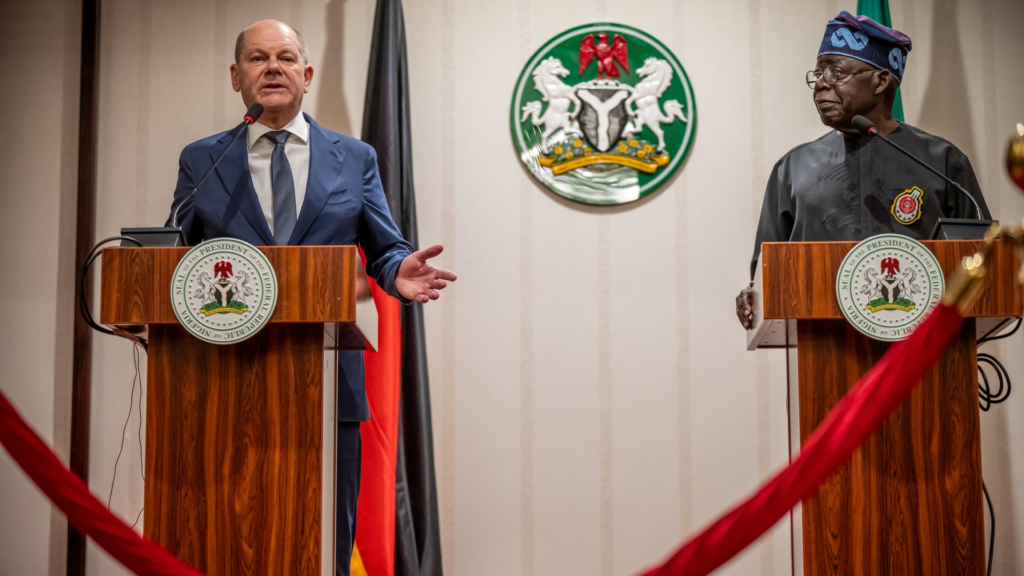
Nigeria and Germany are opening a major new chapter in their long diplomatic history as leaders from both nations gather in Abuja for high-level bilateral consultations.
Nigeria’s Minister of Foreign Affairs, Ambassador Bianca Odumegwu-Ojukwu, is hosting Germany’s Minister for Foreign Affairs, His Excellency Johann David Wadephul, alongside a delegation of top European business executives, lawmakers, and technology leaders.
Diplomatic meetings between two major nations often sound like abstract talk meant only for politicians in suit jackets. But this specific gathering holds massive importance for ordinary citizens, small business owners, young tech talents, and green energy enthusiasts across Africa’s largest economy.
The discussions focus on real-world issues: growing bilateral trade, boosting local green energy projects, training young people with practical skills, and building deeper ties in technology and digital innovation.
Let us break down everything happening at these talks, why Germany is looking to expand its footprint in West Africa, and what all of this means for you.
A Snapshot of the Nigeria-Germany Partnership
To understand why this meeting matters, it helps to look at where both nations currently stand. Germany is Europe’s largest economy and a global leader in manufacturing, heavy machinery, engineering, and clean technology. Nigeria, on the other hand, is Africa’s most populous country, boasting a youthful population, a booming digital economy, and rich natural resources.
For decades, the two countries have maintained strong diplomatic ties built on mutual respect and trade. According to trade data from The Observatory of Economic Complexity, Nigeria regularly exports billions of dollars in goods to Germany every year.
Key Trade Fact: Crude petroleum, raw cocoa, and cocoa products remain Nigeria’s primary exports to Germany. In return, Nigeria imports heavy industrial machinery, high-tech engines, vehicle parts, and electrical equipment from German manufacturers.
While raw commodities like oil and cocoa have historically dominated trade, both governments want to shift gears. Nigeria wants to process its raw materials locally before exporting them, while Germany wants reliable partners for green energy, skilled manpower, and new markets for its technical solutions.
This high-level meeting in Abuja serves as a direct bridge to turn those mutual desires into working policies.
What Is on the Table in Abuja?
The bilateral consultations between Foreign Minister Bianca Odumegwu-Ojukwu and Foreign Minister Johann David Wadephul are designed to review existing agreements and chart a roadmap for the future.
Official statements released by the Federal Ministry of Information and National Orientation highlight five central pillars driving the talks:
- Expanding Commercial Trade: Removing trade barriers and encouraging more German businesses to invest directly in Nigerian industries.
- Renewable Energy Expansion: Accelerating solar power, green hydrogen production, and grid modernisations across Nigeria.
- Vocational Training and Job Skills: Building practical training hubs so young Nigerians can learn in-demand technical trades.
- Digital Innovation and Technology: Connecting German technology firms with Nigerian software developers, startup founders, and digital creators.
- Managed Migration and Security: Promoting safe, legal migration channels while working together on regional stability in West Africa.
The German foreign minister is not travelling alone. His delegation includes influential board members and CEOs from leading German IT, manufacturing, and energy corporations. After finishing meetings with government officials in Abuja, the delegation is heading directly to Lagos to connect with local private sector leaders and tech hubs.
Renewable Energy and Climate Action
Electricity remains one of the single biggest operational hurdles for businesses and households in Nigeria. It is also an area where Germany possesses deep technical expertise.
Germany has committed tens of millions of Euros through development agencies like GIZ to help modernise Nigeria’s energy sector. A major portion of these bilateral agreements supports the Presidential Power Initiative, an ambitious project aimed at overhauling Nigeria’s power transmission and distribution infrastructure.
Why Green Energy Matters to Both Nations
Germany is actively transitioning away from traditional fossil fuels and seeking global partners who can produce green energy. Nigeria offers vast solar potential and the raw capabilities needed for green hydrogen production.
By investing in Nigerian clean energy projects, Germany secures future clean energy supply lines while Nigeria gains modern, low-cost power systems that keep local businesses running smoothly.
Key focus areas in the current energy discussions include:
- Building off-grid solar power stations in rural communities.
- Upgrading heavy electrical equipment across regional grid networks.
- Training local engineers and technicians on modern renewable systems.
- Exploring joint ventures for green hydrogen manufacturing.
When factories and tech hubs have reliable electricity, operating costs drop dramatically, leading to lower prices for consumers and faster growth for businesses.
Technology, Innovation, and Digital Growth
The digital economy in West Africa has grown at a rapid pace over the past decade, and Nigeria stands right at the centre of that boom. From financial technology platforms to online entertainment, Nigerian tech talent is gaining global attention.
German corporate leaders recognize this potential. The inclusion of high-ranking IT executives in the German delegation signals a strong desire to collaborate on digital tools, artificial intelligence, software automation, and cloud computing.
German companies want access to skilled developers and innovative software solutions, while Nigerian tech talents want access to capital, international mentorship, and European market expansion.
For readers following global technology trends, digital automation is changing how businesses run every single day. If you want to keep up with how artificial intelligence is transforming modern industries, explore our detailed articles on Technology and AI on our blog.
At the same time, thousands of young creators are building digital businesses using automated video tools, modern content platforms, and online marketing tools. If you are interested in exploring how simple digital tools create income streams, check out our guide on YouTube Automation to see how modern creators manage scalable online channels.
By strengthening bilateral ties in digital innovation, Nigeria and Germany are opening real doors for young creators, developers, and entrepreneurs to work globally without ever needing to leave home.
Practical Skills and Youth Employment
One of the standout features of the German economy is its famous dual-education system. In Germany, young people do not just study theory in a university classroom; they split their time between practical factory training and academic schooling.
Nigeria has a very young population, with millions of energetic youths entering the job market every year. To help bridge the gap between academic education and practical job skills, the bilateral talks are placing strong focus on vocational education.
Through joint development funds, Germany is investing tens of millions of Euros into practical training centres across Nigeria. These hubs focus on teaching usable trade skills, including:
- Advanced mechanical engineering and automotive maintenance.
- Solar panel installation and electrical grid maintenance.
- Agricultural processing and smart farming techniques.
- Digital software development, network security, and data handling.
Instead of graduating with degrees that might not match current job openings, young people can learn hard, practical skills that match what top employers are actively seeking.
Agriculture, Processing, and Local Value Chains
Agriculture remains the main backbone of rural economies across Nigeria, employing millions of people. However, a large percentage of agricultural produce is lost after harvest due to poor storage facilities, weak transportation links, and a lack of local processing plants.
Nigeria exports massive quantities of raw cocoa beans to Europe every year. European manufacturers turn those raw beans into chocolates and beauty products, selling them back to global markets at much higher prices.
During these bilateral talks, Nigerian representatives are emphasizing the need to build local processing capacity.
The Goal for Agriculture: Instead of simply shipping raw materials abroad, Nigeria aims to partner with German engineering firms to set up processing plants locally. Processing cocoa into cocoa butter or processing raw cashews locally creates processing jobs, boosts farm incomes, and increases export earnings.
German commitments are also targeting climate-smart farming tools, post-harvest preservation systems, and low-interest funding options for agribusiness startups.
Managed Migration and Legal Frameworks
Migration is a topic that regularly dominates international news headlines. Both Nigeria and Germany are addressing this issue openly during their Abuja meetings.
Germany faces a shrinking workforce due to an aging population and needs skilled workers across health care, information technology, engineering, and construction. Meanwhile, Nigeria has a surplus of educated, talented young professionals seeking good career opportunities.
The challenge in recent years has been irregular, unsafe migration routes. Through these high-level consultations, both governments want to create legal, transparent pathways for skilled Nigerian workers to move to Germany legally while protecting them from exploitation.
These initiatives combine legal work opportunities in Europe with remote job pathways, allowing Nigerian talent to work for international firms directly from Nigeria.
What This Means for Everyday Citizens
It is easy to view big diplomatic talks as political speeches that rarely touch daily life. But the outcomes of these consultations lead to real changes that affect citizens directly.
Here is how these bilateral agreements affect different groups of people:
For Business Owners and Small Entrepreneurs
Increased foreign investment makes importing machinery and technology easier. As German companies set up operations or team up with local businesses, local supply chains receive more orders, expanding opportunities for suppliers, transporters, and service providers.
For Young People and Job Seekers
New funding for vocational training centres means affordable access to high-demand technical skills. Furthermore, German technology companies establishing local offices create direct jobs for software developers, project managers, and digital specialists.
For Farmers and Agribusinesses
New investments in post-harvest technology and climate-smart farming mean fewer crop losses after harvest, better market access, and reliable funding opportunities.
Staying Ahead with WhatsBuzzn
At WhatsBuzzn, our core mission is simple: we break down trending stories, complex political events, and major global shifts into clear, simple language that everyone can understand.
Whether we are covering high-stakes international diplomacy like the Nigeria-Germany talks, explaining changes in the digital economy, or sharing practical guides on personal growth, we keep you informed with real, honest insights.
If you want to learn more about our magazine, our editorial mission, or the team behind the scenes, take a moment to visit our About Page.
Have a story tip, a business inquiry, or feedback on our content? You can easily get in touch with us through our official Contact Page.
You can also follow our community across our active social media channels for real-time updates and trending stories:
- Follow us on Instagram
- Connect with us on Facebook
- Join the conversation on X (formerly Twitter)
Frequently Asked Questions (FAQs)
What are bilateral talks?
Bilateral talks are formal discussions between two sovereign nations. Representatives meet to discuss shared goals, clear up trade disagreements, sign business agreements, and agree on how to work together on issues like security, energy, and economic growth.
Who is representing each country in the 2026 Nigeria-Germany talks?
Nigeria is represented by Minister of Foreign Affairs Ambassador Bianca Odumegwu-Ojukwu. Germany is represented by Minister for Foreign Affairs His Excellency Johann David Wadephul, alongside a delegation of German lawmakers, energy experts, and corporate tech executives.
Why is Germany heavily interested in investing in Nigeria?
Nigeria is West Africa’s largest market, with over 200 million people, a strong tech ecosystem, and massive potential for renewable energy projects. Germany views Nigeria as a key partner for green hydrogen production, economic growth, and regional stability in West Africa.
How do these agreements help reduce unemployment in Nigeria?
Germany is funding practical training hubs in Nigeria that teach useful technical trades like solar installation, mechanical repair, modern farming, and software coding. Additionally, German investments in local power projects and manufacturing help Nigerian businesses grow and hire more workers.
Will these bilateral talks affect visa processes for Nigerians?
While visa rules were not the only topic on the agenda, managed migration is a core focus. Both nations are working to create legal, organized pathways for skilled Nigerian workers and students to visit, study, and work in Germany legally.
Final Thoughts
The bilateral consultations between Nigeria and Germany mark a practical step toward a stronger economic partnership. By focusing on practical priorities like green power, technical training, digital technology, and expanded trade, both nations stand to gain significantly.
As these high-level discussions wrap up in Abuja and move toward practical business sessions in Lagos, all eyes will be on how quickly these agreements translate into new power projects, vocational training hubs, and expanded trade deals on the ground.
Stay tuned to WhatsBuzzn as we continue to track these developments and deliver the stories that matter most to you.
