
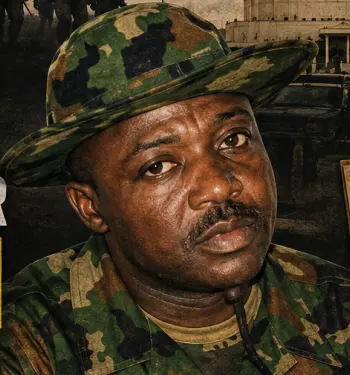
When big political news breaks, everything else stops. People gather around newsstands, check their phones, and send messages back and forth in family chat groups. The recent statement by Mohammed Ma’aji about leading a coup against President Bola Ahmed Tinubu caused that exact kind of reaction across the country.
Ma’aji clearly stated that his motivation was pure patriotism rather than personal ambition. He argued that his actions were taken to protect the nation, not to grab personal power.
Statements like this spark heavy debate among everyday citizens. Can an illegal action ever be justified by good intentions? Where is the line between political ambition and real love for a country?
At WhatsBuzzn, our goal is to break down massive viral stories so you get the clear facts without getting confused by heavy political jargon. Let us look at what was said, why it matters, and what it means for the country.
The Confession That Sparked National Debate
The statement from Mohammed Ma’aji was direct and serious. He claimed that taking steps against the administration of President Bola Ahmed Tinubu was not about personal position or title. Instead, he framed his actions as a rescue mission for the nation.
The $0 Secret To Launching Your Entire Online Empire
Why pay hundreds every month for separate software? Build funnels, send emails, and make sales with Systeme.io completely free.
Get Started For $0Free Forever • No Credit Card Needed • Beginner-Friendly
He pointed to widespread economic challenges, rising costs of living, and security concerns as the main reasons behind his stance. According to him, remaining silent while ordinary people struggled was no longer an option he could accept.
For many listeners, the words sounded like a passionate plea from someone who cares deeply about his homeland. For others, it sounded like a dangerous defense for actions that break the supreme law of the land.
Political analysts note that figures who challenge sitting governments almost always use the language of national service. Frame your actions as patriotism, and you automatically win sympathy from citizens who feel frustrated by current conditions.
Patriotism vs. Ambition: Understanding the Difference
To really understand this situation, we have to look closely at the two core ideas Ma’aji mentioned: ambition and patriotism.
Ambition is about personal gain. It is the drive to hold office, control public funds, command attention, and enjoy the power that comes with high leadership positions. When political figures act purely out of ambition, the country usually suffers because personal interests come before public welfare.
Patriotism, on the other hand, means putting the well-being of the nation and its citizens first. True patriots build institutions, respect the constitution, and work to protect the rights of ordinary people.
Here is where the big conflict lies:
- The Proponent’s View: Supporters of Ma’aji argue that when public suffering reaches a high level, bold action becomes necessary to bring change. They view his statement as an act of courage from someone willing to risk everything for the public good.
- The Legal View: Legal experts and constitutional scholars see things very differently. They argue that true patriotism requires respecting the constitution. Trying to unseat a democratically elected leader outside of normal election processes hurts the nation, regardless of how good the intentions might be.
History shows us that almost every military ruler or political challenger in history claimed to act out of patriotism. Very few ever admitted that they just wanted power. This makes it crucial for citizens to look at actions rather than just words.
The Political Context Under President Tinubu
To understand why Ma’aji’s message gained so much attention, we need to look at the environment in Nigeria today.
President Bola Ahmed Tinubu came into office with big promises of economic reform and national renewal. Since taking office, his administration has introduced several major policies aimed at reshaping the national economy:
- Removal of Fuel Subsidies: This policy was designed to save government funds for infrastructure and development, but it quickly led to higher transportation costs and increased prices for daily goods.
- Currency Reforms: Changes in foreign exchange rules caused the local currency to fluctuate, raising the cost of imported goods and making business difficult for small shop owners.
- Security Measures: While security forces continue to fight banditry and insurgency, safety concerns remain top of mind for farmers and families in many regions.
These hard economic realities create a stressful environment for everyday people. When citizens feel economic pressure, statements that criticize the government easily catch fire online and on the streets. Ma’aji tapped directly into these existing public feelings.
Why Democratic Processes Matter Most
Even when people feel dissatisfied with current conditions, legal experts agree that democracy remains the safest path forward for any country.
A constitutional government gives citizens the right to vote, express opinions, and hold leaders accountable during regular election cycles. When political power changes hands through peaceful, legal means, the country stays stable. Foreign investors keep their money in local businesses, schools remain open, and public safety is preserved.
When someone attempts to bypass democratic systems, several serious risks emerge immediately:
- Loss of Stability: Illegal power shifts often lead to internal conflict, dividing the armed forces and putting innocent citizens in harm’s way.
- Economic Breakdown: International partners pull back investments, trade slows down, and local markets face extreme disruption.
- Disregard for Human Rights: Non-democratic control frequently results in restrictions on free speech, limited media access, and arbitrary detentions.
This is why major civic organizations and human rights groups strongly defend constitutional order. They argue that fixing a democracy requires more civic participation and better leadership, not illegal short-cuts.
Send, Spend & Hold Money Worldwide Without Hidden Fees
Transfer money internationally at the real exchange rate and hold 40+ currencies in one account.
Open a Wise AccountMid-market rate • Fast transfers • 40+ currencies
How News Travels in the Age of Social Media and AI
In the past, political news took days to spread across the country through printed newspapers and evening radio broadcasts. Today, a statement like Mohammed Ma’aji’s reaches millions of screens within minutes.
Social platforms allow information—and misinformation—to travel at lightning speed. A single video clip or voice note can go viral across WhatsApp groups, X feeds, and Facebook walls before official sources can verify the facts.
Modern content creators are using smart digital tools to cover these breaking stories quickly. Many media publishers rely on advanced technology and AI solutions to edit videos, write headlines, and publish updates faster than ever before.
At the same time, automated video systems and digital publishing strategies, like those explored in our guide to YouTube automation techniques, help independent commentators analyze political trends and share breaking news with huge online audiences.
While fast news keeps us informed, it also places extra responsibility on readers. In moments of political tension, rumors can spread just as fast as true reports.
The Role of Public Perception and Social Media Signals
Public reaction to Ma’aji’s statements was immediate across digital platforms. People took to social media to share opinions, argue about legal points, and debate the future of the country.
On platforms like X (formerly Twitter), political discussions trended for hours. Users shared snippets of quotes, legal analyses, and historical comparisons.
Over on our official Facebook page, readers voiced different perspectives. Some emphasized the daily struggles of local traders, while others warned against supporting any move that disrupts democratic governance.
Visual updates and quick summary posts on platforms like Instagram helped young readers grasp the main points of the news without getting bogged down in legal terms.
This real-time public conversation shows how connected citizens have become. People no longer just accept news passive; they discuss it, question it, and share their own thoughts with the world.
The $0 Secret To Launching Your Entire Online Empire
Why pay hundreds every month for separate software? Build funnels, send emails, and make sales with Systeme.io completely free.
Get Started For $0Free Forever • No Credit Card Needed • Beginner-Friendly
Separating Facts From Emotional Headlines
During high-profile political events, telling the difference between real facts and political spin can be difficult. Here are simple steps you can use to stay grounded whenever dramatic news breaks:
Check the Original Source
Always ask where the statement first appeared. Was it delivered in an official recording, a verified court document, or an unverified text message? Relying on confirmed media outlets helps you avoid false reports.
Look for Independent Verification
Do not rely on a single headline. Check if multiple reputable outlets are reporting the exact same facts. If only one unknown blog is sharing a massive story, exercise caution.
Understand the Speaker’s Motivation
Every political actor has a goal. When reading a statement, ask yourself what the speaker stands to gain. Recognizing political interests helps you evaluate statements more objectively.
Separate Emotion from Reality
High-stakes political news is often designed to trigger strong emotions like fear or anger. Step back, read the full story calmly, and focus on verified facts rather than sensational language.
What Comes Next for the Political Landscape?
The political conversation sparked by Ma’aji’s statement is far from over. As the legal and security systems handle the immediate situation, the broader questions about governance, public welfare, and national security remain active topics of discussion.
Government leaders face the ongoing task of addressing economic hardships while keeping the public safe. When citizens see real improvements in their daily lives—such as stable food prices, better roads, and safe communities—political tension naturally decreases.
For ordinary citizens, the situation serves as a reminder of the power of civic engagement. Voting in elections, asking tough questions of representatives, and supporting peaceful community initiatives remain the most effective ways to build a stronger nation.
Frequently Asked Questions
What did Mohammed Ma’aji say about his actions against President Tinubu?
Mohammed Ma’aji stated that his actions were motivated by patriotism rather than personal ambition. He claimed he acted out of concern for the nation’s economic struggles and security issues.
Is an illegal attempt to change a government allowed under any circumstances?
No. Under the Constitution, power can only be transferred through established democratic procedures like elections. Illegal power grabs are treated as serious crimes under national law.
Why do political figures often use patriotism to explain their actions?
Patriotism is a concept that resonates deeply with people who love their country. By framing actions as patriotism, figures hope to gain understanding and support from citizens who are unhappy with current conditions.
How can ordinary citizens protect themselves from fake political news?
Citizens can protect themselves by verifying news with established media organizations, avoiding the sharing of unconfirmed audio or video clips, and reading beyond sensational headlines.
Where can I find reliable updates on trending national stories?
You can follow trusted news outlets and visit our about page to learn more about how we cover trending national events and viral stories in simple, accessible language.
Navigating fast-moving political stories requires patience, clear thinking, and access to accurate information. While dramatic statements will always capture public attention, keeping our focus on constitutional order, open dialogue, and real public welfare is what keeps a country moving forward.
What are your thoughts on this situation? If you have questions about our coverage or want to share feedback on political stories you want us to explain next, reach out through our contact page or join the discussion across our social media channels.
