
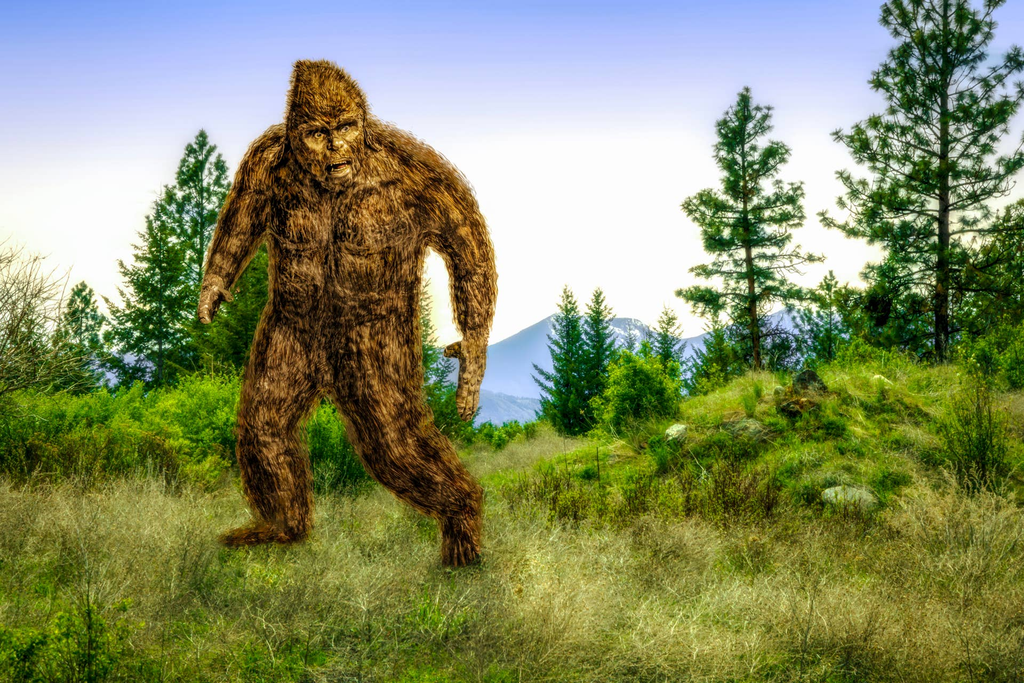
For decades, anyone who claimed to spot giant, human-like footprints deep in the North American woods risked getting laughed out of the room. Most people wrote off Bigfoot as a fun campfire story, a tourist gimmick, or an excuse to sell bumper stickers in small mountain towns. Now, official records from the federal government are giving curious minds a fresh reason to look closer at those old forest mysteries.
The United States Forest Service, which operates under the U.S. Department of Agriculture, quietly published a collection of historical Bigfoot and Sasquatch records in its public online Freedom of Information Act reading room. The files were uploaded on October 15, 2026, without a big press conference or official announcement. Once major news outlets like Fox News and local reporters in the Pacific Northwest noticed the upload in November 2026, the documents quickly spread across social media.
If you have ever wondered how serious government scientists react when someone reports a giant ape-like creature walking through a national forest, these papers offer a fascinating peek behind the curtain. They do not hand us a Hollywood ending, and they certainly do not settle the debate once and for all. Instead, they show real wildlife biologists, border patrol trackers, and everyday hunters trying to make sense of strange tracks in the mud and snow.
What Exactly Did the U.S. Forest Service Release?
The newly surfaced collection sits inside the U.S. Forest Service FOIA Reading Room under a folder labeled “Bigfoot/Sasquatch Records”. According to the agency’s public index, the files come from its Washington Office under the Watershed, Fish, Wildlife, Air, and Rare Plants division. Rather than a massive vault of thousands of classified pages, the release contains three distinct historical documents spanning more than half a century.
The first document is an official June 18, 1982 Umatilla National Forest investigation report written by a Forest Service wildlife biologist in the Pacific Northwest. It details a field visit to inspect giant footprints found in a restricted watershed area in Washington state.
The $0 Secret To Launching Your Entire Online Empire
Why pay hundreds every month for separate software? Build funnels, send emails, and make sales with Systeme.io completely free.
Get Started For $0Free Forever • No Credit Card Needed • Beginner-Friendly
The second file is a six-page typed account written in 1980 by a man named Leo T. Kinney. In his letter, Kinney looks back at a hunting trip in western Montana during the late 1940s when he and three companions stumbled across massive tracks and felt an overwhelming sense of dread.
The third record is a local newspaper clipping from the January 2003 edition of the Clark Fork Valley Press in Montana. That story covers an eight-year-old boy who walked out into the winter woods and found hundreds of giant, five-toed footprints pressed into the snow.
Together, these three files show how the federal government handled Sasquatch reports long before smartphones, trail cameras, and viral TikTok videos existed.
What Happened During the 1982 Umatilla National Forest Investigation?
The centerpiece of the document release is the 1982 investigation from the Mill Creek Watershed inside the Umatilla National Forest, near Walla Walla in southeastern Washington. Because the watershed supplies clean drinking water to local communities, public access to the area is heavily restricted. That detail alone made the discovery of unexplained tracks feel much stranger to the people working there.
On June 17, 1982, a Forest Service North Zone wildlife biologist named Rodney L. Johnson traveled out to the site to examine the prints in person. He did not treat the trip like a joke. According to the report, investigators measured the impressions carefully, snapped color photographs, and poured plaster casts so they could study the shape of the foot back at the office.
Johnson documented giant footprints across three separate muddy locations. Each print measured roughly 15 inches long and 7 inches wide. The tracks ran for about 25 to 40 feet, moving up and down small slopes before disappearing into thick forest brush. Beyond the muddy patches, Johnson noted broken and disturbed plants stretching another 30 to 40 feet into the undergrowth, as if something large had pushed its way through.
One detail in particular caught the biologist’s eye. One of the footprints showed a slight deformity on the second toe, giving it the kind of tiny flaw you would expect to see on a real living foot rather than a smooth wooden cutout.
In his six-page memo written on June 18, 1982, Johnson admitted that whoever or whatever left those marks had left behind impressive detail. He wrote that if the tracks were faked, someone went to a great deal of trouble, adding that the fine marks on the foot appeared very natural and would be hard to copy.
Why Did Investigators Still Suspect a Hoax in 1982?
Despite how realistic the toe marks looked up close, Johnson did not walk away convinced that a giant ape-man was roaming Washington’s woods. When he stepped back and looked at the bigger picture, several physical clues simply did not add up.
In his final conclusion, Johnson stated that the tracks were likely made by something other than a two-legged creature weighing more than 300 pounds. As detailed in coverage by the Hindustan Times, three major red flags stood out during his field check:
- The stride never changed on hills: When any real person or heavy animal walks uphill or downhill, their steps naturally shorten or lengthen to keep their balance. In Mill Creek, the distance between the giant footprints stayed completely uniform regardless of the slope.
- The weight did not match the size: A creature with 15-inch feet would easily weigh several hundred pounds. Yet Johnson noticed that his own standard work boots sank deeper into the soft mud than the supposed Sasquatch prints did.
- The ground looked prepped beforehand: Pine needles, twigs, and forest litter right next to the footprints showed obvious signs of having been brushed aside by hand before the print was pressed into the dirt.
A few weeks later, a second expert weighed in and backed up Johnson’s doubts. On July 28, 1982, U.S. Border Patrol tracking specialist Joel Hardin sent a separate memo to the Forest Service office in Walla Walla. Hardin suggested the tracks were man-made using a soft plaster or rubber-coated fake foot. He believed a prankster had planted the prints in a restricted watershed specifically to get government officials involved and trick them into giving credibility to Bigfoot claims.
Why Did Four Montana Hunters Get Chills in the 1940s?
While the 1982 report reads like a careful detective file, the second document in the release feels much more like a gripping personal confession. Written in 1980 by Leo T. Kinney, the six-page letter describes an incident from the late 1940s in the Petty Creek area of western Montana.
Kinney was not a weekend tourist wandering off a marked trail. He was an experienced outdoorsman hunting alongside three other men who knew how to read animal signs in the Rocky Mountains. During their trip, the four hunters came across a trail of unusually large footprints cutting through the timber.
According to Kinney’s account, the strangeness did not stop at the tracks. He wrote about an incident involving a missing elk carcass where only the animal’s entrails remained behind. He also referenced accounts from other local hunters who had found similar giant tracks in the area and noticed an overpowering, unfamiliar smell paired with low grunting sounds coming from the brush.
What makes Kinney’s letter stick in your mind is how honest he was about his fear. Four grown men carrying hunting rifles stood in the woods looking at those tracks, and none of them wanted to find out what had made them.
Send, Spend & Hold Money Worldwide Without Hidden Fees
Transfer money internationally at the real exchange rate and hold 40+ currencies in one account.
Open a Wise AccountMid-market rate • Fast transfers • 40+ currencies
In his letter, Kinney recalled that the group stopped to talk things over and decided they were not eager to catch up to whatever was ahead of them. He admitted that nobody wanted to look scared in the moment, yet when the four men talked about the day years later, every single one of them confessed they had felt a heavy, uneasy feeling and chills running up and down their backs.
Unlike the 1982 Washington tracks, nobody poured plaster casts in Petty Creek in the 1940s, and no biologist measured the mud. Still, reading a straightforward account from seasoned hunters who turned around out of pure instinct gives you a clear sense of why Sasquatch stories refuse to die out.
What Did an Eight-Year-Old Boy Find in Montana in 2003?
The third file jumps forward to January 2003, proving that strange footprint reports did not stay locked in the twentieth century. This record is a scanned newspaper story from the Clark Fork Valley Press, a local paper serving Plains and Sanders County in northwestern Montana.
As reported in coverage by KIRO 7, the story began when an eight-year-old boy named Austin Peterson went walking in the woods near River Road West. In the snow, he spotted a long line of massive footprints.
At first, adults in the neighborhood assumed a large bear had wandered through the area. Bears are common in that part of Montana, so big tracks in the snow rarely cause panic on their own. When neighbors walked over to inspect the prints up close, however, they realized the shape was all wrong for a bear. Instead of long claw marks and wide paw pads, the impressions showed clear, human-like toes.
A neighbor named Bob Mesing examined the scene and estimated there were hundreds of tracks scattered through the area. Mesing followed the trail roughly 100 yards into the trees before the snow became too thin to hold clear prints.
Based on what he measured, Mesing estimated that whatever walked through the woods had a five-foot stride and feet measuring more than 16 inches long and 8 inches wide. Those numbers are remarkably close to the 15-inch footprints Rodney Johnson measured in Washington state more than twenty years earlier.
Mesing’s reaction summed up how many practical rural residents view the whole subject. He told the local paper that he did not know if he believed in the Bigfoot theory, but the tracks were sitting right there in front of him.
Why Is the Government Releasing Bigfoot Files Now?
Whenever a federal agency posts documents about Bigfoot, UFOs, or old government investigations, people immediately ask why the files are coming out at this exact moment. The answer comes down to a mix of public curiosity, federal transparency rules, and internet culture.
Under the Freedom of Information Act, everyday citizens, journalists, and researchers can ask federal agencies to hand over copies of historical records. When multiple people request the same files over time, agencies often upload those records to a public online reading room so anyone can view them without filing a new paperwork request.
The $0 Secret To Launching Your Entire Online Empire
Why pay hundreds every month for separate software? Build funnels, send emails, and make sales with Systeme.io completely free.
Get Started For $0Free Forever • No Credit Card Needed • Beginner-Friendly
That is exactly how the “Bigfoot/Sasquatch Records” folder landed on the Forest Service website in October 2026. Earlier in the year, the same agency also posted historical UFO reports dating back to 1952 in its reading room, reflecting a broader push to make unusual archived files easier for the public to inspect.
Even so, the timing caught the attention of longtime researchers. In an interview with The Washington Post cited by FOX 5 New York, Jeremiah Byron of the Bigfoot Society questioned why so much cryptid and Bigfoot material was surfacing in late 2026. He expressed hope that this release could signal other government departments to open up their own dusty filing cabinets.
At the same time, Bigfoot never really left mainstream pop culture. From giant wooden Sasquatch statues welcoming road-trippers to small towns in northern California, to gamers sharing viral clips of a panicked Sasquatch sprinting through the fictional swamps of Leonida in Grand Theft Auto VI, the legend keeps finding new audiences every generation.
Does This Mean Bigfoot Is Actually Real?
If you were hoping these files contained DNA test results, clear close-up photographs of a living creature, or a secret government admission, you are going to walk away disappointed. The newly published records do not prove that Bigfoot exists.
The U.S. Forest Service has kept the same neutral stance for decades. During a past public community forum called “Bigfoot in Your Backyard” at California’s Stanislaus National Forest, agency staff noted plainly that the Forest Service can neither confirm nor deny that the creature exists.
What these documents actually prove is something much more grounded and human. They show that when taxpayers report something strange on public lands, Forest Service rangers and wildlife biologists take their work seriously. They put on their boots, hike out into the mud, take careful measurements, and follow the physical evidence wherever it leads—even when that evidence points straight to a clever prankster with a rubber-coated mold.
At the same time, the files remind us why the mystery survives. Even after skilled trackers explain away one set of footprints in Washington, you are still left with old stories from Montana hunters who felt chills in the timber and small-town neighbors staring at 16-inch tracks in fresh snow. North America still holds millions of acres of rugged, roadless forest where people rarely set foot, leaving plenty of room for imagination.
What Are the Most Common Questions About the Forest Service Bigfoot Files?
Where can I read the official Bigfoot files myself?
You can read all three PDF documents for free on the official U.S. Forest Service FOIA Reading Room website. Scroll down to the “Frequently Requested Records” table and look for the entry titled “Bigfoot/Sasquatch Records” dated October 15, 2026.
Did the U.S. Forest Service confirm that Bigfoot exists?
No, the agency has not confirmed that Bigfoot is real. The released documents consist of one field investigation that concluded the tracks were likely faked, one personal letter recalling a 1940s hunting trip, and one 2003 local newspaper article.
Why did the 1982 biologist think the footprints were fake?
Wildlife biologist Rodney L. Johnson doubted a real 300-pound creature made the 1982 Washington tracks because the step length never changed on steep slopes, his own boots sank deeper into the mud than the giant prints did, and leaves near the tracks looked like someone had brushed them aside by hand.
Are there more government Bigfoot documents still hidden?
There could be other old memos or local ranger notes sitting in regional archives across the country. Under federal transparency laws, agencies usually digitize and post historical records only after members of the public submit specific Freedom of Information Act requests for them.
What Do You Think Is Hiding in the Woods?
The new Forest Service release gives both skeptics and believers plenty to talk about around the dinner table. Skeptics get a textbook breakdown of how easily a determined prankster can fool people with detailed fake footprints, while Bigfoot fans get official government records showing that federal biologists spent real time and taxpayer resources chasing down Sasquatch clues.
What is your take on these newly released Bigfoot files? Do you think every sighting comes down to hoaxes and misidentified bears, or could something undiscovered still be out there in the deep woods?
