
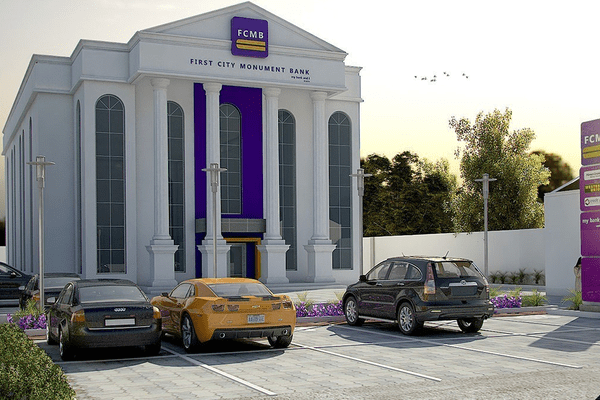
Financial reports can often feel like a endless wall of numbers, charts, and complicated accounting terms. But every once in a while, a financial story comes along that gets everyone talking across the business world.
FCMB Group Plc recently released its unaudited financial results for the half-year ended June 30, 2026. The numbers in the report are catching a lot of attention. The financial services giant nearly doubled its Profit Before Tax, recording an impressive 99% growth.
At WhatsBuzzN, our mission is simple. We take trending stories, major economic events, and breaking developments, and explain them in clear, straightforward language. You do not need a degree in finance to understand what is happening with your money or the institutions handling it.
This detailed guide breaks down how FCMB Group achieved this growth, what drove the massive jump in profits, how their digital banking division performed, and what all of this means for everyday customers, small business owners, and investors.
Breaking Down the Big Numbers in Simple Terms
When a financial company talks about Profit Before Tax (PBT), they are referring to the total profit made from daily business operations after paying operational expenses, but before paying income taxes to the government.
Build Funnels, Email Lists & Sell Online With One Free Tool
Create funnels, send emails, and sell online using Systeme.io without paying for multiple tools.
Create Free AccountFree forever • No credit card • Beginner-friendly
For the first six months of 2026, FCMB Group reported a Profit Before Tax of N157.3 billion. During the exact same period in 2025, that number stood at N79.1 billion. That represents a 99% year-on-year increase, meaning the group essentially doubled its pre-tax earnings in just twelve months.
This huge jump was backed by strong top-line revenue growth across the board. Gross earnings, which is the total amount of money coming into the group before deducting any expenses, grew by 27.8% to reach N676.2 billion, up from N529.2 billion in H1 2025.
A big portion of this money came from interest income. Interest income is the money a bank earns from loans, credit lines, and investments. FCMB Group saw its interest income rise by 31%, powered by a 22% growth in earning assets, which reached N5.98 trillion.
At the same time, Net Interest Income surged by 71.8% to reach N356.3 billion. This happened because while interest earned from loans went up, the cost of paying interest on deposits went down.
For shareholders, this translated into higher returns. The annualized Earnings Per Share (EPS), which measures how much profit the group generates for every share owned by investors, rose to N4.23 compared to N3.96 for the full year 2025. This increase happened even though the group had added new shares following its recent capital raise.
You can read the full official report coverage on major news platforms like BusinessDay and Premium Times for extra context.
How Every Division Contributed to the Growth
One interesting detail from the financial results is that FCMB Group did not rely on just one single business area to make money. Instead, all four main divisions within the group showed solid profit growth.
Here is how each division performed during the six-month period:
Consumer Finance
The Consumer Finance division, which includes popular lending services like Credit Direct Limited, saw the highest percentage growth in pre-tax profits. Profit before tax in this segment jumped by 92%.
More people and small income earners rely on quick consumer loans to cover personal expenses, school fees, and small business needs. The demand for simple, fast, and accessible micro-loans helped drive performance in this segment.
The Core Banking Group
The main banking arm, First City Monument Bank Limited, remains the core pillar of the enterprise. This division recorded an 80% growth in profit before tax.
The bank benefited directly from better loan pricing, an increase in low-cost customer deposits, and funds raised during its recent recapitalization drive. With over 200 branches across Nigeria and a regulated banking subsidiary in the United Kingdom, the core banking operation proved solid once again.
Investment Banking
The Investment Banking unit, which covers capital market advisory, debt structuring, and stockbroking through FCMB Capital Markets and CSL Stockbrokers, grew its profit before tax by 76%.
Despite wider market changes, more companies needed guidance on issuing bonds, raising equity, and restructuring corporate finances. FCMB’s deal advisory teams managed to capture significant business from these operations.
Investment Management and Pensions
The Investment Management arm, which includes FCMB Pensions and FCMB Asset Management, delivered a 50% increase in pre-tax profit.
As people look for safe places to save for retirement and grow their wealth, pension contributions and investment fund subscriptions increased. Total Assets Under Management (AUM) across these teams grew by 14.3% to hit N1.95 trillion by June 2026.
Non-Banking Operations Are Becoming a Powerful Engine
Many people think of FCMB purely as a commercial bank where you open a savings account or get an ATM card. However, FCMB Group operates as a financial holding company. That means it owns several independent businesses outside traditional banking.
In the first half of 2026, these non-banking businesses made a big contribution. Non-banking operations generated 26% of the overall Group Profit Before Tax. Combined profits from these non-banking companies grew by an impressive 185% year-on-year to reach N40.7 billion.
This strategy is known as revenue diversification. When a banking group relies on multiple revenue channels—like consumer credit, asset management, stockbroking, and pension funds—it becomes far less vulnerable if interest rates change or one sector slows down.
Having balanced income streams allows the group to remain profitable regardless of shifts in the economic landscape.
Digital Banking and Technology Drive Revenue Growth
Technology has changed the way people interact with money. From mobile apps and USSD codes to instant transfer portals, electronic channels are now the primary way most people perform financial transactions.
FCMB Group invested heavily in digital solutions over recent years, and those investments continue to deliver results. The group’s digital ecosystem—which covers digital lending, payment processing, and digital wealth management apps—sustained steady revenue growth.
Digital banking revenue grew to N89.1 billion during the first half of 2026, up from N73.6 billion in H1 2025. This digital income now accounts for 13.2% of the entire group’s gross earnings.
The rise in digital revenue was driven by a higher volume of transactions. Millions of users are paying bills, moving money, and applying for quick digital loans right from their smartphones. For the bank, digital transactions cost much less to process than branch-based transactions, which helps keep operating overhead low.
If you are curious about how tech innovations and automated systems are transforming businesses across different industries, check out our Technology & AI category. We also cover digital creation models, such as our guide on building digital assets through YouTube Automation, for readers looking to explore modern online revenue options.
Smart Money Management: Deposits, Assets, and Equity
A financial group cannot grow its profits sustainably without managing its balance sheet effectively. FCMB Group’s H1 2026 numbers reveal several key operational strengths:
Total Assets: N8.36 Trillion (+9.5%) Customer Deposits: N4.92 Trillion (+11.4%) Low-Cost Deposit Mix: 74.9% Total Equity: N1.17 Trillion (+40.3%) Capital Adequacy Ratio: 23.5%
Build Funnels, Email Lists & Sell Online With One Free Tool
Create funnels, send emails, and sell online using Systeme.io without paying for multiple tools.
Create Free AccountFree forever • No credit card • Beginner-friendly
Customer deposits grew by 11.4% to reach N4.92 trillion as of June 2026. More importantly, the bank improved its deposit mix. Low-cost deposits—which consist mainly of regular savings and current accounts—made up 74.9% of total customer deposits.
Why does a low-cost deposit mix matter? When a bank holds more savings and current accounts instead of expensive fixed-term deposits, it pays out less interest to depositors. Because of this mix, FCMB’s total interest expense actually dropped by 2.7% year-on-year, even while overall customer deposits grew.
Total assets owned by the group rose by 9.5% to reach N8.36 trillion. Customer loans and advances grew by 5.2% to N2.49 trillion. The bank directed much of this loan growth toward high-yielding retail customers, small businesses (SMEs), and corporate clients in key sector industries.
On the capital side, total equity jumped 40.3% to reach N1.17 trillion. This boost came from strong retained earnings and an additional capital injection of roughly N227 billion during the second quarter of 2026. This extra capital gives FCMB Group a Capital Adequacy Ratio (CAR) of 23.5%, providing a comfortable safety cushion well above standard regulatory requirements.
What Leadership Says About the Future
When executive leaders present these financial reports, their commentary gives valuable context on where the company is headed next.
Commenting on the half-year performance, Ladi Balogun, the Group Chief Executive of FCMB Group, emphasized that the results reflect the strength of their recapitalized and diversified business structure.
He pointed out that the group delivered record profitability while taking proactive steps to strengthen balance sheet quality for long-term growth. He highlighted several key factors driving their performance:
- Expanding net interest margins that maximize lending income.
- A higher proportion of low-cost deposits that reduces funding costs.
- Disciplined management of operating costs across all subsidiaries.
- Stronger profit contributions from non-banking units like pensions and wealth management.
Looking ahead, management expressed confidence in their strategy. They confirmed that FCMB Group remains on track to deliver a Return on Equity (RoE) of over 25% for the full 2026 financial year. You can read more about executive commentary in official press statements carried on THISDAYLIVE.
Why This Performance Matters to You
Financial news can sometimes feel distant if you are not checking stock charts every morning. However, when one of the country’s major banking institutions posts solid results, it has real implications for different groups of people.
For Retail Bank Customers
If you hold a savings or current account with FCMB, seeing strong financial results offers peace of mind. A profitable bank with a Capital Adequacy Ratio of 23.5% is stable, secure, and well-capitalized.
It also means the bank has more resources to invest back into customer technology—improving mobile app performance, enhancing account security, and rolling out user-friendly payment channels.
For Business Owners and SMEs
Small and medium-sized enterprises rely heavily on bank credit to manage cash flow, purchase stock, and expand operations.
A bank with growing earning assets and fresh capital injections has more room to lend money. FCMB’s sustained growth in retail and SME lending indicates that credit channels remain open for growing businesses.
For Investors and Shareholders
Over 620,000 shareholders own stock in FCMB Group Plc. For these investors, a 99% jump in profit before tax and an annualized Earnings Per Share (EPS) of N4.23 are clear indicators of value creation.
Strong earnings give companies the flexibility to invest in future growth while maintaining return expectations for shareholders.
For the General Economy
Banking sector performance often reflects broader economic health. When financial institutions navigate high inflation and changing market conditions while growing customer deposits and digital transactions, it shows that economic activity is continuing to move forward.
Frequently Asked Questions (FAQs)
What does 99% PBT growth mean in basic English?
It means that FCMB Group doubled its profit before paying government taxes compared to the same period last year. The group made N157.3 billion in pre-tax profit in H1 2026, compared to N79.1 billion in H1 2025.
What main factors caused FCMB Group’s profits to jump so fast?
The growth was driven by a 31% increase in interest earned from loans and investments, an 11.4% growth in customer deposits, a lower cost of holding those deposits, higher revenue from digital banking apps, and strong profits from non-banking businesses like Consumer Finance and Investment Management.
How much money did FCMB make from digital banking?
Digital operations—including payment processing, mobile lending, and wealth management platforms—generated N89.1 billion in revenue during the first half of 2026. This represents 13.2% of the group’s total gross earnings.
How safe is FCMB Group for regular account holders?
FCMB Group maintains strong financial health. Its Total Equity reached N1.17 trillion, total assets grew to N8.36 trillion, and its Capital Adequacy Ratio stands at 23.5%, which is well above regulatory minimum requirements.
What is the difference between FCMB Bank and FCMB Group?
First City Monument Bank Limited (the Bank) is the commercial banking subsidiary where retail customers open accounts and perform everyday transactions. FCMB Group Plc is the parent holding company that owns the Bank along with other financial businesses like Credit Direct Limited, FCMB Pensions, FCMB Asset Management, and CSL Stockbrokers.
How can I get more simplified business and finance news?
You can follow regular updates right here on WhatsBuzzN. We break down complex news stories in business, technology, politics, and pop culture into easy, accessible reads.
Staying Connected with WhatsBuzzN
At WhatsBuzzN, we bring you clear, straightforward breakdowns of trending stories across business, technology, lifestyle, and global events. We believe staying informed should feel easy and intuitive.
If you have questions, feedback, or news tips you would like our team to cover, visit our Contact Page and get in touch.
You can also join our growing online community across social media:
- Follow our visual updates on Instagram
- Join the conversation on Facebook
- Get real-time updates and trending news on X (Twitter)
Stay tuned to WhatsBuzzN for the latest updates on stories that shape our world.
