
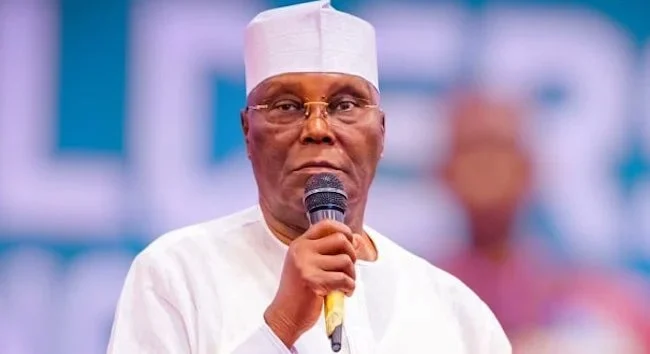
Atiku Abubakar has officially declared that he will bring back the petrol subsidy if he wins the presidential election in 2027. The former Vice President and presidential candidate reaffirmed his stance during a high-level meeting with political leaders in Abuja. He stated clearly that his decision to return fuel relief to Nigerians is final and unchanged.
The announcement has restarted an intense national debate across Nigeria. Fuel prices have jumped dramatically since President Bola Tinubu announced the end of the petrol subsidy on May 29, 2023. For millions of citizens, everyday items, food, and transport costs have climbed beyond reach.
Atiku argues that the government has a basic duty to protect its citizens from extreme financial hardship. He maintains that Nigeria possesses enough wealth to care for its people while keeping key economic sectors running smoothly.
The Breaking Announcement: Atiku Reaffirms Fuel Subsidy Promise
Atiku Abubakar took to his official social media accounts and public meetings to clear up any doubts about his economic agenda. He explicitly stated that his pledge to restore the petrol subsidy remains absolute.
His public declaration came after conflicting statements surfaced from within his team. A press aide had previously suggested that any future subsidy would only be temporary and eventually phased out completely. Atiku quickly stepped in to correct the record.
The $0 Secret To Launching Your Entire Online Empire
Why pay hundreds every month for separate software? Build funnels, send emails, and make sales with Systeme.io completely free.
Get Started For $0Free Forever • No Credit Card Needed • Beginner-Friendly
He made it clear that no assistant speaks on his authority regarding core policy decisions. He insisted that relieving the daily financial burden on Nigerian families is non-negotiable under his proposed administration.
According to Atiku, the true measure of a nation’s wealth is not how much revenue the government collects. Instead, it is measured by how much real value the average citizen retains in their pocket when buying food and basic services.
Understanding the Context: How Nigeria Got Here
To understand why this promise carries so much weight, it is important to look back at recent economic shifts. For decades, the Nigerian government covered a significant portion of petrol costs to keep retail prices low.
In May 2023, President Bola Tinubu announced during his inaugural address that the fuel subsidy was officially gone. The administration explained that paying trillions of naira for fuel subsidies was unsustainable and drained money needed for roads, healthcare, and public education.
However, the rapid removal of the subsidy had immediate consequences across every sector of the economy:
- Petrol pump prices tripled: Fuel moved from around N195 per litre to over N1,000 per litre in many parts of the country.
- Transport costs skyrocketed: Bus fares, interstate travel, and logistics prices surged overnight.
- Food inflation escalated: Farmers and food sellers had to spend significantly more money moving farm produce to market centers.
- Business operating expenses multiplied: Small business owners relying on petrol generators faced heavy operational costs.
The federal government points to record high revenue collections distributed to state governments as proof that reform was necessary. Yet, many households report that their monthly salaries can no longer cover basic living costs.
What Does Atiku’s “Targeted Subsidy” Plan Really Mean?
Atiku has explained that his proposed plan will not be a simple copy of the old system. Critics often pointed out that the previous subsidy regime suffered from corruption, smuggling, and fraudulent claims by middlemen.
Instead, Atiku promises to introduce what he calls a targeted subsidy. This approach aims to fix the systemic flaws of past programs while offering direct relief to consumers.
Here are the key points of his proposed framework:
- Supporting Local Refining: The plan focuses on allocating domestic crude oil to local refiners at manageable, controlled prices.
- Cutting Transport Expenses: By keeping fuel affordable for public transit and haulage trucks, transport fares remain stable.
- Lowering Food Costs: Decreasing transportation costs helps farmers move food to urban areas without passing huge expenses to buyers.
- Protecting Purchasing Power: The primary goal is restoring real purchasing value to the naira spent by ordinary citizens.
- Independent Auditing: Policy advisers note that the proposed intervention would be capped, budget-transparent, and audited regularly to stop leakages.
Rather than subsidizing foreign oil importers, Atiku stresses that his administration will back local production and refine crude oil inside Nigeria.
The Controversy: Why Did Atiku Clarify His Position?
Political debates can get confusing when different representatives send mixed messages. The recent stir began when one of Atiku’s media aides, Paul Ibe, appeared on television to discuss fuel policy.
During that broadcast, the aide implied that any new fuel subsidy would serve only as a short-term measure until domestic refining fully took over. That statement led many commentators to believe Atiku was backing away from his original promise.
Atiku responded quickly to clear up the misunderstanding. Speaking to political leaders, he disowned the aide’s statements directly. He reaffirmed that the decision on this core economic policy lies directly with him as the candidate.
He posted on X that his stance has not changed and will not change. He reiterated his belief that a nation as rich in resources as Nigeria should never abandon its people to extreme economic hardship.
Political Responses and Public Debate
As expected, Atiku’s strong statement has drawn sharp reactions across the political spectrum.
Send, Spend & Hold Money Worldwide Without Hidden Fees
Transfer money internationally at the real exchange rate and hold 40+ currencies in one account.
Open a Wise AccountMid-market rate • Fast transfers • 40+ currencies
Representatives of the ruling All Progressives Congress (APC) have voiced strong disagreement. They argue that returning to fuel subsidies would undo fiscal progress made over the past few years. The ruling party maintains that money saved from subsidy removal is currently being directed toward national infrastructure, healthcare programs, and student loan funds.
On the other hand, many civil society groups, labor unions, and everyday citizens view the promise as a welcome relief. Transport workers and trade associations emphasize that high fuel prices make basic survival nearly impossible for millions.
Economic analysts remain divided on the issue:
- Supporters of subsidy restoration highlight that high fuel costs trigger widespread inflation, which stifles economic growth and increases poverty.
- Opponents of subsidy restoration warn that spending massive budget amounts on fuel price suppression can lead to national debt and reduce capital investment.
How Everyday Citizens Are Adapting to High Living Costs
While politicians debate what will happen in 2027, ordinary citizens have to navigate high prices today. Managing daily expenses requires creative thinking, strict budgeting, and finding new ways to generate income.
Many individuals and small business owners are adapting through practical adjustments:
- Sharing rides and trips: Neighboring families commute together to cut weekly petrol expenses.
- Switching energy sources: Solar setups and gas powered equipment are replacing small petrol generators for basic lighting and operations.
- Buying food in bulk: Households combine resources to purchase staples directly from wholesale markets.
- Adopting digital work: Workers and creators look for remote income options that eliminate daily commuting.
To explore more stories, societal trends, and detailed insights on how people are handling modern challenges, you can read more about our mission at WhatsBuzzn.
Exploring New Income Channels in a Tough Economy
When traditional living costs go up, relying on a single income source becomes difficult. Many people are using online tools and digital skills to build secondary income streams.
Modern technology makes it possible to reach global audiences right from home. For instance, creating digital content on platforms like YouTube allows creators to share skills, tutorial guides, or entertainment without heavy start-up capital.
If you want step-by-step guides on building automated digital channels and working online, check out our specialized section on YouTube automation techniques. Learning how content creation works can help turn your personal knowledge into steady financial growth.
Using Technology and AI to Save Costs and Boost Productivity
Beyond creating video content, modern digital tools are transforming how small businesses operate. Artificial intelligence tools can handle routine writing, scheduling, customer support, and administrative tasks in seconds.
The $0 Secret To Launching Your Entire Online Empire
Why pay hundreds every month for separate software? Build funnels, send emails, and make sales with Systeme.io completely free.
Get Started For $0Free Forever • No Credit Card Needed • Beginner-Friendly
By automating basic tasks, freelancers and small business owners cut overhead expenses while accomplishing far more each day. This extra efficiency helps offset rising fuel and utility bills.
If you want to discover practical ways to integrate smart tools into your daily workflow, visit our comprehensive resources on technology and AI innovations. Embracing these modern shifts is one of the most effective ways to stay competitive regardless of general economic pressure.
Frequently Asked Questions (FAQs)
Did Atiku Abubakar really promise to bring back the fuel subsidy?
Yes, Atiku Abubakar confirmed that he will restore the petrol subsidy if elected president in 2027. He stated that his position on providing fuel relief to Nigerians remains firm and unchanged.
How does Atiku plan to fund his targeted subsidy proposal?
Atiku plans to focus on domestic refining and local crude allocation rather than importing fuel. He intends to supply local refiners with crude at regulated rates, cap public spending, and use independent audits to eliminate corruption.
Why did Atiku publicly disown his media aide’s statements?
His press aide, Paul Ibe, suggested on television that the subsidy would only be temporary. Atiku clarified that the aide was not speaking on his authority, reaffirming that his commitment to restoring the subsidy is absolute.
What is the government’s current position on the fuel subsidy?
The current administration under President Bola Tinubu maintains that removing the fuel subsidy was necessary to protect the country from bankruptcy and release funds for public infrastructure, education, and health.
How can citizens stay updated or share their views on this issue?
You can follow ongoing discussions and share your thoughts with our growing community. Feel free to reach out via our contact page or connect directly through our official social media channels on Instagram, Facebook, and X (formerly Twitter).
The Road to 2027: What Lies Ahead
The debate over petrol subsidy restoration highlights the central challenge facing Nigeria today: balancing long-term government fiscal reform with immediate relief for working families. Fuel prices remain directly linked to food transport costs, general market prices, and overall household stability.
As the 2027 campaign cycle approaches, policy proposals regarding energy costs, purchasing power, and national infrastructure will be scrutinized closely by voters. Whether through direct price relief, local refining expansion, or economic diversification, finding sustainable solutions to high living costs remains the top priority for millions across the nation.
