
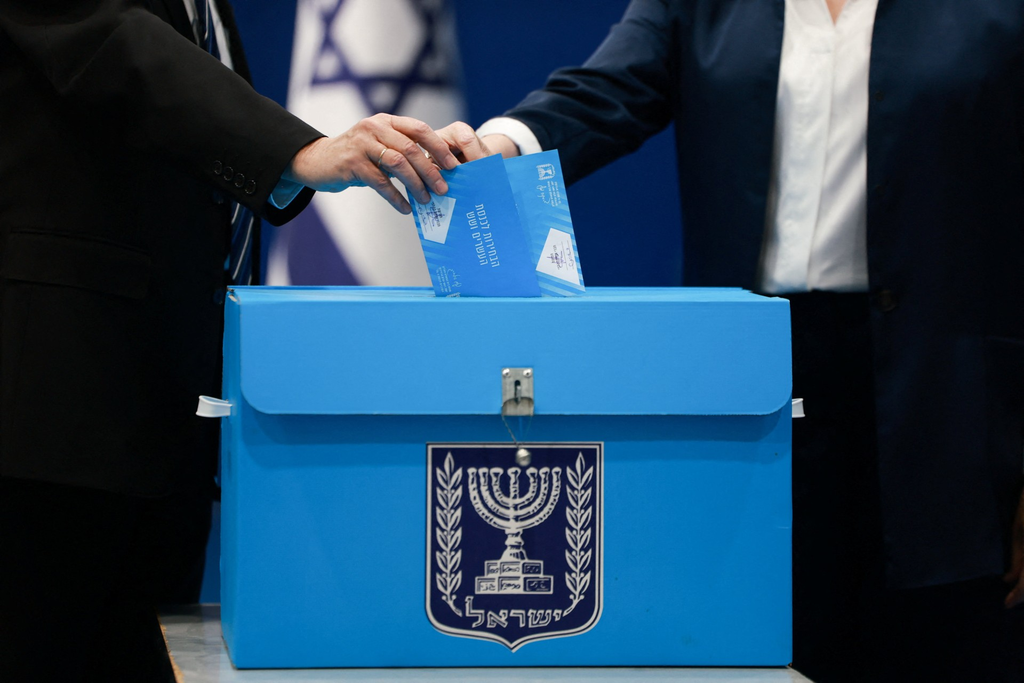
The exit polls dropped late Tuesday evening, and the political establishment in Jerusalem was left stunned. After months of bitter campaigning, military crises, and deepening social division, the biggest story of Israel’s legislative election did not come from the traditional ruling elite. It came from Arab towns and villages across northern Israel, the Triangle region, and the Negev desert.
Palestinian citizens of Israel turned out at the ballot box in numbers nobody saw coming. Initial voting data and exit surveys show voter turnout among the Arab community reaching near-unprecedented highs of around 70 to 80 percent in several key districts. That surge has pushed Arab political factions on track to capture between 16 and 18 seats in the 120-member Knesset.
This historic wave of votes has completely wrecked the conventional math of Israeli politics. Prime Minister Benjamin Netanyahu’s right-wing bloc has stalled well short of the 61-seat threshold needed to form a government on its own, resting around 55 seats. At the same time, the centrist opposition bloc led by Gadi Eisenkot has found itself locked out of an automatic majority.
Arab lawmakers are no longer sitting on the sidelines of Israeli politics. They have emerged as the defining power players of this entire race.
The Numbers That Shocked the Nation: What the Polls Actually Show
To understand why this outcome is causing panic in some quarters and street celebrations in others, you have to look at how Israel’s parliament works.
The $0 Secret To Launching Your Entire Online Empire
Why pay hundreds every month for separate software? Build funnels, send emails, and make sales with Systeme.io completely free.
Get Started For $0Free Forever • No Credit Card Needed • Beginner-Friendly
The Knesset has 120 total seats. To form a governing cabinet, a prime minister needs a working coalition of at least 61 seats. For years, right-wing leaders like Benjamin Netanyahu relied on a reliable coalition of nationalist and ultra-Orthodox parties to clear that bar.
This time, the math crumbled.
According to exit polls and early preliminary ballot tallies, the main Arab political alliance—led by the Joint List (featuring the Hadash and Ta’al factions)—surged to an astonishing 12 seats. Meanwhile, the United Arab List, known widely as Ra’am and led by Mansour Abbas, secured another 4 seats. Some projections have the combined Arab representation climbing as high as 18 seats once all absentee, military, and late ballots are tallied.
To put that achievement into context, Arab parties captured 15 seats during their high-water mark in March 2020. Back in 2022, Arab voter turnout plummeted below 54 percent amid widespread disillusionment and factional infighting. Many voters felt their ballots made no real difference in government decisions.
Tuesday shattered that apathy. Turnout across the country climbed past 77.7 percent, marking one of the highest overall voter turnouts since 1999. In Arab communities, the surge was even more pronounced. Towns like Nazareth, Umm al-Fahm, Rahat, and Majd al-Krum saw lines extending around street blocks late into the evening.
Why Palestinian Citizens of Israel Rushed to the Ballot Box
What drove millions of people who previously felt alienated by the system to stand in line for hours? The answer comes down to lived experience, mounting daily pressures, and political anger that finally reached a tipping point.
Frustration Reached an Absolute Boiling Point
Palestinian citizens of Israel make up roughly 20 percent of the country’s population. They hold Israeli citizenship, carry national identity cards, and have the right to vote. Yet, for decades, they have faced deep systemic disparities in municipal funding, education, housing development, and public safety.
Over the past two years, life on the ground became significantly harder:
- The Runaway Crime Epidemic: Violent crime and gang activity have devastated Arab towns, leaving hundreds dead while local police forces faced heavy criticism for inaction. Community members felt abandoned by state security services.
- Budget Freezes and Hostile Policies: Hardline cabinet ministers repeatedly delayed or blocked billions of shekels earmarked for basic infrastructure and municipal services in Arab localities.
- Threats to Civil Liberties: Activists, students, and workers faced heightened surveillance, workplace firings, and arrests simply for expressing solidarity with family members in Gaza and the West Bank.
Many voters felt that staying home would only hand absolute control to politicians who openly advocated for their marginalization.
Backlash Against Divisive Campaign Rhetoric
Fear-based campaigning has long been a staple of Israeli elections, but this cycle pushed things too far for many voters.
As early voting figures began leaking on Tuesday afternoon, Benjamin Netanyahu took to social media and grabbed megaphones in public shopping centers, shouting warnings that Arab voters were “flooding the polls” and “stealing the election.” The rhetoric was an explicit repeat of his infamous 2015 election-day broadcast where he warned that Arab citizens were “voting in droves.”
In the past, such scare tactics intimidated minority voters and whipped up the nationalist base. This time, the tactic completely backfired. Rather than staying away out of despair, Arab citizens saw the warnings as an open challenge. Community organizations, youth movements, and local influencers used social media to turn those panic broadcasts into a rallying cry, urging neighbors to pick up their IDs and cast their ballots before voting booths closed.
A Fresh Determination to Demand Real Power
For years, a heated debate divided the community: Should Arab citizens vote in national elections, or does participation simply legitimize a system that discriminates against them?
This election delivered a clear, resounding answer. People realized that boycotting parliament did not stop restrictive laws from passing; it only made them easier to enact. By turning out en masse, voters decided to flex their collective democratic muscle and force whoever sits in the Prime Minister’s office to reckon with their existence.
The anger and pushback against state policies have not been confined to Israel. Around the world, millions have taken to the streets to demand justice, equal rights, and an end to civilian suffering. When over 250,000 protesters flooded central London to speak out on the crisis, it reflected the same global sentiment that drove local voters to stand up and demand fundamental changes at home.
Send, Spend & Hold Money Worldwide Without Hidden Fees
Transfer money internationally at the real exchange rate and hold 40+ currencies in one account.
Open a Wise AccountMid-market rate • Fast transfers • 40+ currencies
The Key Faces Behind the Political Surge
The surge did not happen by accident. It was the product of disciplined grassroots organizing and clear political messaging from seasoned community leaders.
Ayman Odeh and Ahmad Tibi: The Veteran Coalition Builders
Leading the Joint List, lawmakers Ayman Odeh and Ahmad Tibi framed this election as an existential battle for civil survival. They focused on three core promises:
- Halting government neglect and forcing authorities to treat violent crime in Arab neighborhoods as a national emergency.
- Rebuilding broken coalitions between Jewish and Arab democratic forces to defend basic judicial protections and equal rights.
- Unapologetically representing Palestinian rights on the national and international stage.
Their message resonated strongly with working-class families and younger voters who wanted leaders willing to fight aggressively inside parliament without backing down.
Yousef Jabareen and Aida Touma-Sliman: Mobilizing the Base
Candidates like Yousef Jabareen and veteran lawmaker Aida Touma-Sliman played crucial roles on the ground. They spent weeks holding town halls in universities, community centers, and local cultural clubs, explaining how every single additional seat reduces the legislative power of far-right extremists.
Their organizing efforts bridged generational divides, bringing out both older residents and first-time voters who had previously tuned out of politics entirely.
Mansour Abbas: The Independent Pragmatist
Mansour Abbas took a different political gamble back in 2021 when his Ra’am party made history by joining Naftali Bennett and Yair Lapid’s governing coalition. Abbas argued that Arab politicians should be pragmatic dealmakers, willing to work with any government that signs checks for schools, clinics, and municipal budgets.
While that approach drew criticism from more nationalist factions, Ra’am’s strong showing of 4 seats proved that a sizable portion of Arab voters still values tangible, day-to-day material results. Together, these different political styles created an expansive umbrella that pulled almost every segment of the community to the voting booths.
How This Shatters the Coalition Math for Netanyahu and the Far Right
The immediate consequence of this Arab voter surge is total gridlock for Israel’s traditional right-wing bloc.
Benjamin Netanyahu’s Blocked Path to Power
Netanyahu’s entire re-election strategy rested on building an ironclad 61-seat majority with his traditional partners: Likud, the ultra-Orthodox parties (Shas and United Torah Judaism), and far-right nationalist factions.
The preliminary results have closed that door:
The $0 Secret To Launching Your Entire Online Empire
Why pay hundreds every month for separate software? Build funnels, send emails, and make sales with Systeme.io completely free.
Get Started For $0Free Forever • No Credit Card Needed • Beginner-Friendly
- Likud Stalls: Likud remains the single largest party at roughly 27 seats, but it cannot muster a majority on its own.
- Far-Right Setbacks: Itamar Ben-Gvir’s Otzma Yehudit party suffered clear losses, dropping seats as centrist and moderate voters pushed back against inflammatory leadership.
- The Arithmetic Defeat: With the Netanyahu-aligned bloc sitting between 54 and 56 seats, the incumbent prime minister cannot form a stable government without finding defectors from other camps—an almost impossible task given the deep personal rivalries in parliament.
As exit polls appeared on television screens, crowds of Arab youth gathered in Nazareth and northern towns, chanting slogans celebrating the retreat of far-right figures who had spent years targeting their communities.
The Opposition’s Complex Puzzle
The anti-Netanyahu camp, centered around Gadi Eisenkot’s Yashar! party, Naftali Bennett’s Beyachad, The Democrats, and Avigdor Lieberman’s Yisrael Beytenu, has roughly 49 to 51 seats.
They cannot reach 61 on their own either.
This dynamic creates a profound political dilemma for Israeli centrists. In the past, mainstream Zionist parties treated Arab parties as political untouchables, refusing to invite them into governing cabinets or formal agreements. But the sheer size of the Arab bloc now makes ignoring them mathematically impossible.
Eisenkot and his allies face a defining choice:
- Reach an agreement or confidence-and-supply pact with Arab parties in exchange for massive funding for Arab towns, police reform, and civil equality.
- Attempt a broad national-unity government with moderate members of Likud to bypass the Arab bloc entirely.
- Fail to form a government, plunging the country into its sixth general election in less than a decade.
The Broader International Picture: Shifting Geopolitics in the Middle East
This domestic political earthquake is not happening in a vacuum. It unfolds against an international backdrop defined by massive geopolitical friction, military conflict, and intense global scrutiny.
Across the globe, governments and legal institutions have pushed back against aggressive military campaigns and controversial policies. In the United States, significant legal and political pushback has emerged against hardline foreign policy decisions. Federal courts stepped in when a controversial plan targeted international students over criticism of Israel, proving that public and legal sentiment is shifting dramatically.
At the same time, diplomatic battles on Capitol Hill have grown increasingly bitter. High-ranking American lawmakers have repeatedly clashed over unconditional support for overseas military operations, leading to major showdowns like efforts by top Democrats to block massive bomb sales to Israel.
Public protests have mirrored these legislative battles. When Israeli leaders addressed international summits, they were met with fierce public opposition, including when massive street demonstrations shut down New York City outside the United Nations.
Furthermore, shifting regional power dynamics—including growing diplomatic maneuvers by China across the Middle East—mean that any new Israeli government will operate in a far less forgiving global environment. A government that depends on the consent or passive support of Arab lawmakers would face intense pressure to moderate its military policies, prioritize civilian protection, and reopen genuine diplomatic channels.
What Changes on the Ground for Everyday Citizens?
Beyond high-stakes coalition negotiations and international headlines, what does this historic vote actually mean for regular families living in Arab and Jewish communities across Israel?
Real Investment in Public Safety and Policing
The top priority for Arab voters in this election was personal safety. The unchecked spread of organized crime, illegal firearms, and extortion rings has made ordinary life terrifying in many towns.
With 16 to 18 seats in the Knesset, Arab lawmakers have the political leverage to demand:
- Independent oversight of police departments operating in Arab districts.
- Targeted federal funding for community-led crime prevention and youth employment programs.
- The immediate removal of extremist political appointees from national security leadership.
If any coalition hopes to pass an annual budget or survive a no-confidence vote, addressing public safety in these neglected regions will have to be at the very top of the legislative agenda.
Equal Funding for Municipalities and Schools
For decades, Arab municipalities have operated on budgets that pale in comparison to neighboring Jewish towns. Basic public infrastructure—such as paved roads, sewage processing, public parks, and modern school facilities—has lagged behind.
A powerful Arab parliamentary bloc will be positioned to demand the immediate release of frozen multi-year development funds. Securing equal state subsidies for local clinics, high-tech training centers, and public transportation will be the non-negotiable price for legislative cooperation.
Halting Discriminatory Legislation
In recent parliamentary terms, far-right lawmakers pushed aggressive bills aimed at stripping residency rights, restricting housing access, and curtailing Arabic language use in official spaces.
With the far-right losing its parliamentary majority and Arab representation surging, these controversial proposals face a dead end. Instead of playing defense against hostile laws, Arab lawmakers can now introduce bills promoting equal civil rights, fair zoning regulations, and legal protections against workplace discrimination.
Frequently Asked Questions (FAQ)
How many seats did Arab parties win in the Israel election?
Preliminary results and exit polls show Arab parties winning between 16 and 18 seats in the 120-member Knesset. The Joint List (Hadash-Ta’al) secured an estimated 12 seats, while the United Arab List (Ra’am) claimed approximately 4 seats, marking one of the strongest collective showings in Israeli electoral history.
What caused the historic voter turnout among Arab citizens?
The surge was driven by deep frustration over rising violent crime in Arab towns, years of government budget neglect, and anger at divisive campaign rhetoric from right-wing ministers. Voters realized that participating in the election was the most direct way to push back against far-right policies and protect their basic civil rights.
Can Arab parties join an Israeli governing coalition?
While Arab parties have rarely joined formal governing cabinets—with Ra’am’s participation in the 2021 coalition being the historic exception—they can provide crucial outside support. By voting in favor of a coalition on key issues or abstaining during no-confidence motions, they can enable a centrist government to function without formally holding ministerial positions.
Why did Benjamin Netanyahu fail to secure a majority?
Netanyahu’s right-wing bloc fell short because of losses suffered by his far-right allies, combined with record-high turnout among minority and opposition voters. His alliance stalled between 54 and 56 seats, leaving him well below the 61 seats required to form a majority government.
Who are the primary Arab political factions in the Knesset?
There are two major political forces representing Arab citizens: the Joint List (an alliance of Hadash and Ta’al, led by Ayman Odeh and Ahmad Tibi), which focuses on civil equality, secular democracy, and Palestinian national rights; and the United Arab List (Ra’am, led by Mansour Abbas), a pragmatic Islamist party focused on municipal funding and socio-economic improvements.
Will this election result lead to another immediate election?
Because neither the right-wing bloc nor the centrist opposition holds an easy path to 61 seats, extensive coalition talks will take place over several weeks. If party leaders refuse to cooperate across ideological lines or reach an understanding with Arab factions, Israel could be forced into another snap general election.
The record-breaking performance of Arab parties in this election marks a watershed moment in Israeli political history. For years, the political establishment treated the Arab electorate as a quiet, predictable minority that could be easily bypassed in backroom coalition deals. By showing up at the polls in historic numbers, Arab citizens have shattered that assumption and redrawn the political map.
Whether the country ends up with a fragile centrist government, an uneasy compromise coalition, or another round of voting, one fundamental truth remains clear: the path to governing Israel now runs straight through the millions of Arab citizens who demanded that their voices be heard.
