
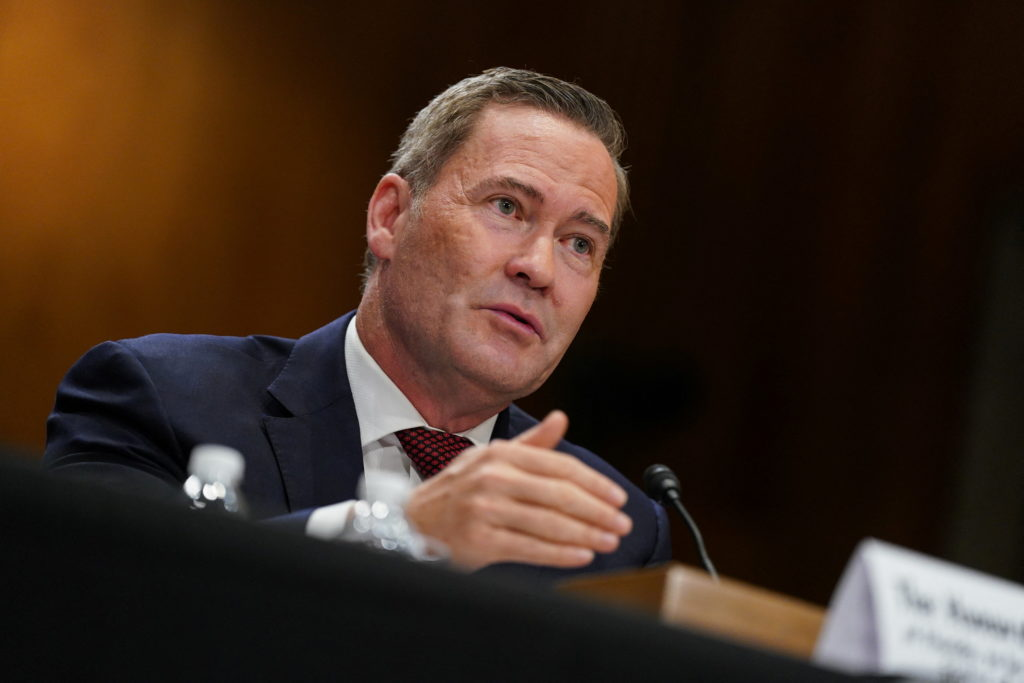
The floor of the United Nations General Assembly usually features polite speeches, carefully chosen words, and quiet diplomatic nods. That quiet atmosphere vanished completely when United States Ambassador to the UN Mike Waltz and Cuban Foreign Minister Bruno Rodríguez Parrilla engaged in an explosive screaming match right in front of world leaders.
The dramatic standoff took place in New York during the opening debate on the long-standing United States trade embargo against Cuba. Things quickly spiraled out of control when Rodríguez stormed out of his seat and charged toward the speaker podium where Waltz was addressing delegates. What followed was a wild scene of pointing fingers, desk-pounding, shouts echoing through the hall, and frantic attempts by UN leadership to prevent delegates from physically clashing on camera.
Before UN officials could restore order, General Assembly President Khalilur Rahman had to step in and suspend the entire session. Here is the full breakdown of why this fight started, what the two diplomats shouted at each other, and what this explosive moment means for relations between Washington and Havana.
The Boiling Point at the Podium: How the Shouting Match Started
The debate began on Tuesday, October 27, 2026, ahead of the annual vote demanding an end to the American trade embargo on Cuba. The resolution has been brought to the UN floor every single year since 1992. However, the tone inside the hall was far sharper than in previous years.
Waltz took the microphone to deliver the official position of the United States. Instead of reading standard diplomatic text, he launched a fierce attack against the leadership in Havana. Waltz accused the Cuban government of running forced labor schemes and living lives of luxury while everyday citizens on the island deal with chronic blackouts, empty shelves, and food shortages.
The $0 Secret To Launching Your Entire Online Empire
Why pay hundreds every month for separate software? Build funnels, send emails, and make sales with Systeme.io completely free.
Get Started For $0Free Forever • No Credit Card Needed • Beginner-Friendly
To drive his argument home, Waltz held up a printed photograph of revolutionary figure Che Guevara wearing what Waltz identified as a luxury Rolex watch valued around $40,000.
Waltz pointed out that the ruling elite enjoys mansions, private jets, and luxury timepieces while regular families in Cuba sit in the dark without fuel or electricity. He also spoke out about human rights abuses under Fidel Castro, accusing the regime of throwing Christians, gay individuals, Afro-Cubans, and political dissidents into forced labor camps over past decades.
Members of the Cuban delegation immediately reacted with fury. Delegations from Havana started banging their fists on their desks in unison, creating a loud drumming noise across the Assembly hall to drown out the American ambassador’s microphone.
“Back Up! This Is America”: The Moment Rodríguez Approached the Stage
Foreign Minister Bruno Rodríguez Parrilla decided desk-thumping was not enough. Raising a procedural point of order under General Assembly Rule 71, Rodríguez stood up, walked down the center aisle, and headed directly toward the main rostrum where Waltz was speaking.
Approaching the podium, Rodríguez began shouting directly at Waltz, accusing him of lying blatantly and offending the dignity of the Cuban people.
Waltz refused to step aside. Leaning into his microphone, Waltz pointed back at Rodríguez and warned him to stop approaching.
“You understand who you’re dealing with? This is America. Back up,” Waltz yelled across the podium.
As Rodríguez continued calling Waltz a liar, Waltz turned to General Assembly President Khalilur Rahman, demanding that security enforce standard rules of decorum.
“Mr. President, this individual needs to back away from this podium,” Waltz demanded. “He is not going to intimidate me in the United States of America like he tries to intimidate political prisoners. I am the representative of the United States of America. Back up! Back away! This isn’t Havana.”
Waltz looked directly at the Cuban minister and added: “This is America, my friend. This is the United Nations. This is not your communist dictatorship. You cannot silence me.”
The confrontation grew so loud and chaotic that Rahman had to threaten delegates with complete expulsion before officially slamming his gavel and suspending the session to separate both sides.
Phone Grabs and Chaos in the Aisles
The drama did not stay confined to the podium. While Waltz and Rodríguez traded accusations at the front of the hall, tensions boiled over among staff members sitting nearby.
Delegates and diplomats pulled out smartphones to capture video of the confrontation. During the commotion, a member of the Cuban diplomatic team confronted Waltz’s official spokesperson, J.P. Freire.
According to video footage obtained by reporters, a Cuban official reportedly lunged toward Freire in an attempt to grab his iPhone while he filmed Rodríguez advancing toward the stage. UN security personnel had to push between staff members to keep the situation from turning into a physical brawl in the aisles.
Waltz later shared video clips of the scene directly to his official social media pages, stating that while the Cuban government might be used to silencing protesters at home, foreign delegates cannot bully American representatives in New York.
Send, Spend & Hold Money Worldwide Without Hidden Fees
Transfer money internationally at the real exchange rate and hold 40+ currencies in one account.
Open a Wise AccountMid-market rate • Fast transfers • 40+ currencies
The Debate Behind the Anger: The 64-Year Embargo
Beneath the shouting lies an intense, decades-long policy dispute. The United States first slapped economic sanctions on Cuba in the early 1960s after Fidel Castro seized power and nationalized American-owned properties and businesses.
For 34 years in a row, Cuba has brought an annual resolution before the UN General Assembly declaring the embargo illegal and urging Washington to lift it.
Havana’s Position: A Blockade That Cripples Everyday Life
Cuban officials argue that American sanctions are not just trade restrictions, but an outright economic war and energy blockade. Havana reports that the embargo has caused more than $8 billion in economic losses over the past year alone.
Cuba has been dealing with one of its worst economic and energy crises in modern memory:
- The national power grid has suffered multiple major collapses, plunging millions of people into complete darkness for days at a time.
- Tourism—the main source of foreign currency for the island—has dropped steeply, with visitors down nearly 60 percent.
- Severe shortages of medicine, clean drinking water, gasoline, and basic groceries have triggered widespread public protests and prompted historic waves of migration off the island.
Rodríguez and Cuban President Miguel Díaz-Canel have repeatedly condemned Washington’s policies, calling the economic pressure an act of collective punishment aimed at overthrowing their government. Similar international disputes over trade and energy pressure have flared in other parts of the hemisphere, particularly with neighboring regimes like Venezuela.
Washington’s Position: Self-Inflicted Ruin and Internal Corruption
The United States government sees the crisis completely differently. Ambassador Waltz explicitly rejected the idea that Washington is responsible for the collapse of Cuba’s basic infrastructure.
During his floor speech, Waltz argued that there is no true military blockade around the island. He noted that American businesses exported over $876 million worth of agricultural goods, medical supplies, and food to Cuba during the first eight months of 2026 alone. He pointed out that Cuba trades openly with nations across the globe, including China, Russia, Mexico, Canada, Spain, and member states of the European Union.
According to Washington, Cuba’s financial troubles stem from gross economic mismanagement, corruption within state-run holding companies like GAESA (a military-run conglomerate controlling ports, hotels, and retail), and strict socialist price controls that discourage domestic business production.
Deepening Hemispheric Friction and Shifting Global Alliances
This blowup at the UN is not an isolated event. It reflects a much harder line taken by Washington across Latin America and the Caribbean.
In recent months, the administration has increased pressure against authoritarian governments across the region, imposing strict financial restrictions and cracking down on state-owned oil movements. The White House has consistently targeted foreign state assets while dealing with political crackdowns in Latin America, mirroring ongoing international actions against ousted leaders facing criminal charges.
The $0 Secret To Launching Your Entire Online Empire
Why pay hundreds every month for separate software? Build funnels, send emails, and make sales with Systeme.io completely free.
Get Started For $0Free Forever • No Credit Card Needed • Beginner-Friendly
For decades, the UN vote against the American embargo was almost entirely one-sided. Every year, over 180 countries routinely voted in favor of Cuba’s resolution, leaving the United States and Israel almost completely alone in opposition.
However, American diplomats have launched aggressive campaigns to peel countries away from Havana’s coalition. In recent voting sessions, countries like Argentina, Ukraine, Hungary, North Macedonia, and Paraguay shifted their positions, breaking traditional consensus and voting alongside the United States.
Despite those shifting alliances, the General Assembly resolution remains non-binding. Even if nearly every nation in the world votes against the embargo, only the United States Congress possesses the constitutional authority to officially repeal the laws that established it.
Frequently Asked Questions (FAQs)
Why did Mike Waltz and Bruno Rodríguez clash at the UN?
The two officials clashed during the UN General Assembly debate on the United States economic embargo against Cuba. Waltz accused the Cuban regime of widespread corruption, human rights abuses, and luxury spending while its population suffers. Rodríguez interrupted the speech, walked down to the podium, and called Waltz a liar, leading to an intense exchange of shouting.
Can the United Nations force the United States to end the embargo?
No. General Assembly resolutions reflect the opinion of the international community, but they are non-binding. Under United States law, the economic embargo against Cuba was codified into federal statutes like the Helms-Burton Act. Only the United States Congress can formally repeal or end the embargo.
Did the UN meeting get canceled because of the fight?
General Assembly President Khalilur Rahman temporarily suspended the session to break up the shouting match and prevent physical conflict. After order was restored, the debate resumed so that member states could register their official remarks before the scheduled vote.
What is the current economic situation in Cuba?
Cuba is experiencing one of its most severe economic crises in decades. The island faces prolonged power outages due to aging power plants and fuel shortages, along with severe deficits in basic medicines and food supplies. Tourism numbers have plummeted, prompting mass emigration.
The shouting match between Mike Waltz and Bruno Rodríguez Parrilla marks one of the most hostile direct exchanges inside the United Nations in years. As Havana struggles through blackouts and Washington doubles down on sanctions, the scene at the podium shows that diplomatic relations between the two neighbors are more fractured than ever.
