
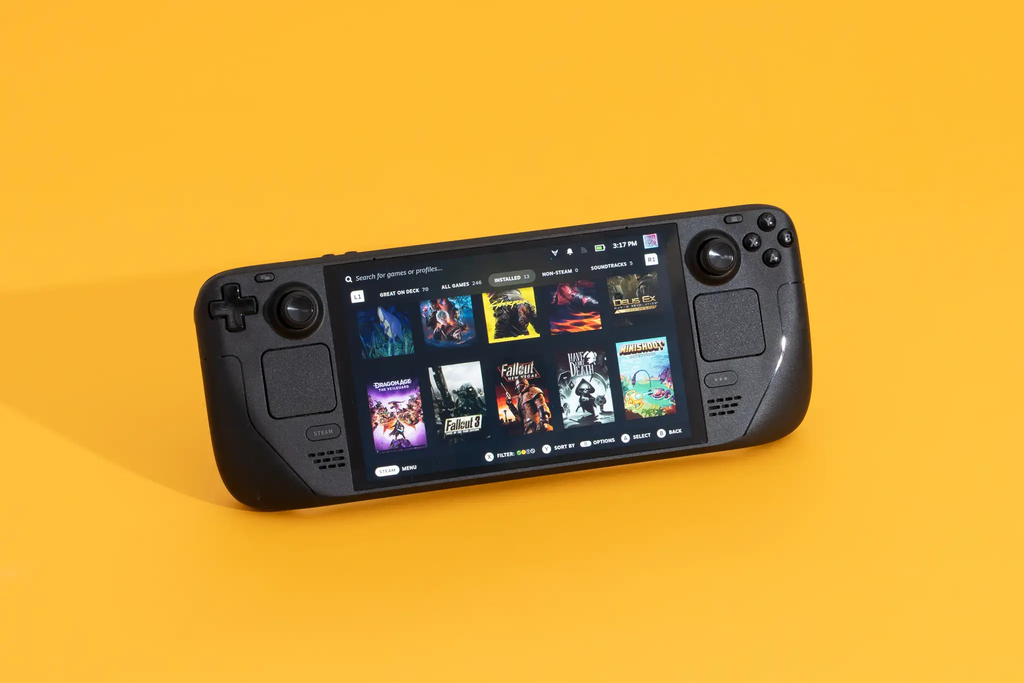
If you want to buy a brand-new gaming console without emptying your savings, the Nintendo Switch Lite remains the cheapest new gaming console available at retail, selling brand-new for $199.
For home setups connected directly to a television, the disc-free Xbox Series S holds the crown as the cheapest new full-sized, current-generation home console, commonly priced at $299.
Finding genuine bargains in gaming hardware has become tricky. Flagship hardware like the PlayStation 5 Pro commands eye-watering price tags upwards of $700, while the Nintendo Switch 2 enters the scene near the $450 to $499 mark. Between inflation and component price shifts across the electronics industry, picking up a brand-new machine demands a close look at raw price tags, hidden setup expenses, and overall game library values.
Here is an honest, straightforward breakdown of the cheapest new gaming consoles, how much they actually cost to run, and which one fits your daily downtime best.
1. Nintendo Switch Lite: The Unrivaled $199 Budget Champ
When looking strictly at buying a brand-new system fresh in its factory box, nothing from the major platform creators undercuts the Nintendo Switch Lite. Originally released as a pure portable companion to the hybrid Nintendo Switch, it remains on retail shelves as Nintendo’s dedicated entry-level machine.
The $0 Secret To Launching Your Entire Online Empire
Why pay hundreds every month for separate software? Build funnels, send emails, and make sales with Systeme.io completely free.
Get Started For $0Free Forever • No Credit Card Needed • Beginner-Friendly
What You Get for $199
The Switch Lite delivers a compact, dedicated handheld experience. It features a bright 5.5-inch 720p LCD screen, integrated directional buttons, and solid battery life that ranges between three to seven hours depending on graphical intensity.
Unlike its larger sibling, the Switch Lite does not detach its controllers, nor can it connect to a TV. It is strictly a grab-and-go device designed for solo play in your hands, on the commute, or lounging around the house.
The Real Long-Term Value
The biggest upside to the Switch Lite is its access to the massive Nintendo Switch catalog. You can play thousands of titles, ranging from indie classics to monumental adventures like The Legend of Zelda: Breath of the Wild and Super Mario Odyssey.
Even as gamers look ahead to the next generation and prepare for new releases on Nintendo Switch 2, the original Switch library offers unmatched value. Most physical cartridges and digital purchases are heavily discounted, and free-to-play powerhouses like Fortnite, Rocket League, and Fall Guys run without requiring paid online subscriptions.
Hidden Expenses to Consider
The primary hidden cost of the Switch Lite is internal storage. Out of the box, the system packs just 32GB of built-in memory, a portion of which is occupied by the operating system. If you plan to download more than two or three mid-sized games, you will need to spend around $15 to $25 on a 128GB or 256GB microSD card.
2. Xbox Series S: The Cheapest New TV Console ($299)
If handheld screens are not your preference and you want a proper console that plugs into your living room TV, the disc-free Xbox Series S is the undisputed king of budget gaming.
Selling brand-new at retail for $299 for the 512GB model—and often found bundled with extras during promotional windows—the Series S costs hundreds less than the PlayStation 5 or Xbox Series X.
Modern Technology on a Realistic Budget
Despite its small, toaster-like footprint, the Xbox Series S shares the exact same high-speed internal architecture and custom SSD speed as the much larger Xbox Series X. That means you get:
- Near-instant game load times.
- Quick Resume, allowing you to suspend and jump between several active games in seconds.
- Support for smooth framerates up to 120 FPS on compatible displays.
- Access to all modern blockbuster releases.
The trade-off comes down to visual fidelity. While the flagship consoles target native 4K resolution, the Series S targets resolutions between 1080p and 1440p, using internal upscaling to output cleanly to modern 4K panels. For casual gamers, families, and everyday TV displays, the graphical difference is well worth the $200 saving.
The Game Pass Synergy
The main financial secret behind the Series S is its compatibility with Microsoft’s digital subscription library. Pairing an all-digital console with Xbox Game Pass allows access to hundreds of rotated games on day one without having to drop $70 on individual retail titles. Even as Xbox cloud streaming and platform business strategies shift, the console remains a practical hub for everyday players.
What to Watch Out For
Because the Series S is an all-digital system, there is no disc drive. You cannot play second-hand discs borrowed from friends or bought at clearance sales. Storage can also run tight quickly. The basic 512GB model leaves roughly 364GB of usable space for software. While newer 1TB black models exist for around $349, expanding your SSD storage later with proprietary expansion cards can run an additional $80 to $130.
3. Alternative Budget Contenders: Handhelds, Retro Systems, and Cloud Devices
While the Switch Lite and Xbox Series S dominate the traditional console market, several alternative new platforms target wallet-conscious players.
Classic Hybrid Nintendo Switch ($299)
If you love the Nintendo ecosystem but demand television connectivity and detachable controllers for local multiplayer party sessions, the standard Nintendo Switch still sells brand-new for roughly $230 to $299. It bridges the gap between pure handheld gaming and household entertainment.
Nex Playground ($180 – $200)
For parents looking for an active, living-room console specifically for younger kids, the Nex Playground has emerged as a viral, family-friendly device. Powered by a small AI camera that sits on your media console, it requires no handheld controllers and translates natural body jumps and arm movements into screen action. It sells new for less than $200, though it relies on a recurring software subscription pass for its expanding game library.
Retro Micro-Consoles and Arcade Units ($40 – $120)
For retro lovers who crave classics from the 80s, 90s, and early 2000s, dedicated hardware manufacturers like Anbernic, Miyoo, and Blaze Entertainment (makers of the Evercade series) produce brand-new, officially licensed portable handhelds and desktop mini-consoles. Devices like the Evercade Alpha or Super Pocket sell new between $60 and $130, playing physical cartridges with built-in tactile buttons.
Send, Spend & Hold Money Worldwide Without Hidden Fees
Transfer money internationally at the real exchange rate and hold 40+ currencies in one account.
Open a Wise AccountMid-market rate • Fast transfers • 40+ currencies
Cloud Streaming Hardware ($50 – $100)
If you already possess a reliable high-speed home internet connection, you may not need traditional console hardware at all. With services like Xbox Cloud Gaming, GeForce NOW, and browser-based gaming initiatives, you can connect a standard Bluetooth controller to a low-cost streaming stick or smart television. However, ensuring you have the best internet speed and stable low ping for online gaming is essential before relying entirely on cloud play.
Upfront Cost vs. True Cost of Ownership
Looking strictly at retail stickers tells only half the story. Hardware manufacturers frequently sell base machines at or near cost, making up their profits on digital software, subscription charges, and physical add-ons.
Here is what the real financial commitment looks like once all standard requirements are factored in:
1. Game Subscriptions vs. Individual Purchases
On a traditional console like the PlayStation 5, new blockbuster games launch at $70. If you buy three major titles within your first few months, your software spending easily matches the price of an entry-level console.
Opting for an Xbox Series S paired with Game Pass, or a Switch Lite relying on deep seasonal indie digital sales, allows you to stretch a limited entertainment budget across hundreds of playing hours. Meanwhile, discussions around legislation protecting digital game ownership highlight how the broader industry continues to balance digital rentals against permanent collections.
2. The Physical Media Dilemma
Digital-only hardware locks your purchases entirely to platform-controlled digital stores. When Sony and Microsoft push toward disc-free ecosystems—a topic heavily discussed amid speculation over future PlayStation disc shifts—you lose the ability to buy cheap used discs, trade in physical games, or borrow titles from local libraries. If you live in an area with an active second-hand disc market, a disc-capable console might actually save money over three or four years despite costing more upfront.
3. Online Multiplayer Access
Playing paid games online with friends requires an active recurring subscription:
- Nintendo Switch Online: Approximately $20 per year for standard individual access.
- Xbox Game Pass Core: Roughly $10 per month (or $60 to $75 annually).
- PlayStation Plus Essential: Approximately $80 per year.
Free-to-play multiplayer titles like Call of Duty: Warzone, Roblox, and Fortnite generally bypass these paywalls on both Xbox and Nintendo systems, making them great choices for budget players who want zero recurring monthly overhead.
Brand-New vs. Second-Hand: Is Buying Used Worth the Risk?
Because current flagship machines remain expensive, many bargain hunters look at the pre-owned market. Platforms like Swappa, eBay, and refurbished outlets regularly offer last-generation machines like the PlayStation 4 or Xbox One for anywhere between $110 and $180.
While buying used can lower the financial barrier even further, buying a brand-new console provides distinct safeguards:
The $0 Secret To Launching Your Entire Online Empire
Why pay hundreds every month for separate software? Build funnels, send emails, and make sales with Systeme.io completely free.
Get Started For $0Free Forever • No Credit Card Needed • Beginner-Friendly
- Manufacturer Warranty: Every brand-new retail console comes backed by an official 12-month manufacturer replacement warranty against motherboard defects and power supply failures.
- Controller Health: Pre-owned controllers often suffer from stick drift, worn analog rubber, or weakened internal rechargeable batteries. Replacing a worn controller immediately adds $50 to $70 to your budget.
- Software Longevity: New generation consoles receive developer support, active patches, and modern security firmware for many years to come, whereas older hardware phases out gradually.
If total reliability, fresh out-of-the-box battery life, and complete software support matter to you, spending the minor difference for a new Switch Lite or Series S is typically the smarter financial decision.
Frequently Asked Questions
What is the cheapest new gaming console you can buy in 2026?
The Nintendo Switch Lite is the cheapest new gaming console available from major manufacturers, retailing at $199 brand-new.
What is the cheapest new home console that connects to a TV?
The Xbox Series S is the cheapest new home console that connects to a TV, priced at $299 for the 512GB all-digital model.
Can the Nintendo Switch Lite play all Nintendo Switch games?
The Switch Lite plays any game that supports handheld mode. Titles that strictly require detached Joy-Con motion controls (such as 1-2-Switch or Ring Fit Adventure) require buying wireless Joy-Con controllers separately.
Does the Xbox Series S support physical game discs?
No. The Xbox Series S is completely digital and has no disc drive. All software must be downloaded directly from the Xbox Store or accessed through subscription services.
Are cheap retro consoles legal to buy new?
Officially branded retro systems from licensed makers (like Evercade or authorized retro hardware) are legal and use officially licensed software cartridges. Low-cost unbranded units pre-loaded with thousands of copyrighted games often operate in legal gray zones and vary wildly in build quality.
Finding great video games does not require taking on debt or chasing expensive luxury hardware. By grabbing a $199 Nintendo Switch Lite for portable entertainment or picking up an all-digital $299 Xbox Series S for high-speed living room TV play, you can enjoy thousands of world-class games while keeping your hard-earned money right where it belongs.
