
Two of Silicon Valley’s most ambitious tech entrepreneurs have teamed up to build supercharged canines for the battlefield.
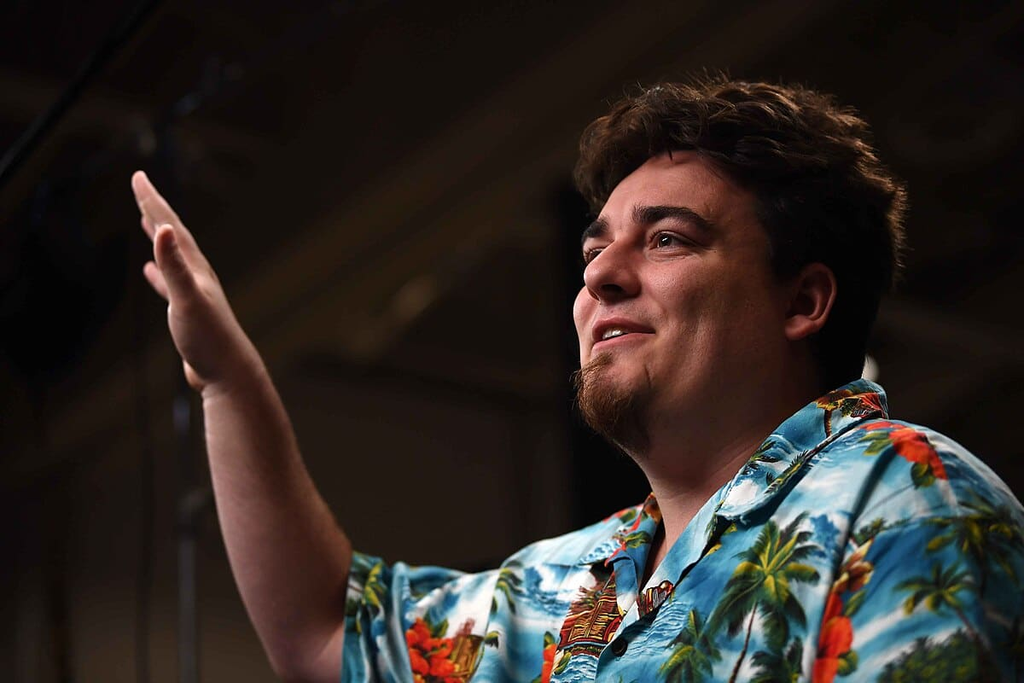
Ben Lamm, the tech entrepreneur best known as the co-founder and CEO of de-extinction company Colossal Biosciences, has officially partnered with Palmer Luckey, the defense tech magnate behind Anduril Industries, to launch a controversial new company called Warhound.
Warhound has burst out of stealth with a massive $200 million seed round and an eye-popping $1.2 billion valuation. Its core mission? To clone and genetically edit working dogs specifically designed for military operations, domestic law enforcement, and search-and-rescue teams.
The concept sounds straight out of a speculative sci-fi thriller, but the money, science, and strategic defense backing are entirely real.
From Woolly Mammoths to Engineered Canines
Until now, Ben Lamm was making global headlines for trying to bring prehistoric icons back to life. Colossal Biosciences has spent the last few years raising hundreds of millions of dollars to resurrect extinct creatures like the woolly mammoth, the thylacine (Tasmanian tiger), and the dodo. While many assumed that advanced gene-editing platform would stay firmly in the realm of conservation and paleontology, Warhound shows how fast deep-tech genetic tools can pivot into national defense.
The $0 Secret To Launching Your Entire Online Empire
Why pay hundreds every month for separate software? Build funnels, send emails, and make sales with Systeme.io completely free.
Get Started For $0Free Forever • No Credit Card Needed • Beginner-Friendly
Teaming up with Palmer Luckey—who originally created the Oculus Rift before revolutionizing autonomous military hardware with Anduril—marks a powerful union between genetic engineering and high-tech defense hardware.
Rather than deploying off-the-shelf civilian breeds, Warhound intends to treat military dogs as an integrated, engineered capability. Colossal brings its genomics and cloning infrastructure to the table, while Anduril plans to design specialized protective body armor, heads-up display goggles, sensor suites, and tactical communications gear tailored directly to the dogs’ biology.
The Military Problem Warhound Wants to Solve
Why build genetically engineered dogs in the first place? According to the founders, America’s working-dog pipeline is severely broken.
Today, military working dogs (MWDs) perform life-and-death missions that machines, drones, and humans still cannot match. They detect hidden improvised explosive devices (IEDs), track hostile targets over rugged terrain, search collapsed buildings after disasters, and protect perimeter checkpoints.
However, sourcing and training these animals is an inefficient and risky process:
- Over-reliance on foreign breeders: More than 80% of all working dogs used by the United States military and federal law enforcement agencies are purchased from civilian breeders across Europe.
- Intense global competition: The United States is now actively competing with foreign rivals to acquire top-tier breeding stock from a shrinking global pool.
- Devastating failure rates: Raising and training a military service dog takes upwards of two to three years and costs tens of thousands of dollars. Despite this investment, fewer than half of the purchased dogs actually pass testing and qualify for active field service. Many wash out due to hidden genetic health conditions, behavioral anxiety, or physical wear and tear.
- Genetic health flaws: High-drive working breeds like Belgian Malinois and German Shepherds are notoriously prone to debilitating hereditary ailments, including hip dysplasia, degenerative myelopathy, early vision loss, and chronic joint degeneration.
Warhound argues that traditional dog breeding is an unpredictable lottery. By introducing cloning and targeted genetic editing, the company aims to produce litters with predictable health profiles, structural stamina, and superior sensory capabilities right from birth.
How the Science of “Warhound” Actually Works
Warhound does not claim it is creating mutant monsters. Instead, the company frames its technology around optimizing the biology of the finest working breeds alive today.
1. Cloning Proven Performers
The first phase of the startup’s program focuses on somatic cell cloning. Instead of breeding two dogs and hoping their offspring inherit their parents’ best traits, Warhound plans to take tissue samples from proven, battle-tested military dogs that have already demonstrated elite operational capabilities and exceptional physical resilience.
By cloning these top performers, the company hopes to create a uniform genetic foundation with an inherently higher training success rate.
2. Targeted Gene Editing
Beyond basic cloning, the company intends to apply modern CRISPR gene-editing tools. The initial focus will be eliminating the hereditary health defects that regularly cut working dogs’ careers short, such as hip and elbow dysplasia.
Down the road, geneticists could explore optimizations that enhance olfactory receptor density (sharpening scent detection for explosives and narcotics), improve cardiovascular endurance, and increase heat resistance in extreme desert environments.
3. High-Tech Tactical Integration
A dog bred by Warhound will not head into the field naked. Anduril’s engineering teams are designing bespoke tactical vests that feature integrated sensor arrays, secure data feeds, thermal monitoring, and real-time biometric tracking. This equipment will allow handlers to track an animal’s vitals, stress levels, and field surroundings from miles away.
The startup anticipates having its first cloned puppies born in early 2027, with the earliest cohorts entering testing and operational service within two years after birth.
Big Defense Backing and the “Canine-as-a-Service” Model
Building high-tech defense hardware requires substantial capital, and Warhound is backed by some of the most influential players in Silicon Valley and the intelligence community.
The startup’s $200 million seed round included participation from venture giant Sequoia Capital as well as In-Q-Tel, the strategic investment arm of the CIA and the broader United States intelligence community.
Send, Spend & Hold Money Worldwide Without Hidden Fees
Transfer money internationally at the real exchange rate and hold 40+ currencies in one account.
Open a Wise AccountMid-market rate • Fast transfers • 40+ currencies
Warhound is exploring multiple distribution pathways. While the company intends to provide individual animals to the Department of Defense, local police departments, and emergency rescue agencies, it is also considering a Canine-as-a-Service subscription model. Under this framework, government agencies could contract a guaranteed, ongoing supply of pre-screened, healthy, fully trained, and medically monitored tactical dogs without having to manage high kennel overhead or absorption costs for dogs that wash out during preliminary training.
Ethical Controversies: Playing God with Man’s Best Friend?
While defense analysts view Warhound as an overdue modernization of military supply chains, animal welfare advocates and bioethicists are sounding alarms.
Dogs hold a unique emotional place in human culture. They are companions, family members, and service partners. Modifying their genetic code specifically to enhance their performance in violent combat situations strikes many critics as deeply troubling.
Animal Welfare Concerns
Cloning mammals remains a technically demanding process that frequently involves high rates of embryonic loss, birth defects, and surrogate complications. Critics question whether breeding dogs engineered for battlefield deployment prioritizes animal well-being or turns living creatures into consumable military commodities.
The Nature vs. Nurture Dilemma
Veteran military canine handlers caution that genetics is only one part of what makes a great working dog. A dog’s drive, focus, courage, temperament, and bond with its handler are shaped largely by early socialization, environment, and persistent training. A clone may carry the exact DNA of a legendary bomb-sniffing dog, but it will not inherit its life experiences or working temperament out of the womb.
Retirement and Care
What happens to cloned dogs that fail their training or are medically retired after frontline deployments? Warhound has stated that it is collaborating with the American Humane Society to ensure its training protocols meet strict animal welfare standards and that retired service animals will be placed in safe, loving homes through structured adoption and reunification initiatives.
Even so, independent regulatory oversight for genetically engineered military animals remains uncharted territory.
Connect With Our Growing Community
The collision of biotechnology, advanced computing, and national defense is moving faster than ever. Want to share your thoughts on whether genetically engineered working dogs cross an ethical line? Have a trending tip or an insider story we should investigate?
Get directly in touch with our editorial team through our Contact Page.
You can also join the conversation and track live discussions with our team across our social profiles:
The $0 Secret To Launching Your Entire Online Empire
Why pay hundreds every month for separate software? Build funnels, send emails, and make sales with Systeme.io completely free.
Get Started For $0Free Forever • No Credit Card Needed • Beginner-Friendly
- Follow real-time breaking alerts and debates on X (formerly Twitter).
- Check out daily trending highlights and discussions on Instagram.
- Connect with the broader community and join interactive discussions on Facebook.
Frequently Asked Questions
What is Warhound?
Warhound is a biotechnology and defense startup founded by Ben Lamm and Palmer Luckey. The company raised $200 million to clone and genetically optimize high-performance working dogs for military, police, and emergency response applications.
Who is Ben Lamm?
Ben Lamm is a serial technology entrepreneur and the co-founder and CEO of Colossal Biosciences, a prominent genetic engineering company currently working on de-extinction projects for species like the woolly mammoth.
What breeds of dogs will Warhound focus on?
The company is primarily focusing on traditional high-performance military working breeds, specifically the Belgian Malinois and the German Shepherd.
Why doesn’t the military simply breed dogs the traditional way?
Traditional breeding produces inconsistent health and behavioral outcomes. Currently, more than 80% of U.S. working dogs are sourced from Europe, and fewer than half pass the necessary service exams, often due to preventable genetic issues like hip dysplasia and arthritis.
Are these dogs robotic or cyborgs?
No. The dogs are biological animals. However, they are bred through cloning and genetic selection, and will be fitted with advanced protective vests, audio communications gear, and sensor systems created by defense contractor Anduril.
When will the first Warhound dogs be ready?
The company projects its first cloned litters will be born in early 2027, with preliminary deployments and testing occurring within two years after birth.
As biotechnology moves from academic laboratories into everyday applications, Warhound stands as a stark preview of what happens when synthetic biology meets defense contracting. Whether this venture will transform modern defense logistics or run into insurmountable ethical and biological roadblocks will become clear as the first litters arrive
