
Meta Platforms just shattered Wall Street expectations with a staggering $64.6 billion in revenue for the third quarter. While critics spent months questioning if big tech was burning too much cash on artificial intelligence, Mark Zuckerberg proved that his digital empire is not just surviving—it is printing money at an unbelievable rate.
Between July and September, Meta brought in nearly $700 million every single day. The company saw its total revenue jump 26% compared to the same period last year, sailing past analyst predictions of $63.3 billion.
Behind those shiny headline numbers sits a complex story. Zuckerberg is pouring historic sums into data centers, shaking up shareholder rules with an unusual stock split, and quietly eating a nearly $10 billion legal hit.
Here is what went down, how Meta keeps finding ways to make billions off your screen time, and what it means for your wallet, your feeds, and your business.
The Raw Numbers: How Big Was Meta’s Quarter?
When a company gets as large as Meta, growing by 10% in a year is considered solid. Growing by 26% year-over-year is almost unheard of for a company valued at over a trillion dollars.
The $0 Secret To Launching Your Entire Online Empire
Why pay hundreds every month for separate software? Build funnels, send emails, and make sales with Systeme.io completely free.
Get Started For $0Free Forever • No Credit Card Needed • Beginner-Friendly
Meta’s official financial release posted on the Meta Investor Relations Portal outlines an ad juggernaut running at full steam:
- Total Revenue: $64.6 billion, up 26% year-over-year.
- Advertising Revenue: $63.1 billion, accounting for nearly 98% of all money coming in the door.
- Ad Impressions: Up 10% across Facebook, Instagram, and WhatsApp.
- Average Price Per Ad: Up 14% compared to the third quarter of last year.
- Daily Active People: 3.64 billion people now log into at least one Meta app every single day.
Think about that last number for a second. Nearly half the people living on Earth open Facebook, Instagram, WhatsApp, or Messenger at least once every 24 hours. That level of daily attention gives Meta unmatched pricing power over global advertising.
Advertisers are paying 14% more for every ad they run on Meta platforms, and they are buying 10% more ad placements overall. That double punch—more ads delivered at higher prices—is the secret sauce that drove this quarter’s massive beat.
The Ad Machine: Why You Keep Buying Things on Instagram
A few years ago, Apple introduced major privacy changes that made it harder for apps to track users across the internet. Industry watchers thought that move would cripple Facebook and Instagram for good.
Instead, Meta rebuilt its entire ad infrastructure from the ground up using machine learning. Rather than tracking what you do on other websites, Meta now uses internal artificial intelligence models to predict what you want to see based on how you interact with content inside its own apps.
Every time you pause on a short video, re-watch a clip, share a post with a friend, or scroll past a picture quickly, Meta’s algorithms take notes. The system tests different product placements against your specific habits until it finds what catches your attention.
Advertisers are seeing better returns because of this shift. Even small business owners who run simple campaigns find that Meta’s automated ad tools, called Advantage+, pick the right audiences better than humans can. Because the ads convert into actual sales, brands are happy to pay higher rates to stay on your feed.
Reels has also turned into a serious revenue machine. Short-form video used to make far less money per minute of viewing time than regular feed photos. Meta has closed that gap. Short videos now generate meaningful ad dollars without driving people away to competing platforms like TikTok or YouTube Shorts.
The $145 Billion AI Spending Spree
While money is pouring in, cash is also flying out the door at record speed. Meta raised the lower end of its full-year capital expenditure forecast to a massive range of $135 billion to $145 billion. In the third quarter alone, the company spent $34.9 billion on equipment, servers, and data centers.
To put that into plain English: Meta is spending more money on computing power in a single year than most Fortune 500 companies are worth in total.
Zuckerberg made it clear on the earnings call that he has zero plans to pump the brakes on artificial intelligence spending. Meta is buying hundreds of thousands of specialized computer chips, securing power grids, and building massive server farms to train its next generation of open-source models.
Meta’s built-in digital assistant, along with its newer conversational tools, has quickly picked up millions of active users across North America. The company wants AI built into every corner of its apps:
1. Smart Messaging
WhatsApp and Messenger are rolling out automated customer support agents for shops, letting business owners answer questions, book appointments, and close sales without human staff.
2. Auto-Generated Creative Ads
Brands can now upload a plain picture of a product, and Meta’s AI will automatically generate background scenes, write different captions, and produce video variations tailored to individual shoppers.
3. Hyper-Personalized Feeds
Instead of only showing you posts from accounts you follow, algorithms now fill a large portion of your feed with recommended posts from creators you have never heard of, keeping your eyes glued to the screen longer.
Send, Spend & Hold Money Worldwide Without Hidden Fees
Transfer money internationally at the real exchange rate and hold 40+ currencies in one account.
Open a Wise AccountMid-market rate • Fast transfers • 40+ currencies
Wall Street was nervous that this heavy spending would cut Meta’s profits to ribbons. But because the core ad business grew by 26%, investors gave Zuckerberg a free pass to keep spending as much as he wants.
The Sneaky 2-for-1 Stock Split: How Zuckerberg Protects His Crown
Alongside the revenue numbers, Meta dropped a surprise announcement that caught financial markets off guard: a 2-for-1 stock split using a brand-new class of non-voting Class C shares.
Stock splits usually make shares cheaper on paper so regular people can buy whole units more easily. For example, if a stock trades at $600, a two-for-one split turns one share into two shares worth $300 each. Your total account value stays identical.
Meta’s move, however, has a clever corporate catch.
By creating and distributing Class C non-voting shares, current stockholders get extra shares, but none of those new shares carry any voting rights at shareholder meetings.
Why does this matter?
Mark Zuckerberg already holds voting control of Meta through his super-voting Class B shares. In normal circumstances, when a company gives out stock bonuses to hire top AI researchers or buys other companies using stock, the founder’s ownership percentage shrinks over time.
By creating a fresh pool of non-voting Class C stock, Meta can hand out millions of dollars in equity to keep top engineers from leaving for Google or OpenAI, all without Mark Zuckerberg losing an ounce of control over his company. He can run the company for decades to come, regardless of what activist Wall Street funds think about his decisions.
For regular investors looking through public filings on the U.S. Securities and Exchange Commission website, the split means you own more pieces of the company, but Mark Zuckerberg remains the sole ruler of the kingdom.
The $9.9 Billion Penalty: Why the Profit Column Looked Strange
If you look closely at Meta’s bottom-line net profit, you might notice something unusual. GAAP operating income dropped 37% compared to last year, coming in at $13 billion. Earnings per share landed at $3.83, missing what would have been roughly $7.40 per share.
The $0 Secret To Launching Your Entire Online Empire
Why pay hundreds every month for separate software? Build funnels, send emails, and make sales with Systeme.io completely free.
Get Started For $0Free Forever • No Credit Card Needed • Beginner-Friendly
Did the business stumble? Not quite.
The drop was caused by a giant, one-time legal settlement charge of $9.89 billion. Meta set aside this massive pile of money to settle ongoing state and federal legal battles regarding youth mental health, teen safety on Instagram, and child protection protocols.
Regulatory agencies and state attorneys general have pressed social media platforms over how screen time and recommendation algorithms affect young people. Rather than risk unpredictable courtroom jury verdicts, Meta decided to take the painful accounting hit all at once.
Chief Financial Officer Susan Li highlighted during the earnings call that if you take away that single legal settlement, Meta’s operating profit actually jumped 11% year-over-year. Advertisers did not pull back, operations ran smoothly, and cash kept coming in.
The market largely shrugged off the penalty because it is a backward-looking cost, not an ongoing drain on future cash flows.
Reality Labs: The Division That Lost $4.1 Billion
While the main apps generated massive profits, Meta’s Reality Labs division continued to lose billions.
Reality Labs is the hardware and virtual reality group responsible for the Quest headsets, the Horizon virtual worlds, and smart eyewear. For the quarter:
- Reality Labs Revenue: $443 million
- Reality Labs Operating Loss: $4.13 billion
Losing over $4 billion in three months on hardware sounds disastrous on paper. Yet, the loss was actually narrower than the $5.13 billion loss analysts had expected.
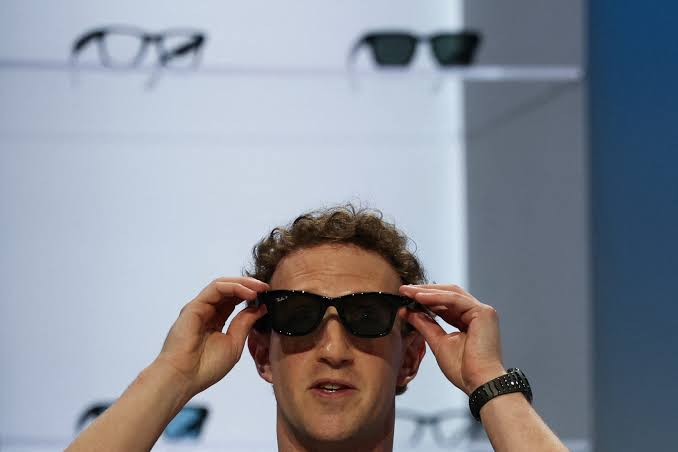
Zuckerberg’s hardware vision is finally showing signs of practical traction, but not where people originally expected. While heavy VR headsets remain a niche market for gamers, Meta’s smart glasses—built in partnership with Ray-Ban maker EssilorLuxottica—have turned into a genuine retail hit.
People actually want to wear lightweight glasses that can snap photos, play podcasts, take phone calls, and run real-time visual translations through voice commands. By pairing smart glasses with built-in voice assistants, Meta has found a path toward wearable computing that people do not mind wearing in public.
Reality Labs will not turn a profit anytime soon, but as long as Instagram and Facebook keep producing $63 billion in ad revenue each quarter, Meta has the luxury of funding long-term hardware experiments indefinitely.
What This Means for Everyday Social Media Users
When Meta does well financially, it directly changes how you experience your favorite apps every day. The company’s continued growth signals three big shifts heading to your phone:
More Unconnected Content on Your Feed
Your feed will feel less like an address book of your real-life friends and more like an entertainment feed driven by algorithms. Meta has discovered that showing you high-performing posts from random creators keeps you scrolling far longer than looking at your cousin’s holiday pictures.
Smarter, Less Annoying Ads
Because Meta’s AI analyzes what you respond to in real time, the ads on your feed will match your recent interests with spooky accuracy. You will see fewer random spam products and more products that fit things you were just talking about or looking up.
Direct Commerce Inside WhatsApp
WhatsApp is transforming into an all-in-one super-app for commerce in regions across Latin America, Asia, and Africa. Instead of clicking an ad that takes you to an external website, you can view catalogs, chat with shop managers, confirm orders, and pay for items directly inside your chat threads.
How Creators and Small Businesses Should Adapt
If you rely on Facebook or Instagram to sell products, find freelance clients, or grow your personal brand, Meta’s latest financial report carries important lessons you cannot ignore.
1. Organic Reach Is Not Coming Back
Ad prices climbed 14% this quarter because competition among businesses for feed space is fierce. If you run a business page and only post static photos, your views will continue to drop. You need to combine engaging video content with paid micro-campaigns to get consistent attention.
2. Embrace Short-Form Video or Get Left Behind
Reels is Meta’s primary growth engine right now. Algorithms reward creators who hold viewer attention for more than three seconds. Keep your video openings snappy, jump straight to the point, and add clear captions since many users watch clips with their phone audio muted.
3. Test Automated Ad Tools
Do not spend hours manually tweaking minor audience demographics. Meta’s Advantage+ automated targeting tools currently outperform most manual setups. Give the algorithm three to five different creative options (different photos, headline hooks, and video angles) and let the system find your best buyers automatically.
4. Build a Community Off the Main Feed
With ad costs climbing, turning one-time social visitors into direct contacts is critical. Use your social traffic to collect email addresses, build WhatsApp broadcast groups, or direct followers to specialized community spaces where algorithm shifts cannot cut off your communication.
Meta vs. The Competition: Who Is Winning the Tech Race?
To truly appreciate Meta’s quarter, look at the rest of the tech industry.
Traditional digital publishers are struggling with declining web traffic as AI search summaries answer user queries directly. Alphabet (Google) and Amazon continue to fight hard for search and retail ad dollars. Meanwhile, TikTok faces continuous legal scrutiny and potential bans across multiple Western nations.
Meta stands in a remarkably sturdy position. It does not depend on Google’s search engine to find customers. It does not rely on phone manufacturers for distribution. With 3.64 billion daily active users, Meta is its own self-contained internet ecosystem.
By backing open-source AI models, Meta has also forced the entire tech sector to adapt to its standards. Developers worldwide are building tools on top of Meta’s foundational systems for free, saving Meta billions in software development while weakening closed competitors who charge expensive subscription fees.
Frequently Asked Questions (FAQs)
Why did Meta stock react positively if profit dropped?
Wall Street cares primarily about core operational growth. Total revenue beat expectations by over a billion dollars, ad volume rose 10%, and ad pricing increased 14%. Investors recognized that the drop in operating profit was caused by a single, one-time $9.89 billion legal settlement rather than a decline in the company’s ability to generate cash.
What is the new 2-for-1 stock split, and what are Class C shares?
Meta announced a 2-for-1 stock split that gives shareholders additional shares in the form of non-voting Class C stock. This lets the company issue stock compensation to retain top tech talent and fund expansion without diluting the voting power of Mark Zuckerberg, who controls the company through Class B super-voting shares.
How does Meta use artificial intelligence right now?
Unlike companies that only offer standalone chatbots, Meta uses AI directly inside its apps to rank feed recommendations, improve ad targeting, generate ad graphics for marketing teams, and power conversational assistants across WhatsApp, Instagram, and smart glasses.
Is Reality Labs ever going to make money?
Reality Labs lost $4.13 billion this quarter and will continue to lose billions in the near future as Meta develops augmented reality lenses and spatial computing hardware. However, sales for Ray-Ban Meta smart glasses have beaten internal targets, proving that consumers want practical, voice-assisted wearable tech.
Why are advertising costs on Instagram and Facebook getting higher?
Ad prices jumped 14% year-over-year because millions of businesses compete for the same user attention. Because Meta’s AI algorithms deliver strong conversion rates, advertisers are willing to bid higher amounts to reach active buyers on the platform.
What to Watch Going Forward
Meta’s third-quarter earnings report proved that the company’s heavy investments in artificial intelligence are already paying off in cold, hard cash. Far from burning money on empty promises, Zuckerberg turned machine learning into an efficient ad-targeting engine that generated $64.6 billion in ninety days.
With the holiday shopping season arriving, advertising demand will only climb higher. The big test for Meta over the coming months will be keeping server costs under control while rolling out advanced smart glasses and messaging tools to billions of people worldwide.
One thing is undeniable: whenever people count Meta out, the company finds a way to adapt, re-engineer its machine, and post numbers that leave Wall Street stunned.
