
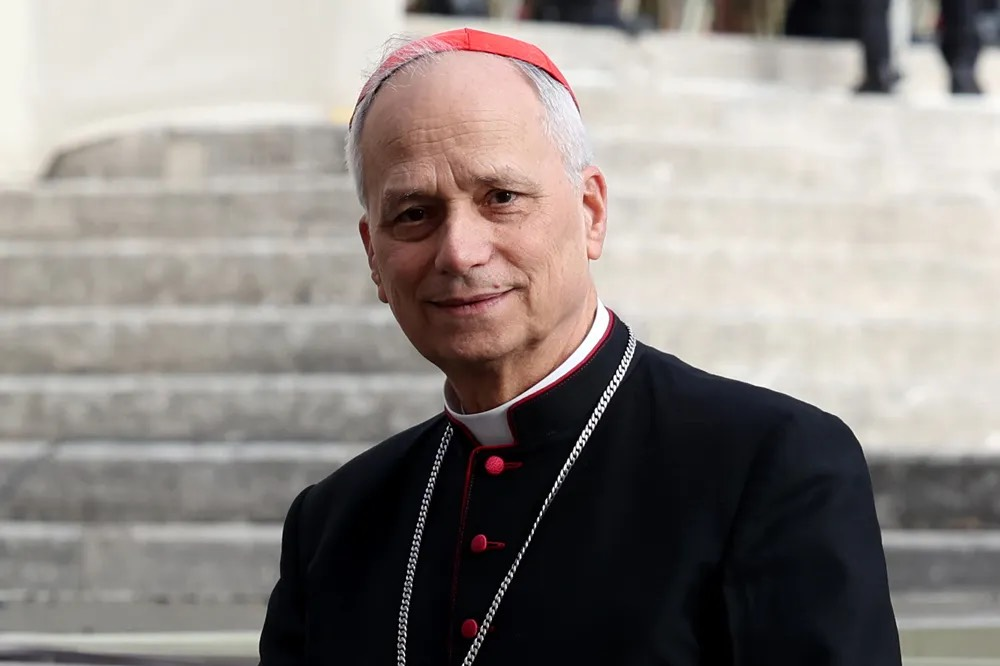
The Vatican has just dropped a medical bombshell that is sending shockwaves across the globe. Pope Leo XIV has been officially diagnosed with lung cancer after undergoing major thoracic surgery in Rome.
Doctors at the Agostino Gemelli University Polyclinic confirmed that a suspicious growth removed from the 71-year-old pontiff’s right lung was lung adenocarcinoma, a serious form of lung cancer. The news came late Tuesday evening directly from the Holy See Press Office, leaving over 1.3 billion Catholics and observers worldwide stunned, concerned, and waiting anxiously for updates on the recovery of the Holy Father.
The announcement came only hours after the pope walked into the hospital with a smile on his face, waving to doctors and well-wishers gathered outside. Within a matter of hours, what was initially described as a routine procedure to take out a small localized nodule turned into a full-scale battle against cancer.
Here is everything that happened behind the hospital doors, what this sudden diagnosis means for the pontiff, and how this unexpected medical crisis could alter the future of the Catholic Church.
The Tuesday Afternoon Surgery: What Happened Inside Gemelli Hospital
On Tuesday afternoon, Pope Leo arrived at Rome’s Agostino Gemelli Polyclinic, the famous medical center long nicknamed “Vatican Three” because past popes have spent so much time receiving care there.
The $0 Secret To Launching Your Entire Online Empire
Why pay hundreds every month for separate software? Build funnels, send emails, and make sales with Systeme.io completely free.
Get Started For $0Free Forever • No Credit Card Needed • Beginner-Friendly
Unlike previous popes who were frequently rushed into hospitals in secret ambulances, Pope Leo arrived on foot just after 1:00 PM local time. He looked relaxed, greeted hospital staff warmly, and acknowledged the crowds gathered outside the hospital gates.
The procedure began shortly after his arrival. A specialized medical team led by Professor Stefano Margaritora, head of thoracic surgery at Gemelli Polyclinic, performed a 90-minute operation. Dr. Luigi Carbone, the pope’s personal physician, monitored the process alongside a team of expert anesthesiologists and surgical assistants.
During the operation, surgeons removed the entire lower lobe of Pope Leo’s right lung in a surgical procedure known as a lobectomy. The surgical team used video-assisted thoracic surgery, commonly called VATS. This minimally invasive technique uses tiny incisions, a miniature camera, and thin instruments rather than cracking open the patient’s chest.
While the surgery itself went smoothly without surgical complications, the findings from the operating room changed everything.
Pathologists conducted a rapid intraoperative histological exam, which means they tested the removed tissue on the spot while the pope was still on the operating table. The test results came back positive for malignant cancer cells, officially diagnosing the bishop of Rome with lung adenocarcinoma.
What Is Lung Adenocarcinoma? A Plain-English Breakdown
Medical terms can feel confusing and intimidating when you hear them on the news. In simple terms, lung adenocarcinoma is the most common subtype of non-small cell lung cancer.
The lungs are made up of millions of tiny air sacs and airways lined with different kinds of cells. Adenocarcinoma starts in the glandular cells that line the outer parts of the lungs, specifically the cells that produce mucus and fluids that help us breathe easily.
Because adenocarcinoma tends to grow on the outer edges of the lungs rather than in the central airways, it often grows silently without causing early symptoms. People frequently have no idea it is there until it is caught during a scan for an entirely unrelated reason.
There are several important facts to know about this specific condition:
- It affects non-smokers too: While smoking is a leading risk factor for all lung cancers, adenocarcinoma is the type most commonly found in people who have never smoked or who quit decades ago.
- It often stays quiet early on: In its initial stages, adenocarcinoma rarely causes a painful cough, shortness of breath, or chest pains. This is why doctors call lung nodules silent passengers.
- Surgical removal is the gold standard: When caught early before spreading, surgically removing the affected lobe of the lung offers the best chance of curing the illness.
Just like everyday people facing unexpected health scares, hearing the word cancer is always frightening. In recent months, public figures from entertainment icons sharing their candid health update following a cancer diagnosis to music artists recovering after major surgery and unexpected medical crises have brought health awareness to the forefront. When an illness strikes a global religious leader, however, the stakes feel uniquely massive.
Breaking Vatican Tradition: The Shocking Transparency of Pope Leo XIV
For centuries, the health of the pope was treated as a state secret. The Vatican historically preferred absolute secrecy, rarely acknowledging that a pope was ill until rumors had already spun out of control or the pontiff was on the brink of death.
When past pontiffs faced medical crises, the official press office often released vague statements referring to mild exhaustion or a slight fever. Pope Francis pushed the needle toward more honesty during his pontificate, but even his emergency hospital visits were usually announced only after he had already arrived in the clinic.
Pope Leo has completely rewritten the rulebook on transparency.
Just two days before his surgery, during his regular Sunday Angelus prayer in St. Peter’s Square, Pope Leo looked directly into the cameras and told the world the truth himself. He informed the gathered crowds that doctors had discovered a localized nodule in his right lung and that he would undergo surgery to take it out on Tuesday.
He did not hide behind spokespeople. He did not issue a quiet press release at midnight. He stood at his window, spoke directly to the public, and asked for their prayers.
Send, Spend & Hold Money Worldwide Without Hidden Fees
Transfer money internationally at the real exchange rate and hold 40+ currencies in one account.
Open a Wise AccountMid-market rate • Fast transfers • 40+ currencies
This bold openness has earned him widespread praise, but it has also shocked traditionalists inside the Holy See. Medical transparency at this level means every test, every recovery milestone, and every future scan will now be evaluated under an intense global microscope.
It is also worth noting where the pope is resting right now. Gemelli Hospital has a private 10th-floor apartment reserved exclusively for popes, complete with its own private chapel, medical suite, and security entrance. Because that papal suite is currently undergoing scheduled renovations, Pope Leo is recovering in a standard hospital room on an ordinary recovery ward, surrounded by the same medical staff who care for everyday patients.
A Family Burden: The Pope’s Personal Struggle Behind Closed Doors
While the world sees Pope Leo as the spiritual leader of more than a billion people, he is also an older brother dealing with family heartbreak.
Behind the solemn public announcements, Pope Leo has been carrying a heavy personal load. His older brother, Louis Prevost, who lives in Florida, has been undergoing intensive cancer treatments for multiple myeloma, a rare cancer of the white blood cells.
Family relatives confirmed that both brothers have been supporting one another through their respective medical journeys over phone calls and private messages. Facing your own cancer diagnosis while watching a sibling fight the same enemy is a brutal reality that many everyday families know all too well.
Those close to Pope Leo say his personal history with sickness has shaped his deep empathy for the vulnerable. Decades ago, while serving as a missionary and leader within the Augustinian order, he survived serious illnesses that tested his resolve. He has often spoken about how moments of physical vulnerability remind human beings of their dependence on God and their connection to others who suffer.
What This Means for the 17-Month-Old Papacy
Pope Leo was elected only 17 months ago, stepping onto the Chair of Saint Peter with an ambitious reform agenda, a focus on missionary renewal, and a desire to heal divisions within the church.
At 71 years old, he is relatively young compared to recent predecessors when they were elected. When Pope Benedict XVI was chosen, he was 78; Pope Francis was 76. Many observers expected Pope Leo’s pontificate to be an energetic, decades-long chapter of leadership.
This cancer diagnosis now casts a shadow of uncertainty over his upcoming schedule:
The Upcoming Pastoral Visit to Peru
Pope Leo spent significant years of his ministry serving in Peru, working closely with local communities as a missionary bishop. He had scheduled a major pastoral visit to Peru in the coming months, a trip he considered one of the emotional centerpieces of his early papacy. While the pope told aides before entering surgery that he still fully intends to make the journey, medical experts caution that high-altitude travel and rigorous international flights may not be advisable immediately following major lung surgery.
The $0 Secret To Launching Your Entire Online Empire
Why pay hundreds every month for separate software? Build funnels, send emails, and make sales with Systeme.io completely free.
Get Started For $0Free Forever • No Credit Card Needed • Beginner-Friendly
The Heavy Administrative Burden of the Holy See
Running the Vatican is not just a spiritual calling; it is a grueling administrative job. The pope must review bishops’ appointments, manage global diplomatic relations, conduct weekly public audiences, lead marathon liturgical celebrations, and resolve sensitive doctrinal debates.
Church governance frequently intersects with national politics and social challenges across Africa, Europe, and the Americas. Whether dealing with debates over governance alongside Catholic bishops navigating state political clashes or national leaders addressing bishops on economic stability and social peace, the head of the Catholic Church must remain sharp, present, and engaged.
When a world leader faces serious illness, speculation about leadership stability inevitably follows. Just as royal observers analyzed palace operations when King Charles managed public duties amidst health discussions, Vatican insiders are already watching how the Roman Curia will handle daily decisions while the pontiff recuperates.
Comparing Pope Leo’s Lungs to Pope Francis’s History
Long-time Vatican watchers were quick to note a strange parallel between Pope Leo and his predecessor, Pope Francis. Both men have had parts of their lungs surgically removed, but the circumstances could not be more different.
Back in 1957, when Pope Francis was a 21-year-old seminarian named Jorge Mario Bergoglio in Argentina, he contracted a severe respiratory infection and pleurisy that nearly took his life. At that time, antibiotics were far less advanced than they are today. To save his life, Argentine doctors cut away a portion of his right lung to halt the runaway infection.
Francis lived with that reduced lung capacity for more than six decades, serving as archbishop, cardinal, and pope without requiring an oxygen tank for the vast majority of his life. His condition was infectious, not oncological.
Pope Leo’s situation is distinct. His surgery was performed not because of an infectious disease, but because of cancer. While Pope Francis carried his lung scar as a relic of a youthful illness that was completely behind him, Pope Leo is confronting a newly discovered malignancy in his seventh decade of life.
The Road Ahead: Staging, Recovery, and Treatment Options
Now that the lower lobe of his right lung has been successfully removed, what happens next for Pope Leo?
Surgeons were able to remove the visible tumor, but the medical journey is far from over. Over the next several days, oncologists and pathologists will conduct detailed molecular testing and staging examinations.
Understanding the Cancer Stage
Knowing that the pope has adenocarcinoma is only the first piece of the puzzle. Doctors must determine the precise stage of the cancer.
To do this, pathologists will examine the edges of the removed lung tissue to ensure clean margins, meaning no cancer cells were left behind near the cut line. They will also analyze adjacent lymph nodes removed during the surgery to check if any microscopic cells slipped out of the lung.
- Stage 1 (Localized): If the cancer was strictly confined to the nodule and the lymph nodes are completely clear, surgery alone may be curative. In this best-case scenario, the pope might only need routine surveillance scans every few months.
- Stage 2 or 3 (Regional): If cancer cells are detected in the nearby lymph nodes, doctors will recommend additional therapy to prevent the disease from coming back.
- Stage 4 (Advanced): If scans reveal that cells have travelled to other organs or the opposite lung, systemic full-body treatment will be required immediately.
Modern Treatment Breakthroughs
If Pope Leo does require follow-up therapy, cancer treatment in 2026 is vastly more advanced and targeted than it was even a decade ago.
Doctors rarely jump straight to harsh, old-school chemotherapy without exploring personalized options first. Oncologists will run genetic sequencing on the pope’s tumor to look for specific biomarkers and mutations, such as EGFR or ALK mutations.
If those markers are present, the pope could receive targeted therapies, which are daily pills designed to block cancer cells from multiplying while leaving healthy cells unharmed. Another option is immunotherapy, which boosts the patient’s own immune system to hunt down and destroy rogue cancer cells with far fewer side effects than traditional chemotherapy.
The Physical Recovery from a Lobectomy
Living with one less lung lobe requires patience. The human right lung has three lobes (upper, middle, and lower), while the left lung has two.
Removing the lower lobe of the right lung reduces total lung volume by roughly 15 to 20 percent. However, the human body is remarkably resilient. Over the coming weeks, the remaining lung tissue will expand slightly to fill the empty space left behind in the chest cavity.
With proper respiratory therapy, breathing exercises, and gentle physical rehab, most patients who undergo a minimally invasive VATS lobectomy can return to a relatively normal routine within four to six weeks.
Global Reactions and Waves of Prayer
The announcement from the Vatican prompted an immediate outpouring of messages and prayer vigils across continents.
From cathedrals in North America and basilicas in Europe to parishes across Africa, Asia, and Latin America, priests offered special intentions during morning masses. Faith leaders from other Christian denominations, as well as Muslim, Jewish, and interfaith leaders, issued statements expressing solidarity with the Roman pontiff.
In St. Peter’s Square, tourists and pilgrims gathered in small groups on Tuesday night, kneeling on the cobblestones beneath the papal apartments. Even though the lights in the top-floor study remained dark while the pope rested miles away at Gemelli Hospital, believers lit candles and recited the Rosary for his swift healing.
Outside the hospital in northern Rome, well-wishers left flowers, holy cards, and handwritten notes at the foot of the statue of Saint John Paul II, which stands at the hospital’s entrance. The scene served as a poignant reminder of the enduring human bond between everyday believers and the man they call their Holy Father.
Frequently Asked Questions (FAQs)
What type of cancer does Pope Leo have?
Pope Leo has been diagnosed with lung adenocarcinoma, a form of non-small cell lung cancer that begins in the glandular cells on the outer regions of the lung. It is the most common variety of lung cancer diagnosed worldwide.
Did Pope Leo undergo surgery?
Yes. On Tuesday, October 13, 2026, Pope Leo underwent a 90-minute operation at Rome’s Agostino Gemelli Polyclinic. Surgeons performed a lobectomy using video-assisted thoracic surgery (VATS) to remove the entire lower lobe of his right lung.
Was the surgery successful?
The Vatican confirmed that the operation was completed without surgical complications. The pontiff woke up from anesthesia in good condition and is currently resting comfortably in his hospital room under observation.
Will Pope Leo have to resign?
There is no indication that Pope Leo plans to resign. While canon law permits a pope to resign freely if they choose, many popes have governed through serious illnesses. The decision will depend on his recovery, his final pathology results, and whether he feels physically capable of fulfilling his duties.
How long will the pope stay in Gemelli Hospital?
Standard recovery for a minimally invasive VATS lobectomy typically requires three to seven days in the hospital, provided there are no postoperative complications such as air leaks or infections. His doctors will decide on a release date based on how quickly his breathing strengthens.
Does Pope Leo smoke?
There is no public record of Pope Leo being a regular smoker. Adenocarcinoma is known among medical professionals as the most common lung cancer found in non-smokers and former light smokers.
Pope Leo faces a challenging road of recovery, testing, and rehabilitation, but the early medical reports indicate that the surgery went as smoothly as his medical team could have hoped. His decision to confront his illness with complete public honesty has set a new tone for the papacy, breaking down centuries of traditional secrecy in favor of human connection and mutual vulnerability.
The coming days will provide crucial answers regarding the stage of his cancer and whether additional therapies will be necessary. For now, the global Catholic community and observers worldwide will be watching Gemelli Hospital closely, hoping for the continued healing and steady recovery of Pope Leo XIV.
If you have questions, feedback, or a story you would like to share, you can easily reach out to the editorial team through the WhatsBuzzn Contact Page.
Stay connected and join the conversation on social media by following our updates on Instagram, liking our community on Facebook, and following the latest breaking news on X.
