
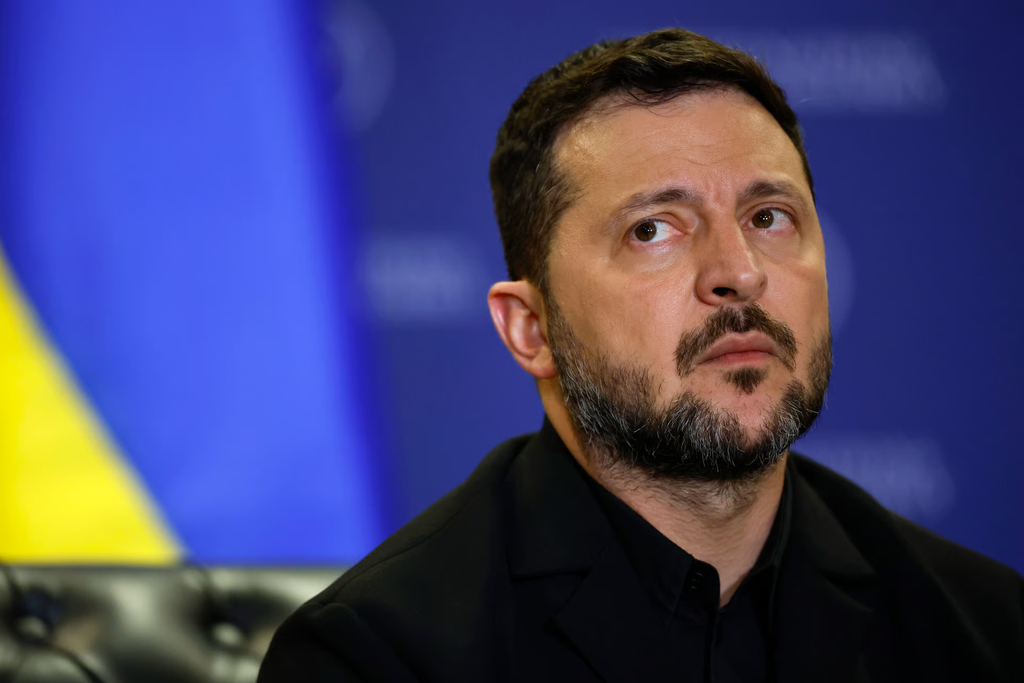
Tensions between Washington and Kyiv have hit a breaking point after President Donald Trump publicly demanded that Ukrainian President Volodymyr Zelenskyy halt drone strikes on Russian oil refineries. Trump went even further by suggesting that Ukraine needs a new president who can make a deal with Moscow.
The sudden public clash has exposed a growing rift between the two leaders. Washington is prioritizing global energy prices ahead of upcoming U.S. midterm elections, while Kyiv is refusing to give up one of its most effective military strategies without strong security guarantees.
With U.S. envoys warning that intelligence sharing could be on the line and Trump declaring a unilateral energy ceasefire on social media, the partnership that has sustained Ukraine’s defense is facing its biggest test yet. Understanding how this clash unfolded requires looking at the high-stakes political math driving both sides.
The Breaking Point: What Caused the Unexpected Clash?
For months, Ukraine has carried out targeted long-range drone strikes against oil refineries, fuel depots, and energy hubs deep inside Russian territory. Kyiv designed this strategy to hit Russia where it hurts most: its war wallet. By disrupting Russian fuel production, Ukraine aimed to cut off the Kremlin’s energy revenues, create fuel shortages for frontline Russian military units, and raise the economic cost of the war for Moscow.
From a military standpoint, the strategy yielded clear results. Dozens of Russian refining units suffered severe damage, forcing Moscow to restrict fuel exports and draw heavily on internal reserves.
The $0 Secret To Launching Your Entire Online Empire
Why pay hundreds every month for separate software? Build funnels, send emails, and make sales with Systeme.io completely free.
Get Started For $0Free Forever • No Credit Card Needed • Beginner-Friendly
However, the ripple effects spread quickly across international fuel markets. Global diesel prices began climbing rapidly. Combined with shipping delays caused by conflict in the Middle East, high fuel costs began impacting American consumers at the pump.
For the White House, rising gas and diesel prices represent a direct political challenge. With U.S. midterm elections approaching and control of Congress on the line, fuel costs are a top issue for American voters.
The tension boiled over when Trump publicly slammed the refinery strikes, telling Zelenskyy he had better stop targeting Russian energy sites. Trump argued that hitting diesel facilities was driving up energy costs globally and hurting working-class Americans.
When Kyiv hesitated to pause the attacks, Trump doubled down during public remarks, suggesting that Ukraine should elect a new leader who knows how to negotiate. That comment sparked an immediate reaction across Europe and set off intense debate in Washington.
High Stakes and Pressure Tactics in Washington
Behind the public statements, pressure on Kyiv has escalated through private diplomatic channels. Reports indicate that high-level U.S. representatives, including envoys Steve Witkoff and Jared Kushner, raised the possibility of tapering off vital U.S. intelligence sharing if Ukrainian forces continue targeting Russian energy assets.
Real-time satellite and signal intelligence provided by Washington has been a cornerstone of Ukraine’s defense since 2022. Losing access to that information would create major operational hurdles for Ukrainian forces on the battlefield.
At the same time, the White House shocked international observers by exploring a temporary agreement with Moscow to secure Russian diesel shipments. The goal was simple: flood global markets with fuel to bring prices down quickly.
To Kyiv, cutting energy deals with the Kremlin while pressuring Ukraine to stop defending itself felt like a heavy blow. Ukrainian officials openly voiced frustration, arguing that purchasing Russian fuel rewards Moscow for its aggression while penalizing the country fighting for its survival.
Political analysts point out that this dispute highlights two completely different sets of priorities:
- Washington views the war through the lens of economic stability, global energy markets, and domestic election dynamics.
- Kyiv views the refinery strikes as a necessary counter-offensive measure to disrupt Russia’s war machine and protect its own population.
When those two priorities collided, the diplomatic fallout was swift.
The “Surprise” Energy Ceasefire and Zelenskyy’s Unyielding Response
The dispute reached a dramatic moment when Trump posted an announcement on Truth Social claiming that Russia and Ukraine had agreed to an immediate “energy ceasefire”. He instructed both sides to stop hitting each other’s energy infrastructure and warned them not to break the agreement.
The announcement caught leadership in Kyiv off guard. Zelenskyy quickly clarified that Trump’s social media post came as complete news to him and that no formal deal had been signed directly between Ukraine and Russia.
However, rather than rejecting the idea outright, Zelenskyy responded with a carefully calculated counter-proposal. He stated that Ukraine is always ready for genuine de-escalation, but any ceasefire must be mutual, transparent, and backed by real guarantees.
Zelenskyy made Kyiv’s position crystal clear:
- Ukraine will agree to stop targeting Russian oil refineries immediately.
- In return, Russia must completely stop targeting Ukrainian power plants, heating stations, electricity grids, and civilian supply lines.
- The ceasefire must include explicit timelines and international monitoring so Moscow cannot use the pause to rebuild its forces.
Zelenskyy pointed out that Russia has systematically targeted Ukrainian power facilities for years, leaving millions of civilians facing blackouts and freezing temperatures during winter. Expecting Ukraine to unilaterally stop hitting Russian oil plants while Russian missiles continue hitting Ukrainian power stations is an unreasonable demand.
Send, Spend & Hold Money Worldwide Without Hidden Fees
Transfer money internationally at the real exchange rate and hold 40+ currencies in one account.
Open a Wise AccountMid-market rate • Fast transfers • 40+ currencies
To highlight the issue, just hours after Trump announced the supposed energy truce, Ukrainian officials reported fresh Russian missile and drone attacks hitting power facilities inside Ukraine. For Kyiv, that proved that verbal assurances from Moscow mean very little without firm enforcement mechanisms.
Calling the Bluff: Elections Under Martial Law
One of the most intense parts of this disagreement centers on Trump’s public call for Ukraine to replace its leadership. By suggesting that Zelenskyy should step aside for someone who can reach an agreement with Putin, Trump touched a sensitive political nerve inside Ukraine.
Under the Ukrainian constitution, presidential elections are strictly prohibited while the country is under martial law. Martial law was declared immediately following Russia’s full-scale invasion and has been renewed continuously by parliament.
Holding nationwide elections during an active war presents massive legal and practical challenges:
- Millions of Ukrainian citizens are living abroad as refugees or displaced inside the country.
- Hundreds of thousands of soldiers are fighting on the front lines and cannot safely cast ballots.
- Large areas of eastern and southern Ukraine remain under Russian military occupation.
- Polling places across free Ukrainian cities would become immediate targets for Russian missile strikes.
Despite these hurdles, Zelenskyy responded directly to Trump’s challenge with a bold political offer. He announced that if Russia agrees to a comprehensive, 60-day full ceasefire across the entire front line, Ukraine will take the necessary legal steps to organize nationwide elections.
That offer effectively turned the political pressure back onto Washington and Moscow. If the White House and Kremlin genuinely want new elections in Kyiv, they must first secure a total halt to Russian military aggression. Without a reliable ceasefire, asking a nation under daily bombardment to hold elections remains an impossible task.
Europe Steps In: Why Western Allies Are Caught in the Middle
The public disagreement between Washington and Kyiv has placed European allies in a delicate position. Leaders across the continent are scrambling to maintain unity within NATO while managing their relationships with the U.S. administration.
NATO Secretary-General Mark Rutte and key European leaders reaffirmed their strong support for Ukraine following Trump’s comments. European nations view Ukraine’s long-range strikes as a legitimate form of self-defense against an invading force. They argue that stopping Kyiv from hitting military supply chains leaves Ukrainian cities vulnerable to uninterrupted Russian attacks.
Security concerns in Europe escalated further when recent Russian drone attacks landed near the Polish border. Polish Prime Minister Donald Tusk warned that Moscow is actively trying to test NATO’s resolve and destabilize neighboring European states through sabotage and border pressure.
In response, European defense officials are exploring ways to step up direct aid to Kyiv. While European countries cannot easily replace the full volume of U.S. military hardware, they are increasing financial support, expanding drone manufacturing partnerships, and supplying advanced air defense systems to protect Ukrainian infrastructure.
The $0 Secret To Launching Your Entire Online Empire
Why pay hundreds every month for separate software? Build funnels, send emails, and make sales with Systeme.io completely free.
Get Started For $0Free Forever • No Credit Card Needed • Beginner-Friendly
This dynamic reveals a widening gap between transatlantic allies:
- The White House is prioritizing rapid economic stabilization, lowered domestic inflation, and controlled global fuel prices.
- European governments view Russian aggression as an existential threat to European security that cannot be resolved through hasty concessions.
The Strategic Dilemma: Why Ukraine’s Refinery Campaign Matters
To understand why Kyiv is resisting U.S. pressure, it helps to look at how much Ukraine’s drone program has evolved. Early in the conflict, Ukraine relied almost entirely on foreign-supplied weaponry. Over the last two years, however, domestic defense companies in Ukraine have built an impressive long-range drone industry.
These domestically produced drones can fly hundreds of miles into Russian territory, hitting oil refineries, ammunition depots, and military airfields with remarkable precision. Because these weapons are built inside Ukraine, Kyiv does not need foreign permission to choose its targets.
For Ukrainian military planners, targeting Russian oil infrastructure accomplishes several goals:
- Economic Pressure: Oil exports represent the single largest source of revenue funding the Kremlin’s military budget. Hitting refineries forces Russia to spend millions on repairs rather than weaponry.
- Logistical Disruption: Armored vehicles, tanks, and transport trucks require massive amounts of diesel fuel. Damaging regional refineries slows down military supply lines heading to the front line.
- Symmetry: Russia has repeatedly targeted Ukrainian energy infrastructure to freeze cities during winter. Striking Russian energy assets gives Kyiv leverage to negotiate a mutual freeze on infrastructure strikes.
Giving up this capability without a guaranteed halt to Russian missile strikes would leave Ukraine at a massive tactical disadvantage. That is why Zelenskyy and his defense leadership are standing firm, even at the risk of frustrating key partners in Washington.
What Happens Next for the US-Ukraine Partnership?
The coming weeks will be critical in determining whether Washington and Kyiv can repair their diplomatic relationship or if the rift will widen further.
If the White House decides to limit intelligence sharing or restrict future military aid packages, Ukraine will have to rely even more heavily on its European partners and domestic defense production. While Ukraine’s defense industry has grown significantly, losing American intelligence resources would make tracking long-range Russian threats much harder.
On the political side, the U.S. midterm elections remain a major factor. How voters react to energy prices and foreign policy debates over the next month will shape Washington’s approach.
For Ukraine, the primary goal remains survival and securing a lasting, honorable peace—not just a temporary pause that allows Russian forces to regroup. Navigating diplomatic pressure from its primary benefactor while defending its territory against an aggressive neighbor is perhaps the toughest tightrope Kyiv has had to walk yet.
Frequently Asked Questions (FAQs)
Why is Donald Trump asking Ukraine to stop striking Russian oil refineries?
Trump argues that Ukrainian drone attacks on Russian oil infrastructure disrupt global energy supply chains and drive up diesel prices worldwide. With high fuel costs impacting American consumers right before U.S. midterm elections, Washington wants energy markets stabilized quickly.
Did Russia and Ukraine actually sign an energy ceasefire agreement?
No formal agreement was signed directly between Ukraine and Russia. Trump announced an “energy ceasefire” on Truth Social, but Kyiv clarified that it was not consulted beforehand. Zelenskyy stated that Ukraine is willing to pause refinery strikes only if Russia simultaneously stops targeting Ukrainian power grids and energy facilities with verifiable guarantees.
Can Ukraine legally hold presidential elections during the war?
Under Ukraine’s constitution, elections cannot take place while the nation is under martial law. Holding a vote during active hostilities presents major security risks, displacement challenges, and logistical hurdles. However, Zelenskyy proposed that if a complete 60-day ceasefire is established, Ukraine would take steps to conduct nationwide elections.
What is the controversy around the U.S. diesel deal with Russia?
The White House explored buying Russian diesel to boost global fuel supplies and lower domestic prices. Ukrainian officials and several Western lawmakers criticized the move, arguing that purchasing energy from Moscow eases financial pressure on the Kremlin and weakens international sanctions.
What happens if the U.S. limits intelligence sharing with Kyiv?
Limiting satellite and signal intelligence would make it more difficult for Ukrainian forces to track Russian military movements, anticipate missile launches, and target high-value assets accurately. Ukraine would have to rely more on European intelligence agencies and its own surveillance networks.
Navigating global news and complex international developments requires reliable updates you can trust. If you have questions about our coverage or want to share your thoughts on this story, visit our Contact Page. Stay connected with our latest updates, breaking stories, and deep dives by following our social channels on Instagram, Facebook, and X (formerly Twitter)
