
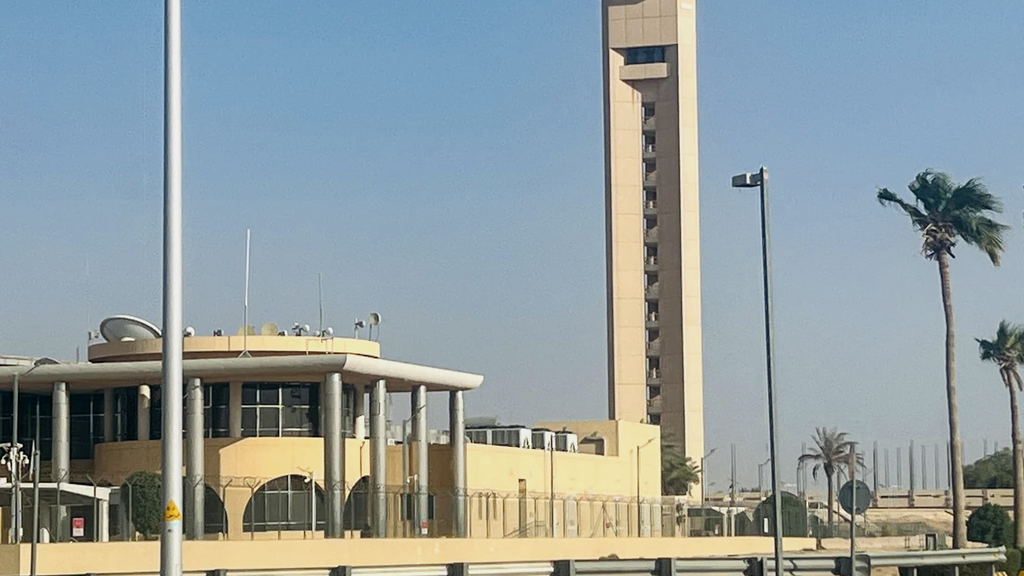
A devastating missile and drone strike on King Khalid International Airport in Riyadh, Saudi Arabia, has left 12 people dead and more than 300 wounded. The strike hit a busy area inside the domestic terminal complex, sending shockwaves across the region and triggering immediate emergency closures.
Saudi Arabia’s General Authority of Civil Aviation confirmed that the strike occurred during peak travel hours, targeting areas near Terminals 3 and 4. Emergency teams, helicopters, and dozens of ambulances rushed to the scene to treat victims and evacuate survivors from damaged areas.
This attack marks one of the most severe direct hits on major civilian infrastructure inside the Saudi capital. It represents a dramatic turn in the ongoing military confrontation between Saudi-backed forces and Iran-backed Houthi rebels operating from Yemen.
Chaos Inside Terminals 3 and 4: What Happened on the Ground
Travelers waiting for domestic flights described scenes of absolute panic as a loud explosion tore through part of the departure terminal. Eyewitnesses near Gate 401 reported seeing glass shatter across waiting areas while sections of the ceiling collapsed onto passengers below.
Loud blasts shook the entire building before smoke filled the main passenger halls. Airport security personnel immediately dimmed lights and instructed everyone to take cover, while panic-stricken families ran toward emergency exits to escape.
The $0 Secret To Launching Your Entire Online Empire
Why pay hundreds every month for separate software? Build funnels, send emails, and make sales with Systeme.io completely free.
Get Started For $0Free Forever • No Credit Card Needed • Beginner-Friendly
Hospitals across Riyadh were quickly overwhelmed as injured passengers arrived by ambulance and military rescue helicopters. Medical workers worked through the night to treat victims suffering from severe shrapnel wounds, head injuries, and structural trauma caused by flying debris.
Outside the airport complex, heavy police barricades were set up within minutes. Security forces blocked all incoming roads to keep the perimeter clear for emergency responders and military security teams arriving to secure the facility.
Remembering the Victims: Nationalities and Casualties
The Saudi General Authority of Civil Aviation released an official statement confirming the death toll and breakdown of victims. Among the 12 fatalities were four Saudi citizens and eight foreign nationals living or traveling in the kingdom.
The foreign citizens killed in the attack include two individuals from Bangladesh, alongside one citizen each from the United States, Egypt, Jordan, Syria, Palestine, and Sudan. Health officials stated that over 300 people were treated for injuries, with several remaining in critical condition inside intensive care units.
U.S. Secretary of State Marco Rubio publicly confirmed the death of the American citizen and expressed deep condolences to the family. He condemned the strike as a reprehensible act that showed a total disregard for innocent human life.
The loss of life across multiple national backgrounds highlights how international air travel hubs put everyday global travelers directly in harm’s way during regional conflicts.
How the Attack Unfolded: Missiles and Drones Target the Capital
Military analysts indicate that the attack involved a coordinated barrage of heavy ballistic missiles and long-range attack drones launched from Houthi-controlled territory in Yemen. The weaponry managed to penetrate local defensive systems before hitting the airport complex.
This latest strike follows a series of smaller aerial probing attacks earlier in the week. Prior strikes on the same airport facility had already claimed three lives and caused localized damage to parked commercial aircraft.
The persistent targeting of civilian transportation hubs shows a strategic shift toward maximum disruption. Previous Houthi operations focused heavily on border regions and military outposts, but recent months have seen an increase in long-range strikes hitting major urban infrastructure.
To understand how these military strikes fit into broader regional warfare, you can read our breakdown on how us iran war escalates houthi strikes in saudi arabia push oil prices past 100.
White House Response: Will the U.S. Join Military Action?
Following news of the attack, U.S. President Donald Trump addressed reporters and confirmed that Washington is actively reviewing military options. When asked if the United States would join Saudi Arabia in direct retaliatory strikes against Houthi targets, he stated that a decision would be made quickly.
The White House indicated that senior administration officials held urgent consultations with Saudi Crown Prince Mohammed bin Salman to discuss joint defense measures and intelligence sharing. Defense leaders are currently reviewing target packages across Yemen to deter further strikes.
American military units operating in the region have already stepped up naval patrols and air defense monitoring. The foreign policy debate in Washington is intensifying over how far the U.S. military should go to protect Gulf allies and keep international airspace safe.
For more details on military shifts across the region, check out our report on how the us sending third aircraft carrier to middle east is war about to explode.
The Bigger Picture: Why the Houthis Are Targeting Saudi Infrastructure
The war in Yemen has dragged on for years, creating one of the world’s worst humanitarian situations while drawing in competing regional powers. The Houthi movement, backed by Iran, controls large parts of northern Yemen, including the capital city of Sanaa.
Send, Spend & Hold Money Worldwide Without Hidden Fees
Transfer money internationally at the real exchange rate and hold 40+ currencies in one account.
Open a Wise AccountMid-market rate • Fast transfers • 40+ currencies
In recent months, fighting has intensified along critical land routes and coastal shipping channels. Saudi-backed forces recently launched fresh offensives to push Houthi fighters away from strategic points, leading the rebels to retaliate against Saudi cities.
By attacking high-profile targets like King Khalid International Airport, the Houthis aim to impose severe economic costs on Saudi Arabia. They want to demonstrate that key infrastructure remains vulnerable as long as military pressure continues inside Yemen.
These strikes are part of a wider conflict stretching across the Middle East. You can learn more by reading about how the gulf conflict escalates tehran responds to massive u s airstrikes across the middle east.
Travel Chaos and International Flight Diversions
The attack caused immediate, widespread disruptions across the global aviation network. Saudi aviation authorities issued a complete suspension of all incoming and outgoing flights at King Khalid International Airport shortly after the explosion occurred.
Flight tracking data from Flightradar24 showed dozens of international and domestic flights turning around mid-air or diverting to alternate airports in nearby cities like Jeddah and Dammam. Terminal operations remained completely frozen as investigators gathered evidence.
Governments around the world issued urgent travel warnings for their citizens in Saudi Arabia. Agencies including the U.S. Department of State, the UK Foreign Office, and government departments in Canada, Australia, and Germany urged people to stay away from the airport area.
Travelers scheduled to fly through Riyadh are being urged to contact their airlines directly before attempting to travel. Many international carriers have temporarily suspended service to the capital while safety procedures and security clearances are reviewed.
Shockwaves Across Energy Markets and Global Oil Prices
Beyond the human loss and travel disruptions, attacks on Saudi Arabian soil immediately generate shockwaves throughout global financial and commodity markets. Saudi Arabia is the world’s leading exporter of crude oil, and market stability relies heavily on safe infrastructure.
Energy analysts warn that strikes targeting major urban centers raise concerns about the security of nearby energy facilities, pipelines, and export terminals. Oil prices surged higher in international trading immediately following confirmation of the airport strike.
When critical shipping channels and regional facilities face missile threats, insurance rates for cargo ships and air freight jump dramatically. These added costs eventually trickle down to consumers worldwide in the form of higher fuel and transport prices.
The $0 Secret To Launching Your Entire Online Empire
Why pay hundreds every month for separate software? Build funnels, send emails, and make sales with Systeme.io completely free.
Get Started For $0Free Forever • No Credit Card Needed • Beginner-Friendly
To see how regional tensions affect global shipping and energy, explore our analysis of how global oil crises escalate as attacks hit the strait of hormuz and saudi pipelines.
Additionally, key maritime choke points like the Red Sea face constant disruption. Read about how the houthis seize strategic red sea port of mokha what it means for global trade oil prices and security to understand the broader trade impact.
What International Travelers Need to Know Right Now
If you or your family members have upcoming travel plans involving Saudi Arabia or transit stops in the Gulf region, staying informed is essential. Safety protocols across major airports are being upgraded, leading to longer processing times and strict security checks.
First, always verify flight status directly with your airline before heading to any airport in the region. Airlines are adjusting schedules dynamically, and last-minute cancellations or re-routings are common during security escalations.
Second, register your travel details with your national embassy or consulate. Programs like the U.S. Smart Traveler Enrollment Program (STEP) allow diplomatic missions to contact you directly with real-time security alerts and evacuation guidance if needed.
Finally, keep track of official statements from regional authorities and official aviation boards like the Saudi General Authority of Civil Aviation. Avoid spreading unverified rumors on social media, as accurate information is vital for personal safety.
How Local Economies and Supply Chains Are Affected
When a major aviation hub like Riyadh suffers structural damage, cargo supply chains feel the impact immediately. King Khalid International Airport handles massive volumes of air freight, including electronics, medical supplies, and perishable goods destined for local and regional markets.
Flight suspensions force cargo planes to ground their shipments or reroute to secondary facilities. This creates severe logistical bottlenecks, delaying supply deliveries for businesses operating in Saudi Arabia and nearby countries.
Businesses that rely on just-in-time delivery systems are facing higher costs as they pivot to slower land or sea transport routes. These disruptions add further financial pressure to local economies already dealing with rising global inflation.
Global energy leaders have repeatedly warned about fragile supply lines during conflict. For more insights, read how the world oil supply is on the brink as aramco chief issues scarily thin warning here is what it means for your pocket.
Emergency Response and Security Upgrades in Riyadh
In the hours following the strike, Saudi security services implemented comprehensive defense measures across the capital city. Military units reinforced air defense batteries around key infrastructure, government buildings, and civilian centers.
Civil defense teams worked continuously to clear debris from Terminals 3 and 4, ensuring structural stability before allowing forensic teams to complete their investigations. Specialized bomb disposal units scanned the surrounding airfield to ensure no unexploded ordnance remained.
Hospitals across the capital maintained high alert status, receiving blood donations from thousands of local residents responding to urgent appeals. Community support across Riyadh was swift, with volunteers assisting families affected by the tragedy.
Saudi officials reiterated that the kingdom will take all necessary actions to protect its territory, citizens, and foreign residents. They stressed that attacks on civilian facilities constitute severe violations of international law.
Frequently Asked Questions (FAQs)
What airport was attacked in Saudi Arabia?
The attack targeted King Khalid International Airport (RUH), located approximately 35 kilometers north of Riyadh, Saudi Arabia. The strike specifically impacted domestic passenger facilities near Terminals 3 and 4.
How many people were killed and injured in the attack?
Saudi authorities confirmed that 12 people died in the strike and 309 others were injured. The victims included four Saudi citizens and eight foreign nationals from countries including the United States, Bangladesh, Egypt, Jordan, Syria, Palestine, and Sudan.
Who is responsible for the strike on Riyadh airport?
The Saudi-led coalition fighting in Yemen blamed Iran-backed Houthi rebels for the attack. The Houthis have launched multiple long-range missile and drone strikes against Saudi infrastructure in recent months as part of the ongoing Yemen conflict.
Is Riyadh airport open or are flights still suspended?
Flights were immediately suspended following the attack, with incoming aircraft diverted to other domestic airports. Travelers should check directly with their airlines and monitor civil aviation updates before making any journey to the airport.
Will the United States get involved in military strikes?
U.S. President Donald Trump stated that the White House is evaluating whether to join Saudi Arabia in military strikes against Houthi targets in Yemen. A decision is expected following ongoing military and diplomatic reviews.
How does this attack impact global oil and fuel prices?
Attacks on major infrastructure inside Saudi Arabia raise security concerns for nearby energy production and shipping routes. This uncertainty typically leads to immediate surges in crude oil prices, which can eventually increase fuel costs worldwide.
The attack on King Khalid International Airport represents a grim escalation in a regional conflict that continues to spill over into civilian life. As emergency teams clean up the damage and families mourn the loss of loved ones, the international community is watching closely to see how Saudi Arabia and its global partners respond. Navigating world events requires reliable, clear information without unnecessary drama. Staying updated through official channels and understanding the broader geopolitical picture is the best way to keep yourself and your loved ones prepared.
If you have questions or want to reach out to our team, feel free to visit our contact page. You can also stay connected with us on social media by following our official pages on Instagram, Facebook, and X (formerly Twitter).
