
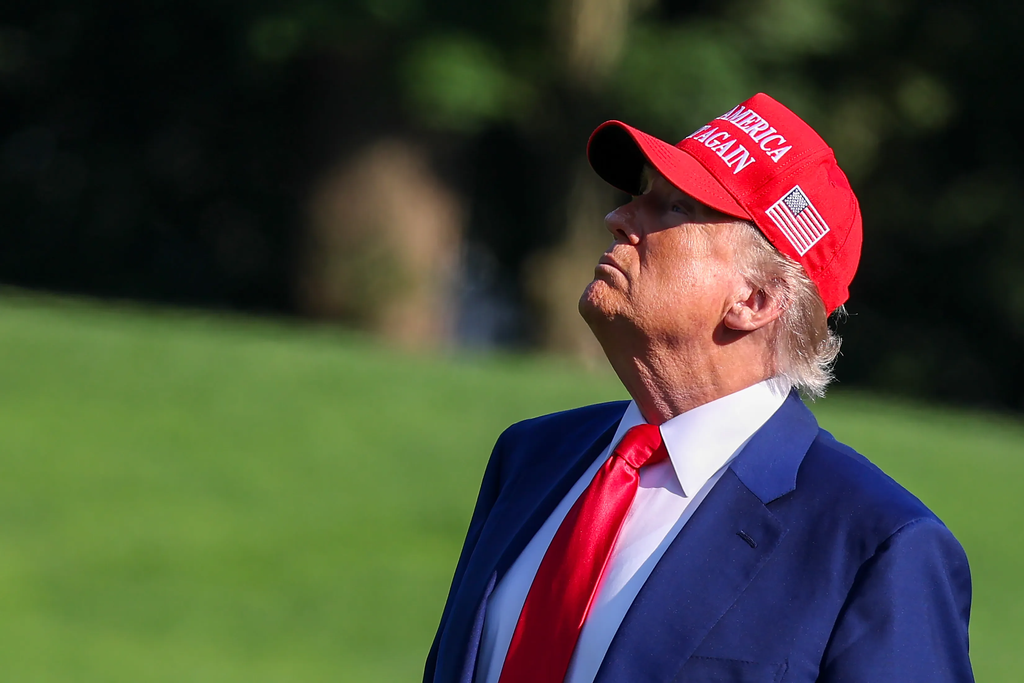
Donald Trump made headlines again with a big announcement on his social media platform, Truth Social. He told the public that he plans to appoint a brand-new artificial intelligence adviser—often referred to as an “AI czar”—and create a completely new group called an “AI force.” However, he left out the most important part of the story. He did not provide a single detail on how either initiative would be structured, who would lead them, or how they would actually work in practice.
This sudden announcement quickly caught the attention of politicians, tech founders, and everyday observers across the globe. Artificial intelligence is currently one of the most talked-about topics on the planet, driving massive changes in business, military strategy, and daily life. When the leader of the United States hints at major new government moves in tech, people sit up and pay attention.
Yet, without official blueprints or policy papers, everyone is left wondering what this new plan really means. Is an “AI force” a military unit, a specialized team of computer programmers, or just a political group? Who will be chosen as the new AI czar to guide American technology policy? To understand why this announcement happened now and why it matters so much, we have to look closely at what was said, the current state of technology, and the massive international race taking place behind the scenes.
What Did Trump Actually Say on Truth Social?
In his social media post, Trump made his vision for the artificial intelligence industry very clear. He stated plainly that his administration has no desire to slow down or restrict American tech companies. He wrote that the government will not in any way hinder or stifle the growth of this incredible industry. Instead, he promised that his administration will cherish the industry, help it grow, and watch over it as it expands.
When it comes to handling safety concerns and potential crimes involving technology, Trump took a very specific stance. He argued that the United States does not need to build a massive new government agency or create piles of complicated new federal regulations. According to his post, the government can handle bad actors very easily by using the existing criminal and civil justice systems that are already in place today.
Build Funnels, Email Lists & Sell Online With One Free Tool
Create funnels, send emails, and sell online using Systeme.io without paying for multiple tools.
Create Free AccountFree forever • No credit card • Beginner-friendly
In simple terms, his message to Silicon Valley is straightforward: go ahead and build the most advanced computer tools you can without worrying about new federal red tape. If someone uses those tools to commit a crime, steal money, or hurt another person, the regular police, prosecutors, and civil courts will handle it just like any other legal issue.
However, the post left two major concepts completely unexplained. The first is the appointment of a new “AI czar,” which is an informal term used for a senior presidential adviser dedicated solely to computer intelligence policy. The second is the creation of an “AI force.” Because no additional explanation was offered, industry experts and political analysts have spent hours trying to decode what these two initiatives will look like once they are officially launched.
The Story Behind America’s Previous AI Adviser
To understand why a new adviser is being named, it helps to look at how the administration handled this position in the past. Earlier, venture capitalist David Sacks held the role of primary AI adviser. Sacks is a well-known figure in the world of technology investments and Silicon Valley start-ups, known for his belief in free-market capitalism and minimal government oversight.
Sacks served in that official advisory role before stepping down in the spring to transition into an external advisory position. During his time in government and in public speeches afterward, Sacks made his opinions on tech laws very clear. He strongly opposed creating new federal rules or creating new government bureaus specifically to manage computer algorithms.
Speaking at a public event recently, Sacks explained his perspective on safety. He argued that tech developers themselves should be responsible for ensuring that their products are safe before releasing them to the public. If a product causes real harm or breaks existing laws, the company that made it can be held liable in court. In his view, threatening companies with lawsuits if things go wrong is a much better approach than forcing everyone to ask for government permission before launching new tools.
Ever since Sacks moved to his external role, the position of a full-time, internal White House AI czar has been open. Trump’s post confirms that a replacement is officially on the way. Picking the right candidate for this spot is a major decision because that person will help decide how the American government supports tech companies, invests in computer infrastructure, and responds to global tech challenges.
The Timing Isn’t a Coincidence: The High-Stakes US-China Race
The timing of this announcement was not an accident. It came directly ahead of a crucial, high-stakes meeting between Donald Trump and Chinese President Xi Jinping. At the exact same time, top economic officials from both nations were gathering for serious discussions. US Treasury Secretary Scott Bessent scheduled a major meeting with Chinese Vice Premier He Lifeng at the JPMorgan Chase headquarters in New York to talk about economic issues, trade, and shared risks surrounding artificial intelligence.
The United States and China are currently locked in an intense global competition for technology leadership. Both governments view artificial intelligence as the single most important technology for the future. Whoever leads in this field will likely have the strongest economy, the most advanced military defenses, and the greatest influence over global commerce.
Trump and many prominent tech executives frequently argue that heavy government regulation in America would give China a massive advantage. They warn that if American software developers are bogged down by strict legal rules, filing endless safety reports, and waiting for government approvals, Chinese tech firms will move ahead unhindered and build more powerful systems faster.
On the other side of the debate, safety advocates insist that competing with China should not mean ignoring safety altogether. They argue that building powerful systems without proper safeguards could lead to dangerous accidents that hurt everyone, regardless of which country builds them first. You can read more about how cutting-edge tools are shaping global trends on our technology and AI section.
The Big Debate: Total Innovation vs. Safety Risks
Inside Washington and across the broader tech industry, a fierce debate is raging between those who want maximum speed and those who want strict safety guardrails. Trump’s announcement firmly places his administration on the side of maximum speed and minimal government interference.
Many business owners, software engineers, and venture capitalists are celebrating this stance. They believe that giving companies total freedom to innovate will lead to incredible breakthroughs in healthcare, scientific research, education, and daily productivity. They point out that heavy regulations often end up helping big, wealthy corporations that can afford armies of lawyers, while crushing small start-ups that cannot afford the compliance costs.
However, safety researchers and lawmakers from both political parties express deep concern over this hands-off approach. Concerns are growing among politicians about the potential risks that unchecked computer systems could pose to human lives, public safety, and private property.
For example, former Anthropic researcher Jacob Coxon recently issued a stark warning about the rapid pace of development. He stated publicly that many people who are actively building advanced computer intelligence earnestly believe that the technology could pose existential threats to humanity within the decade if it is not developed with extreme caution.
Safety advocates argue that relying purely on regular courts after a disaster happens is not enough. They point out that standard legal lawsuits can take years to move through the court system. If an automated system causes a massive power outage, breaks financial markets, or spreads dangerous misinformation on a huge scale, simply suing the creators after the damage is done will not fix the problem. They believe clear federal safety standards are needed before advanced systems are released to the public.
What Could an “AI Force” Look Like in Practice?
Because Trump did not explain what an “AI force” means, people are making several educated guesses based on how the government has handled similar issues in the past. Depending on how the plan is organized, an “AI force” could take one of three main forms.
First, it could be a specialized military or defense group. Similar to how the United States created the Space Force to protect satellite assets, an “AI force” could be a new branch or dedicated unit within the military. This group would focus on protecting national defense networks against automated cyberattacks, developing advanced drone systems, and ensuring the military maintains technological superiority on the battlefield.
Second, it could be a civilian cybersecurity task force. This type of force would bring together top computer experts, government agents, and private security teams to guard critical American infrastructure. They would work around the clock to protect electrical grids, financial networks, water systems, and healthcare facilities from automated foreign hacking attempts.
Third, it could be an economic and industrial task force. Instead of focusing on defense or policing, this group could focus entirely on helping American tech companies build big things faster. They could work to streamline the construction of giant data centers, secure cheap electricity for supercomputers, and make sure American tech firms have all the hardware and resources they need to win the global technology race.
Modern digital tools and automated systems are already transforming businesses everywhere, from corporate offices to digital creation models like YouTube automation strategies that allow creators to build and manage digital media channels efficiently.
How This Government Push Affects Regular People
When politicians talk about national policies, czars, and international competitions, it can sound very distant from normal life. But the decisions made in Washington regarding technology will directly impact regular everyday people in very practical ways.
If the government maintains a low-regulation environment that allows tech companies to build as fast as possible, consumers will likely see rapid improvements in everyday technology. You will get access to smarter tools, better smartphone features, faster medical diagnostic tools, and new software that makes running a small business much easier and cheaper.
At the same time, a lack of specific federal guidelines creates unique risks for everyday internet users. Without clear rules on digital privacy, deepfakes, and copyright protection, people might face an increase in automated online scams, identity theft, and fake digital content designed to deceive the public.
Furthermore, job market changes remain a huge topic of concern. While rapid technological progress creates new high-tech jobs, it also automates routine tasks previously performed by human workers. Without clear government programs to retrain workers or guide the transition, many employees worry about losing their livelihoods to automated software systems.
What to Expect Next in Washington and Silicon Valley
In the coming weeks, attention will focus heavily on who the White House selects as the official new AI adviser. The background of the person chosen will send a clear signal to the world about where American technology policy is headed. If the administration picks another venture capitalist or tech founder, it will confirm that a market-first, low-regulation approach is here to stay. If they choose someone with a background in national security or computer research, the focus might lean more toward defense and infrastructure.
Simultaneously, global diplomatic meetings will shape how international tech standards develop. As American and Chinese leaders discuss trade, security, and technology sharing, the entire world will be watching to see if the two superpowers can agree on basic rules for safe technology development or if they will enter a full-scale technological cold war.
Meanwhile, members of the United States Congress may not leave everything up to executive announcements. Several lawmakers are already drafting federal bills aimed at protecting user privacy, stopping deepfake fraud, and protecting children online. Whether those bills can pass through a divided government remains to be seen.
Build Funnels, Email Lists & Sell Online With One Free Tool
Create funnels, send emails, and sell online using Systeme.io without paying for multiple tools.
Create Free AccountFree forever • No credit card • Beginner-friendly
One thing is completely clear: artificial intelligence is no longer just a topic for science fiction or tech conventions. It is now at the absolute center of national politics, presidential announcements, and global economics.
Frequently Asked Questions
What is an AI czar?
An “AI czar” is an informal title used by the media and politicians to describe a senior government adviser who oversees national strategy, executive policies, and federal initiatives related to artificial intelligence.
Why didn’t Donald Trump provide details about his new AI plan?
It is very common for political leaders to announce broad goals or major policy ideas on social media platforms first to gauge public reaction before their administration finishes drafting the formal, detailed official documentation.
Who was the previous AI adviser in Trump’s administration?
Venture capitalist David Sacks previously served as the primary AI adviser in the administration before stepping down in the spring to take on an external advisory position.
Is the United States creating a military branch for artificial intelligence?
It is currently unknown. Trump used the term “AI force” in his post, but he did not specify whether it would be a military branch, a civilian task force, a cybersecurity team, or an economic development group.
Why is the competition between the US and China so important for tech rules?
Both the United States and China want to lead the world in advanced technology because it determines future economic strength and military power. US leaders fear that heavy regulations could cause American companies to fall behind Chinese competitors.
How does a low-regulation approach affect tech safety?
A low-regulation approach allows companies to invent and release new tools quickly without waiting for government permits. However, critics argue it leaves the public vulnerable to risks like automated fraud, deepfakes, and privacy violations before courts can step in.
The race for technological dominance is moving faster than ever, and decisions made today will shape how we work, communicate, and live for decades to come. As we wait for official announcements regarding who will fill the adviser role and how the new force will operate, staying informed is the best way to keep up with these major global shifts. To learn more about our platform and our mission, feel free to explore our About Us page or get in touch directly through our Contact Us page. You can also join our growing community and follow our latest updates across our official social channels on Instagram, Facebook, and X (formerly Twitter).
