
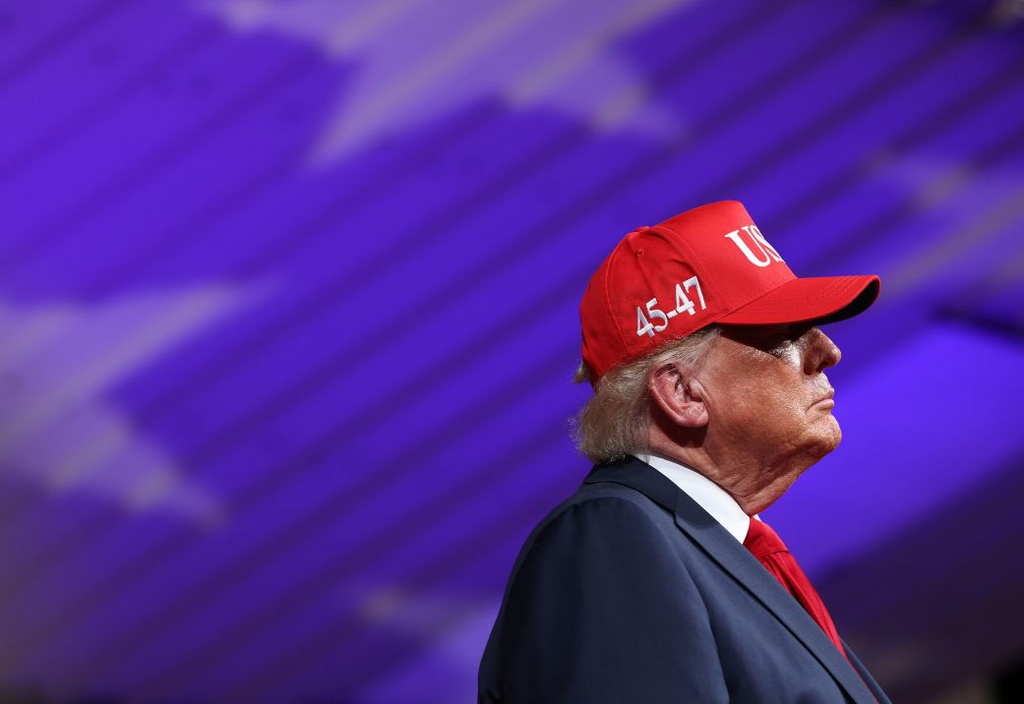
A major diplomatic storm just erupted across the Atlantic. Headlines around the world blew up after US President Donald Trump announced that Washington reached a groundbreaking agreement giving the United States permanent control over Greenland’s security.
Within hours of the announcement, leaders in both Denmark and Greenland rushed to set the record straight, making it clear that no someone is buying their country and their national sovereignty remains completely intact.
This sudden development has left millions of people asking simple questions. Did Denmark actually hand over power to Washington? Is Greenland becoming an American territory? Or is this just another case of dramatic political statements masking a standard military pact? The situation is moving fast, and understanding what is really happening requires looking closely at the statements, the history, and the massive stakes in the icy North.
The agreement comes after months of intense pressure, public threats, and behind-the-scenes negotiations among the United States, Denmark, and Greenland. While the final paperwork is expected to be signed during the upcoming United Nations General Assembly in New York, the debate over who really holds authority in the Arctic is louder than ever.
The Bold Claims: What Did Trump Say About the Greenland Deal?
The drama started when Donald Trump posted a statement on social media declaring that a deal had been finalized. According to his statement, the agreement grants the United States forever access and total operational ability to do whatever is necessary to defend both Greenland and America. He claimed that Washington now holds permanent control over security matters and all other needs on the giant island.
Build Funnels, Email Lists & Sell Online With One Free Tool
Create funnels, send emails, and sell online using Systeme.io without paying for multiple tools.
Create Free AccountFree forever • No credit card • Beginner-friendly
Trump also made it clear that the core purpose of this move is to keep major American rivals completely out of the region. Under the terms he described, foreign powers like China and Russia will be strictly barred from building military bases, deploying armed forces, or making sensitive financial investments anywhere on Greenland soil without written permission from Washington.
To top it off, Trump mentioned that this partnership would allow the US military to install advanced defense hardware on the island, including components linked to high-tech missile defense networks designed to protect North America and European allies. His words immediately made it sound as if the United States had effectively taken ownership of Greenland’s national defense apparatus.
Denmark and Greenland Push Back: “Sovereignty Is Non-Negotiable”
It did not take long for officials in Copenhagen and Nuuk to respond to Trump’s public claims. Both governments quickly released formal statements confirming that an agreement exists, but they flatly denied that Greenland’s political independence is being traded away. They emphasized that protecting their land and their people remains entirely under their own constitutional authority.
Denmark’s Foreign Minister Lars Løkke Rasmussen addressed the situation directly on social media. He stated that while the agreement strengthens security across the Arctic and North Atlantic, it strictly respects Denmark’s firm red lines. He noted that after months of damaging uncertainty, a binding pact within the framework of the NATO alliance is a positive outcome, provided that national sovereignty is not compromised.
Greenland’s Prime Minister Jens-Frederik Nielsen echoed those exact thoughts. He highlighted that any deal negotiated between the nations explicitly recognizes the sovereignty and territorial integrity of the Kingdom of Denmark and safeguards the fundamental right of the Greenlandic people to self-determination. In plain language, Greenland is willing to host military personnel to keep the peace, but the island is not for sale, and its government will not take orders from Washington.
Why Greenland Matters So Much to the United States
To understand why Washington is so fixated on this Arctic island, you have to look at a globe. Greenland sits directly between North America and Europe, right at the top of the Northern Hemisphere. This unique geography makes it one of the most important strategic locations on the planet for tracking military activity, monitoring airspace, and projecting power across northern shipping routes.
For decades, military strategists have viewed the Arctic as a primary defense buffer. With modern satellite technology, advanced radar systems, and artificial intelligence transforming global defense strategies, having direct access to polar territory allows nations to detect long-range threats long before they reach major population centers. You can read more about how cutting-edge tools shape global defense and modern life in our dedicated Technology & AI category.
Beyond pure military defense, Greenland is packed with natural resources that the global economy desperately needs. As polar ice continues to shift, vast deposits of critical minerals, rare earth metals, and untapped energy reserves are becoming far easier to access. These materials are crucial for manufacturing smartphones, electric vehicles, renewable energy hardware, and advanced electronics.
Tensions, Threats, and Months of Diplomatic Pressure
This new agreement did not happen in a vacuum. It is the result of months of intense political tension that threatened to tear apart long-standing alliances within NATO. The pressure began building earlier in the year when Washington repeatedly raised the idea of acquiring Greenland, using aggressive rhetoric that shocked European leaders and created panic among locals on the island.
The thought of an American takeover forced European diplomats into emergency discussions. Leaders across the continent insisted that international law and existing treaties must be respected. Denmark made it repeatedly clear that while it welcomed closer security cooperation with the United States, it would never cede control over its territory or treat its citizens as bargaining chips.
To defuse the escalating crisis, NATO officials stepped in to help guide discussions toward a mutual compromise. The goal was simple: give the United States the military reassurance it demanded to secure the Arctic against foreign rivals, while ensuring that Greenland and Denmark retained complete political ownership over their land.
What Do the People of Greenland Actually Think?
While politicians in Washington and Copenhagen debate high-level policy, everyday citizens living in Nuuk, Greenland’s capital, are viewing the entire situation with a heavy dose of skepticism. Many locals worry that getting squeezed between super-power rivalries will strip away their cultural identity and hard-won local governance.
For decades, Greenlanders have worked to gain greater self-rule from Denmark, establishing their own parliament and managing their internal affairs. Many residents feel that swapping Danish influence for direct American oversight would simply replace one form of colonial relationship with another. Local elders and community leaders have openly expressed that they want security provided through broader international partnerships rather than unilateral American control.
Public sentiment on the streets reflects a desire for stability, peace, and respect. Residents want modern infrastructure, job opportunities, and strong defense, but they are adamant that their children and grandchildren should not grow up under foreign rule. For them, self-determination is not a bargaining chip to be tossed around during presidential press conferences.
Strategic Security: Keeping Russia and China at Bay
A massive driver behind this security agreement is the growing military and economic activity of Russia and China in the polar region. Over the past decade, Moscow has reopened old Soviet-era Arctic military bases, deployed icebreaker fleets, and placed modern missile systems along its northern coastline.
At the same time, Beijing has declared itself a near-Arctic state, investing heavily in shipping projects, scientific research facilities, and infrastructure proposals across northern nations. Western intelligence agencies have long warned that allowing adversary nations to gain an economic or military foothold in Greenland would pose a direct threat to transatlantic security.
By securing an agreement that legally blocks Chinese and Russian investments in critical infrastructure, Washington aims to lock down the region completely. The agreement creates strict vetting rules for any foreign money attempting to enter Greenland, ensuring that sensitive ports, airports, and communication networks remain strictly under Western alignment.
What History Tells Us: The Long Relationship Between Washington and Greenland
This is not the first time the United States military has set up shop on Greenland soil. In fact, American forces have maintained an active presence on the island for over eighty years, starting during the Second World War when Denmark was occupied and the US stepped in to defend the territory from hostile forces.
In 1951, Denmark and the United States signed a formal defense agreement that officially allowed the US military to build and operate facilities on the island. This agreement led to the creation of Pituffik Space Base, formerly known as Thule Air Base, which sits high above the Arctic Circle. This facility plays a vital role in tracking polar satellites and providing early warnings for incoming missile threats.
The key difference today is that historical treaties always operated on mutual consent and shared NATO responsibility. The current debate centers on whether the new terms grant Washington unmatched operational freedom that exceeds past agreements, or if it simply updates the 1951 treaty to match modern geopolitical realities.
What Comes Next? The Upcoming UN General Assembly
All eyes are now turned toward New York, where leaders are scheduled to gather for the United Nations General Assembly. Officials expect the formal language of the agreement to be finalized and signed during high-level side meetings between American, Danish, and Greenlandic diplomats.
However, major questions remain unanswered. The public still does not know the exact details regarding how many additional American troops will be deployed, where new bases might be built, or how much authority local courts will have over foreign military personnel. Transparency will be essential in the coming weeks to calm public fears and establish clear boundaries.
As news breaks and official documents are released, independent journalists, digital creators, and news outlets will be breaking down every clause for the public. If you are interested in how digital creators summarize breaking global stories and build massive online audiences around trending news, check out our insights in our YouTube Automation category.
How to Stay Informed and Connected
Following fast-moving international news can feel overwhelming, but staying informed on real-world events matters now more than ever. Having clean, straightforward access to reliable facts helps everyone understand how decisions made in distant capital cities impact global stability, economics, and daily life.
If you want to know more about our editorial vision and why we bring you direct, easy-to-read updates on global events, visit our About Us page. We believe that staying updated on world news should be simple, transparent, and engaging for readers everywhere.
We always love hearing from our community of curious readers. If you have questions, feedback, or story suggestions about this topic or other world events, feel free to drop us a note through our Contact Us page. You can also join our growing online community and share your thoughts on social media by following our official pages on Instagram, Facebook, and X (formerly Twitter).
Frequently Asked Questions (FAQs)
Did Donald Trump buy Greenland?
No. Greenland was not sold to the United States. Leaders from both Denmark and Greenland have repeatedly stated that the island is not for sale, and its political sovereignty remains entirely unchanged under the new security agreement.
Build Funnels, Email Lists & Sell Online With One Free Tool
Create funnels, send emails, and sell online using Systeme.io without paying for multiple tools.
Create Free AccountFree forever • No credit card • Beginner-friendly
Who actually controls Greenland right now?
Greenland is an autonomous territory within the Kingdom of Denmark. It has its own democratically elected parliament and prime minister who handle internal affairs, while foreign defense and international relations are managed in cooperation with Denmark.
What does the new security deal actually do?
The deal allows the United States to expand its military presence and build upgraded defense facilities on the island. In return, it binds the US to defend Greenland while strictly prohibiting foreign powers like China and Russia from establishing military or strategic economic footprints there.
Why does the United States want a military presence in Greenland?
Greenland sits in a vital strategic location between North America and Europe. It provides an ideal position for early-warning radar systems, Arctic sea route monitoring, space tracking capabilities, and access to key natural resources.
Is NATO involved in this Arctic agreement?
Yes. Both Denmark and the United States are founding members of NATO. Officials from the alliance helped facilitate talks to ensure that Arctic defense measures strengthen shared transatlantic security while respecting national borders.
When will the final deal be signed?
Diplomats expect the formal agreement to be signed during meetings at the United Nations General Assembly in New York, after which more specific details about military operations may be made public.
The ongoing developments around Greenland prove that the Arctic is fast becoming one of the most critical geopolitical zones on Earth. As the United States, Denmark, and Greenland move toward finalizing their updated defense relationship, the world will be watching closely to see how this military partnership unfolds on the ground. Balancing international security with national respect is never easy, but maintaining that balance is vital for long-term peace in the far North.
