
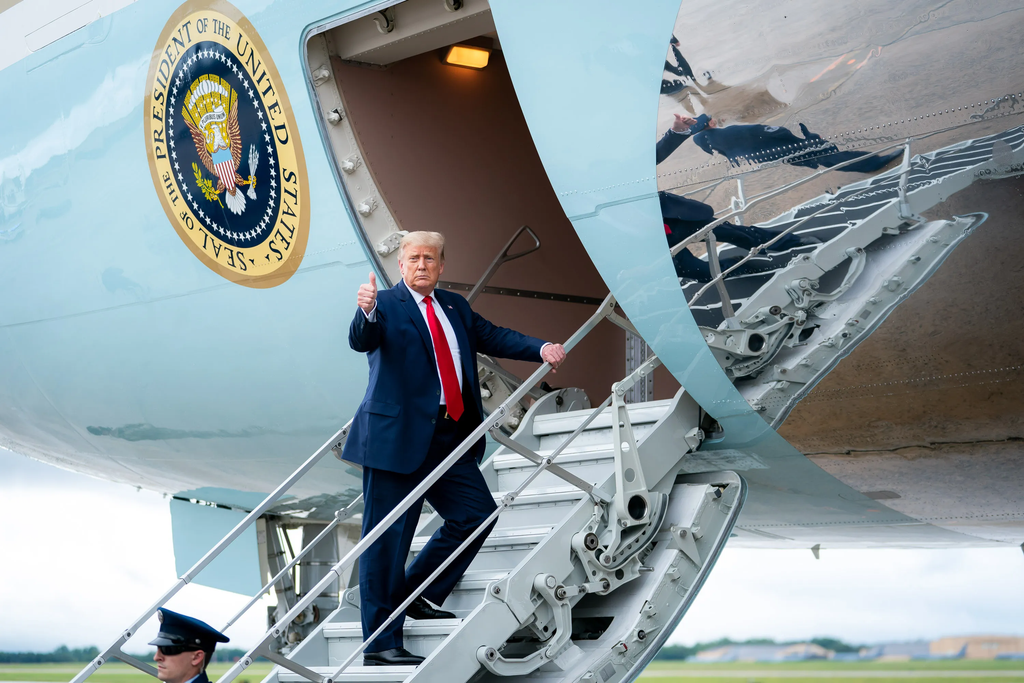
US President Donald Trump has officially announced a massive security agreement between the United States, Denmark, and Greenland. Under this new deal, the American military will expand its footprint on the giant Arctic island to build a permanent security presence. The announcement marks one of the biggest geopolitical moves of the year, bringing an end to months of intense global speculation and debate.
For months, world leaders and observers followed the back-and-forth discussions surrounding Greenland. Trump previously suggested that the United States should acquire the island directly to protect American interests. However, this newly announced pact takes a different path. Instead of changing who owns the island, the agreement grants the US military sweeping access while keeping Greenland firmly under the sovereignty of the Kingdom of Denmark.
Trump took to social media to share the news, describing the agreement as an “Infinite Life” deal with no expiration date. He emphasized that the arrangement gives the US complete authority to manage security needs in the area while blocking strategic rivals like China and Russia from establishing any military or economic footholds on the island. Meanwhile, officials in Denmark and Greenland stressed that the deal respects local self-determination and territorial integrity.
This announcement carries huge implications for international relations, global defense, and the future of the Arctic. To understand why this deal is making headlines across the globe, it helps to break down what was agreed upon, why Greenland is so important, and how this decision affects everyday life around the world.
The Big Announcement: What Is Inside the U.S.-Greenland Security Deal?
The new deal establishes a framework for long-term military cooperation between Washington, Copenhagen, and Nuuk (the capital of Greenland). While full legal details will be finalized when leaders sign the document during the upcoming United Nations General Assembly, several core points have already been made public by officials from all three governments.
The $0 Secret To Launching Your Entire Online Empire
Why pay hundreds every month for separate software? Build funnels, send emails, and make sales with Systeme.io completely free.
Get Started For $0Free Forever • No Credit Card Needed • Beginner-Friendly
First, the United States receives permanent access to build, expand, and operate military facilities across Greenland. Trump announced that the US defense department will immediately start selecting suitable locations to construct new installations and station additional troops. US Secretary of State Marco Rubio highlighted that this arrangement permanently incorporates Greenland into the North American strategic defense zone.
Second, the pact includes a strict exclusion clause aimed at foreign rivals. Under the terms disclosed by US State Department officials, non-NATO nations are completely banned from opening military bases in Greenland. Furthermore, countries deemed to be US adversaries cannot make sensitive investments or purchase critical infrastructure on the island without explicit written permission from Washington.
Third, the agreement directly addresses the question of ownership. Despite earlier claims and proposals regarding a potential purchase of the island, this pact leaves Greenland as an autonomous territory under the Kingdom of Denmark. Danish Prime Minister Mette Frederiksen confirmed that the agreement recognizes the territorial integrity of Denmark and upholds the rights of Greenlandic citizens to make their own decisions about their future.
Finally, Trump stated that the deal comes at “no cost” to American taxpayers, though specific financial breakdowns have yet to be fully detailed. For the US administration, securing full defense privileges without acquiring the administrative burden of running the island represents a major strategic victory.
Why Is Greenland So Important to Global Powers?
To understand why the US, Russia, and China pay so much attention to Greenland, you have to look at a globe from the top down. Greenland is the world’s largest island, situated directly between North America and Europe in the Arctic Ocean. Its unique location makes it one of the most strategically valuable places on Earth for defense monitoring and global trade.
During the Cold War, the United States recognized the island’s value and constructed several defense installations there. The most famous of these is the Pituffik Space Base, formerly known as Thule Air Base, located in northwestern Greenland. Operated by the US Space Force, this base plays a vital role in global missile warning systems, space surveillance, and tracking object trajectories across the Northern Hemisphere.
Beyond military positioning, Greenland has become even more important due to environmental changes and global economic shifts. As Arctic ice melts, new ocean shipping lanes are opening up. These northern maritime routes can cut transit times between Europe and Asia by thousands of miles, making control of northern waters a huge economic priority.
Greenland is also packed with rich natural resources. The island contains massive underground deposits of rare earth minerals, which are essential materials used in making smartphones, electric vehicle batteries, advanced medical equipment, and military technology. Both China and Russia have shown growing interest in Arctic resources over recent years, prompting the US and its NATO allies to secure their positioning in the region. You can learn more about how international alliances operate by exploring historical records on NATO treaties.
How We Got Here: From Outright Purchase Demands to a Security Agreement
The road to this historic security deal was anything but smooth. The debate began shortly after Trump returned to office, when he renewed calls for the United States to acquire Greenland. He argued that controlling the territory was essential to prevent hostile nations from setting up operations near North American borders.
At the time, Trump did not rule out extreme measures to secure the island, which created significant friction with European partners. Denmark and local Greenlandic leaders firmly rejected any talk of selling the land. Prime Minister Mette Frederiksen repeatedly declared that Greenland belongs to its people and is not a commodity to be bought or sold.
The strong stance from Denmark led to months of tense diplomatic negotiations. European nations watched closely, concerned about stability within the NATO alliance. However, diplomats behind the scenes quietly worked toward a middle ground that could satisfy American security demands while respecting Danish sovereignty.
The eventual compromise shifted the focus from land ownership to defense rights. By granting the US permanent military access and veto power over hostile investments, the deal gives Washington the defense control it sought. At the same time, Denmark and Greenland preserved their legal boundaries and political authority. For official background on how American foreign policy approaches international treaties, you can check out the [suspicious link removed].
What Does This Deal Mean for Russia, China, and NATO Allies?
The geopolitical reactions to the U.S.-Greenland security pact have been swift and varied. Within NATO, many European leaders breathed a sigh of relief that a potential crisis between alliance members was resolved through diplomacy rather than direct conflict.
By securing Greenland under a joint defense umbrella, NATO strengthens its northern flank against potential security threats. Recent months have seen rising tensions in the Arctic and Baltic regions, including military maneuvers and airspace disputes involving foreign naval vessels. Strengthening defense capabilities in the Arctic sends a clear message about NATO’s commitment to regional security.
For Russia and China, this agreement represents a major roadblock to their Arctic ambitions. China has previously labeled itself a “near-Arctic state” and sought to invest in Greenlandic mining projects and infrastructure. Under the terms of the new agreement, those types of investments cannot move forward without US approval.
Send, Spend & Hold Money Worldwide Without Hidden Fees
Transfer money internationally at the real exchange rate and hold 40+ currencies in one account.
Open a Wise AccountMid-market rate • Fast transfers • 40+ currencies
Russia, which maintains a large military presence along its extensive Arctic coastline, has voiced strong opposition to expanding Western military power in the region. Russian diplomats have argued that increasing US troop levels in Greenland could lead to greater militarization of the Arctic circle.
How Do the People of Greenland Feel About the Agreement?
While world leaders negotiate in capital cities, the residents of Greenland are processing what this expansion means for their daily lives. Greenland is home to around 56,000 people, most of whom are indigenous Inuit. The island has enjoyed self-governing autonomy within the Kingdom of Denmark since 1979, with local authority over domestic issues like education, healthcare, and economic development.
Reactions on the island are mixed. On one hand, many local business leaders see economic opportunities. Construction projects for new military infrastructure, roads, and airfields could bring jobs, improved local transport, and direct financial investment to remote communities. Greenland’s Prime Minister, Jens-Frederik Nielsen, noted that the deal recognizes local interests and brings stability to international partnerships.
On the other hand, many citizens remain cautious about having a larger foreign military presence in their towns. There are concerns about environmental preservation, local culture, and whether increased military activity might draw unwanted geopolitical tension to their quiet island home. Many Greenlanders hold long-term aspirations for total independence, and they want to ensure that long-term security deals do not limit their political freedom in the future.
How Modern Media and AI Track World Events
In years past, major geopolitical developments took weeks or months to reach global audiences. Today, news about international security agreements breaks in real-time, traveling across digital platforms in seconds.
Media creators and digital publishing platforms play a massive role in helping everyday people digest complicated geopolitical news. Through modern automated workflows and smart content creation tools, online channels break down breaking news into easy-to-understand videos and articles faster than ever before. If you are interested in how modern creators automate content production to cover viral stories, check out our guide on YouTube Automation strategies.
At the same time, advanced technology and artificial intelligence are changing how national defense systems work in places like Greenland. From tracking satellite data to analyzing Arctic weather patterns, smart systems help defense agencies process information accurately. You can read more about how cutting-edge tools are changing global industries in our dedicated section on Technology and AI trends.
What Happens Next for the Greenland Security Agreement?
While President Trump and European leaders have announced the terms of the deal, several official steps must take place before construction teams and additional military personnel arrive in Greenland.
Here is the upcoming timeline for the agreement:
- Official Signing Ceremony: Leaders from the United States, Denmark, and Greenland are scheduled to formally sign the agreement documents in New York during the United Nations General Assembly.
- Parliamentary Approval: The deal must be presented to and approved by the parliaments in both Denmark and Greenland. Local lawmakers will review the specific language to confirm that sovereignty rights remain fully protected.
- Site Surveys and Development: Once legal approvals are complete, engineers and military planners from the US Department of Defense will begin surveying locations across Greenland to select construction sites for new facilities.
- Local Economic Partnerships: American representatives will work alongside local Greenlandic contractors and workers to begin construction projects, ensuring that local communities benefit from development efforts.
How to Stay Connected with Whatsbuzzn
Staying informed about major world events, breaking news, and trending global topics shouldn’t be complicated. We aim to break down complex global developments into simple, straightforward stories that anyone can enjoy reading.
The $0 Secret To Launching Your Entire Online Empire
Why pay hundreds every month for separate software? Build funnels, send emails, and make sales with Systeme.io completely free.
Get Started For $0Free Forever • No Credit Card Needed • Beginner-Friendly
Want to learn more about who we are and what drives our editorial team? Visit our about page to get the full story behind our platform.
Have a question about this article, a news tip to share, or feedback for our writers? We would love to hear from you! Reach out to us directly through our contact page and our team will get back to you.
Do not forget to join our growing online community across social media! Follow us for live updates, behind-the-scenes content, and viral news summaries:
- Connect with us on Instagram for daily visual news updates.
- Join the conversation on our Facebook page and share your thoughts with fellow readers.
- Follow our official handle on X (formerly Twitter) to catch breaking updates as they happen.
Frequently Asked Questions (FAQs)
Did the United States buy Greenland from Denmark?
No, the United States did not buy Greenland. Greenland remains an autonomous territory under the Kingdom of Denmark. The agreement is a long-term defense and security pact, not a land sale or property purchase.
Will the U.S. build new military bases in Greenland?
Yes, the agreement allows the US military to expand its presence and construct new facilities in suitable areas across Greenland. The exact locations and types of bases will be decided following official site surveys.
What is the Pituffik Space Base?
Pituffik Space Base (formerly known as Thule Air Base) is a existing military facility located in northwestern Greenland. Operated by the US Space Force, it provides missile warning, space surveillance, and satellite tracking capabilities for the US and NATO.
Why does the agreement block non-NATO countries from Greenland?
The exclusion clause is designed to protect North American and European security interests. By barring non-NATO nations from constructing military installations or buying sensitive assets, the deal prevents geopolitical rivals from establishing a military foothold in the Arctic.
Does the deal need final approval before it takes effect?
Yes. Although the governments have reached a complete consensus on the terms, the final agreement must be formally signed at the United Nations and then approved by the parliaments in both Denmark and Greenland.
The U.S.-Greenland security deal marks a historic moment in modern international relations. By balancing American defense priorities with local Arctic sovereignty, this pact reshapes military strategy in the far North while keeping global powers closely watching the horizon. As construction plans get underway and official signatures are finalized, the entire world will be keeping an eye on how this powerful Arctic partnership unfolds in the months ahead.
