
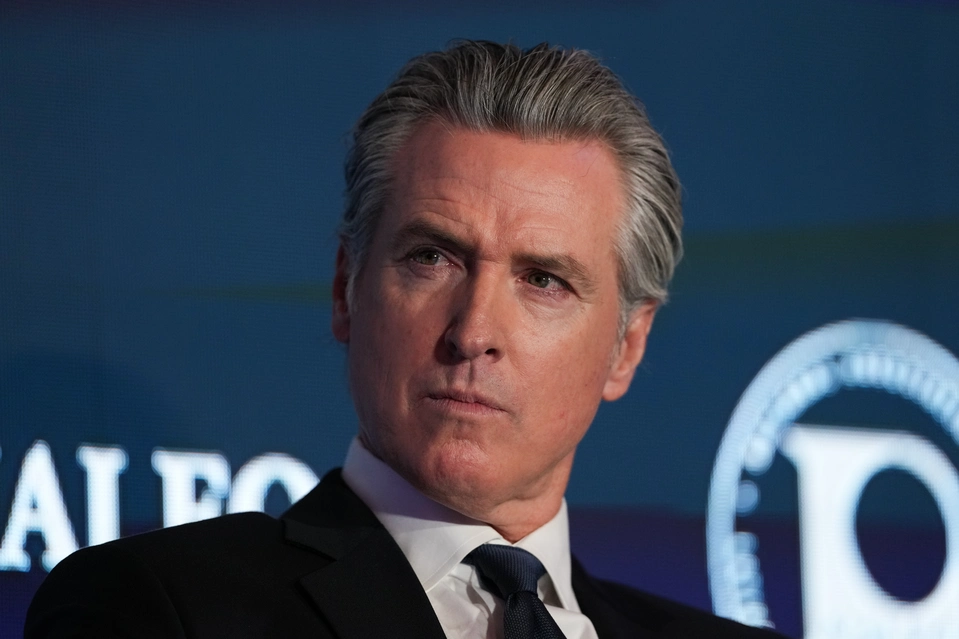
California Governor Gavin Newsom has made his position clear regarding the 2028 presidential election. In a recent interview, Newsom stated that he will not run for president in 2028 if former Vice President Kamala Harris decides to enter the primary race.
Speaking during an interview with CNN anchor Jake Tapper, Newsom explained that competing directly against Harris would create unnecessary conflict inside the Democratic Party. He described a potential primary battle between the two of them as a bad move for everyone involved.
Newsom said that facing Harris in a primary campaign would amount to “mutual assured destruction”. He emphasized that both of them draw support from the exact same groups of voters, donors, and political allies. Because of that shared foundation, he argued that fighting each other for the nomination would waste time and damage both of their political careers.
What Gavin Newsom Said in His Interview
The comments were made during an interview conducted while Newsom and Tapper were fly fishing on the Bitterroot River in Montana. When asked directly if he would challenge Harris for the Democratic nomination in 2028, Newsom gave a firm answer.
“Of course not. Why would I? I wouldn’t do that to her. I wouldn’t do it to me. Why would I?” Newsom told CNN. He added, “I wouldn’t waste everyone’s time. Who needs that?”
Build Funnels, Email Lists & Sell Online With One Free Tool
Create funnels, send emails, and sell online using Systeme.io without paying for multiple tools.
Create Free AccountFree forever • No credit card • Beginner-friendly
Newsom explained that a competing primary run between two high-profile California leaders would serve no greater good. He noted that political opponents would enjoy watching two major Democrats battle each other, calling it a gift to other political parties.
When Tapper pointed out that Harris previously ran for president and lost, Newsom held his ground. He explained that he knows her base of supporters and her circle of friends very well. He noted that the overlap between their supporter bases is almost total, meaning a primary contest between them would force long-time allies into an uncomfortable split.
According to reports covered by The Guardian, Newsom admitted that he considered running in earlier election cycles but felt he was not ready. He explained that candidates must be honest with themselves about whether they represent the right choice for the country at any given moment.
A Shared History: Roots in San Francisco Politics
To understand why Newsom made this promise, it helps to look at the deep personal and professional history between Newsom and Harris. Both politicians built their careers in the same political environment in California, specifically in San Francisco.
In the early 2000s, Newsom served as the Mayor of San Francisco while Harris served as the city’s District Attorney. They rose through the ranks of California politics at the exact same time, working with many of the same community leaders and financial supporters.
Over the years, their political paths stayed closely aligned. Newsom eventually became the Lieutenant Governor of California and later the Governor. Meanwhile, Harris became the Attorney General of California, then a United States Senator, and eventually Vice President under Joe Biden.
Because they grew up in the same political backyard, they share deep connections across California. The same business leaders, political donors, and advocacy organizations have backed both of them for decades. If both entered the 2028 Democratic primary, those long-time supporters would be forced to choose one over the other.
Why Newsom Called a Primary Fight “Mutual Assured Destruction”
The term “mutual assured destruction” originally comes from military strategy, describing a scenario where two sides attack each other so intensely that both end up destroyed. Newsom applied this idea to describe a primary fight against Harris.
Running a nationwide presidential campaign requires massive financial resources, thousands of staff members, and strong voter enthusiasm. California is the single largest source of campaign donations for Democratic candidates across the United States.
If Newsom and Harris both ran, California donors would be split down the middle. Campaign workers and local leaders in the state would have to take sides. Instead of spending energy and money competing against rival political parties, both candidates would end up spending millions of dollars fighting each other for the same voters.
Newsom realized that while they traded blows in a lengthy primary, another Democratic candidate from a different state could easily gain momentum and win the nomination. By ruling out a run against Harris, Newsom eliminates a messy California primary war.
Gavin Newsom’s National Strategy and Political Profile
Even though Newsom says he will not challenge Harris, he has not closed the door on his political ambitions entirely. Over the past few years, Newsom has been active on the national stage, building a high profile across the country.
He has traveled to key swing states to campaign for fellow Democrats ahead of major elections. He has also used social media aggressively to debate political opponents, respond to national news events, and push back against rival policies.
Newsom’s team has leaned heavily into modern digital communication to connect directly with voters nationwide. In modern campaigns, reaching people requires far more than standard television speeches. Candidates build online channels, collaborate with creators, and use automated content systems to keep their messaging active around the clock. You can learn more about how modern creators and media teams automate their video channels by checking out these YouTube automation guides.
Technology plays a huge role in how modern campaigns analyze voter trends and communicate online. From artificial intelligence tools to smart audience tracking, tech is shifting the political landscape every day. To explore how new digital tools are transforming different fields, read our latest technology and AI updates.
Newsom made it clear that he is still thinking through his future. He mentioned that any decision to run for higher office down the line depends on several factors, including his family’s agreement, his personal readiness, and whether his message fits what voters want at that time.
Kamala Harris and the Path to 2028
Kamala Harris remains one of the best-known figures in the Democratic Party. Having served as Vice President, she starts with national name recognition that few other potential candidates can match.
Despite her loss in the 2024 presidential election against Donald Trump, early polling among prospective 2028 Democratic primary voters shows Harris holding a leading position. A report covered by the Washington Post notes that Harris consistently ranks at or near the top of early primary preferences.
Harris has stated publicly that she is taking time to evaluate her options regarding a potential 2028 bid. However, Newsom’s decision not to challenge her provides her with a clearer path if she chooses to run.
Without Newsom in the race, Harris would likely secure the support of the vast majority of California’s political donors and organizational leaders. That solid home-state foundation would give her campaign a massive financial boost early on, allowing her to focus her time and resources on early voting states like Iowa, New Hampshire, South Carolina, and Nevada.
Other Contenders in the 2028 Democratic Primary
With Newsom stepping back if Harris runs, attention shifts to other Democratic leaders who might enter the 2028 primary. The Democratic Party has several governors, senators, and federal leaders who are viewed as potential presidential candidates.
Josh Shapiro
The Governor of Pennsylvania won a decisive victory in a critical swing state. Shapiro has earned national attention for his pragmatic governing style and his ability to appeal to moderate and independent voters in the Rust Belt.
Gretchen Whitmer
The Governor of Michigan has built a strong reputation by winning major elections in a key Midwestern state. Her focus on infrastructure, manufacturing jobs, and healthcare has made her a popular figure among party members across the country.
Pete Buttigieg
The former Transportation Secretary and 2020 presidential candidate remains a popular figure among many Democrats. Known for his clear communication skills and frequent television appearances, Buttigieg continues to maintain a strong national following.
Alexandria Ocasio-Cortez
The Congresswoman from New York is one of the most prominent progressive voices in American politics. She commands a massive grassroots following and possesses strong digital fundraising abilities.
JB Pritzker
The Governor of Illinois has used his platform to pass progressive policies while using his personal resources to support Democratic organizations across the nation.
If Harris decides not to run for president in 2028, Newsom would instantly become one of the main contenders alongside these leaders. But if Harris does launch a campaign, these potential candidates will have to decide whether to challenge a former Vice President for the nomination.
Build Funnels, Email Lists & Sell Online With One Free Tool
Create funnels, send emails, and sell online using Systeme.io without paying for multiple tools.
Create Free AccountFree forever • No credit card • Beginner-friendly
Relief for California Donors and Party Leaders
California is often viewed as the financial engine of national politics. For months, Democratic party insiders in the state expressed worry about the possibility of Newsom and Harris running against each other.
Many top political donors in San Francisco, Los Angeles, and Silicon Valley have personal relationships with both Newsom and Harris. Being asked to take sides in a primary would have created major awkwardness and divided local political committees.
Newsom’s public commitment has brought a sense of relief to many of these donors. California political operatives can now avoid an internal civil war, ensuring that local fundraising dollars stay focused on helping the party win competitive elections nationwide.
Understanding Political Timing and the “Zeitgeist”
During his interview with CNN, Newsom highlighted the concept of political timing. He pointed out that anyone considering a run for president needs to look in the mirror and ask if they truly match what the country needs at that specific moment.
“You have to meet the moment,” Newsom said during the interview. “You have to be honest with yourself. Do you represent the zeitgeist of the moment? Are you wasting everybody’s time?”
In national politics, having experience or name recognition is not always enough. Successful presidential campaigns happen when a candidate’s personal story and policy focus align with the mood of the electorate. Newsom admitted that during previous election cycles, he felt he was not ready to meet that standard.
He emphasized that running for the highest office in the nation should not be driven purely by ego. It requires a clear purpose that connects with voters across all regions of the country.
How Voters and Social Media Are Reacting
Newsom’s announcement quickly sparked debate across political forums and social media networks. Supporters of Kamala Harris praised Newsom for showing loyalty and prioritizing party unity ahead of personal ambition.
On the other hand, some of Newsom’s supporters expressed disappointment. They argued that open primary debates make the party stronger by allowing voters to choose among all available candidates rather than stepping aside for establishment figures.
The conversation highlights a broader debate within the Democratic Party about how best to select its next presidential nominee. Some voters favor clear, orderly transitions, while others prefer energetic primary contests that test candidates under pressure.
You can join the ongoing conversation and follow real-time political updates on our official social media channels:
- Follow our latest posts on our X account
- Connect with our community on our Facebook page
- View visual stories and updates on our Instagram page
Frequently Asked Questions (FAQs)
Why did Gavin Newsom say he will not run for president if Kamala Harris runs?
Gavin Newsom stated that running against Kamala Harris would create “mutual assured destruction”. Since both politicians built their careers in California and share the same donor base, political advisors, and supporters, fighting each other in a primary would split their resources and hurt both of their political futures.
Is Gavin Newsom’s statement legally binding?
No, political declarations made years before an election are not legally binding. However, Newsom made his statement publicly and clearly on national television. Going back on his word later would draw heavy political criticism from voters and party leaders.
Has Kamala Harris formally announced a run for president in 2028?
No, Kamala Harris has not formally announced a presidential campaign for 2028. She has stated in recent interviews that she is taking time to consider her options. However, early polls show her leading potential Democratic primary contenders.
What happens if Kamala Harris decides NOT to run for president in 2028?
If Kamala Harris chooses not to enter the 2028 primary, Gavin Newsom would be free to run. Under that scenario, Newsom would likely enter the race as one of the front-runners for the Democratic nomination, supported by strong California fundraising networks.
Who are the other potential Democratic candidates for 2028?
Other prospective candidates mentioned by political analysts include Pennsylvania Governor Josh Shapiro, Michigan Governor Gretchen Whitmer, Transportation Secretary Pete Buttigieg, Representative Alexandria Ocasio-Cortez, and Illinois Governor JB Pritzker.
Where can I find more background news and stories?
You can explore more articles on politics, culture, and trending news by visiting our About WhatsBuzzn page. If you have feedback or news tips to share, feel free to reach out through our Contact page.
Looking Ahead to the 2028 Presidential Race
Gavin Newsom’s announcement marks an early defining moment in the build-up to the 2028 presidential election. By choosing not to challenge Kamala Harris, Newsom has chosen party unity and strategic caution over a potentially bruising state-level rivalry.
This move gives Kamala Harris a much clearer runway if she decides to pursue the presidency again. It avoids a costly division among California’s political donors and allows the party to focus its attention on building a cohesive national platform.
At the same time, Newsom keeps his options open for the future. Whether Harris runs or not, Newsom remains a central figure in Democratic politics, positioning himself as a disciplined team player who knows when to step forward and when to wait for the right moment. As 2028 approaches, voters across the country will be watching closely to see how these decisions shape the future of American leadership.
