
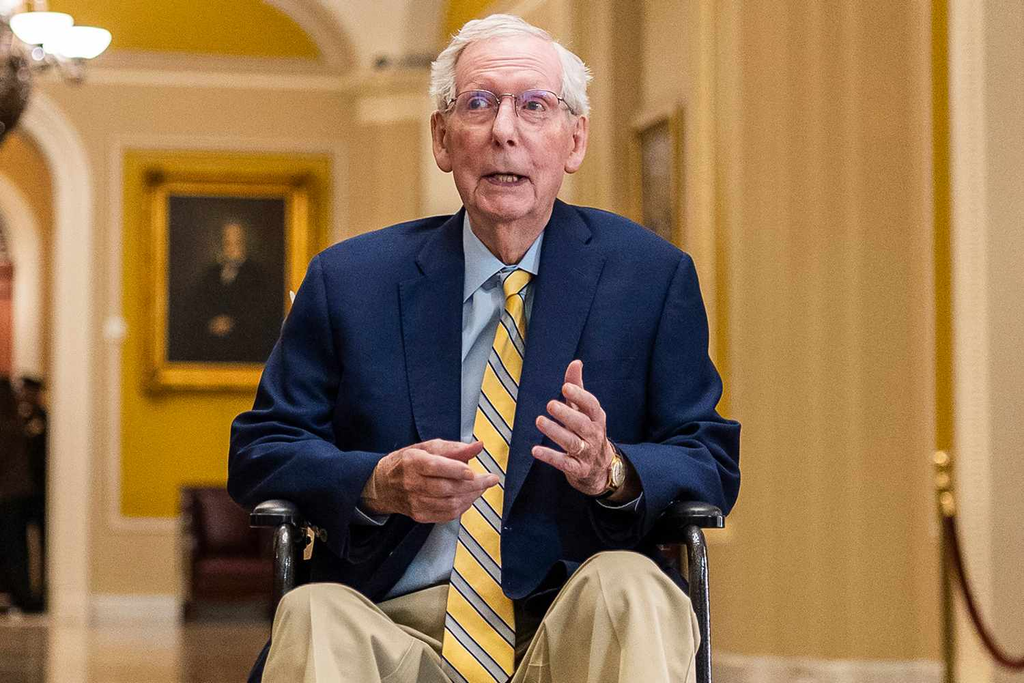
Republican Senator Mitch McConnell returned to the Senate floor on Monday after a three-month absence following a severe fall at his Washington home in June. Arriving in a wheelchair, the 84-year-old Kentucky lawmaker cast his first vote in nearly twelve weeks, putting an end to months of public concern and online speculation about his health.
His return comes at a critical moment for Senate Republicans, who operate with a tight majority and face major upcoming votes on agriculture, national defense, and government funding. McConnell made it clear that while his physical recovery is still an ongoing process, he is back to help his party finish important legislative work before his term ends in January.
The Long Road Back to Capitol Hill
The story of McConnell’s extended absence began on June 14, when he suffered a bad fall inside his residence. The incident required immediate hospitalization, where doctors treated him for a brief loss of consciousness and a mild case of pneumonia.
Recovery was slow and complicated. For several weeks after the initial incident, McConnell’s office offered very few updates regarding his physical status. That lack of clear news created a wave of rumors on social media and drew criticism from political observers who demanded more transparency. Kentucky Governor Andy Beshear went as far as issuing a public letter asking the senator to provide clear information to the people he represents.
In a written statement released on the day of his return, McConnell addressed the long delay directly. He explained that his rehabilitation was a slow and frustrating journey, made harder by the lasting effects of childhood polio. McConnell survived polio at a very young age, but the physical impact has affected his gait and balance throughout his adult life. Recovering from a major fall as an octogenarian with post-polio condition required months of intensive physical therapy under medical supervision.
Build Funnels, Email Lists & Sell Online With One Free Tool
Create funnels, send emails, and sell online using Systeme.io without paying for multiple tools.
Create Free AccountFree forever • No credit card • Beginner-friendly
While some critics questioned whether he would return at all, his doctors cleared him to travel back to the Capitol. His return marks one of the longest medical leaves taken by a sitting party leader in recent Senate history, proving just how challenging his physical recovery has been.
What Happened on Monday at the Capitol
McConnell made his official return to Capitol Hill on Monday evening. He was seen leaving his Washington residence earlier in the day and arrived at the Capitol building using a wheelchair. Dressed in his typical dark suit, he paused briefly outside the Senate chamber to speak with waiting journalists.
Despite looking visibly frailer and speaking at a slower pace, McConnell showed flashes of his classic dry sense of humor. He joked with reporters that he was surprised so many of them turned out to see him, considering how many questions he had avoided answering during his twenty years in party leadership.
The senator then entered the floor to cast his vote. He joined his colleagues to vote on the confirmation of a federal judge for a district court in Ohio. Members from both sides of the aisle greeted him on the Senate floor as he resumed his official duties.
In his official statement, McConnell was candid about his physical condition. He admitted that he is still not back to 100 percent physical health. However, he reassured Senate Majority Leader John Thune that he will do everything possible to attend crucial votes when the Republican conference needs his vote.
According to reporting from the Associated Press, Senate staff instructed reporters not to capture video footage of his hallway remarks, though photographers were permitted to take still images. This detail highlights the delicate nature of his return as he continues to regain his physical strength.
Why McConnell’s Return Matters Right Now
The timing of McConnell’s return is important for several major legislative battles currently brewing in Washington. Republicans hold a narrow 53-47 majority in the Senate. When party margins are this thin, every single vote matters, especially when dealing with controversial bills or tight judicial confirmations.
During the summer, McConnell’s absence directly impacted legislative progress. One major casualty was the national Farm Bill. This massive piece of legislation sets policies for agricultural programs, forestry, and national nutrition assistance across the country. Because McConnell serves on the Senate Agriculture Committee, his absence meant Republicans lacked the necessary vote to advance the bill out of committee.
With McConnell back in his seat, Senate leaders can now schedule crucial votes to move the Farm Bill forward. Republican leaders are also looking to advance key bills regarding cryptocurrency regulation, college athletics policies, and defense appropriations.
Foreign policy is another area where McConnell’s vote carries significant influence. Throughout his career, McConnell has been an outspoken advocate for strong international defense partnerships. Upon his return, he specifically pointed out that he wants to be present to support NATO allies and ensure American backing for democratic nations facing foreign military threats, including support for Ukraine against Russia.
As the Senate enters the final months of its legislative calendar, having every member present is essential for party leaders trying to pass key bills before deadlines arrive.
A History of Recent Health Challenges
McConnell’s recent fall in June is not the first time his health has made national headlines. Over the past two years, the senior senator has experienced several public health scares that raised questions about his ability to continue serving.
In March 2023, McConnell suffered a severe fall at a hotel in Washington, D.C. That incident resulted in a concussion and a rib fracture, forcing him to miss several weeks of Senate work while undergoing treatment. Later that same year, he fell again after a luncheon, resulting in a sprained wrist.
Perhaps most concerning to the public were two separate medical events during press conferences in the summer of 2023. On both occasions, McConnell suddenly froze at the podium, staring ahead silently for several seconds before colleagues and aides stepped in to assist him.
Following those events, the Capitol physician conducted a comprehensive medical evaluation. The official report concluded that McConnell had not suffered a stroke, seizure, or heart attack. Instead, doctors explained that his falls and occasional physical freezing were tied to his post-polio condition and the lingering effects of his concussion.
Despite these physical setbacks, McConnell has consistently rejected calls to resign early, insisting that he remains fully capable of finishing his term.
The Broader Debate Over Age and Term Limits in Washington
McConnell’s physical struggles have fueled a broader conversation about age in American politics. Across the country, voters and policy analysts are discussing whether age limits or term limits should be established for federal lawmakers.
The United States Senate currently has several members in their seventies and eighties. When high-profile leaders experience long absences due to illness or injury, it often sparks debates about government efficiency and representation. When a senator is unable to vote for months, the constituents of that state lose their full voice in Congress.
This topic became a central focus during recent presidential election cycles and continues to be a major talking point in public debates. Many younger voters favor introducing maximum age limits for members of Congress, while supporters of senior politicians argue that decades of political experience and institutional knowledge are invaluable when negotiating complex national laws.
McConnell has already taken steps toward stepping aside. At the end of 2024, he officially stepped down from his role as Senate Republican Leader, a position he held for seventeen years. Senator John Thune of South Dakota was elected by the Republican conference to take over as party leader.
McConnell has confirmed that he will not seek re-election when his current Senate term ends in January. Political parties in Kentucky have already selected their candidates for the upcoming election to fill his seat, with Republicans nominating Representative Andy Barr and Democrats nominating Charles Booker.
How News and Social Media Reacted to the Return
In today’s connected world, a high-profile political return generates massive interest across news platforms and social networks. During McConnell’s three months away, the lack of official details gave rise to intense online debate and political commentary.
News organizations like The Guardian and major broadcast networks closely tracked every update leading up to his appearance on Capitol Hill. Online communities discussed everything from Senate vote counts to the potential impact on major policy decisions.
Staying updated on fast-moving news stories is easier than ever through social media channels. You can follow real-time updates and community discussions on our official Instagram page, stay informed through our Facebook page, or join the broader political conversation on our X profile.
The rapid speed at which political news travels highlights the growing importance of digital reporting. Content creators and online journalists rely on modern tools, including technology and AI updates alongside automated workflows such as YouTube automation content, to deliver timely breaking news coverage to audiences worldwide.
What Comes Next for the Longest-Serving Senate Leader?
Mitch McConnell holds a unique place in American political history. First elected to the U.S. Senate in 1984, he has served forty years in office. During his tenure, he became the longest-serving party leader in Senate history, overseeing judicial appointments, major tax reforms, and landmark political battles under multiple presidential administrations.
Now in the final stretch of his career, McConnell is operating as a rank-and-file senator while retaining his positions as chair of key committees, including the Senate Rules Committee and a defense appropriations subcommittee. These assignments give him significant influence over federal spending priorities and Senate administrative rules during his remaining months in office.
Build Funnels, Email Lists & Sell Online With One Free Tool
Create funnels, send emails, and sell online using Systeme.io without paying for multiple tools.
Create Free AccountFree forever • No credit card • Beginner-friendly
His immediate focus will be assisting Senate leaders in passing essential legislation before the end of the term. While physical therapy remains a daily requirement to keep him mobile, McConnell’s vote gives Republicans the baseline strength needed to pass key conservative policies.
As Washington prepares for a political transition in the coming year, McConnell’s final months in office will mark the conclusion of one of the most consequential Senate careers of the modern era.
Frequently Asked Questions (FAQs)
Why was Mitch McConnell absent from the Senate?
Mitch McConnell was absent for three months following a fall at his home in Washington, D.C., on June 14. He was hospitalized for a brief loss of consciousness and treated for mild pneumonia before undergoing intensive physical therapy.
How long was Mitch McConnell away from Capitol Hill?
He was away from the Senate for approximately 90 days, making his absence one of the longest medical leaves taken by a sitting party leader in recent history.
Is Mitch McConnell retiring from the U.S. Senate?
Yes. Mitch McConnell will complete his current term and retire from the Senate when his term expires in January.
Who replaced Mitch McConnell as Republican Leader in the Senate?
Senator John Thune of South Dakota succeeded Mitch McConnell as the Senate Republican Leader after McConnell stepped down from leadership at the end of 2024.
Did Mitch McConnell suffer a stroke or heart attack during his fall?
No. Comprehensive medical evaluations by the Capitol physician confirmed that McConnell did not suffer a stroke, brain hemorrhage, or heart condition. His mobility challenges are related to his post-polio condition and physical recovery from his fall.
Mitch McConnell’s return to the Senate floor marks a significant moment in modern political news. After three months of recovery, the 84-year-old senator is back to participate in critical legislative votes during his final months in public office. His presence provides Republicans with the voting numbers required to advance important bills, including the Farm Bill and key defense funding measures.
As national politics continues to shift, staying informed about government updates and global developments remains crucial. If you would like to know more about our editorial mission and story coverage, please visit our About Us page. To share feedback, send news tips, or reach our publishing team directly, feel free to visit our Contact Us page.
