
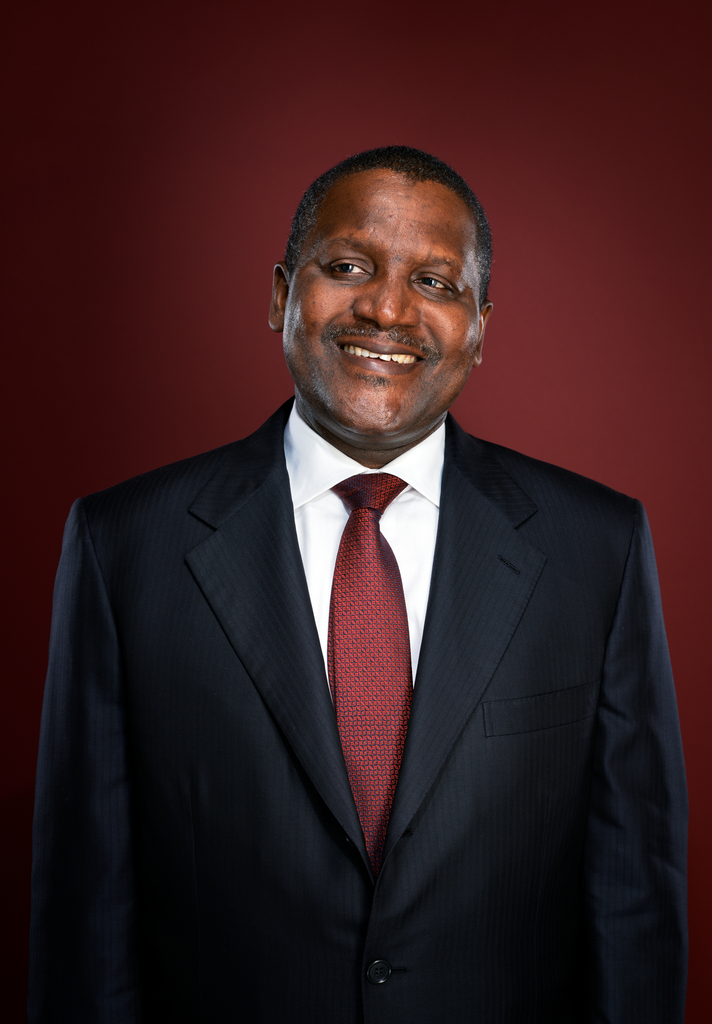
Aliko Dangote has officially made global financial history by becoming the first African industrialist to cross the $50 billion net worth benchmark. According to updated figures from the Forbes Billionaires Index, the Nigerian businessman saw his fortune surge to an unprecedented $51.3 billion following a massive revaluation of his core industrial assets and the public listing of his flagship oil refinery.
This huge jump added over $20 billion to his wealth in a remarkably short window. For years, Dangote held the title of Africa’s richest person with a net worth hovering between $10 billion and $15 billion. The completion and full operational rollout of the Dangote Petroleum Refinery in Lagos shifted his financial trajectory entirely, vaulting him into the upper tier of global wealth alongside international icons like Jack Ma and Phil Knight.
Understanding how Dangote reached this milestone requires looking at a decades-long strategy built on local manufacturing, massive scale, and relentless expansion into basic human necessities. His journey offers a masterclass in how targeted private investment can transform an entire continent’s economic landscape while creating massive private wealth.
The Mega Refinery Deal That Changed Everything
The primary catalyst behind Dangote’s leap past the $50 billion mark is the Dangote Petroleum Refinery, located in the Lekki Free Trade Zone near Lagos, Nigeria. Valued at nearly $50 billion during its recent private placement and initial public offering (IPO) preparation, the refinery stands as the largest single-train oil refinery on earth.
Building a facility capable of processing 650,000 barrels of crude oil per day was widely viewed as an enormous financial gamble. Dangote invested roughly $19 billion of his own capital and corporate loans to bring the project to life over a decade of complex construction.
Build Funnels, Email Lists & Sell Online With One Free Tool
Create funnels, send emails, and sell online using Systeme.io without paying for multiple tools.
Create Free AccountFree forever • No credit card • Beginner-friendly
Now that the refinery is fully operational, the economic return on that multi-billion-dollar bet has exceeded initial market expectations.
- Ending Fuel Importation: For decades, Nigeria exported crude oil only to import expensive refined petrol due to broken domestic refineries. Dangote’s plant completely flipped this dynamic, meeting 100% of Nigeria’s domestic demand for refined products while leaving substantial surplus for export across Africa and Europe.
- Massive Foreign Exchange Savings: By producing gasoline, diesel, and aviation jet fuel locally, the refinery saves billions of dollars in foreign currency exchange each year. This operational capability dramatically stabilizes national supply chains.
- Direct Equity Value: Because Dangote holds a majority ownership stake in the refinery enterprise, the plant’s high private market valuation flowed straight into his personal net worth calculation.
To power and automate complex industrial infrastructure on this scale, modern manufacturing plants rely heavily on advanced technical systems and smart machinery. Industry updates around cutting-edge tools and industrial automation can be explored on the WhatsBuzzn Technology & AI Hub.
From Trading Rice to Industrial Empire: The Early Foundations
Aliko Dangote’s business path did not begin with giant factories or oil pipelines. In 1977, he received a small $3,000 loan from his uncle, Sanusi Dantata, to launch a modest trading enterprise in Kano, Nigeria.
In those early days, the business focused on buying and selling basic food commodities such as sugar, rice, flour, and pasta. Dangote bought goods in bulk, moved them efficiently, and sold them at razor-thin margins. His focus was speed, volume, and customer reliability.
By the late 1990s, Dangote recognized a fundamental flaw in relying solely on trading imported goods: import tariffs, government policy changes, and currency swings could destroy a trading business overnight. He made a bold strategic choice to pivot from importing finished goods to manufacturing them locally inside Nigeria.
He began constructing massive processing facilities for sugar refining and flour milling. By producing essential goods inside the market where they were consumed, Dangote lowered costs, secured long-term distribution networks, and established brand dominance that competitors simply could not match.
Dangote Cement: The Cash Engine of Africa
While the oil refinery generated his recent wealth surge, Dangote Cement has long served as the ultimate cash-generation engine of his entire business network. Cement is the fundamental building block of urbanization, infrastructure, and housing across developing economies.
Dangote built cement plants equipped with heavy-duty machinery across sub-Saharan Africa. Today, Dangote Cement operates in 10 countries, including Nigeria, Ghana, Ethiopia, Senegal, South Africa, Zambia, and Tanzania.
- Dominant Market Share: Dangote Cement controls over 60% of the cement market in Nigeria alone, producing tens of millions of metric tons every single year.
- High Operational Margins: By building its own power generation plants and owning its limestone quarries, the company keeps production costs low while maintaining strong profit margins.
- Funding Future Ventures: The steady, predictable cash flow produced by cement sales provided the cash reserves required to fund high-risk, long-term capital projects like the refinery and fertilizer complexes without relying entirely on external financing.
By focusing on high-demand building materials, Dangote established an economic moat that generated stable revenue through economic upswings and downturns alike.
Fertilizer, Sugar, and Expanding the Empire
Beyond energy and cement, Dangote has systematically targeted other critical foundational sectors across Africa. Food security and agricultural productivity represent two of the largest growth opportunities on the continent.
The Dangote Fertilizer Plant, situated right next to the oil refinery in Lagos, is one of the largest granulated urea fertilizer plants in the world. Built at a cost of $2.5 billion, the facility has a capacity of 3 million metric tons per year.
- Boosting Agricultural Yields: The fertilizer complex supplies local African farmers with affordable urea, dramatically improving crop yields for corn, wheat, and rice.
- Global Export Footprint: Large shipments of fertilizer are regularly exported from Nigeria to markets in the United States, Brazil, India, and across Latin America.
- Integrated Supply Chains: By using natural gas byproducts from energy operations to manufacture fertilizer, the business minimizes waste and maximizes operational efficiency.
Modern businesses across every industry rely on scalable, automated operational models to handle growth smoothly. For insights into building automated media platforms and scalable content strategies, check out the guide on WhatsBuzzn YouTube Automation Strategies.
What a $50 Billion Net Worth Means for Africa’s Economy
Aliko Dangote reaching a $51.3 billion net worth carries heavy economic weight far beyond his personal bank account. For decades, the list of the world’s top 50 richest people was dominated almost exclusively by American, European, and East Asian technology founders and luxury titans.
Dangote’s rise changes the global business narrative around African wealth creation. It demonstrates that massive, world-class industrial projects can be successfully funded, constructed, and operated within Africa by African business leaders.
- Attracting Foreign Direct Investment: International institutional investors view Dangote’s success as proof that large-scale capital investments in African infrastructure can deliver exceptional returns.
- Job Creation at Scale: The Dangote Group directly employs over 50,000 workers across Africa and supports hundreds of thousands of indirect jobs in transport, distribution, construction, and retail.
- Currency Stabilization: Domestic production of fuel, sugar, cement, and fertilizer reduces dependence on foreign imports, helping preserve national foreign currency reserves.
Core Lessons Entrepreneurs Can Learn from Dangote’s Journey
Dangote’s rise from a small-scale commodity trader to a $50 billion industrial giant offers practical strategies for business builders, investors, and leaders everywhere.
Focus on Basic Human Needs
Dangote did not build his empire on trendy tech gadgets or short-term hype. He focused on things people use every single day: food (sugar, salt, flour), shelter (cement), mobility (fuel), and agriculture (fertilizer). When a business solves basic physical needs, demand remains strong regardless of market trends.
Think in Decades, Not Quarters
Building a 650,000-barrel-per-day refinery took more than ten years of continuous planning, capital expenditure, and political negotiation. Dangote ignored short-term market skepticism and stayed committed to a long-term Vision.
Own the Whole Value Chain
Rather than outsourcing critical parts of his business, Dangote owns his supply chains. He owns the limestone mines for cement, the power plants that light his factories, the gas pipelines that feed his fertilizer plants, and the trucks that deliver his goods to market. Backwards integration protects businesses from supply chain disruptions.
Reinvest Profits Aggressively
Instead of pulling profits out of his businesses to purchase passive assets abroad, Dangote consistently reinvested earnings back into expanding local factories and building new projects. Aggressive reinvestment drives compound growth.
Stay Connected with Our Coverage
Keeping up with fast-moving stories in global business, economics, technology, and culture is essential for staying ahead of trends.
To learn more about our publication, mission, and editorial standards, visit our official page at WhatsBuzzn About Us. If you have news tips, questions, or partnership inquiries, reach out directly via the WhatsBuzzn Contact Form.
Follow our official social channels to receive real-time updates and join ongoing conversations across our online community:
- Connect with us on WhatsBuzzn Instagram for visual updates and stories.
- Join the discussion on WhatsBuzzn Facebook for community posts and news breakdowns.
- Follow our feeds on WhatsBuzzn X (Twitter) for breaking announcements and live commentary.
Frequently Asked Questions
How did Aliko Dangote become worth over $50 billion?
Aliko Dangote’s net worth crossed $50 billion following the revaluation and stock market listing preparation of his 650,000-barrel-per-day oil refinery in Lagos, Nigeria. The high private placement valuation added over $20 billion to his personal fortune due to his large equity ownership.
What is the main source of Aliko Dangote’s wealth?
His wealth stems from his majority stakes in Dangote Petroleum Refinery, Dangote Cement (Africa’s largest cement producer), Dangote Fertilizer, and Dangote Sugar Refinery. His industrial holdings span manufacturing, energy, agriculture, and construction materials across sub-Saharan Africa.
Where is the Dangote Refinery located?
The refinery is located in the Lekki Free Trade Zone in Lagos, Nigeria. It covers roughly 2,635 hectares and is the largest single-train oil refinery anywhere in the world.
How does Dangote’s wealth compare to other global billionaires?
At over $51 billion, Dangote ranks among the top 30 wealthiest individuals globally. His fortune places him ahead of prominent global figures like Jack Ma (founder of Alibaba) and Phil Knight (founder of Nike).
When did Dangote start his business?
Dangote started his business journey in 1977 after securing a $3,000 loan from his uncle to trade commodities like sugar, rice, and flour in Kano, Nigeria. He transitioned into full-scale industrial manufacturing in the late 1990s.
Build Funnels, Email Lists & Sell Online With One Free Tool
Create funnels, send emails, and sell online using Systeme.io without paying for multiple tools.
Create Free AccountFree forever • No credit card • Beginner-friendly
Looking Ahead to the Future of African Industry
Aliko Dangote’s leap past the $50 billion mark marks a historic turning point for African enterprise on the world stage. By taking calculated financial risks and building mega-infrastructure locally, he has redefined what is possible for private enterprise across developing markets. As his oil refinery and fertilizer operations reach full global export capacity, the footprint of his industrial empire will continue shaping regional economies for decades to come.
