
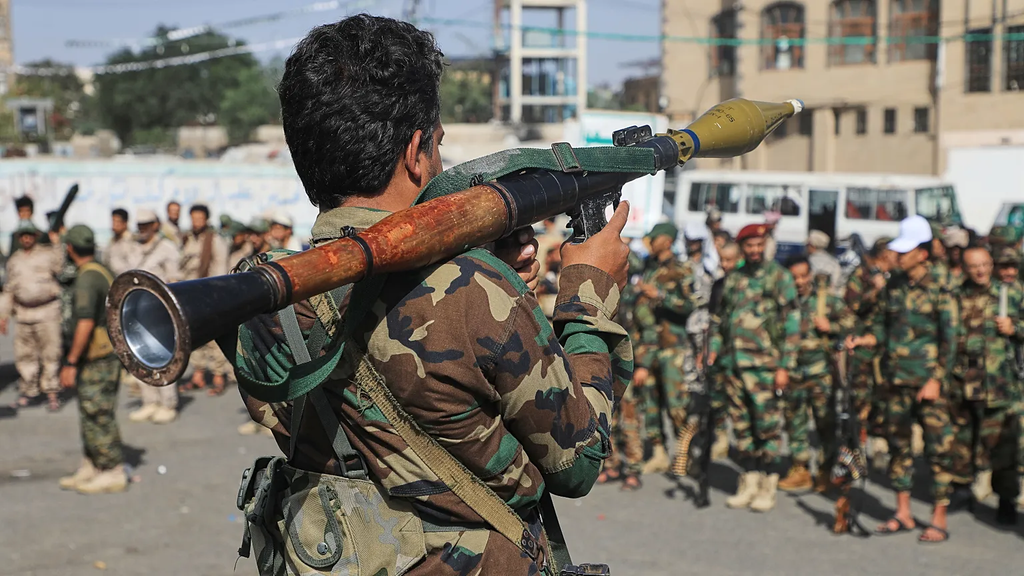
Houthi forces in Yemen have officially captured a key strategic port along the Red Sea coast. This military takeover marks one of the most significant territorial shifts in the region in recent years. By securing this vital coastal hub, the movement has established direct control over a essential maritime gateway that connects the Indian Ocean to the Mediterranean Sea through the Suez Canal.
The immediate aftermath of the operation sent shockwaves through global shipping headquarters and foreign ministries around the world. Military analysts describe the takeover as a massive tactical victory not just for the Houthis, but also for their primary backer, Iran. With key docking facilities, radar installations, and coastal defense systems now under Houthi control, the group holds a commanding position over one of the world’s busiest commercial shipping lanes.
This development comes after weeks of intense skirmishes along the Yemeni coastline. Coastal guard units and local forces were forced to retreat as heavily armed Houthi fighters launched a coordinated assault from multiple directions. The speed and success of the offensive have sparked urgent emergency meetings among international naval coalitions stationed nearby to protect commercial vessels.
Understanding how this event unfolded requires looking at the bigger picture. The Red Sea is not just a body of water on a map. It serves as the economic superhighway for global trade, carrying millions of barrels of crude oil and billions of dollars in manufactured goods every single day. When control of this waterway changes hands under military force, the consequences ripple quickly into markets across the globe.
Understanding the Red Sea Corridor and Why This Port Matters
The Geopolitical Heart of Global Shipping
To understand why international leaders are concerned about this port, it helps to look at how global trade moves across the ocean. The Red Sea connects to the Arabian Sea through a narrow bottleneck known as the Bab-el-Mandeb Strait. Ships traveling from factories in Asia to markets in Europe must pass through this narrow passage before reaching the Suez Canal.
Build Funnels, Email Lists & Sell Online With One Free Tool
Create funnels, send emails, and sell online using Systeme.io without paying for multiple tools.
Create Free AccountFree forever • No credit card • Beginner-friendly
According to trade data from the International Maritime Organization, roughly 12 percent of total global trade and nearly 30 percent of global container traffic pass through this maritime corridor. When a hostile military force controls a deep-water port right along this bottleneck, every single ship passing by becomes vulnerable to interception, monitoring, or missile attack.
By capturing this specific facility, the Houthis now possess a permanent staging ground for naval operations. Instead of relying solely on mobile land launchers hidden in the mountains, they now have direct access to maritime docks, fuel storage tanks, and coastal surveillance hubs. This gives them the ability to project power far beyond the shoreline.
How the Seizure Unfolded on the Ground
Reports from local sources and international news agencies like Reuters confirm that the assault began in the early morning hours. Houthi forces used a combination of armored vehicles, heavy artillery, and armed speedboats to encircle the port perimeter. Local security forces found themselves outgunned and quickly overwhelmed by the disciplined infantry units.
Once inside the compound, Houthi fighters quickly secured critical infrastructure. They took over administrative buildings, power generation facilities, and cargo handling cranes. Within hours, defensive positions were built around the port perimeter to prevent any immediate counter-offensive by opposing regional forces.
Local authorities reported that civilian workers were instructed to leave the primary shipping terminals as military personnel established new checkpoints. The rapid occupation demonstrated careful planning and logistics, showing that the operation was designed to hold the position long-term rather than serve as a temporary raid.
The Role of Iran in the Expanding Conflict
A Major Strategic Win for the Axis of Resistance
The relationship between the Houthis and Tehran has grown significantly over the past decade. Western intelligence agencies and the United Nations Security Council have repeatedly highlighted how Iranian military advisers, technology transfers, and weapons shipments have built up Houthi capabilities.
This victory gives Iran an indirect hand on the throttle of global commerce. By empowering an ally along the Red Sea, Tehran gains immense leverage in its broader geopolitical standoff with Western nations and regional rivals. Military experts point out that controlling key maritime choke points allows Iran to exert pressure without engaging in direct state-on-state warfare.
The takeover of the port reinforces what analysts call the Axis of Resistance, a network of regional allies supported by Iran stretching across Lebanon, Syria, Iraq, and Yemen. With a permanent foothold along the Red Sea, this network now has an active presence along major global trade routes.
Pressure on the United States and Coalition Allies
The port seizure places severe operational pressure on international naval coalitions patrolling the region. The United States and its partners have spent months attempting to safeguard commercial shipping lanes through naval patrols and targeted airstrikes. However, securing a coastline becomes far more complex when an opposing force holds fully developed port infrastructure.
This latest shift follows a series of direct military encounters across Middle Eastern waters. Earlier skirmishes have already seen significant clashes, such as when US strikes targeted Iranian oil tankers following attacks on naval vessels. The regional situation remains fragile, with military actions frequently spilling over into broader energy corridors.
As naval patrols adjust to this new reality, military command structures are forced to consider riskier maritime operations to prevent total disruption of commercial shipping lanes. The potential for unexpected skirmishes between coalition warships and coastal defense units has reached its highest level in years.
What This Means for Everyday Consumers and Global Trade
Soaring Shipping Costs and Rerouted Cargo Ships
The immediate real-world effect of this conflict is felt in the maritime logistics industry. Major shipping companies like Maersk and Hapag-Lloyd have already instructed their fleet captains to avoid the Red Sea corridor whenever safety concerns rise. Instead, cargo vessels are forced to take a massive detour around the southern tip of Africa, traveling around the Cape of Good Hope.
Taking the long route around Africa adds roughly 10 to 14 days to a typical voyage between Asia and Western Europe. This detour burns thousands of extra tons of marine fuel per ship and adds millions of dollars in operational expenses for a single journey. Insurance companies have responded by raising war-risk premiums for any vessel attempting to sail through the Red Sea.
These added shipping costs do not stay hidden inside corporate spreadsheets. They are passed directly down the line to businesses and everyday shoppers. From electronics and clothing to car parts and home appliances, goods bound for retail shelves face both delivery delays and higher price tags.
Global Oil Prices and Energy Security Concerns
Energy markets are particularly sensitive to military developments along key water passages. The Red Sea serves as a crucial transit route for oil tankers carrying crude from the Persian Gulf to refineries in Europe and North America. Any disruption or threat to these vessels immediately triggers volatility in world crude prices.
The global economy has already seen how Middle Eastern maritime tensions directly affect oil production and distribution channels. Recent reports show how energy markets react when regional shipping routes tighten, impacting national revenues and consumer fuel prices globally.
When tanker traffic slows down, energy traders price in the threat of sudden supply shortages. Tanker owners require higher charter rates to cover increased security risks, which trickles down to gasoline pump prices for ordinary drivers around the globe.
The Global Superpower Response: Washington, Beijing, and Beyond
The US Military Dilemma
Washington faces a challenging set of choices in response to the port seizure. On one hand, allowing a hostile group to maintain unrestricted control over a major commercial shipping port sets a dangerous precedent for international maritime freedom. On the other hand, launching a full-scale amphibious assault or prolonged bombing campaign to clear the port carries enormous escalation risks.
Defense officials in the United States must carefully balance tactical actions against the possibility of dragging the military into a wider regional war. As detailed in coverage of US and Iranian military fire exchanges, even small tactical skirmishes can quickly spin into larger regional conflicts that drag multiple nations into active combat.
Furthermore, air defense systems and interceptor missiles used by naval destroyers cost millions of dollars per unit. Relying solely on defensive patrols to shoot down incoming cheap drones and anti-ship missiles is an expensive and unsustainable strategy over the long run.
China’s Delicate Balancing Act
While the United States leads naval coalition forces, China finds itself in a unique position regarding Red Sea security. As the world’s largest manufacturing exporter, Chinese factories rely heavily on open Red Sea shipping lanes to deliver products to European buyers. Disruptions to these trade routes cause real harm to Chinese manufacturing revenues.
At the same time, Beijing maintains close economic and diplomatic ties with Tehran, purchasing large quantities of Iranian crude oil. This balance makes Beijing hesitant to join Western-led military coalitions, preferring instead to push for behind-the-scenes diplomatic resolutions.
This dynamic illustrates how China is actively expanding its influence across the Middle East, positioning itself as an alternative political broker while navigating complex regional alliances. How Beijing handles this crisis will play a big role in shaping future diplomatic efforts across the region.
Humanitarian Crisis and the Local Impact on Yemen
Food Aid Disruption and Local Port Economy
Beyond global economics and high-level geopolitics, the seizure of this port has direct consequences for millions of innocent civilians living in Yemen. The country has endured years of severe economic hardship, relying almost entirely on imported food, basic medicines, and international aid supplies to survive.
Ports along the Red Sea coast serve as the primary entry points for relief supplies delivered by global organizations like the World Food Programme. When a port becomes an active military zone, relief ships are forced to turn back or delay offloading critical cargo due to safety hazards.
According to updates from international aid agencies reported by BBC News, even short disruptions at port facilities can spark immediate food shortages and price spikes in local markets. For families already struggling to afford basic meals, the militarization of their local port represents an immediate threat to daily survival.
Civilian Displacements and Local Infrastructure Damage
The military assault on the port city has also forced thousands of local residents to flee their homes in search of safety. Heavy weapons fire and airstrikes damaged nearby residential neighborhoods, power grids, and water supply networks.
Build Funnels, Email Lists & Sell Online With One Free Tool
Create funnels, send emails, and sell online using Systeme.io without paying for multiple tools.
Create Free AccountFree forever • No credit card • Beginner-friendly
Local emergency services have struggled to manage the sudden influx of displaced people needing shelter and medical attention. Reconstruction efforts that were previously underway to repair damaged public infrastructure have come to a complete halt as military forces consolidate their positions across the town.
What Comes Next? Possible Scenarios for the Red Sea Conflict
Scenario 1: Increased Military Operations and Coastal Strikes
One likely outcome is an escalation in targeted military strikes by international coalitions aimed at neutralizing Houthi military assets inside the port. Naval forces may attempt to destroy coastal radar stations, missile depots, and dockside facilities used to support armed speedboats.
However, conducting military strikes inside a functioning port environment carries high risks of civilian casualties and permanent destruction of vital infrastructure, which could make future humanitarian aid operations nearly impossible.
Scenario 2: Diplomatic Negotiations and International Agreements
Another possibility involves diplomatic negotiations mediated by regional nations like Oman or Qatar. Diplomatic talks could aim to establish a neutral monitoring force at the port to guarantee the safe passage of commercial vessels in exchange for economic concessions or relief aid.
Past attempts at diplomatic compromises in the region have proven difficult to sustain, but the global economic pressure caused by shipping delays may push international powers to seek a mediated settlement. Diplomatic discussions often center on broader regional issues, similar to ongoing debates over what it will take to stabilize key maritime channels.
Scenario 3: Long-term Shifts in Global Trade Routes
If security along the Red Sea remains uncertain for an extended period, the global shipping industry may permanently adjust its operational routes. Logistics companies are already investing in alternative transport methods, including expanded railway links across Eurasia and upgraded port infrastructure along African coasts.
While these alternative routes require significant time and capital investment, long-term instability in the Middle East may force the global economy to adapt to a reality where the Red Sea is no longer viewed as a guaranteed, safe commercial highway.
Expanding Your Horizon Beyond World News
Staying informed on global events helps you understand how world economies, supply chains, and political decisions directly impact everyday life. Keeping track of fast-moving international developments requires reliable information presented in a clear, straightforward manner.
If you are interested in exploring how modern technology and automated systems are changing how news and content are shared worldwide, take a moment to look into our guide on YouTube automation. Understanding these digital tools gives you insight into how modern media platforms deliver breaking updates to millions of viewers in real time.
For readers passionate about the latest developments in artificial intelligence, digital innovation, and tech breakthroughs shaping our future, our dedicated technology & AI section offers simple, easy-to-read articles designed to keep you ahead of the curve.
Want to learn more about our team and what drives our coverage? You can read about our background on our about page. If you have thoughts to share, questions about our reporting, or feedback on this article, feel free to reach out directly through our contact page.
You can also join our growing online community and join the discussion across our official social channels:
- Connect with us on Instagram for daily highlights and visual updates.
- Follow our official page on Facebook to get breaking news delivered right to your feed.
- Join the conversation on X (formerly Twitter) to share your perspective on trending global stories.
Frequently Asked Questions (FAQs)
Why is the Red Sea port so important to global trade?
The Red Sea connects the Indian Ocean to the Mediterranean Sea through the Suez Canal. It is the shortest maritime route between Asia and Europe. Around 12 percent of global trade passes through this corridor, making it essential for moving manufactured goods, oil, and raw materials efficiently.
Who are the Houthis and why are they attacking Red Sea shipping?
The Houthis are an armed political and religious movement based in Yemen. They control significant territory in the country, including the capital city of Sanaa. They state that their maritime attacks and port operations are carried out in solidarity with Palestinians and in opposition to Western military involvement in the region.
How does Iran benefit from the Houthi victory at the Red Sea port?
Iran provides financial, logistical, and military support to the Houthis. Having an ally control a key maritime choke point gives Tehran significant political and strategic leverage over global trade routes, allowing it to project influence across the region without engaging in direct conflict.
Will this port takeover cause prices to go up for consumers?
Yes, it likely will. As shipping companies reroute vessels around Africa to avoid dangerous waters, transit times increase by up to two weeks. The additional fuel costs, higher insurance rates, and ship charter fees lead to increased prices for imported consumer goods and crude oil.
Can international naval forces easily recapture the port?
Recapturing a port facility through military force is extremely complex. An amphibious assault or heavy air bombardment risks destroying valuable civilian infrastructure, causing heavy casualties, and triggering a larger regional conflict. Most international coalitions prefer focused defense patrols and targeted strikes over full-scale ground invasions.
The capture of this Red Sea port by Houthi forces represents a major turning point in regional dynamics. As international coalitions adjust their security strategies and shipping companies navigate longer routes around Africa, the global economic impact will continue to unfold in the coming months. Staying aware of these developments helps us better understand the connected world we live in today.
What are your thoughts on how international powers should handle this growing Red Sea crisis?
