
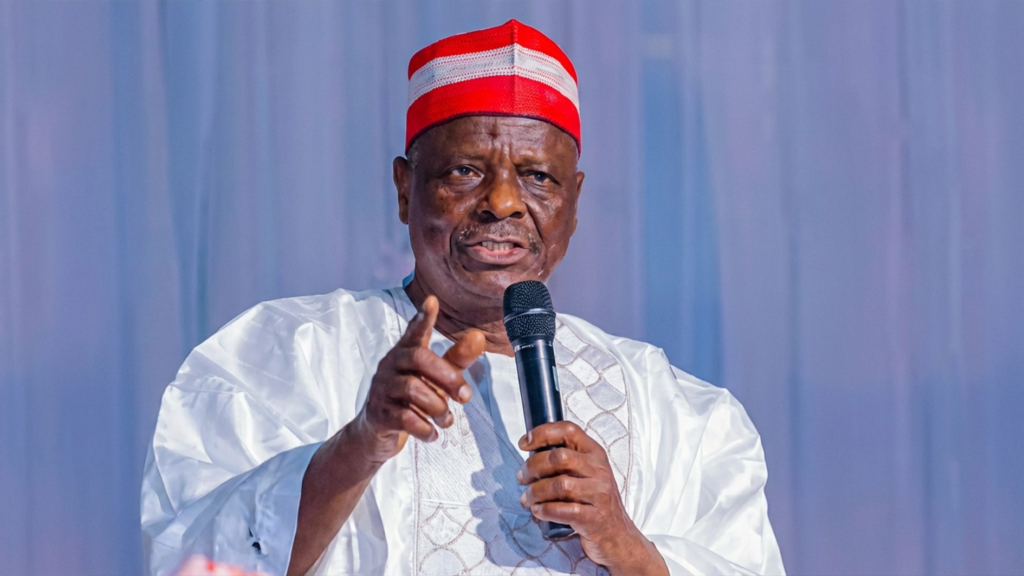
Rabiu Kwankwaso, a former governor of Kano State and a highly influential figure in Nigerian politics, has sent a very loud and clear message to the ruling party ahead of the 2027 general elections. According to him, assuming that having the support of over 30 state governors will automatically secure a victory for President Bola Tinubu is a massive mistake. Kwankwaso made these exact remarks during a recent Town Hall Meeting held in Rivers State, setting the stage for what promises to be a very heated and competitive election season.
He took the time to remind everyone present that political power at the state level does not always translate to an automatic win at the presidential level. To drive his point home, he pointed back to recent political history. He reminded the audience that a sitting president has lost an election in Nigeria before, specifically referencing the defeat of former President Goodluck Jonathan in 2015. For Kwankwaso and his political supporters, this historical fact is absolute proof that voters, not just a network of governors, are the ones who ultimately decide who gets to lead the country.
Why the Goodluck Jonathan Example Matters
When Kwankwaso brought up the name Goodluck Jonathan, he was touching on a very significant and unforgettable moment in Nigeria’s political history. Back in the buildup to the 2015 elections, Goodluck Jonathan had the full and heavy backing of the federal government. He was the sitting president, enjoying access to immense national resources and having a large number of state governors actively campaigning on his side. Yet, when the final results were tallied by the Independent National Electoral Commission (INEC), he lost the election to Muhammadu Buhari.
Kwankwaso used this exact scenario to lay down a caution for the current administration. He stated clearly that Jonathan was the president, yet the sitting president lost the election. He explained that this serves as a massive lesson for anyone who thinks that simply controlling a majority of the states makes a presidential candidate unbeatable. It is very easy for political parties to get comfortable when they look at the map and see their party members sitting in the government houses of most states across the federation. But Kwankwaso is arguing that the grassroots reality can be very different from the political calculations made in air-conditioned boardrooms.
The core message he is passing across here is that incumbency is not magic. A president can have all the institutional advantages possible, but if the everyday citizens feel entirely disconnected from the government, the opposition can still win the election. Kwankwaso is signaling that the 2027 election will not be decided by how many state governors the ruling party can parade at their rallies, but by how the everyday Nigerian feels about the economy, security, and the general direction of the country.
The $0 Secret To Launching Your Entire Online Empire
Why pay hundreds every month for separate software? Build funnels, send emails, and make sales with Systeme.io completely free.
Get Started For $0Free Forever • No Credit Card Needed • Beginner-Friendly
A Stern Warning to Northern Governors
Kwankwaso did not just stop at analyzing the presidency; he also turned his attention directly to the state governors, placing a special focus on those in the Northern part of Nigeria. He boldly predicted that many of these governors would find it very difficult to even come out and campaign for their respective parties when the 2027 elections roll around.
The reason for this bold prediction, according to Kwankwaso, is simple: poor performance in office. He mentioned to the crowd that he has studied the political trend and concluded that many state governors have performed so woefully that facing the voters to ask for another term will be an incredibly tough task. When political leaders fail to provide basic infrastructure, refuse to create jobs, or struggle to protect their citizens, asking those same citizens for their votes becomes a very hard sell.
He particularly highlighted the rising anger among the people. Kwankwaso pointed out that residents are deeply frustrated by the worsening living conditions in their states. One of the biggest issues driving this high level of frustration is the widespread insecurity, a severe problem that has hit Northern Nigeria particularly hard over the last few years. With innocent communities facing constant attacks and severe economic hardship, Kwankwaso believes that the voters are completely running out of patience. He stressed that this anger is very real and could easily show up in how people cast their ballots at the polling units.
High Revenues, Low Impact
Another major point Kwankwaso touched on during the town hall meeting was the management of public funds. He raised serious questions about the massive revenues currently flowing into the bank accounts of state governments as well as the federal government. According to him, despite the huge and visible increase in government earnings, the ordinary Nigerian on the street is not feeling any positive impact.
To put things into a clearer perspective, Kwankwaso asked the audience to look back at his own time serving as the governor of Kano State back in 1999. He noted that during his tenure, states and local governments received far less revenue to work with. He claimed they got around 4 billion naira each at that specific time. Fast forward to today, governments are receiving substantially more money from federal allocations, but the visible physical development and human capital improvement do not match the huge figures.
He mentioned how modern access to information has exposed these figures, noting that the government collected over 1.11 trillion naira in just under one single year. He then openly challenged the sitting governors by asking what exactly they have done with all that money, concluding bluntly that they have done close to nothing. This wide disconnect between high government revenue and the harsh, difficult living conditions of citizens is a key reason why Kwankwaso feels the ruling party is highly vulnerable ahead of the next general elections.
The National Democratic Congress Movement
The town hall meeting in Rivers State where Kwankwaso made these remarks also featured another massive heavyweight in Nigerian politics: Peter Obi. Both men are now actively flying the flag for a newly formed political movement known as the National Democratic Congress (NDC). In this new setup, Peter Obi is standing as the presidential candidate, while Rabiu Kwankwaso serves as his vice-presidential running mate.
This fresh political alliance is drawing a whole lot of attention across the country. Both men have massive followers in completely different regions of Nigeria. Obi commands very strong support across the Southern regions and among young, urban voters, while Kwankwaso has a deeply rooted political structure and cult-like following in the North, particularly in Kano State. By joining their forces together under the NDC umbrella, they are presenting a heavily united front specifically designed to challenge the current dominance of the ruling All Progressives Congress (APC).
During the very same event, Peter Obi took the microphone to assure their numerous supporters that absolutely nobody would be allowed to intimidate them or manipulate their votes during the 2027 elections. He made it perfectly clear that those thinking the next election will be business as usual are being totally delusional. Obi vowed that anyone attempting to stop legitimate votes from being counted would face very stiff resistance. Together, Obi and Kwankwaso are promising a totally fresh approach to leadership, one that they consistently claim will prioritize the actual needs of the citizens over normal political games.
How the Ruling Party Reacted
As you would expect in politics, the strong comments from Kwankwaso and Obi did not go unnoticed by the ruling party. The Federal Government and the APC quickly fired back, publicly dismissing the entire narrative as mere wishful thinking and cheap talk. They made it very clear to the press that they remain fully confident in their solid ability to win re-election and comfortably retain power in 2027.
The National Secretary of the APC, Ajibola Basiru, strongly criticized Obi and Kwankwaso’s historical comparisons. Basiru did not hold back, calling the opposition candidates poor students of history. He pointed out that while Goodluck Jonathan might have lost his election as a sitting president, Muhammadu Buhari successfully won his own re-election while in power, and the APC retained firm control of many states under his leadership. Basiru suggested that the opposition candidates were simply suffering from partial amnesia by consciously choosing to remember only the parts of history that suit their political arguments.
The ruling party deeply believes that their current widespread control of the states is a true testament to their political strength, not a weakness. They strongly argue that any perceived rejection of the APC, especially in the Northern regions, is just a false matter of perception deliberately created by the opposition to cause confusion. The ongoing back-and-forth arguments between the two camps clearly show that the fierce battle lines for 2027 are already being drawn.
A Changing Landscape for Voters
The way Nigerians engage with politics is changing very rapidly. Just like how different industries are evolving through the use of modern tools, the political space is heavily influenced by quick access to information. Kwankwaso even mentioned how easy it is now for citizens to track government revenue figures online. People are far more aware now than they were decades ago, and politicians can no longer hide facts easily.
It is very interesting to observe how the digital age is forcing politicians to be far more accountable to the people. The internet is a massive tool for change. Many Nigerians are using the online space to stay fully updated, openly debate government policies, and even find new ways to make a living. For instance, while some people are busy trying to understand the shifts in the political landscape, others are looking at the digital economy to survive. If you are curious about how the internet is changing different sectors, you can check out our articles in the Technology AI category to see what is new.
Furthermore, the fast rise of digital platforms has given ordinary citizens a very loud voice. Young people are creating video content, tracking political campaign promises, and sharing breaking news at the speed of light. Some creative individuals are even using YouTube Automation to build entire channels that focus entirely on political commentary, news analysis, and holding leaders accountable. This free and open flow of information means that hiding poor performance is becoming almost impossible for any government official. Voters now have digital receipts, and they will gladly bring these hard facts to the polling units.
Send, Spend & Hold Money Worldwide Without Hidden Fees
Transfer money internationally at the real exchange rate and hold 40+ currencies in one account.
Open a Wise AccountMid-market rate • Fast transfers • 40+ currencies
Looking Ahead to 2027
What Kwankwaso is ultimately saying through all his statements is that the average Nigerian voter is becoming much smarter and way more demanding. A candidate can have all the institutional backing in the world, complete with money and influence, but if the voters do not trust the candidate, the ballot box will definitely reflect that lack of trust. The upcoming election is not just going to be about which political party has the most money in their accounts or the most governors in their camp. It is going strictly going to be about who can actually convince the public that they have a genuine, workable plan to fix the broken economy, properly secure the country, and improve the general standard of living.
For the NDC movement, the primary goal is to heavily ride on this massive wave of public frustration. They want to present themselves to the public as the most capable alternative. Kwankwaso stressed that Nigeria desperately needs a committed, strong, and energetic leadership that truly understands the daily challenges of the people. On the flip side of the coin, the ruling APC will be working round the clock to prove that their current economic policies just need more time to mature and yield positive results, consistently urging the voters to trust the process and not abandon ship.
It is a truly fascinating clash of ideas, beliefs, and political strategies. As the year 2027 approaches, every single political statement, town hall meeting, and campaign rally will be heavily scrutinized by the media and the public. The Nigerian people are the real judges in this massive contest, and their final verdict at the polls will decide the future direction of the entire nation.
Stay Connected With Us
This political drama is just getting started, and there will definitely be a whole lot more to talk about as we get closer and closer to the actual election year. We always love hearing what you think about these trending political topics. Do you completely agree with Kwankwaso that the ruling party is in deep trouble, or do you think the APC’s high confidence is fully justified?
We are always sharing quick updates and sparking engaging conversations on our social media platforms. Make sure to follow us and share your honest thoughts with the community. You can find us posting daily on Instagram, join our growing community of readers on Facebook, and keep up with our latest breaking posts on X.
If you want to know more about the hardworking team bringing you these trending stories, simply head over to our About page to read our story. Also, if you have any news tips, content suggestions, or just want to say a quick hello to the editors, feel free to reach out directly through our Contact page.
Frequently Asked Questions (FAQs)
Who is Rabiu Kwankwaso?
Rabiu Musa Kwankwaso is a very prominent Nigerian politician. He previously served as the executive governor of Kano State and has been a very influential figure in Northern Nigerian politics for many years. He is widely known for his extremely strong grassroots support, especially through his famous Kwankwasiyya political movement.
What is the National Democratic Congress (NDC)?
In the context of the recent political town hall meeting held in Rivers State, the National Democratic Congress (NDC) is a new political platform featuring a major coalition between top opposition figures. Peter Obi is running as the main presidential candidate, with Rabiu Kwankwaso serving as his vice-presidential running mate ahead of the highly anticipated 2027 general elections.
Why did Kwankwaso mention Goodluck Jonathan?
Kwankwaso deliberately mentioned former President Goodluck Jonathan to make a very specific point about how elections work in Nigeria. Jonathan was a sitting president who had the full backing of many state governors, yet he dramatically lost the 2015 general election. Kwankwaso used this historical fact to explain that simply having state governors on your side does not automatically mean you will win the presidential election.
How did the APC respond to Kwankwaso’s comments?
The ruling All Progressives Congress (APC) quickly dismissed Kwankwaso’s confident statements as mere cheap talk. Their National Secretary publicly argued that Kwankwaso and his political team are poor students of history. The APC reminded them that former President Muhammadu Buhari successfully won his re-election as a sitting president, proving that the ruling party remains very strong and unbeatable.
The $0 Secret To Launching Your Entire Online Empire
Why pay hundreds every month for separate software? Build funnels, send emails, and make sales with Systeme.io completely free.
Get Started For $0Free Forever • No Credit Card Needed • Beginner-Friendly
What did Kwankwaso say about Northern governors?
Kwankwaso heavily criticized many state governors, focusing especially on those in the North, stating that they have performed woefully in office. He predicted that their poor performance in delivering dividends of democracy, combined with the rising insecurity and deep economic frustration among the citizens, would make it very difficult for them to even boldly campaign for their political parties in the next general election.
Conclusion
The long road to the 2027 general elections is already looking like a highly contested and unpredictable battle. Rabiu Kwankwaso’s recent comments have definitely stirred the political waters, reminding everyone that in the game of politics, absolutely nothing is guaranteed until the final vote is cast. His argument that having 30 governors does not safely secure a presidential victory brings a whole lot of fresh perspective, especially when looking back at the surprising events of the 2015 elections.
As political leaders like Peter Obi and Kwankwaso heavily push their new message of change to the grassroots, the ruling APC remains completely steadfast in defending their track record, pointing to their political strength across the states. What is completely clear at this moment is that Nigerian voters are paying much closer attention to facts and figures than ever before. With rising digital awareness of government spending and public performance, the ultimate power truly lies in the hands of the people. It will be very interesting to watch closely how these different political strategies unfold as the nation actively prepares to head to the polls once again.
