
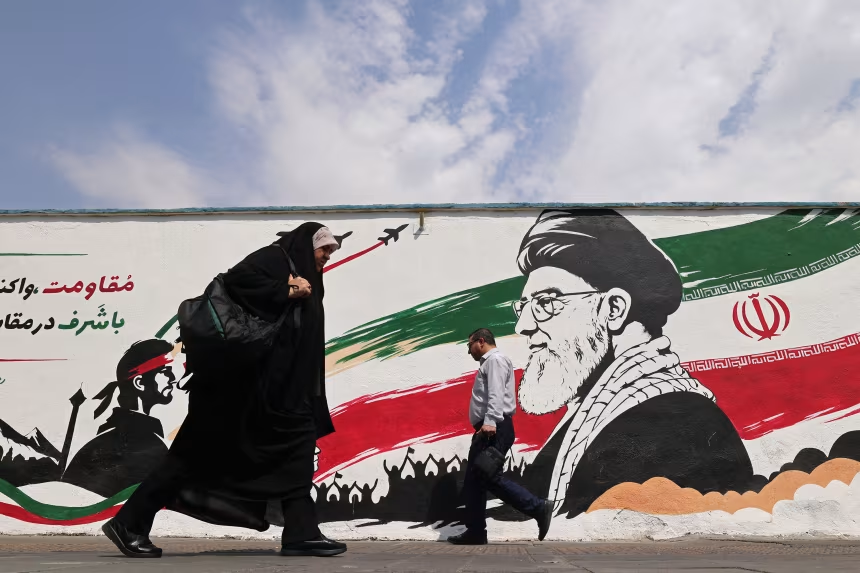
Tensions between the United States and Iran have taken another sharp turn. After weeks of quiet and stalled diplomatic efforts, U.S. President Donald Trump has returned to publicly floating the idea of regime change in Tehran.
Asking his social media followers when the Iranian people will “rise up and fight,” Trump has reignited a debate that many thought was put to rest earlier this year. The comments mark a dramatic shift from the administration’s position just a few months ago. Back then, U.S. officials insisted that Washington was focused solely on reaching a deal to secure trade routes and stop nuclear progress.
Now, with talks completely paused and military strikes resuming in the Middle East, the world is watching to see what comes next. The sudden change in message raises major questions about U.S. foreign policy, global energy stability, and the future of the Iranian government.
The Sudden Shift in U.S. Strategy Toward Tehran
For months, official statements from Washington emphasized that the U.S. was not trying to overthrow the Iranian government. During the early summer, administration officials repeatedly told reporters that the goal was limited to securing international shipping routes and stopping nuclear weapons development.
That calm did not last. Following a series of fresh military exchanges and broken negotiations, Trump publicly questioned the legitimacy of Iran’s ruling leadership once again. In recent statements, he suggested that the Iranian economy is near collapse and that the current government may not survive much longer.
The $0 Secret To Launching Your Entire Online Empire
Why pay hundreds every month for separate software? Build funnels, send emails, and make sales with Systeme.io completely free.
Get Started For $0Free Forever • No Credit Card Needed • Beginner-Friendly
This strategy shift comes after U.S. envoys were ordered to stop direct discussions with Iranian representatives. The diplomatic pause immediately opened the door for more aggressive language from both sides.
Military strikes quickly followed the breakdown in talks. U.S. forces targeted several positions in the region, while Iranian forces launched retaliatory actions. The renewed fighting ended a short period of quiet and signaled that a peaceful agreement is no longer on the near horizon.
From Negotiation to Escalation: How We Got Here
To understand why diplomacy stalled, it helps to look back at how the conflict evolved over the past several months. Hostilities flared up significantly earlier in the year, leading to major disruptions in international shipping and regional security.
In June, both nations signed a preliminary agreement intended to lower the temperature. That temporary deal was designed to reopen vital sea lanes and set up a sixty-day window for formal peace talks. For a short moment, it looked like a lasting agreement was possible.
However, the core issues were never fully resolved. The main disagreements centered on two major issues:
- Nuclear Commitments: The U.S. demanded long-term pauses on uranium enrichment and the dismantling of facilities, while Iranian negotiators resisted long timelines.
- Sanctions and Blockades: Iran demanded an immediate lifting of economic blockades, while Washington insisted on keeping pressure until every condition was met.
As the sixty-day window closed without progress, frustration grew on both sides. Washington eventually decided to suspend formal meetings entirely. With envoys sent home, military posturing quickly took the place of diplomatic meetings.
Reports from major outlets like CNN Foreign Policy Coverage highlight that neither country is currently working on a plan to reopen talks. Instead, both sides seem comfortable taking a waiting stance, even as military action ramps up.
What Trump is Saying and Why It Matters
The tone coming out of Washington changed almost overnight. On social media, Trump rejected claims that he was trying to force Iran back to the negotiating table. He posted that he felt confident in the current U.S. military position and pointed to heavy pressure on the Iranian economy.
These public posts were accompanied by direct questions about why the Iranian public has not pushed harder against their leaders. By openly bringing up popular uprisings, the administration is using public rhetoric as a tool to put pressure on Tehran.
Other high-ranking U.S. officials have added context to this approach. Treasury Secretary Scott Bessent mentioned in interviews that the goal is to apply maximum economic pressure to limit Tehran’s options. Official statements suggest that economic hardship could force the regime to change its behavior or face internal collapse.
At the same time, White House Press Secretary Karoline Leavitt clarified that the U.S. is not necessarily planning a direct ground invasion to force a change in government. Instead, the administration is emphasizing that any real regime change would have to come from inside Iran itself, driven by its own citizens.
When asked by reporters whether the U.S. plans to covertly support or arm opposition groups inside Iran, Trump declined to provide details, stating it was not appropriate to discuss potential intelligence operations publicly.
The Reality Inside Iran: Protests, Power, and the IRGC
While public statements from Washington sound confident, conditions inside Iran are complicated. The Iranian population has faced severe economic hardship due to international sanctions, inflation, and currency devaluation. Public frustration with government policies is widespread across many cities.
However, translating public frustration into a complete change of government is extremely difficult. Previous waves of street protests were met with severe force by state security units.
The power structure in Tehran remains heavily guarded by key institutions:
Send, Spend & Hold Money Worldwide Without Hidden Fees
Transfer money internationally at the real exchange rate and hold 40+ currencies in one account.
Open a Wise AccountMid-market rate • Fast transfers • 40+ currencies
- The Islamic Revolutionary Guard Corps (IRGC): This powerful military branch controls major sectors of the economy and holds tight security command.
- The Basij Force: A paramilitary group used regularly to enforce rules and suppress public demonstrations.
- State Media Control: Traditional media and internal communication channels are strictly monitored to prevent coordinated action.
Analysis from independent news outlets like AP News Middle East Reporting suggests that top Iranian authorities are prepared to maintain tight security control over the population. Even when top political figures change or pass away, the underlying military framework usually steps in to keep the political system intact.
Because of this heavy security presence, many Iranian citizens are hesitant to take to the streets, knowing the risks involved. Expecting a fast internal revolution without major structural changes inside the military is seen by many analysts as unrealistic.
The Shadow of History: Lessons from Past Middle East Interventions
Calling for regime change in the Middle East is not a new concept in American politics. Over the past several decades, foreign policy decisions regarding countries like Iraq and Libya demonstrated how unpredictable government collapse can be.
In 2003, the U.S. removed the government in Iraq, expecting a fast transition toward stability. Instead, the sudden collapse of state institutions led to years of severe instability, regional conflicts, and the rise of extremist groups. A similar power vacuum developed in Libya following international intervention in 2011.
Foreign policy scholars warn that Iran presents an even bigger challenge due to its geography, population size, and military setup.
There are also exiled Iranian opposition groups operating outside the country. While these groups are vocal in Western capitals, they are often divided among themselves and lack strong organization inside Iran. Relying on exiled figures to guide political change often leads to disconnects with the people living inside the country.
Many diplomats argue that weakening a government without a clear, stable plan for what comes next can worsen regional security. A sudden breakdown of authority in Tehran could disrupt trade across the Middle East and lead to broader regional uncertainty.
Political Pressure in Washington and the Upcoming Midterms
Domestic politics in the United States also play a huge role in how these foreign policy statements are made. With midterm congressional elections approaching, leaders in Washington are paying close attention to public sentiment.
The American public has generally voiced weariness toward long-term overseas conflicts. Polling over the past year shows that a majority of voters prefer diplomatic solutions or limited engagements rather than endless foreign military actions.
This creates a delicate balance for lawmakers:
The $0 Secret To Launching Your Entire Online Empire
Why pay hundreds every month for separate software? Build funnels, send emails, and make sales with Systeme.io completely free.
Get Started For $0Free Forever • No Credit Card Needed • Beginner-Friendly
- Political Allies: Many congressional advisers warn that active involvement in another Middle Eastern conflict could create political backlash at the ballot box.
- Administration Stance: The White House insists that its “America First” strategy remains intact and that hardline rhetoric is necessary to deter foreign threats.
Trump himself has minimized the impact of election timing on his military choices, stating publicly that foreign policy decisions are based on strategic strength rather than campaign schedules.
Even so, the debate over how to handle Iran is a major talking point in Washington, with lawmakers divided on whether economic sanctions or open diplomacy is the best path forward.
The Strait of Hormuz and Global Energy Risks
One of the biggest concerns for the global economy during this standoff is the security of the Strait of Hormuz. This narrow sea lane connects energy producers in the Persian Gulf to international markets and carries roughly twenty percent of the world’s petroleum supply.
When military tension rises, shipping companies face skyrocketing insurance rates and severe operational delays. Any long-term blockage or threat to commercial tankers immediately impacts global oil prices, leading to higher fuel costs for consumers worldwide.
Recent military reports confirm that U.S. naval forces have increased patrols to keep commercial shipping moving safely through the strait. While Washington claims near-total operational control of the passage, traffic levels remain below normal pre-war levels.
Energy markets hate uncertainty. As long as formal talks remain stalled and statements about regime change continue, international energy markets will likely remain volatile.
How Modern Technology and AI Shape Global Crises
In today’s connected world, international conflicts are fought on digital battlefields just as much as on the ground. Modern technology plays a massive role in how foreign policy events unfold and how information travels around the globe.
During periods of political tension, internet access inside affected regions is frequently restricted or monitored. Governments often use advanced digital tools to track online activity, limit social media usage, and block specific communication platforms.
At the same time, satellite imaging and artificial intelligence are changing how military monitoring and news gathering work:
- Satellite Tracking: High-resolution orbital images allow journalists and researchers to verify military movements in real time.
- AI Data Analysis: Security analysts use automated systems to scan large volumes of flight data, shipping signals, and social media posts to detect sudden shifts on the ground.
- Information Security: Digital rights groups work to provide secure, encrypted tools so citizens can share accurate news with the outside world.
Understanding these technological tools is essential for anyone following world events. If you want to learn more about how modern tech and digital systems are transforming global industries, check out our Technology and AI Updates.
How Digital Media and Creators Cover Global Breaking News
The way people get their news during international events has completely changed over the last decade. Traditional television networks are no longer the only place where audiences turn to understand complex geopolitical situations.
Today, digital content creators, independent researchers, and media channels break down breaking news as it happens. Through video breakdowns, podcasts, and short-form video updates, audiences receive immediate context on foreign policy moves, military actions, and economic reports.
Many modern media teams rely on efficient workflows to research, produce, and distribute videos fast enough to keep up with rapid news cycles. For creators interested in how digital platforms handle high-volume content production and video creation, explore our guides on YouTube Automation Strategies.
This fast-paced digital ecosystem ensures that stories about international diplomacy spread across the globe within minutes, giving everyday citizens access to real-time analysis.
What Lies Ahead for U.S.-Iran Relations?
As the situation develops, several key factors will determine whether this confrontation turns into a longer military conflict or moves back toward negotiation.
First, the economic pressure inside Iran will continue to test the endurance of its government. While strict internal security makes a fast collapse unlikely, prolonged financial strain can create unexpected internal political shifts.
Second, international pressure from European and Asian trade partners could eventually push both Washington and Tehran back to the bargaining table. Nations that depend on Persian Gulf energy supplies are keen to see a permanent peace deal signed to protect shipping routes.
Finally, the rhetoric coming from top leaders will remain a key indicator. Whether the current talk of regime change turns into official policy or remains a strategic negotiating tactic will become clear in the coming weeks.
Frequently Asked Questions (FAQs)
Why did diplomatic talks between the U.S. and Iran stall?
Diplomatic negotiations stalled after a sixty-day temporary deal failed to produce a permanent agreement. Both sides could not agree on nuclear enrichment limits, sanctions relief, and long-term security guarantees for international shipping routes.
What does “regime change” mean in this political context?
Regime change refers to the complete replacement of a country’s current government structure. In this context, it means ending the rule of Iran’s clerical government and the Islamic Revolutionary Guard Corps (IRGC) in favor of a new political system.
Has the U.S. announced a direct military plan for regime change?
No. White House officials have stated that while Trump is openly questioning the survival of Iran’s government, the administration is focusing on economic pressure and military deterrence rather than committing to a direct ground invasion.
How does this standoff impact the global economy?
The conflict directly affects the Strait of Hormuz, a crucial shipping route for global oil. Heightened military activity causes uncertainty in energy markets, leading to fluctuating oil prices and higher transport costs worldwide.
Are there active negotiations happening right now?
Currently, formal talks are paused. U.S. envoys were instructed to suspend direct discussions, and neither side has announced a timeline for resuming diplomatic meetings.
Staying updated on complex international stories can feel overwhelming, but keeping track of clear facts helps make sense of the noise. As foreign policy decisions continue to unfold in real time, the impacts will be felt across global markets, technology, and everyday life.
If you want to learn more about our team and how we cover trending global news, check out our About Whatsbuzzn Page. Have thoughts or feedback on this story? Feel free to visit our Contact Us Page to reach out directly.
You can also join our growing community online and join the conversation across our social channels. Connect with us on Instagram, follow our updates on Facebook, and join the discussion on X (formerly Twitter).
