
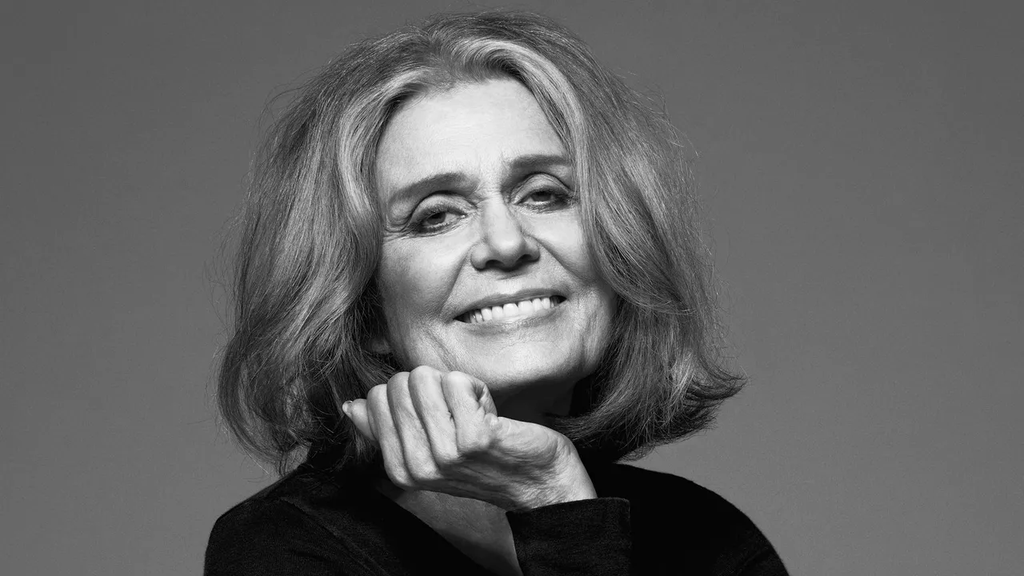
Gloria Steinem, the legendary journalist, activist, and fearless leader of the modern women’s movement, has died at the age of 92. She passed away peacefully on Wednesday at her home in New York City, surrounded by close friends and loved ones. Her foundation announced her passing on Thursday, prompting a global wave of tributes honoring a woman who spent more than six decades fighting for gender equality, civil rights, and reproductive freedom.
For generations of readers, activists, and everyday citizens, Steinem was much more than a famous public figure. She was a voice of clarity and courage. Armed with her signature aviator glasses, calm demeanor, and sharp writing, she helped dismantle outdated ideas about what women could achieve. She showed the world that fighting for equality is not just about changing laws, but about changing how people treat one another in daily life.
From exposing workplace exploitation as an undercover journalist in the 1960s to co-founding Ms. Magazine and launching national advocacy groups, Steinem turned personal conviction into collective movement. Her passing marks the end of an extraordinary era, but the path she carved remains an inspiration for people around the world.
An Unconventional Childhood and the Roots of Activism
Gloria Marie Steinem was born on March 25, 1934, in Toledo, Ohio. Her childhood was far from standard. Her father, Leo Steinem, worked as a traveling antique dealer who moved the family from place to place in a house trailer for much of the year. Because of this nomadic lifestyle, Steinem did not attend school regularly until she was eleven years old.
Her mother, Ruth Nestar Steinem, had been an energetic newspaper editor before her marriage. However, Ruth suffered from severe mental illness and chronic depression, which left her largely incapacitated for years. When her parents divorced, a young Gloria became the primary caregiver for her mother in a run-down house in Toledo.
The $0 Secret To Launching Your Entire Online Empire
Why pay hundreds every month for separate software? Build funnels, send emails, and make sales with Systeme.io completely free.
Get Started For $0Free Forever • No Credit Card Needed • Beginner-Friendly
Watching her mother give up her career and personal independence left a lasting mark on Steinem. It showed her how society often trapped women inside traditional roles while failing to provide support for mental health or financial security. Steinem later explained that caring for her mother taught her early lessons about the deep injustice surrounding how women were expected to live.
After completing high school, Steinem attended Smith College, a prestigious all-women’s institution in Massachusetts. She graduated in 1956 with a degree in government, eager to see the world beyond American borders.
Two Life-Changing Years in India
Instead of taking a traditional job right after college, Steinem earned a Chester Bowles Fellowship and spent two years living and working in India. This journey proved to be one of the most important chapters of her life.
While in India, Steinem traveled through rural villages, met grassroots organizers, and observed non-violent social movements firsthand. She saw how ordinary village women gathered to organize protests and demand fair treatment from local authorities. These experiences taught her that real change happens from the bottom up, through listening, organizing, and building community.
When she returned to the United States in the late 1950s, Steinem brought home a fresh outlook on social justice. She knew she wanted to use writing and storytelling as tools to give voice to people who were ignored by mainstream society.
Undercover Journalism: “A Bunny’s Tale” and National Fame
Before Steinem became a full-time activist, she established herself as a skilled freelance journalist in New York City. In the early 1960s, female journalists were often limited to writing about fashion, beauty, cooking, or celebrity gossip. Steinem wanted to tackle hard-hitting social issues, but editors frequently turned down her pitch ideas because of her gender.
That changed dramatically in 1963 when she accepted a daring assignment for Show magazine. Steinem went undercover as a cocktail waitress—known as a Bunny—at Hugh Hefner’s famous Playboy Club in Manhattan. Using the fake name Marie and wearing a heavy costume, she worked inside the club for eleven days.
Her two-part investigative report, titled “A Bunny’s Tale,” exposed the harsh conditions behind the glamorous image of the Playboy brand. She wrote about the low pay, long hours, painful physical demands of wearing tight corsets and high heels, and constant sexual harassment from patrons.
Exposing Injustice Through Storytelling
The exposé caused an immediate stir across the country. It showed that what had been promoted as a glamorous career opportunity was actually an environment that exploited young women for profit.
“A Bunny’s Tale” established Steinem as a journalist willing to risk her comfort to tell the truth. More importantly, the experience opened her eyes to how widespread workplace discrimination was across different industries. It proved that telling honest stories could start conversations that lead to real change.
Her work as an investigative reporter laid the foundation for her transition into national activism. She realized that reporting on unfair conditions was only the first step. The next step was bringing people together to fix those conditions for good.
Co-Founding Ms. Magazine: Creating a New Space for Women
By the late 1960s, the women’s liberation movement was gaining momentum, and Steinem was becoming one of its most recognizable speakers. However, mainstream newspapers and magazines were still mostly run by men who treated women’s rights as a trend or a punchline.
Steinem knew women needed their own media platform where they could discuss their real lives without editorial censorship. In late 1971, she joined forces with activist Dorothy Pitman Hughes, writer Patricia Carbine, and other trailblazing women to found Ms. Magazine.
The publication launched its sample issue in December 1971 as an insert in New York magazine. The issue sold out all 300,000 copies in just eight days. By July 1972, Ms. became an independent monthly magazine with Steinem serving as co-founder and editor.
Tackling Issues Traditional Magazines Ignored
Ms. Magazine was unlike anything else on newsstands at the time. Traditional magazines for women focused on pleasing husbands, baking cakes, and following beauty trends. Ms. published articles on workplace discrimination, domestic violence, equal pay, sexual assault, and reproductive healthcare.
Send, Spend & Hold Money Worldwide Without Hidden Fees
Transfer money internationally at the real exchange rate and hold 40+ currencies in one account.
Open a Wise AccountMid-market rate • Fast transfers • 40+ currencies
One of the most famous early features was a petition signed by 52 prominent American women, including Steinem, declaring that they had undergone abortions when the procedure was still illegal. This publication occurred a year before the U.S. Supreme Court’s landmark 1973 Roe v. Wade decision.
By putting tough topics on the cover, Ms. Magazine gave millions of women permission to speak openly about their experiences. It transformed personal struggles into shared political goals and proved that women’s voices were both powerful and commercially viable.
A Lifetime of Grassroots Organizing and Political Leadership
As Ms. Magazine grew, Steinem’s role expanded into full-time political organizing. She co-founded the National Women’s Political Caucus in 1971 alongside iconic leaders such as Bella Abzug, Shirley Chisholm, and Betty Friedan. The group aimed to recruit, train, and elect women from all backgrounds to public office.
Steinem also helped establish the Ms. Foundation for Women, the Women’s Media Center, and Voters for Choice. She spent decades traveling across the world, giving speeches at university campuses, union halls, community centers, and rallies.
Throughout her life, Steinem stressed that feminism must be inclusive. She resisted attempts to make the movement about wealthy or white women only, crediting Black women, Indigenous activists, and women of color for leading the way.
“I learned feminism largely from Black women,” Steinem famously noted in interviews, emphasizing that civil rights and women’s rights are inseparable. She consistently used her platform to support racial equality, LGBTQ rights, labor rights, and peace movements.
National Recognition and Lasting Impact
In 2013, President Barack Obama presented Steinem with the Presidential Medal of Freedom, the highest civilian award in the United States. The award recognized her lifetime of work expanding civil rights and creating new opportunities for future generations.
Steinem remained active into her eighties and nineties. She authored nine books, produced television documentaries on violence against women, and participated in social justice demonstrations worldwide. Even as she grew older, she stayed deeply connected to young activists and encouraging new leadership.
Personal Life, Marriage, and Living by Example
Steinem’s personal life often attracted as much public attention as her political work. In her early decades, she chose not to marry, arguing that traditional marriage laws stripped women of their financial independence and personal legal rights.
However, in September 2000, at age 66, Steinem married David Bale, an environmental activist and father of actor Christian Bale. When critics questioned her decision, Steinem explained that marriage laws had finally evolved to offer equal rights to both partners.
The $0 Secret To Launching Your Entire Online Empire
Why pay hundreds every month for separate software? Build funnels, send emails, and make sales with Systeme.io completely free.
Get Started For $0Free Forever • No Credit Card Needed • Beginner-Friendly
She noted that feminism was never about banning marriage, but about giving every person the freedom to choose what works best for their life at any given stage. Tragically, David Bale passed away from brain cancer in 2003, but Steinem remembered their years together with deep warmth.
Steinem lived her life with curiosity, warmth, and an unshakeable sense of humor. Friends and colleagues frequently described her as a remarkable listener who treated everyone she met with genuine respect and interest.
Connecting Storytelling, Tech, and Modern Media
Gloria Steinem’s journey shows the incredible power of media and publishing to change minds and inspire action. Half a century ago, launching a magazine like Ms. required massive physical distribution, print presses, and traditional newsstands.
Today, digital platforms allow creators to share powerful stories instantly with millions of readers around the globe. Whether people publish blogs, produce podcasts, or build video channels through automated content systems like YouTube automation, the underlying goal remains the same: sharing real stories that resonate with people.
Modern creators also use tools like technology and AI to streamline how they research, edit, and distribute information. Steinem understood early on that whoever controls the narrative shapes the culture. Modern digital tools give everyday creators the ability to build independent platforms just as Ms. Magazine did in the 1970s.
Building an engaged audience requires authenticity, clear messaging, and a commitment to helping people. If you want to learn more about how we cover modern trends, culture, and social shifts, visit our about page or reach out through our contact page.
You can also join our growing online community on social media. Connect with us on Instagram, follow our updates on Facebook, or join the conversation on X (formerly Twitter).
Frequently Asked Questions
When did Gloria Steinem pass away and how old was she?
Gloria Steinem passed away on Wednesday, September 2, 2026, at the age of 92. Her foundation confirmed her passing on Thursday, September 3, 2026, stating that she died peacefully at her home in New York City surrounded by loved ones.
What were Gloria Steinem’s most famous contributions to feminism?
Gloria Steinem was a key leader of second-wave feminism. She co-founded Ms. Magazine, the National Women’s Political Caucus, and the Ms. Foundation for Women. She was also a prominent speaker, journalist, and author who spent over fifty years advocating for equal pay, reproductive rights, and gender equity.
What was Gloria Steinem’s undercover Playboy story about?
In 1963, Steinem went undercover as a Playboy Bunny at a Manhattan club for eleven days. Her article “A Bunny’s Tale” exposed low pay, tight and uncomfortable costumes, and sexual harassment, helping launch her career as a prominent investigative journalist.
What honors did Gloria Steinem receive during her lifetime?
Steinem received numerous awards throughout her career, including the Presidential Medal of Freedom in 2013 from President Barack Obama. She was also honored with multiple journalism awards, honorary college degrees, and lifetime achievement recognitions for her activism.
What was Gloria Steinem’s approach to intersectional activism?
Steinem emphasized that gender equality must include women of all racial, ethnic, and economic backgrounds. She frequently gave credit to Black female activists and women of color for shaping her understanding of feminism, arguing that civil rights and women’s rights are deeply connected.
A Lasting Legacy That Continues to Inspire
Gloria Steinem leaves behind a remarkable legacy that spans nearly a century. She transformed how society views gender, work, and personal freedom. Through her journalism, public speaking, and grassroots organizing, she gave millions of people the courage to demand equal treatment and live authentically.
Her life proved that one person’s determination, combined with collective community effort, can break down long-standing barriers. While her physical voice is now silent, her writings, institutions, and spirit will continue to inspire activists, writers, and leaders for generations to come.
