
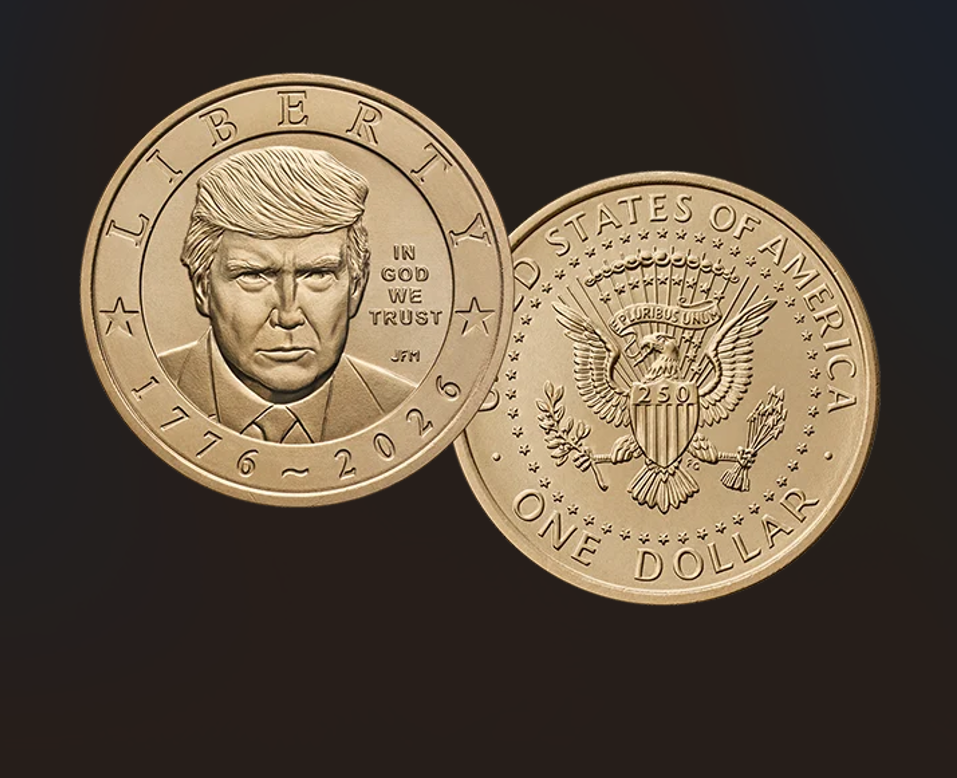
The United States Mint has officially put a new golden $1 coin featuring the face of President Donald Trump into circulation. This move marks the first time in nearly a century that a living president has appeared on circulating U.S. money. The special coin was launched as part of the country’s upcoming 250th birthday celebration, also known as the Semiquincentennial.
People across the United States can now buy these coins directly from the government or look out for them in everyday cash transactions. Treasury Secretary Scott Bessent announced the launch on social media, explaining that the coin was created to celebrate American history, freedom, and national values. However, the release of this piece of currency has sparked strong opinions, political debate, and legal discussions all across the nation.
While some people are excited to collect a rare piece of modern American history, others are questioning if putting a sitting leader on physical money breaks long-standing traditions. Here is a full breakdown of what this coin is, how much it costs, the legal arguments behind it, and what you need to know if you want to get one for yourself.
What Is the New Donald Trump $1 Coin?
The new $1 coin is a special golden-colored piece created to celebrate 250 years of American independence. Even though many people call it a gold coin, it is not actually made of pure gold. Instead, the coin is made from a blend of metals known as manganese brass.
The exact metal composition of the coin includes six percent zinc, three and a half percent manganese, two percent nickel, and the remaining portion is pure copper. This combination gives the coin its shiny golden shine while keeping it affordable to produce. It weighs about 8.1 grams and measures roughly 26.5 millimeters across, which is the standard size for modern American dollar coins.
The $0 Secret To Launching Your Entire Online Empire
Why pay hundreds every month for separate software? Build funnels, send emails, and make sales with Systeme.io completely free.
Get Started For $0Free Forever • No Credit Card Needed • Beginner-Friendly
On the front side of the coin, which coin experts call the obverse side, you will see a detailed portrait of President Donald Trump in a suit and tie. Around the top curve of the coin, the word LIBERTY is written in bold letters. Beside his portrait, the classic American phrase IN GOD WE TRUST is clearly printed. At the bottom edge, the dates 1776 through 2026 are stamped to show the 250-year anniversary span of the nation.
On the back side, which experts call the reverse side, you will find the official Presidential Seal. This image shows a majestic bald eagle holding an olive branch in one claw and a bundle of arrows in the other. A shield covers the eagle’s chest with the number 250 written on it. In the eagle’s beak is a banner with the famous Latin motto E PLURIBUS UNUM, which means Out of many, one. The outer ring of the back side also features the words UNITED STATES OF AMERICA and ONE DOLLAR.
The U.S. Mint also added a special touch for early collectors. On July 4, workers at the Philadelphia Mint struck 250,000 of these coins with a special July 4th mark called a privy mark. These special mark coins have been mixed randomly into the regular batches, making them a fun find for collectors who order early directly from the official U.S. Mint website.
How Much Does the Coin Cost and How Can You Get One?
Even though the face value stamped on the coin says $1, buying them directly from the U.S. Mint will cost you significantly more than a single dollar bill. The government is promoting these coins mainly as collectible items for history enthusiasts, which means they come with an extra retail markup.
If you want to buy a roll of 25 coins from the government catalog, it costs $61. If you prefer a larger bag containing 100 coins, the price goes up to $154.50. That means each coin costs around $1.50 to $2.40 when bought directly from the official store. The U.S. Mint also installed special vending machines at their physical building in Washington, where visitors can purchase single coins for $5 each.
To make sure everyone gets a fair chance to buy them, the U.S. Mint set household purchase limits when sales first opened. Buyers were limited to ordering a maximum of two rolls and two bags per household during the first day of release.
Can you actually use this coin to buy groceries, gas, or coffee? The simple answer is yes. Under federal law, these golden coins are official legal tender. That means they are real money and carry a legal value of exactly $1.
However, there is an important detail to keep in mind before you try spending one at your local grocery store. Federal rules do not force private businesses to accept every form of physical currency. A store owner is allowed to say they only accept credit cards, digital payments, or smaller bills. Also, since most people who buy these coins pay more than $1 to get them, spending one as a regular single dollar at a store would mean losing money. Most experts expect these coins to stay in private collections rather than changing hands at corner shops.
The Legal Debate: Can a Living President Be on U.S. Money?
The decision to put President Donald Trump on a circulating coin has created a massive legal and historical debate. For more than 150 years, the United States has followed a strict tradition: living leaders do not get their faces put on American paper bills or circulating coins.
This rule goes back to 1866, during the American Civil War era. Back then, an official named Spencer M. Clark was in charge of the National Currency Bureau. He was tasked with putting a famous Revolutionary War general named Clark on a new five-cent paper bill. Instead of putting the general on the money, Spencer M. Clark put his own face on the bill. Members of Congress were so angry about his self-promotion that they passed a law stating that only deceased individuals could appear on U.S. money and financial securities.
American leaders felt that putting living presidents on money was too similar to royal monarchies in Europe, where kings and queens put their own faces on coins as soon as they took power. America wanted to show that its leaders were public servants, not royalty.
So how did the U.S. Treasury put Trump on a coin while he is still alive? The legal path comes from a specific piece of legislation passed in 2020 called the Circulating Collectible Coin Redesign Act. This law gave the Treasury Department the authority to create new dollar coins in 2026 to celebrate America’s 250th birthday.
The 2020 law states that no living or deceased person can appear on the reverse (back) side of these anniversary coins. However, legal advisers pointed out that the law did not explicitly ban a living person from appearing on the obverse (front) side. By placing Trump’s portrait on the front side and the Presidential Seal on the back side, government officials argued that the design follows the written text of the law.
Supporters also point to a historical example from 1926. During the country’s 150th anniversary, the U.S. Mint released a commemorative coin featuring President Calvin Coolidge while he was still serving in office, sitting alongside George Washington. Critics, however, argue that the 1926 Coolidge coin was a special non-circulating coin, whereas this new Trump dollar is being made for general circulation.
Before the coin was officially released, a committee known as the Citizens Coinage Advisory Committee raised strong concerns. Some members stated that putting a sitting president on everyday money broke long-standing democratic traditions. According to news reports from major outlets like The Washington Post, some committee members argued the move skipped proper review steps. However, Treasury officials pushed forward, stating they had full legal authority under the 250th anniversary law.
Send, Spend & Hold Money Worldwide Without Hidden Fees
Transfer money internationally at the real exchange rate and hold 40+ currencies in one account.
Open a Wise AccountMid-market rate • Fast transfers • 40+ currencies
Why This Coin Is Causing So Much Public Reaction
The release of the Trump dollar coin comes during a period where public symbols and presidential legacy are heavily discussed topics. Since returning to office, the administration has placed President Trump’s name or image on several public monuments, spaces, and official items.
For example, his name has been added to updated federal park passes, limited-edition travel documents, and major public institutions like the Kennedy Center. The Treasury Department also announced plans earlier this year to include his signature on paper currency and even proposed a concept for a $250 bill.
Because of this broader trend, public reaction to the golden $1 coin has been divided down political lines:
Supporters view the coin as a bold and exciting celebration of American history. They see it as a powerful symbol of national pride during America’s 250th year of independence. For collectors and fans of the president, the coin represents a unique keepsake that marks a historic era in American politics.
Critics, on the other hand, argue that currency should remain completely neutral and non-partisan. They feel that putting a sitting leader on physical money turns public currency into political promotion. Legal scholars have debated whether the move stretches the spirit of historical laws, even if it fits within technical legal loopholes.
Despite the debates, the news has captured widespread attention from national news sources, including coverage by Al Jazeera and TIME Magazine. Whenever money, history, and famous leaders come together, people naturally take notice.
How Collecting Physical Money Fits Into Our Modern Tech World
It might seem surprising that physical coin collection is creating such a big buzz at a time when digital money, online payment apps, and artificial intelligence dominate our daily lives. Most people use cards or phones to pay for their items today, making cash less common than it used to be.
Yet, physical collectibles like coins have actually grown more popular in recent years. Part of this growth comes from how information travels across the web. Content creators, online influencers, and media channels use social media to share breaking news about rare coins, driving massive interest among younger audiences.
For example, many online creators build automated video channels to highlight rare coins, historical currency mistakes, and high-value collectibles. If you are interested in how modern creators build automated video channels about trending news topics like this, check out our guide on YouTube automation trends to see how creators turn viral headlines into popular content.
At the same time, artificial intelligence tools help coin collectors quickly evaluate the value, condition, and rarity of new releases. You can read more about how smart software is transforming everyday hobbies in our detailed breakdown of technology and AI developments. Modern tech makes it easier than ever for regular everyday people to learn about coin grading, market values, and historic releases in just a few clicks.
The $0 Secret To Launching Your Entire Online Empire
Why pay hundreds every month for separate software? Build funnels, send emails, and make sales with Systeme.io completely free.
Get Started For $0Free Forever • No Credit Card Needed • Beginner-Friendly
Frequently Asked Questions About the Donald Trump $1 Coin
Is the new Donald Trump $1 coin made of real gold?
No, the coin is not made of real gold. It is made from a blend of metals called manganese brass, which gives it a shiny golden appearance. The metal mix consists of 88.5 percent copper, six percent zinc, three and a half percent manganese, and two percent nickel.
Can you spend the Trump dollar coin in regular stores?
Yes, the coin is official United States legal tender with a face value of $1. However, because the U.S. Mint sells them for higher prices as collector items, spending one at a store as a regular dollar would mean losing money. Additionally, private businesses are allowed to set their own rules on which physical cash they accept.
How much does it cost to buy the coin from the U.S. Mint?
The U.S. Mint sells a roll of 25 coins for $61 and a bag of 100 coins for $154.50. You can also buy individual coins for $5 each at special U.S. Mint vending machines located in Washington.
Why is having a living president on a coin so unusual?
Federal law passed in 1866 prohibits living people from appearing on U.S. currency to prevent American leaders from imitating monarchies. This is only the second time in 100 years that a sitting president has appeared on a circulating coin, following Calvin Coolidge in 1926.
What is the special July 4th mark on some of the coins?
The U.S. Mint struck 250,000 of these dollar coins on July 4th at the Philadelphia Mint with a special mark called a privy mark. These coins are randomly included inside the bags and rolls sold online, making them extra valuable to coin collectors.
How many coins are being produced?
The U.S. Mint produces circulating dollar coins based on public demand and collector orders. While 250,000 special privy mark coins were produced on July 4, total production numbers will depend on how many rolls and bags people buy during the 2026 anniversary program.
Final Thoughts on the New Donald Trump Dollar Coin
The release of the new golden $1 coin featuring President Donald Trump is one of the most talked-about currency events in modern American history. Whether you view it as an exciting piece of history or a controversial departure from tradition, there is no denying that it has captured the attention of millions.
As the United States continues to celebrate its 250th birthday, unique collectible releases like this coin remind us how money, politics, and culture interact. For collectors, history lovers, or anyone curious about trending national events, keeping an eye on how these coins perform in the secondary market will be fascinating to watch.
If you enjoyed reading this article and want to learn more about our team, check out our About page to see what we are all about. Have questions or want to share your thoughts on this story? Feel free to reach out directly through our Contact page.
Do not forget to join our growing community on social media for the latest trending stories and breaking news updates. Follow us today on Instagram, join the discussion on Facebook, and follow our latest posts on X (formerly Twitter).
