
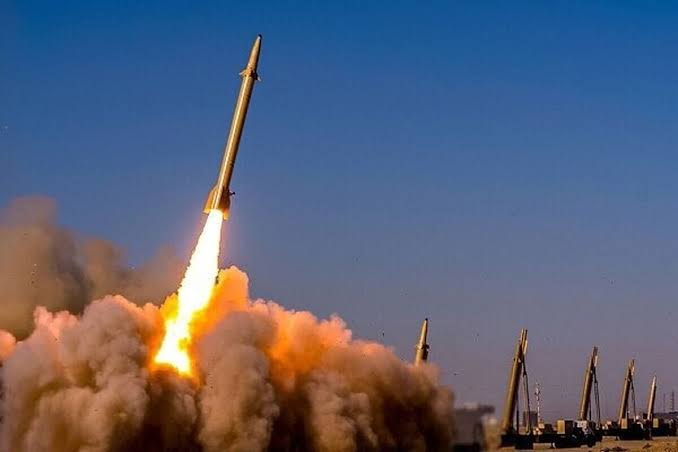
The Middle East is facing one of its most dangerous military escalations in recent history. Following a wave of “large and powerful” airstrikes carried out by the United States military against Iranian installations, Tehran launched a swift series of retaliatory missile and drone strikes targeting U.S. bases and allied nations across the Gulf region.
Air defense sirens have sounded across multiple Gulf nations, while military forces in Jordan, Bahrain, Kuwait, and the United Arab Emirates have been placed on high alert. The exchange of heavy fire marks a dramatic collapse in recent attempts to keep regional tensions under control, reigniting worries about global energy supplies, international shipping routes, and broader stability across the entire Middle East.
What Triggered the Massive U.S. Military Strikes?
The latest round of heavy fighting began after the U.S. military’s Central Command (CENTCOM) launched an extensive bombardment hitting dozens of strategic Iranian military targets along the country’s southern coastline and key offshore islands. American military officials stated that the operations were aimed directly at neutralizing threats posed by the Islamic Revolutionary Guard Corps (IRGC).
According to official statements from Washington, the strikes were executed in response to Iranian attempts to disrupt commercial shipping lanes in the Strait of Hormuz and repeated attacks on American service members stationed in the area. U.S. officials specifically cited evidence that Iranian forces were actively placing sea mines inside international shipping corridors and deploying mobile rocket launchers near key maritime bottlenecks.
Strategic Targets Hit Inside Iran
The American military bombardment targeted a broad network of defense and offensive assets belonging to the IRGC. Reports indicate that the strikes focused heavily on:
The $0 Secret To Launching Your Entire Online Empire
Why pay hundreds every month for separate software? Build funnels, send emails, and make sales with Systeme.io completely free.
Get Started For $0Free Forever • No Credit Card Needed • Beginner-Friendly
- Early-warning radar systems and air defense batteries stationed along the Iranian coast.
- Anti-ship missile sites and coastal rocket launchers located on Gulf islands like Larak and Qeshm.
- Naval warehouses housing sea mines and military drone storage facilities.
- Command, control, and communications infrastructure used to direct maritime operations.
While American officials described the offensive as a necessary move to protect international trade and defense personnel, the magnitude of the operation immediately signaled that a major Iranian response was inevitable.
Tehran’s Rapid Retaliation Across the Gulf Region
It did not take long for Tehran to answer. Within hours of the American strikes, Iran’s military leadership announced a widespread retaliatory operation targeting U.S. assets and regional host countries. Ballistic missiles and attack drones were launched toward targets spanning several Middle Eastern nations.
Iranian military spokespersons issued stark warnings that any nation offering its airspace, military bases, or logistical support to American forces would be treated as an active participant in the conflict. This declaration immediately placed Gulf nations in the direct crosshairs of the expanding war.
Jordan Intercepts Incoming Missiles
Jordan felt the immediate impact of the Iranian response. The Jordanian military reported that over a dozen ballistic missiles entered its airspace. Local air defense batteries, supported by stationed allied forces, successfully shot down most of the incoming projectiles.
Explosions were witnessed in the night sky above Aqaba, a strategic coastal hub near key military installations. While several missiles were destroyed in mid-air, remaining debris fell in unpopulated regions, preventing widespread destruction on the ground.
Bahrain and Kuwait Face Drone Attacks
In Bahrain, home to major naval facilities, emergency alert sirens echoed across residential and industrial sectors as air defense systems engaged incoming targets. Iranian news outlets confirmed that drone attacks were directed at American military facilities inside the kingdom. Local security forces confirmed that multiple hostile drones were intercepted before reaching their intended targets.
Kuwait also reported hostile air activity. The Kuwaiti Armed Forces announced that their defense systems actively engaged incoming drone formations attempting to cross into national airspace, marking one of the most direct threats to the country since the broader conflict began.
UAE and Northern Iraq Targeted
The United Arab Emirates faced drone incursions aimed at air bases where coalition personnel are stationed. Simultaneously, IRGC ground units claimed responsibility for coordinated missile and drone strikes hitting logistical facilities and technical equipment centers in Erbil, located in northern Iraq.
This multi-front counteroffensive demonstrates Iran’s strategy of leveraging its extensive missile and drone arsenal to make the conflict costly not just for Washington, but for every regional ally hosting American troops.
The Human Impact and Rising Regional Casualties
Beyond the military maneuvers and strategic announcements, the conflict continues to inflict a heavy toll on civilians and local communities.
Iranian state media reported that recent U.S. strikes along the southern coast resulted in significant civilian casualties. One strike near the coastal town of Sirik reportedly hit a residential building during a family gathering, killing several civilians and injuring dozens more. Iranian officials forcefully condemned the civilian deaths, vowing that such incidents would accelerate their offensive actions.
In response, American military representatives reiterated that U.S. operations strictly aim at military infrastructure and IRGC assets, stating that precautions are always taken to avoid civilian harm. However, as heavy fighting spreads near populated port cities and coastal villages, the risk of non-combatant casualties remains tragically high.
Panic has also touched civilian populations across Gulf cities, where sudden siren alerts, sonic booms, and anti-air interceptions have disrupted daily life, schools, and local businesses.
Global Energy Markets and Economic Disruptions
The military escalation in the Gulf is sending immediate shockwaves through the global economy. The primary driver of market anxiety is the Strait of Hormuz, a narrow water passage through which approximately one-fifth of the world’s petroleum supplies travel every single day.
When conflict breaks out in or around the strait, maritime trade comes to a virtual standstill. Shipping lines, insurance providers, and oil tanker operators hesitate to send vessels through areas actively targeted by sea mines, drone swarms, and missile batteries.
Send, Spend & Hold Money Worldwide Without Hidden Fees
Transfer money internationally at the real exchange rate and hold 40+ currencies in one account.
Open a Wise AccountMid-market rate • Fast transfers • 40+ currencies
Rising Oil Prices and Inflationary Fears
In the immediate aftermath of the military strikes and Iranian retaliation, benchmark crude oil prices surged dramatically, jumping by several dollars per barrel within hours. Market analysts warn that if the Strait of Hormuz remains contested or unsafe for commercial transit, energy prices could climb significantly higher.
Higher crude oil prices do not stay confined to energy markets; they affect everyday life across the globe:
- Gasoline and Transportation Costs: Fuel prices at local pumps increase rapidly, making daily commutes and freight transport more expensive for families and small businesses.
- Food and Commodity Prices: High transportation costs directly inflate the price of groceries, manufactured goods, and raw materials shipped across international waters.
- Global Inflationary Pressures: Central banks around the world, already fighting inflation, face renewed pressure as energy inputs become more costly.
Commercial vessels have already begun altering their routes, turning away from the Persian Gulf or seeking alternative ports, which adds thousands of miles and massive fuel costs to international shipping schedules.
How Technology and Media Are Tracking the Conflict
Understanding fast-moving international crises requires up-to-the-minute information, and modern technology plays a bigger role than ever before. During high-stakes military events, satellite imaging, real-time flight tracking software, and open-source intelligence (OSINT) networks provide unprecedented visibility into regional developments.
Digital platforms allow analysts and independent observers to track naval vessel movements, monitor airspace closures, and verify satellite images of military bases in real time.
For digital content creators and journalists, making sense of these complex geopolitical developments requires modern content creation tools. Many creators utilize advanced systems in technology and AI to process massive streams of breaking data, translate foreign military briefings, and produce educational video content. Others build automated media systems through YouTube automation strategies to deliver timely news breakdowns and video essays to global audiences searching for clarity during breaking international events.
However, the rapid spread of information online also brings challenges. Old combat footage, mislabeled videos, and unverified rumors often go viral during breaking news events, making responsible reporting and careful verification essential.
How to Stay Informed and Filter the Noise
When major international events unfold rapidly, keeping up with reliable news can feel overwhelming. Between breaking push notifications, social media claims, and conflicting official statements, separating fact from speculation requires a calm approach.
Here are practical steps to stay accurately informed without falling prey to panic or misinformation:
- Rely on Multiple Established News Outlets: Cross-check breaking claims across well-regarded international news organizations, such as major news wire services like Reuters or the Associated Press, which maintain strict editorial standards and on-the-ground correspondents.
- Watch for Official Military and Government Briefings: Pay attention to verified statements from official channels, such as U.S. Central Command or regional defense ministries, while recognizing that every involved party presents information through its own strategic lens.
- Verify Video and Image Sources: Before sharing sensational military clips or casualty reports on social platforms, check whether trusted fact-checkers or journalists have verified the time and location of the media.
- Focus on Broad Context, Not Just Headlines: Headlines often highlight the most shocking moment of an event. Reading full articles helps you understand the historical background, underlying motives, and broader implications.
If you want to learn more about how our editorial team reviews breaking stories and maintains clear, accessible reporting, visit our about page. You can also share news tips or reach out directly to our team through our contact page.
The $0 Secret To Launching Your Entire Online Empire
Why pay hundreds every month for separate software? Build funnels, send emails, and make sales with Systeme.io completely free.
Get Started For $0Free Forever • No Credit Card Needed • Beginner-Friendly
To join real-time conversations and stay updated on global news, technology trends, and viral culture, connect with us on social media via Facebook, Instagram, and X (formerly Twitter).
Frequently Asked Questions (FAQs)
What triggered the latest escalation between the U.S. and Iran?
The recent flare-up was sparked by U.S. military strikes against Iranian Revolutionary Guard Corps (IRGC) targets along Iran’s southern coast. Washington stated the strikes were carried out to stop Iranian attempts to lay sea mines in the Strait of Hormuz and protect commercial shipping lanes and American personnel. Iran responded by firing missiles and drones at U.S. bases and allied Gulf nations.
Which Gulf countries were targeted in Iran’s response?
Iran’s retaliatory strikes directed missiles and attack drones toward U.S. military installations and host infrastructure in Jordan, Bahrain, Kuwait, the United Arab Emirates, and northern Iraq.
Why is the Strait of Hormuz so critical to global stability?
The Strait of Hormuz is a narrow maritime passage connecting the Persian Gulf to the Gulf of Oman and the open ocean. Roughly 20% of the world’s global oil supply passes through this single waterway. Any military conflict or disruption there immediately threatens global energy security and drives up oil prices.
How are local air defense systems performing in the region?
Countries like Jordan, Bahrain, and Kuwait reported that their air defense forces, supported by allied coalition technology, successfully intercepted several incoming ballistic missiles and attack drones. However, the sheer volume of incoming targets creates constant operational strain.
Will this conflict impact global inflation and daily prices?
Yes. Disruptions in Middle Eastern oil exports lead to higher fuel costs worldwide. Elevated fuel prices increase shipping and manufacturing costs, which eventually trickles down to consumer goods, groceries, and everyday services.
Looking Ahead: The Fragile Path to Regional De-escalation
The military exchanges between Washington and Tehran represent a dangerous crossroads for Middle Eastern stability. With missile strikes hitting targets across multiple sovereign nations, the line between targeted retaliation and full-scale regional conflict has become increasingly thin.
International diplomats and regional leaders continue urging both sides to show restraint and return to diplomatic dialogue. Gulf nations in particular are pushing for immediate de-escalation, knowing that prolonged fighting places their infrastructure, trade, and civilian populations at constant risk.
Whether military commanders choose to dial back operations or press forward with further attacks will determine not only the immediate security of the Gulf region, but also the economic stability of the connected global market. As events unfold, keeping a close eye on official developments and verified news reports remains the best way to navigate an uncertain news landscape.
