
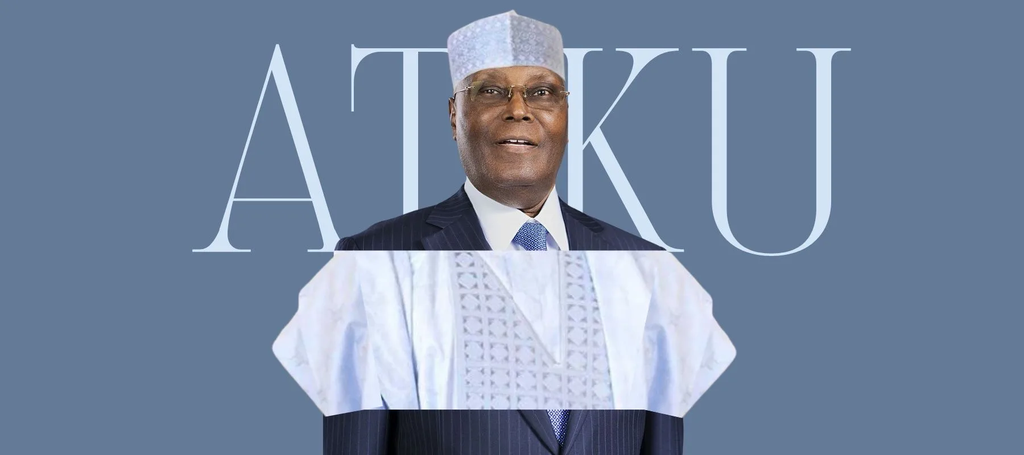
Political conversations across Nigeria are heating up fast, and the African Democratic Congress has made a statement that caught many people by surprise. The political party believes its presidential candidate, Atiku Abubakar, can win the 2027 presidential election without relying on an alliance with other opposition political parties.
The party’s National Publicity Secretary, Bolaji Abdullahi, made the statement during a live interview on Channels Television. For months, political watchers and everyday citizens expected major opposition groups to merge into one giant team to challenge the ruling party. Now, the African Democratic Congress is taking a different stance.
The announcement has created fresh discussions about how political strategies are changing ahead of the upcoming voting season. Understanding what led to this statement helps explain the current political environment in Nigeria and how key political figures are preparing for the next general elections.
Bolaji Abdullahi Details the Party Stance
During his appearance on television, Bolaji Abdullahi explained the current thinking within the party leadership. He made it clear that while working together with other parties could make the campaign process easier, it is not an absolute requirement for them to secure a victory at the polls.
The spokesperson admitted that early political discussions were centered around forming a massive team of opposition leaders. The goal behind that original plan was to build a broad base that could easily defeat the ruling All Progressives Congress. However, as time went on, political movements did not happen the exact way the planners expected.
The $0 Secret To Launching Your Entire Online Empire
Why pay hundreds every month for separate software? Build funnels, send emails, and make sales with Systeme.io completely free.
Get Started For $0Free Forever • No Credit Card Needed • Beginner-Friendly
According to the party representative, their team is confident in their own political strength. They believe that Atiku Abubakar, along with his running mate Rotimi Amaechi, possesses enough political influence and public support across different regions of the country to win on their own merit.
The party spokesman stressed that voters from places like Abia in the south down to Zamfara in the north are looking for serious leadership changes. In his view, the lived economic experience of many citizens over recent years will be the main driver of how people vote, rather than political alliances between party leaders.
Why the Initial Opposition Coalition Movement Changed
To fully understand why the party changed its messaging, it helps to look back at how opposition leaders were planning their moves over the last year. Around 2025, several top political figures started holding high-level meetings. Their main idea was to select one political party platform where everyone could come together under one roof.
The African Democratic Congress was initially chosen by many of these groups as a neutral ground to build this unified front. Prominent politicians who took part in these early discussions included former governors, former ministers, and key national figures. The community expected that this combined movement would produce a single presidential candidate to face the ruling government.
However, politics in Nigeria are full of quick shifts. Key figures who were part of the initial conversations eventually chose different paths. For example, Peter Obi and Rabiu Kwankwaso made decisions to align themselves with another platform, the Nigeria Democratic Congress.
When these key political figures moved in a separate direction, the idea of having one single, massive opposition block naturally changed. Instead of giving up or waiting indefinitely for every leader to join them, the African Democratic Congress decided to move forward with Atiku Abubakar as their primary leader.
Dialogue Among Parties Continues
Even though the party is expressing confidence in moving forward independently, their representatives clarified that they are not completely closing the door on communication. Opposition leaders are still holding informal talks with one another across various political platforms.
The main difference now is what those talks are about. The current conversations are no longer focused on forcing everyone to step down for a single candidate. Instead, the leaders are discussing practical areas where they can cooperate on issues like voting reforms, election monitoring, and protecting ballot results on election day.
This means that while parties will field their own separate presidential candidates, they might still work together behind the scenes to ensure that the electoral process remains transparent and fair for all participants.
The Campaign Plan for Atiku Abubakar and Rotimi Amaechi
Atiku Abubakar has been a prominent face in Nigerian politics for decades. Having served as Vice President, he brings extensive administrative background and established political networks in almost every local government area in the country.
For the upcoming election, his campaign is partnering him with Rotimi Amaechi, a former governor and former minister of transportation. Together, their platform is focusing on economic recovery, security improvements, and government reforms.
Their proposed policy roadmap places a heavy focus on immediate economic relief for citizens. Some of the main promises being made by their campaign team include:
- Restoring certain energy cushions temporarily to lower the cost of living for struggling households.
- Putting long-term plans in place to fix national oil refineries so the country can produce its own fuel locally.
- Stabilizing the foreign exchange market to help small business owners purchase imported goods and raw materials at predictable costs.
- Expanding social safety nets to ensure that vulnerable citizens get financial protection while economic changes are implemented.
- Reforming electoral laws to increase public trust in how election results are collected and reported nationwide.
The team believes that these practical economic plans will matter more to ordinary voters than political deal-making among elite politicians. They are counting on voters choosing candidate plans over party mergers.
Can a Single Opposition Party Win the Presidential Vote?
One of the biggest questions on the minds of voters is whether a single opposition party can actually win against a ruling party. In Nigerian political history, defeating an incumbent president or a ruling party has always been a tough challenge.
The ruling All Progressives Congress holds significant advantages, including nationwide party structures, state governors in many states, and the power of incumbency. President Bola Tinubu and his supporters have stated that they are confident in their record and are not worried about opposition plans.
Send, Spend & Hold Money Worldwide Without Hidden Fees
Transfer money internationally at the real exchange rate and hold 40+ currencies in one account.
Open a Wise AccountMid-market rate • Fast transfers • 40+ currencies
For an opposition party to win without a full coalition, several key factors have to line up:
- Voter turnout must be high in key populated states where the opposition enjoys strong support.
- The opposition candidate must win across multiple geopolitical zones rather than depending on just one region.
- Economic issues must remain front and center in the minds of undecided voters.
- Opposition votes must not be split so deeply among different candidates that the ruling party easily wins with a simple majority.
The last point is where political analysts debate the most. In previous elections, when opposition votes were divided among multiple strong candidates, the ruling party managed to win the overall election. The party leadership argues that voters are now smarter and will naturally unite behind the candidate who has the strongest chance of winning, regardless of how many parties appear on the ballot.
How Information and Social Media Shape Election Debates
Election campaigns are no longer fought only on traditional radio and television stations. Today, everyday citizens get their news and express their views directly on digital platforms. Social media has given every voter a voice and a platform to discuss national policy.
People follow breaking political news, watch live TV debates, and join heated discussions on platforms like our official Facebook page and our active X profile. People also love checking visual updates, political photos, and quick updates on our Instagram account.
Digital tools have changed how fast news travels across the nation. Content creators and media teams now use advanced technologies to process news quickly and share updates with millions of viewers within minutes.
For instance, many modern media setups rely on simple automated video channels to break down complex stories. Learning about YouTube automation helps explain how news clips spread rapidly online to inform voters in distant cities.
At the same time, developments in technology AI enable writers and researchers to analyze public sentiment, track political speeches, and verify claims faster than ever before.
Understanding these digital trends is essential for anyone following politics today. To learn more about our mission to bring simple, honest, and reliable news to everyday readers, you can visit our about us page. If you ever want to share feedback or send a news tip, feel free to reach out through our contact page.
What This Means for Voters Across the Country
For the average Nigerian citizen, political party moves and public statements might sometimes feel confusing. But at its core, this situation shows that the upcoming presidential race will be a dynamic, multi-candidate contest.
Voters will likely have clear choices on the ballot:
The $0 Secret To Launching Your Entire Online Empire
Why pay hundreds every month for separate software? Build funnels, send emails, and make sales with Systeme.io completely free.
Get Started For $0Free Forever • No Credit Card Needed • Beginner-Friendly
- The ruling party offering continuity of current economic and government programs.
- Atiku Abubakar and the African Democratic Congress offering an economic recovery plan.
- Other opposition candidates bringing their own alternative visions for the nation.
Instead of a simple two-party contest, voters will need to evaluate candidates based on their track records, their choice of running mates, and their proposed solutions to real daily problems like food prices, security, and jobs.
Frequently Asked Questions
Why did the African Democratic Congress say they do not need a coalition?
The party believes that Atiku Abubakar has strong national name recognition and widespread voter support across many states. They feel that voter dissatisfaction with current economic conditions will drive people to vote for their candidate, even without a formal alliance of all opposition parties.
Did the opposition coalition collapse completely?
The broad coalition that was planned in 2025 did not turn out as initially planned. Key figures like Peter Obi and Rabiu Kwankwaso moved to the Nigeria Democratic Congress. However, opposition parties still communicate about shared interests like electoral integrity and protecting votes.
Who is Atiku Abubakar running mate for the election?
Atiku Abubakar is running alongside Rotimi Amaechi, who is a former Governor of Rivers State and a former Minister of Transportation.
What are the primary economic promises of Atiku Abubakar’s campaign?
His campaign promises focus on bringing down fuel costs through temporary subsidy protections, repairing local petroleum refineries, stabilizing the foreign exchange rate, and introducing electoral reforms.
How can ordinary citizens follow political updates in real time?
Citizens can follow real-time updates through verified digital news outlets, live television coverage, and active social media pages where political discussions and news clips are shared daily.
As the election draws closer, candidate statements and party strategies will continue to evolve. Whether the African Democratic Congress can successfully win the presidency on its own or if new political alignments emerge will remain one of the most exciting political developments to watch. What matters most is that voters stay informed, ask the right questions, and prepare to exercise their civic duty at the voting booth.
