
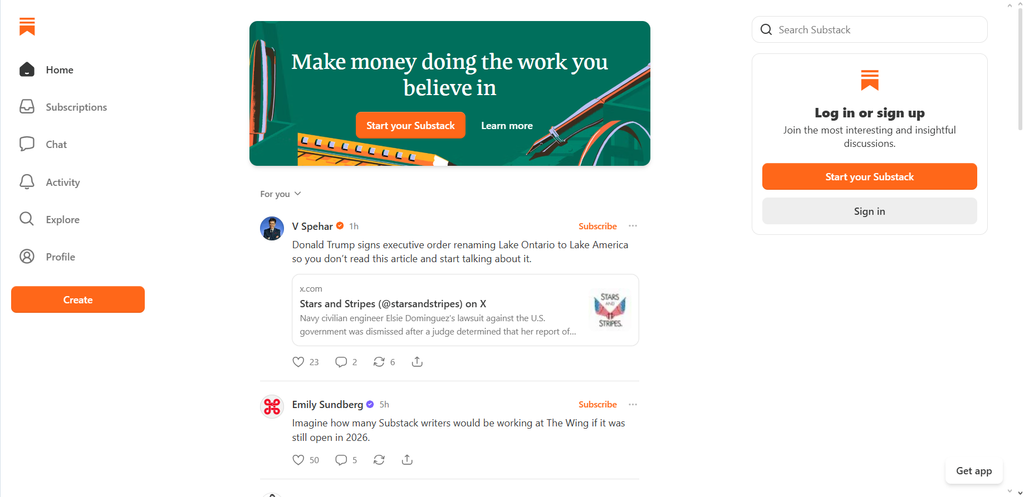
Making a living from writing used to mean begging magazine editors for a chance or spending years trying to land a book deal. The internet changed that model completely. Today, independent writers earn real money every month by sending simple email newsletters directly to their readers.
Substack sits right at the center of this creator movement. It is a platform that lets you publish articles, build an email list, and charge readers a monthly or annual subscription fee for your work. You do not need to deal with web development, ad networks, or code. You write, send, and collect payments.
Building a steady income on Substack takes strategy, consistent work, and a good understanding of what people pay for. This guide breaks down the exact steps you need to build a profitable newsletter from scratch.
What Is Substack and How Does It Actually Work?
Substack works differently from traditional blogs and news websites. Standard blogs rely on page views and display ads. To make full-time money on an ad-based site, you need hundreds of thousands of page views every month. That setup forces writers to post clickbait titles and pump out constant content just to keep web traffic moving.
Substack replaces ads with direct reader subscriptions. Instead of needing tens of thousands of casual readers, you only need a few hundred dedicated subscribers who care enough about your topic to pay five or ten dollars a month.
The $0 Secret To Launching Your Entire Online Empire
Why pay hundreds every month for separate software? Build funnels, send emails, and make sales with Systeme.io completely free.
Get Started For $0Free Forever • No Credit Card Needed • Beginner-Friendly
When you set up paid subscriptions, the platform connects directly to Stripe, a global payment processor. Readers enter their card details once, and Stripe handles recurring payments automatically every month or year.
Setting up an account costs nothing upfront. You do not pay a monthly hosting fee or email list fee. Substack takes a 10 percent cut of your paid subscription revenue, while Stripe takes a standard processing fee of around 3 percent. If you earn zero dollars, you pay zero dollars. When you start earning, you keep roughly 87 percent of your overall income.
This business model changes the dynamic between you and your audience. You do not answer to corporate sponsors, advertisers, or outside editors. You answer only to your readers.
1. Choosing Your Topic and Finding Your Unique Angle
One common mistake new writers make is writing about everything under the sun. If your newsletter covers personal life updates on Monday, political news on Wednesday, and cooking recipes on Friday, readers get confused. People rarely pay for broad personal journals unless you are already a famous figure.
To get paid subscribers, you must focus on a clear topic. A great topic sits right where your personal knowledge meets a real problem your audience wants to solve. Readers subscribe when your posts help them save time, make money, learn a skill, or understand complex topics clearly.
Many successful writers build publications by covering fast-growing industries. For example, breaking down new trends in technology and AI gives readers actionable insights they can use in their daily jobs. Others write about modern online business models, like running automated media channels or applying YouTube automation strategies to grow an audience.
Whatever theme you pick, make sure it solves a clear problem. Ask yourself three basic questions before launching:
- Who is my target reader?
- What daily challenge or question do they face?
- How does my writing help them make better decisions?
When you can answer those questions in one sentence, you have a solid foundation for your publication.
2. Setting Up Your Publication for Success
Setting up your account on Substack takes less than ten minutes. While the technical side is easy, paying attention to a few visual details makes your publication look professional immediately.
Pick a clean, clear name for your publication. Avoid overly clever puns or confusing terms that make it hard for new visitors to understand what you do. If your newsletter offers career advice for remote workers, make sure your title reflects that promise clearly.
Craft a strong one-sentence tagline. This statement appears on your main landing page and at the bottom of every link shared on social media. It should explain the exact benefit readers get when they enter their email address.
Customize your welcome page. When a new user lands on your site, Substack shows a sign-up box before displaying your post archive. Use this space to introduce your work, state your publishing schedule, and explain why joining your email list is worth their time.
Connect your Stripe account right away. Even if you launch as a free publication for your first few months, setting up your payment processing early ensures everything runs smoothly when you turn on paid tiers.
3. Formatting Your Content for Easy Reading
Writing for an email newsletter requires a different approach than writing school papers or traditional books. Most subscribers read your posts on their mobile phones during work breaks or travel. If they open an email and see massive blocks of text, they will close it quickly.
Keep your paragraphs short. Aim for two to four sentences per paragraph. Short paragraphs create white space, making your text feel quick and easy to scan.
Send, Spend & Hold Money Worldwide Without Hidden Fees
Transfer money internationally at the real exchange rate and hold 40+ currencies in one account.
Open a Wise AccountMid-market rate • Fast transfers • 40+ currencies
Use bold text to highlight key points and group your thoughts. Bullet points work great when listing steps, facts, or helpful tips. Avoid jargon and complicated vocabulary. Write like you are explaining a helpful concept to a friend over coffee.
Use a simple structure for every article you write:
- Start with a strong statement or hook that catches attention right away.
- Break your main thoughts into clear sections using bold section titles.
- Explain each idea with direct, real-world examples.
- End with a simple request asking readers to leave a comment, share your post, or consider upgrading to a paid subscription.
Good layout choices build trust with your audience. When readers know your posts are clean and easy to read, they look forward to opening your emails.
4. Growing Your Free Subscriber Base
You cannot sell paid subscriptions without a growing list of free subscribers first. Think of your free list as the foundation of your business. Most newsletters convert between 5 percent and 10 percent of free readers into paid members. If your goal is 100 paid subscribers, you generally need between 1,000 and 2,000 free readers first.
Growing your free list requires promoting your work outside the inbox. Because emails only reach people who already signed up, you must share your insights where new readers hang out.
Substack Notes is a built-in discovery tool on the platform. It functions like a public social feed, letting you share quick thoughts, post short excerpts from your articles, and interact with other writers. Posting regularly on Notes helps you get discovered by readers who are already active on Substack.
Social media cross-promotion is also important. Turn your main article takeaways into bite-sized posts, infographics, or short updates across social networks. Share your visual updates on Instagram, post discussion points on Facebook, and post short text summaries on X. Always include a link back to your Substack sign-up page in your social profiles and post comments.
Cross-promoting with other newsletter creators accelerates your growth. Substack features a Recommendation tool that allows writers to recommend each other’s publications. When someone subscribes to your publication, Substack automatically suggests your partner newsletters. Reach out to writers in related niches to trade recommendations and grow together.
5. Turning Free Readers into Paying Subscribers
Deciding when to start charging for your publication depends on your goals. Some writers enable paid tiers from day one, while others build up a free list first. Waiting until you have a few hundred free subscribers gives you an existing pool of readers ready to support your work on launch day.
Setting your prices correctly makes a big difference. Substack requires a minimum price of five dollars per month or fifty dollars per year. Starting at this standard level works best for most new creators. Setting your price too low makes it hard to earn decent money, while setting it too high might discourage new subscribers before you prove your value.
The $0 Secret To Launching Your Entire Online Empire
Why pay hundreds every month for separate software? Build funnels, send emails, and make sales with Systeme.io completely free.
Get Started For $0Free Forever • No Credit Card Needed • Beginner-Friendly
Converting free readers requires giving them specific reasons to pay. People rarely subscribe just out of charity; they pay for access to useful perks and extra insights.
Popular paid subscriber perks include:
- Deep-dive posts covering detailed strategies or expert analysis.
- Full access to your complete archive of past articles.
- Private community features, like subscriber-only comment sections, chat rooms, or live Q&A calls.
- Downloadable guides, templates, or helpful resource lists.
Use partial paywalls strategically inside your posts. A paywall shows the first few paragraphs of an article for free before asking readers to upgrade to read the rest. Putting your best, most actionable advice behind a partial paywall shows free readers what they are missing and encourages them to subscribe.
Turn on the Founding Member option. Substack lets passionate supporters pay a higher annual rate, such as $100 or $150 per year. Dedicated fans often select this tier simply to show extra support for your publication.
6. Other Ways to Earn Money from Your Substack
While monthly subscriptions form the core of your income, relying on one revenue stream limits your earnings. Successful creators use their newsletter as a hub for multiple income sources.
Affiliate links let you earn commissions by recommending tools, software, or books you use. When a reader buys a product through your link, you earn a percentage of the sale without adding any cost to your reader.
Digital products fit naturally into the newsletter model. You can compile your top articles into an e-book, create short video courses, or sell downloadable templates. Because your subscribers already trust your expertise, offering higher-priced digital items to your list works very well.
Consulting and freelance services offer another path to monetization. Writing publicly showcases your skills, leading readers to hire you for advisory calls, coaching, or freelance project work.
Sponsored posts and brand placements become viable once your email list reaches several thousand active readers. Companies in your industry will pay to place short brand messages or product mentions inside your free emails.
7. Mistakes That Keep Writers Broke on Substack
Building a profitable publication takes patience, but avoiding common pitfalls keeps your growth moving in the right direction.
- Giving up too quickly: Audience growth on Substack compounds over time. Most writers see slow progress during their first few months before momentum builds. Quitting early stops that compounding effect before it starts.
- Never asking readers to upgrade: If you never remind free subscribers about your paid option, they won’t switch. Ask readers to upgrade regularly and remind them of the benefits they receive.
- Publishing without a schedule: Posting three times one week and disappearing for a month destroys reader trust. Set a realistic posting schedule you can stick to long-term.
- Writing about vague topics: Broad articles make it hard to explain why anyone should pay for your work. Focus on specific problems and clear solutions.
Frequently Asked Questions
How long does it take to earn money on Substack?
It depends on your current audience size and posting frequency. Writers who launch with an active social media following can earn income right away. Starting from scratch usually takes three to six months of regular posting to build a free list large enough to generate steady subscription sales.
Do I need thousands of social media followers to start?
No. While having an existing audience speeds up initial growth, many writers build successful publications from scratch. By posting on Substack Notes, networking with other creators, and sharing valuable insights, you can grow your email list organically.
How often should I send emails to subscribers?
Publishing one to two times a week works well for most newsletters. A common schedule involves sending one free article and one paid-only article each week, keeping free readers engaged while rewarding paid members.
Can I move my subscribers to another platform later?
Yes. You own your content and your email list entirely. Substack allows you to export your subscriber list and customer data whenever you want, making it easy to migrate to another newsletter service if your business needs change.
Starting a Substack newsletter is one of the cleanest ways to build a real business around your writing. You do not need technical expertise or corporate funding—just a clear topic, a consistent writing routine, and a commitment to helping your readers solve problems.
Focus on delivering value with every post, talk to your community, and stay patient as your audience grows. To discover more stories and updates from our publication, visit our about page or connect with our team through our contact page.
