
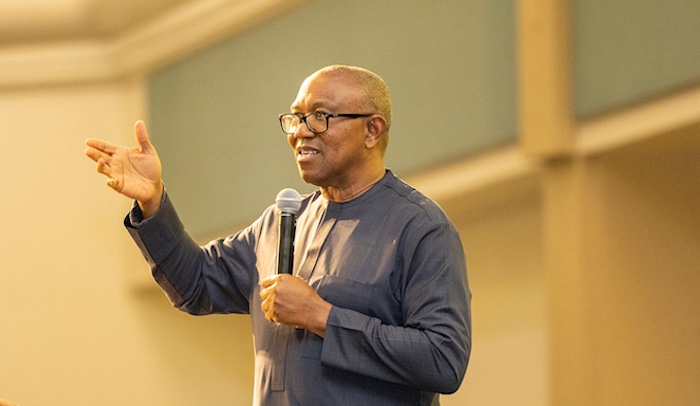
Peter Obi has openly disagreed with Atiku Abubakar over the controversial decision to remove petrol subsidy in Nigeria. Speaking at the Nigerian Bar Association Annual General Conference in Port Harcourt, Obi made it clear that ending the fuel subsidy remains the correct economic move for the country. His statement comes shortly after Atiku Abubakar announced a major shift in his political stance, promising to bring back petrol subsidy if he leads the country in 2027.
The debate between these two prominent political leaders has quickly sparked a major national conversation. While both figures agree that millions of households are suffering from rising costs, they hold completely different views on how to fix the economy. Atiku believes that bringing back the subsidy is essential to give citizens immediate relief. On the other hand, Obi insists that fuel subsidy was an unsustainable burden, arguing that the real issue lies in how the government handles the saved funds.
According to reports covered by Vanguard News, Obi stressed that bad management of government funds should never be used as an excuse to bring back a bad economic policy. He explained that removing the subsidy was meant to free up cash for essential public projects like health, education, and public transportation. However, because those funds have not been properly tracked or put to good use, citizens are left feeling the pain without seeing any real benefit.
This policy clash highlights a deeper question facing the nation. Should Nigeria return to paying billions to keep fuel prices artificial, or should the focus remain on fixing governance so that public money actually serves the people?
Understanding the Dispute Between Obi and Atiku
To understand why this disagreement is so significant, it helps to look at where both leaders stood in the past. During previous campaign seasons, both Atiku Abubakar and Peter Obi advocated for ending the petrol subsidy. Both acknowledged that keeping fuel prices low through government handouts was draining trillions of Naira from the national budget every single year.
The $0 Secret To Launching Your Entire Online Empire
Why pay hundreds every month for separate software? Build funnels, send emails, and make sales with Systeme.io completely free.
Get Started For $0Free Forever • No Credit Card Needed • Beginner-Friendly
However, Atiku recently shifted his position. He pointed out that the abrupt removal of the subsidy caused massive inflation, drove up transport costs, and pushed millions deeper into poverty without any meaningful relief plan in place. Because of this widespread hardship, Atiku now argues that restoring the subsidy under strict monitoring is necessary to protect vulnerable families.
Peter Obi strongly rejects this shift. Reporting from Leadership Newspaper details how Obi reaffirmed his position during his speech in Rivers State. He described the old subsidy regime as a system of organized crime that allowed corrupt individuals to enrich themselves at the expense of ordinary citizens. In his view, returning to that system would be a massive step backward for the nation’s economic stability.
Obi argues that once a government removes a corrupt policy, it must not go back on its word just because the implementation was poorly handled. Instead, the solution is to hold leaders accountable for where the recovered trillions are going.
The Money Question: Where Are the Subsidy Savings Going?
One of the central arguments in this debate centers on how much money the government has saved since petrol subsidies ended. Estimates suggest that trillions of Naira have been recovered and shared among federal, state, and local governments. Yet, average citizens are asking why their daily lives have not improved despite these massive savings.
During his address, Obi noted that over N16 trillion has reportedly been recovered since the subsidy was removed. Despite this huge sum entering public coffers, public infrastructure remains underfunded, food prices remain high, and public transit remains inadequate. Obi pointed out that the funds saved from subsidy removal are being mismanaged instead of being channeled into sectors that lower the cost of living for ordinary people.
When fuel subsidies were removed, the expectation was that the government would immediately invest in alternatives. These alternatives were supposed to include cheap mass transit systems, agricultural support to bring down food prices, and heavy investments in health and basic education. Without these support systems, the burden fell entirely on everyday workers and small business owners.
As highlighted in coverage by Legit.ng, Obi emphasized that the core failure was not ending the subsidy, but failing to plan for the people. Removing a subsidy without giving citizens practical alternatives created an unbearable economic squeeze.
How Obi Proposed Doing It Differently
A key point of contention is whether the policy itself is flawed or if the execution was simply done without compassion. Obi maintains that his own plan for fuel subsidy removal was designed to be structured, transparent, and step-by-step.
In his manifesto, Obi laid out a clear blueprint for handling national resources. His plan centered on three major pillars:
Building Public Trust Before Implementation
Before taking away any subsidy, a government must show citizens exactly how the saved money will be spent. Trust is built when people see clear budgets, public tracking systems, and accountable leadership. Without trust, people view price increases as punishment rather than reform.
Direct Reinvestment in Productive Sectors
Instead of letting saved funds disappear into general government overhead or luxury spending, every Naira saved ought to go directly into productive areas. Investing in local manufacturing, small business loans, and agriculture helps create jobs while driving down inflation.
Compassionate Safety Nets for Citizens
Removing fuel subsidies directly impacts transport costs, which in turn drives up food prices. To prevent mass suffering, a structured removal plan must introduce subsidized public transport, support for farmers, and direct welfare programs for low-income households.
Because these steps were skipped, the immediate result was a sudden spike in living expenses that caught millions of families off guard.
What This Debate Means for Everyday Citizens
For the average citizen, political debates about macroeconomics can often feel distant and theoretical. However, the fuel subsidy debate directly affects what people pay for food, rent, electricity, and daily transport.
When petrol prices rise, bus drivers raise their fares. Farmers pay more to transport produce from rural farms to city markets. Small business owners pay more to fuel generators so they can keep their doors open. The ripple effect touches every single aspect of daily life.
Send, Spend & Hold Money Worldwide Without Hidden Fees
Transfer money internationally at the real exchange rate and hold 40+ currencies in one account.
Open a Wise AccountMid-market rate • Fast transfers • 40+ currencies
This is why Atiku’s proposal to bring back the subsidy appeals to many people who are struggling to get by. It offers the promise of immediate price reductions at the pump. For someone trying to budget for daily meals and commute to work, lower fuel prices sound like instant relief.
However, Obi’s counterargument warns against temporary fixes that cause bigger long-term harm. If the government goes back to spending trillions on fuel subsidies, that money has to come from somewhere. It often means taking on massive foreign debt or cutting funds for hospitals, schools, and roads. In the long run, bringing back the subsidy without addressing underlying corruption could leave the nation in even deeper financial trouble.
The Broader Impact on Governance and Economic Reform
This disagreement between two major opposition figures points to a wider national challenge. How can a developing nation carry out painful but necessary economic reforms without causing widespread suffering?
When economic reforms are carried out without proper planning, the poorest citizens bear the heaviest load. When government leaders cut subsidies for everyday people while continuing to spend lavishly on government operations, public anger grows quickly.
True reform requires sacrifice from both the government and the public. If citizens are expected to pay market rates for fuel, government officials must show equal sacrifice by cutting waste, curbing corruption, and managing public funds with complete transparency.
The current discussion shows that future political debates will not just be about whether to reform the economy. They will be about who can execute those reforms with competence, honesty, and empathy for the people.
Why Transparent Leadership Matters Now More Than Ever
Good governance depends on clear communication and accountability. When leaders make promises about economic reforms, citizens need reliable ways to track progress and verify where public money is being spent.
In today’s digital age, access to factual information is key to holding public figures accountable. Citizens are using online tools, public data portals, and independent media to keep track of government policies and political promises.
Understanding how economic choices impact your daily life helps you make better decisions for your business, career, and personal finances. Whether you are managing a small business, working a job, or looking for new ways to build income online, keeping up with national news is essential.
Exploring New Paths in a Changing Economy
As economic conditions shift, many people across the country are exploring creative ways to build extra streams of income. Digital skills, online content creation, and modern technology are opening up new opportunities that were not available a decade ago.
The $0 Secret To Launching Your Entire Online Empire
Why pay hundreds every month for separate software? Build funnels, send emails, and make sales with Systeme.io completely free.
Get Started For $0Free Forever • No Credit Card Needed • Beginner-Friendly
Learning how to navigate modern digital spaces can give individuals greater financial flexibility, even during tough economic times. For example, learning about digital tools, automated workflows, and online business models can open up global markets from anywhere in the world.
Staying informed about policy changes while building relevant digital skills is one of the best ways to adapt and thrive in a fast-changing economic environment.
Staying Connected with Our Latest Updates
Staying informed should be straightforward and accessible. To learn more about our mission to bring you engaging, clear, and relatable coverage on national news, business, and culture, feel free to visit our About Us Page.
If you have feedback, news tips, or questions about any of our articles, you can easily get in touch with our team through our Contact Page.
For those interested in exploring modern digital income streams and online content creation, check out our dedicated guides under YouTube Automation.
If you want to stay ahead of the curve on technological advances and how new tools are shaping various industries, explore our insights in Technology and AI.
You can also join our vibrant online community and keep up with daily updates on social media. Connect with us on Instagram, follow our updates on Facebook, and join the ongoing conversation on X (formerly Twitter).
Frequently Asked Questions
Why did Peter Obi disagree with Atiku Abubakar on fuel subsidy removal?
Peter Obi believes that ending the fuel subsidy was necessary because the old system was corrupt and financially unsustainable. He argues that the main problem is not the removal itself, but the mismanagement of the funds saved after the policy was put in place.
What was Atiku Abubakar’s reason for wanting to restore petrol subsidy?
Atiku Abubakar stated that he would restore the subsidy because the sudden removal caused intense economic hardship, high inflation, and widespread poverty without providing any visible relief or benefits to ordinary citizens.
What does Peter Obi mean when he refers to fuel subsidy as organized crime?
Obi uses the term to describe how the old subsidy system allowed corrupt cartels and officials to claim trillions of Naira for fuel that was never actually consumed or imported properly. He argues that the system enriched a few individuals while draining the country’s public funds.
How does fuel subsidy removal affect transport and food prices?
When petrol prices rise, transport companies increase passenger fares and freight charges. Because food items must be transported from farms to local markets, higher transport costs directly drive up the price of everyday groceries and basic consumer goods.
What alternatives should have been provided when subsidy was removed?
According to economic experts and policy analysts, removing the subsidy should have been paired with immediate investments in cheap public transit, direct support for farmers, healthcare funding, primary education, and target welfare programs for low-income families.
The Way Forward for National Economic Reform
The clash between Peter Obi and Atiku Abubakar brings necessary attention to how economic policy should be managed in Nigeria. While political figures may disagree on whether to restore or maintain the fuel subsidy removal, the underlying message remains clear: policy decisions must prioritize the welfare of ordinary people.
Removing a corrupt or wasteful subsidy makes sense on paper, but it only works in reality when the saved money is managed honestly and reinvested directly into public services. Without transparency, accountability, and practical support for citizens, even necessary economic reforms will fail to gain public trust.
Moving forward, the focus must remain on demanding transparency from leadership at all levels. When public funds are tracked properly and spent on infrastructure, healthcare, education, and job creation, economic reforms can finally deliver the relief and progress that citizens deserve.
