
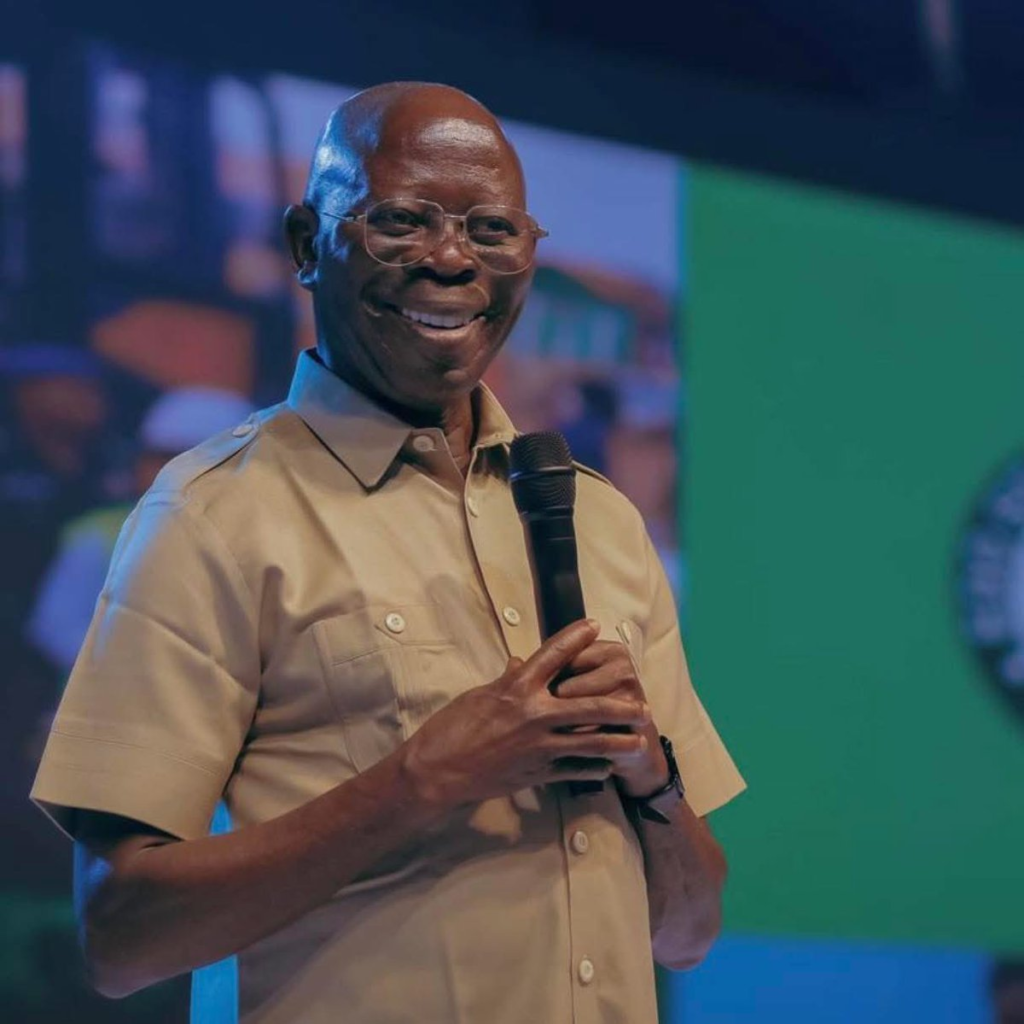
Nigerian political conversations have taken another dramatic turn, and this time, the spotlight is on a heated debate over business backgrounds, economic management, and what it really takes to lead a nation.
Senator Adams Oshiomhole, representing Edo North and a former governor of Edo State, raised eyebrows during a recent television appearance by claiming that Labour Party leader Peter Obi is merely a trader who lacks the long-term vision needed to run Nigeria.
The comment triggered an instant reaction across social media platforms, political talk shows, and news outlets. People on all sides of the political spectrum are asking important questions. Is being a trader a handicap when running for office? What is the difference between a trader mindset and an industrialist mindset? And how does a candidate’s commercial past affect their ability to fix a national economy?
Here at WhatsBuzzn, we break down big political headlines so you can easily understand what is happening without getting lost in complex political chatter. Let us look closely at what Senator Oshiomhole said, why he said it, how Peter Obi’s supporters view the matter, and what this ongoing debate means for everyday Nigerians.
What Did Adams Oshiomhole Actually Say?
During a featured interview on TVC News’ program Beyond the Headlines, Senator Adams Oshiomhole addressed several pressuring issues regarding national governance, political opposition, and economic strategy. When the topic shifted to Peter Obi’s frequent critiques of President Bola Ahmed Tinubu’s administration, Oshiomhole did not hold back.
Build Funnels, Email Lists & Sell Online With One Free Tool
Create funnels, send emails, and sell online using Systeme.io without paying for multiple tools.
Create Free AccountFree forever • No credit card • Beginner-friendly
Oshiomhole argued that Peter Obi’s entire approach to economics is rooted in commercial trading rather than long-term industrial production. According to the senator, traders work on short cycles aimed at fast profits rather than multi-year structural investments.
The senator specifically stated that traders operate on short-term calculations, usually thinking within a three to six-month turnover window. He added that traders are not wired to focus on long-term national planning or projects that require years of patience before showing results.
To make his point even sharper, Oshiomhole claimed that Obi’s historical business ventures relied heavily on importing goods from foreign markets into Nigeria. In his view, bringing finished goods into the country means sending local money abroad, effectively exporting employment to other countries while importing unemployment into Nigeria.
Breaking Down the Argument: Trader vs. Manufacturer Mindset
To understand why this statement made such a huge splash, it helps to look at the economic logic Oshiomhole was trying to put forward. He drew a clear line between two distinct business philosophies: the commercial trader and the industrial manufacturer.
The Characteristics of a Trader Mindset
A trader focuses on buying products at a lower price and selling them quickly for a markup. Key traits of this approach include:
- Short capital cycles: Capital moves quickly from buying stock to selling stock, aiming for continuous turnover within a few months.
- Low emphasis on local production: The primary concern is sourcing goods that people want to buy right now, regardless of where those goods were manufactured.
- Flexibility over permanence: A trader can easily change product lines or shift markets when economic conditions change, meaning they rarely build heavy fixed infrastructure like factories.
The Characteristics of a Manufacturer Mindset
On the other side of the spectrum is the manufacturer or long-term industrial investor. According to Oshiomhole, this mindset is what national leaders need. Key traits of an industrial builder include:
- Long-term commitment: Setting up manufacturing plants, securing land, installing machinery, and training staff takes years of investment before making a single Naira in profit.
- Local value creation: Factories employ local engineers, technicians, and manual laborers, turning raw materials into finished goods inside the country.
- Risk tolerance and resilience: Industrialists must endure temporary market shifts, currency fluctuations, and policy changes because heavy machinery cannot be packed up overnight.
Oshiomhole’s core message was that transforming a large nation like Nigeria requires the patience of an industrialist, not the fast-paced turnaround expectations of a commercial trader.
How Technology and Modern Business Fit Into the Equation
While traditional political debates often pit traders against factory owners, the modern economy is far more interconnected than it was decades ago. Business models today rely heavily on supply chain technology, digital platforms, and logistics networks.
For example, entrepreneurs exploring modern business avenues like YouTube automation guides understand that digital systems require a mix of short-term efficiency and long-term content strategy. Similarly, developments in technology and AI insights show that software, automated supply chains, and data analytics now power both local factories and global trading houses.
In a modern economy, trading and manufacturing are not always total opposites. Efficient trade networks help local factories find raw materials, while technological innovations help traders optimize inventory and reach customer bases more efficiently.
Peter Obi’s Business Background and Political Response
To evaluate Oshiomhole’s claims fairly, it is useful to look at Peter Obi’s actual record and how he describes his own background.
Before entering politics, Peter Obi built a reputation in the private sector as a successful businessman, banker, and investor. He served as the chairman of Next International Nigeria Limited, a major commercial trading firm, and later became the chairman of Fidelity Bank Plc.
The “From Consumption to Production” Vision
Ironically, Peter Obi’s main political slogan during his presidential campaign was moving Nigeria “from consumption to production.” Throughout his speeches, Obi has consistently argued that Nigeria’s main problem is its dependence on foreign goods and reckless government spending.
Supporters of Peter Obi point to several aspects of his record to challenge Oshiomhole’s characterization:
- Fiscal Prudence: During his time as Governor of Anambra State, Obi was widely credited with cutting government waste, clearing state debts, and leaving billions of Naira in state savings accounts for future administration projects.
- Support for Local Businesses: Obi frequently highlights local manufacturing hubs like Nnewi and Aba, arguing that government policies should empower local makers and small enterprises.
- Financial Management: His background in banking gives him deep experience in managing public funds, controlling inflation, and balancing budgets.
From the perspective of Obi’s supporters, having a leader who understands trade, cash flow, and cost control is exactly what Nigeria needs to stop financial waste in government agencies.
Oshiomhole’s Defense of the Current Administration
Beyond criticizing Peter Obi, Adams Oshiomhole used the television interview to defend the economic reforms introduced by President Bola Ahmed Tinubu.
Nigeria has experienced severe economic adjustments, including the removal of fuel subsidies and changes in foreign exchange management. These policy shifts have caused short-term prices to rise, leading to complaints from citizens across the country.
Oshiomhole asked Nigerians to view these policies as painful but necessary medical treatment. He compared Nigeria’s economic state prior to these reforms to a patient suffering from advanced cancer. He explained that major surgery is always painful at first, but it is required if the patient is going to survive and recover long-term.
By framing the issue this way, Oshiomhole attempted to show that the current government is willing to take tough, uncomfortable decisions today in order to build a stronger economic base for tomorrow—something he claims a short-term trader would avoid doing.
What Does Leadership in Nigeria Really Require?
The political sparring between Oshiomhole and Obi highlights a broader debate: what kind of professional background makes the best leader for a developing nation?
Nigeria is a diverse nation with complex challenges including high inflation, youth unemployment, infrastructure deficits, and security issues. Solving these challenges requires a combination of skills:
1. Pragmatic Cash Management
A country cannot invest in long-term factories or massive railway systems if it is leaking money through waste and corrupt contracts. This is where trader-like financial discipline, quick risk management, and budget oversight become valuable skills.
2. Long-Term Infrastructure Planning
At the same time, simple cost-cutting is not enough to grow an economy. A nation needs large power grids, deep-sea ports, highway networks, and industrial hubs. These projects take years to build and require leaders who can plan far beyond their immediate political term.
3. Policy Consistency and Stability
Investors, both local and foreign, need to know that government policies will remain steady. Frequent shifts in regulations hurt both the small retail trader and the heavy factory owner.
Public Reaction: How Nigerians Are Viewing the Debate
As news of Oshiomhole’s comments spread across digital platforms, public responses were split along political and economic lines.
Critics of the current administration argued that attacks on Obi’s business history are merely political distractions meant to shift attention away from rising food costs, electricity tariffs, and living expenses. They maintain that a successful business record of any kind is far better than a lifetime spent as a professional politician who has never run a enterprise.
On the other hand, supporters of the ruling party echoed Oshiomhole’s sentiments, insisting that Nigeria’s historical reliance on importing cheap foreign goods destroyed local manufacturing industries. They argue that the country needs a firm industrial strategy that prioritizes local production, even if the transition period causes temporary discomfort.
Build Funnels, Email Lists & Sell Online With One Free Tool
Create funnels, send emails, and sell online using Systeme.io without paying for multiple tools.
Create Free AccountFree forever • No credit card • Beginner-friendly
Frequently Asked Questions (FAQs)
Why did Adams Oshiomhole call Peter Obi a trader?
Senator Oshiomhole argued that Peter Obi’s business background focuses on commercial importation and rapid sales turnover rather than long-term industrial manufacturing. He claimed that this background causes Obi to focus on short-term financial gains rather than multi-year national development projects.
What was Peter Obi’s primary business background before politics?
Peter Obi was a prominent businessman, serving as the chairman of Next International Nigeria Limited, an international trading company, as well as holding executive roles in the banking sector, including chairman of Fidelity Bank Plc.
What did Oshiomhole mean by “exporting jobs and importing unemployment”?
Oshiomhole used this phrase to describe business models that rely heavily on importing foreign-made goods into Nigeria. When a country imports finished goods instead of making them locally, it creates manufacturing jobs in foreign countries while leaving local workers unemployed.
Is a trader background bad for a political leader?
Not necessarily. While critics argue that traders may focus heavily on short-term cycles, supporters point out that trade skills bring strict financial management, efficient supply chain thinking, and quick decision-making, which are crucial for managing state budgets.
Where can I keep up with more trending political news and updates?
You can follow our latest coverage right here on WhatsBuzzn. Feel free to explore our homepage, check out our opinion pieces, or reach out to our team directly through our official contact page.
Political debates in Nigeria will only get livelier as political parties refine their strategies and present their visions for the future. The debate over whether a country needs a trader’s financial agility or an industrialist’s patient strategy shows how much economic direction matters to everyday citizens. Ultimately, Nigerian voters will decide which leadership style best suits the country’s journey toward stability and growth.
For more updates, engaging discussions, and viral stories from across Nigeria and around the world, stay connected with us on social media. Join our growing community on Facebook, follow our real-time updates on X (formerly Twitter), and catch up with our visual content on Instagram.
Oshiomhole Bombs Peter Obi, Describes Him As Trader With Short Term Foresight
This video provides direct coverage of Senator Adams Oshiomhole’s full TVC interview where he breaks down his arguments regarding Peter Obi’s business background and long-term economic strategy.
