
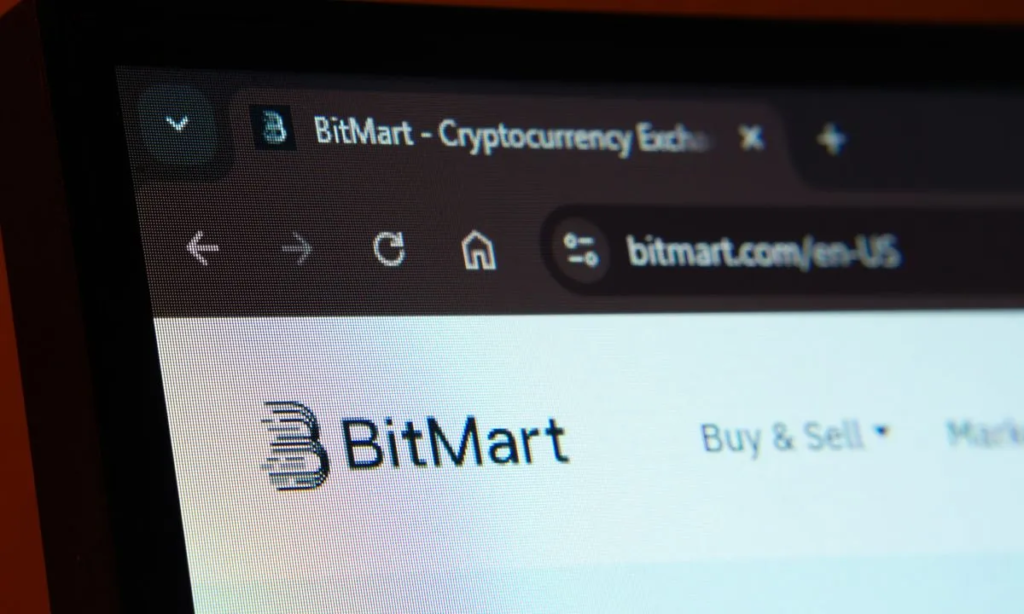
BitMart, one of the most recognizable mid-tier cryptocurrency exchanges in the market, has officially announced that it is shutting down its trading operations. The platform published a public notice confirming that it will begin an orderly wind-down of its entire trading system. After nearly eight years of serving millions of crypto traders worldwide, the exchange is preparing to turn off its servers for good.
For a platform that routinely logged hundreds of millions of dollars in daily trade volume, the sudden announcement sent immediate shockwaves across the global crypto community. Traders holding assets on the platform rushed to check their account balances, while market analysts scrambled to make sense of what caused such a prominent exchange to collapse.
The market reaction was swift and brutal. BitMart’s native utility token, BMX, plummeted by over 70% in less than 24 hours. The price cratered from around $0.31 down to less than $0.06 as investors dumped their holdings. At the same time, social media platforms lit up with complaints from users reporting delayed withdrawal processing and locked accounts.
If you have funds on BitMart or trade cryptocurrency regularly, this news is a crucial wake-up call. Understanding what happened, why it happened, and what you need to do next will save you from losing your hard-earned money.
The Official BitMart Shutdown Schedule: Key Dates You Must Know
BitMart is not turning off its servers immediately, but strict operational limits took effect the moment the announcement went live. The company has outlined a three-phase wind-down timeline that every user must keep on their radar.
Build Funnels, Email Lists & Sell Online With One Free Tool
Create funnels, send emails, and sell online using Systeme.io without paying for multiple tools.
Create Free AccountFree forever • No credit card • Beginner-friendly
Phase 1: Immediate Restrictions (July 26, 2026)
On July 26, 2026, BitMart cut off core features across its platform. The exchange completely halted new user registrations and blocked all crypto and fiat deposits.
Futures trading was immediately forced into a “reduce-only” mode, meaning traders can only close open positions and cannot enter new ones. Spot markets stopped accepting new order placements. Automated features, including API trading, copy trading, and grid trading, were also put into phase-out mode.
Phase 2: Total Stop of Trading Services (August 26, 2026)
Starting at 01:00 UTC on August 26, 2026, BitMart will permanently stop all spot and futures trading. Every active order still open on spot markets will be canceled. Any futures positions that traders have not closed manually by this deadline will be automatically settled using mark or index settlement prices.
Other popular platform offerings, including wealth management products, staking options, crypto lending, and the BitMart Launchpad, will be fully discontinued by or before this date.
Phase 3: Complete Operational Shutdown (January 31, 2027)
BitMart plans to keep its withdrawal portal open until 15:59 UTC on January 31, 2027. This gives users a window of time to move their assets off the platform. Once this date passes, the platform will cease operations entirely. Any funds left on the site after January 31, 2027, will likely be inaccessible forever.
Why Is BitMart Closing Down? Behind the Decision
In its public notice, BitMart offered a brief official explanation. The exchange stated that the decision was made after “a careful evaluation of the Company’s operating conditions, market environment, and future strategic direction”. While that statement sounds polite, the reality facing mid-tier crypto exchanges is far more complicated.
The Squeeze on Mid-Tier Crypto Exchanges
Running a cryptocurrency exchange is an expensive business. Centralized venues must pay huge sums for server infrastructure, security audits, customer support, and legal compliance.
Top-tier exchanges like Binance and Coinbase dominate global trading volume. They enjoy deep liquidity, massive user bases, and high revenues from trading fees. On the other end of the spectrum, small niche exchanges survive on micro-communities.
Mid-tier platforms like BitMart are caught in a dangerous middle ground. They need a continuous influx of new users and speculative trading volume to break even. When overall crypto market volume slows down, revenue dries up quickly while operating costs remain sky-high. Industry experts call this the “fatal flaw” of mid-tier exchanges: without perpetual user growth, the business model breaks down.
Rising Regulatory and Compliance Costs
Governments around the world have increased pressure on crypto trading platforms. Meeting global regulatory rules requires extensive Anti-Money Laundering (AML) monitoring and Know-Your-Customer (KYC) identity systems.
For offshore platforms that operated with minimal compliance for years, adapting to tighter global rules has become financially overwhelming. Staying compliant across dozens of countries can cost millions of dollars annually—an expense that mid-tier exchanges can no longer support during lean market periods.
Internal CEO Shakeup and Leadership Drama
Adding fuel to the fire, former BitMart Chief Executive Officer Nenter Chow made a dramatic public statement on social media shortly after the closure announcement. Chow posted on X that his employment was terminated without prior warning just two days before BitMart made its announcement public.
He stated that he was not consulted about the shutdown decision and only found out about the closure after reading the company’s public notice. This sudden leadership exit suggests intense internal conflict at the highest levels of the company right before the decision was made to pull the plug.
The 2026 Exchange Shakeout: BitMart Is Not Alone
BitMart is not the only exchange shutting down its operations. In fact, it is the third major exchange to announce a total closure in recent weeks.
BitMEX, famous for introducing perpetual swap contracts to crypto, announced its own shutdown after eleven years in business, citing a strategic review. UK-regulated venue EXMO.com also initiated a wind-down process following regulatory pressures, while AscendEX closed its operations earlier.
According to blockchain analytics data, over thirty crypto projects—including exchanges, Layer 1 networks, Layer 2 scaling protocols, and DeFi platforms—have shut down so far.
Former Binance CEO Changpeng Zhao commented on the wave of closures, remarking on social media that “hard times are here again” for crypto platforms operating under tight margins. However, some venture capitalists and industry veterans argue that this consolidation is actually healthy for the long-term crypto ecosystem. By clearing out weak or unsustainable business models, the remaining market becomes safer and more resilient.
Keeping track of fast-moving industry shifts can feel overwhelming. At WhatsBuzzn, our mission is to break down complex global events into simple, actionable insights.
If you want to understand broader technology trends shaping the modern economy, explore our articles on Technology & AI. Many digital entrepreneurs who want to build reliable income without taking huge financial risks are also turning to proven digital business models like YouTube Automation.
Step-by-Step: What You Should Do If You Have Money on BitMart
If you have cryptocurrency or fiat balances inside BitMart, you must take action immediately. Do not wait until the final deadline. Follow these simple steps to protect your funds right now.
Step 1: Cancel Open Orders and Close Futures Positions
Log into your BitMart account right now. Look at your active spot trading orders and cancel any limit orders that have not executed yet.
If you have open futures contracts, close them manually. BitMart will automatically liquidate open futures positions on August 26, but closing them yourself guarantees you control the exact exit price rather than relying on automated settlement algorithms.
Step 2: Convert Low-Liquidity Altcoins into Major Assets
BitMart hosted hundreds of small, low-market-cap altcoins. As trading volume drops, liquidity for these smaller tokens is evaporating fast. Furthermore, withdrawal fees for certain obscure tokens can be very high, or specific blockchain networks may experience unexpected maintenance pauses.
If you own small altcoin balances, consider trading them for highly liquid assets like Bitcoin (BTC), Ethereum (ETH), or major stablecoins like Tether (USDT) or USD Coin (USDC) before trading stops completely on August 26. This makes moving your money off the platform much smoother.
Step 3: Initiate Your Withdrawal Request Without Delay
Do not wait until late August or early 2027 to request your withdrawal. On-chain tracking data from Arkham Intelligence shows that BitMart’s tracked wallet balances dropped from $102 million down to around $69 million in a matter of days.
Users on social media have reported that Tether (USDT) withdrawals are already taking several hours or even days to process. BitMart has acknowledged that processing times may be extended due to extra security checks and identity verification. Submitting your request early places you higher in the processing queue.
Step 4: Move Funds to a Personal, Self-Custodial Wallet
When withdrawing your funds, send them directly to a non-custodial personal wallet where you control the private keys. Good choices include software wallets like Trust Wallet or MetaMask, or hardware security devices like Ledger or Trezor.
Build Funnels, Email Lists & Sell Online With One Free Tool
Create funnels, send emails, and sell online using Systeme.io without paying for multiple tools.
Create Free AccountFree forever • No credit card • Beginner-friendly
Avoid making a direct exchange-to-exchange transfer (e.g., from BitMart straight to another exchange). If there is a delay or processing glitch on either end, tracking down stuck funds across two centralized platforms can become a massive headache.
Step 5: Complete Enhanced KYC Verification If Prompted
Due to elevated fraud risk during exchange wind-downs, BitMart is flagging certain withdrawal requests for additional compliance reviews. If you receive a notification asking to verify your identity or upload identity documents, do so immediately. Delays in providing requested documentation will halt your withdrawal processing.
Key Lessons Every Crypto Investor Needs to Remember
The sudden closure of BitMart serves as an important lesson for anyone investing in digital assets. Protecting your wealth requires practicing strict risk management at all times.
1. “Not Your Keys, Not Your Coins”
This classic crypto phrase remains the golden rule of digital asset security. When you store your cryptocurrency on a centralized exchange, you do not technically control those funds. The exchange holds the private keys. If the company goes bankrupt, suffers a major hack, or decides to shut down, access to your money can vanish in an instant. Always keep assets you are not actively trading in a personal self-custodial wallet.
2. Platform Utility Tokens Carry Extreme Risk
Native exchange tokens like BMX give users discounts on trading fees when the platform is thriving. However, their value is tied directly to the exchange’s survival. When an exchange shuts down, the utility of its platform token disappears entirely, causing the token price to crash toward zero. Never allocate a large percentage of your portfolio to native exchange tokens.
3. Spread Your Risk Across Multiple Platforms
If you prefer using centralized exchanges for active trading, never keep all your funds on a single platform. Diversify your risk across two or three established, heavily regulated platforms. That way, if one exchange encounters operational trouble, the bulk of your portfolio remains safe.
4. Respond Immediately to Negative News
When a platform announces withdrawal delays, leadership changes, or regulatory issues, act fast. Moving your funds out at the first credible sign of trouble is always safer than waiting to see if things get better.
Frequently Asked Questions (FAQs)
Is BitMart shutting down permanently?
Yes, BitMart has officially announced that it is commencing an orderly wind-down of its entire trading platform. Trading services will cease on August 26, 2026, and the platform will permanently close on January 31, 2027.
Why can’t I make new deposits on BitMart?
BitMart suspended all crypto and fiat deposits on July 26, 2026, as part of the first phase of its shutdown plan. This was done to prevent users from adding more funds to a platform that is actively closing down.
What is the last day to withdraw my money from BitMart?
The final deadline to submit withdrawal requests is January 31, 2027, at 15:59 UTC. However, you should submit your withdrawal request as soon as possible because processing times are slowing down due to high request volumes.
Why is my BitMart withdrawal taking so long to process?
Withdrawals are experiencing delays because BitMart is running extra security checks, identity verification procedures, and compliance reviews on outgoing transactions. Make sure your KYC information is complete and check your email for any messages from BitMart support.
What happens if I don’t close my futures trades by August 26?
If you have open futures positions at 01:00 UTC on August 26, 2026, BitMart will automatically close and settle them based on prevailing mark or index prices. It is much better to close your positions manually before this date so you control the execution price.
Why did the BMX token crash so suddenly?
BitMart’s native token, BMX, lost over 70% of its value because the token’s main utility was tied to trading on the BitMart exchange. Once the platform announced its closure, traders rushed to sell their tokens, wiping out millions in market capitalization.
Staying Ahead of the Curve with WhatsBuzzn
The crypto landscape moves fast, and staying informed is your best defense against unexpected market shocks. Having clear, easy-to-read updates keeps you prepared for whatever comes next.
That is why WhatsBuzzn exists. We deliver straightforward, reliable content on the biggest trending stories in technology, finance, entertainment, and digital culture. Our goal is simple: bring you facts and insights without complicated technical jargon or unnecessary fluff.
Got thoughts on the BitMart shutdown or questions about protecting your digital assets? Reach out to us directly through our Contact Page—we always love hearing from our readers!
You can also join the conversation and follow our daily updates across our official social channels:
- Connect with us on Instagram
- Follow our page on Facebook
- Get real-time updates on X (Twitter)
Stay proactive, protect your funds, and keep reading WhatsBuzzn to stay informed on what is happening in our world today.
