
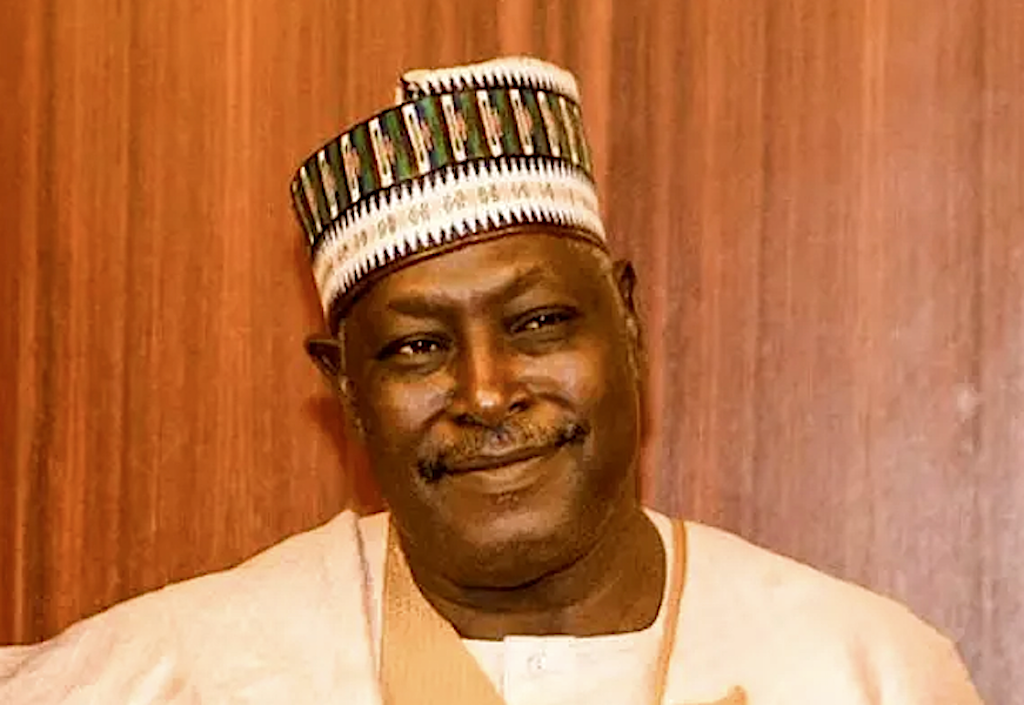
Nigerian politics is moving fast, and conversation about the 2027 presidential election is already taking over headlines. Former Secretary to the Government of the Federation, Babachir Lawal, sparked fresh debate after making bold predictions about who will win and who will lose in the next race for Aso Rock.
In a recent televised interview, Lawal openly declared that former Vice President Atiku Abubakar has zero chance of winning the presidential election in 2027. At the same time, he claimed that a united ticket featuring Labour Party’s Peter Obi and New Nigeria Peoples Party leader Rabiu Musa Kwankwaso stands a strong 70 percent chance of taking the crown.
Lawal did not stop there. He gave President Bola Ahmed Tinubu a 50 percent chance, citing current economic challenges and governance issues.
Here at WhatsBuzzn, we keep our fingers on the pulse of trending news to give you clear, honest breakdowns without complicated political jargon. Let us unpack what Babachir Lawal said, why it matters, and what it could mean for the future of Nigerian leadership.
Who Is Babachir Lawal and Why Are People Listening?
Before breaking down his numbers, it helps to understand who Babachir Lawal is and why his words carry weight across the political landscape.
Build Funnels, Email Lists & Sell Online With One Free Tool
Create funnels, send emails, and sell online using Systeme.io without paying for multiple tools.
Create Free AccountFree forever • No credit card • Beginner-friendly
Babachir David Lawal served as the Secretary to the Government of the Federation during the early years of former President Muhammadu Buhari’s administration. As an insider within the ruling All Progressives Congress for many years, he was deeply involved in building political coalitions across the northern and southern regions of Nigeria.
However, Lawal broke ranks with the APC ahead of the 2023 elections over the party’s same-faith presidential ticket. Since then, he has aligned with opposition voices, making frequent comments on governance, political alliances, and electoral fairness.
When someone with insider knowledge of both the APC and opposition groups speaks out about electoral strategy, voters and analysts listen carefully. His latest remarks give a rare look into how power brokers view the political map leading toward 2027.
Why Lawal Believes Atiku Abubakar Will Lose in 2027
One of the most striking parts of Lawal’s assessment is his absolute dismissal of Atiku Abubakar’s presidential ambitions. According to Lawal, Atiku will definitely lose if he runs again.
There are several major reasons why analysts and political observers view Atiku’s path to the presidency as increasingly difficult.
Declining Support in Key Regions
Atiku Abubakar has been a central figure in Nigerian presidential politics for over two decades. While his experience is vast, his voter base has faced repeated pressure in recent election cycles.
In 2023, the emergence of Peter Obi in the South-East and South-South, combined with Rabiu Kwankwaso’s dominance in Kano State, split traditional votes that previously went to the Peoples Democratic Party. Without a solid, unified base across the South and key Northern states, winning a national presidential race becomes almost impossible.
Voter Fatigue and Demographics
Nigeria has one of the youngest populations in the world. A massive segment of the electorate consists of young voters who are looking for fresh leadership styles, new ideas, and structural reform.
Many young Nigerians view long-standing political figures like Atiku as representatives of the old political order. Lawal’s prediction reflects a growing feeling among voters that traditional candidates will struggle to inspire the turnout needed to pull off a nationwide victory.
Internal Party Conflicts and Coalitions
Atiku’s recent attempts to build opposition alliances have faced friction. Lawal himself voiced deep frustration over internal primary processes and party politics, alleging that transparency remains a major concern. When opposition leaders are divided among themselves, presenting a united front against an incumbent government becomes extremely tough.
The 70 Percent Winning Formula: The Obi-Kwankwaso Joint Ticket
The core highlight of Babachir Lawal’s prediction is his belief that a joint ticket between Peter Obi and Rabiu Kwankwaso has a 70 percent chance of taking power in 2027.
On paper, pairing Peter Obi and Rabiu Kwankwaso creates one of the most geographically balanced political combinations in modern Nigerian history. Here is why Lawal rates this pairing so highly.
Uniting Southern Enthusiasm and Northern Structure
In the 2023 general election, Peter Obi demonstrated massive popularity among young voters, urban dwellers, and voters in the South-East and South-South regions. His message of moving Nigeria from consumption to production resonated strongly with millions seeking economic relief.
On the other hand, Rabiu Musa Kwankwaso holds a powerful grassroots movement known as the Kwankwasiyya movement, concentrated heavily in Kano State and across parts of Northern Nigeria. Kano remains one of the largest voting states in the country, capable of single-handedly altering national results.
Lawal’s calculation is simple math: if you combine Obi’s high-energy voter base in the South with Kwankwaso’s disciplined grassroots network in the North, you create a political force that spans both sides of the River Niger.
Addressing the 2023 Division
During the 2023 elections, many political commentators noted that if Obi and Kwankwaso had run on a joint ticket, the opposition would have secured a much higher total vote count. Because they ran separately, the opposition vote was fragmented across multiple parties, allowing the ruling APC to secure victory with a smaller percentage of the overall national vote.
Lawal argues that learning from past mistakes is essential. By coming together early ahead of 2027, an Obi-Kwankwaso ticket would prevent vote splitting and offer voters a clear, singular opposition alternative.
Potential Obstacles to an Obi-Kwankwaso Ticket
While a 70 percent chance sounds promising on paper, creating a successful coalition is far from simple. Several real-world challenges could derail this potential partnership:
- The Presidential Candidate Question: Both Obi and Kwankwaso have strong national ambitions and loyal followers who want them at the top of the ticket. Deciding who steps down to take the Vice-Presidential slot requires massive political sacrifice.
- Party Structures and Logistics: Building a national network capable of protecting votes in over 176,000 polling units requires immense funding, local party agents, and legal support.
- Regional Pressure: Political leaders often face intense pressure from their home regions not to accept a deputy position.
President Bola Tinubu and the Ruling Party Factor
While Lawal gave the Obi-Kwankwaso ticket a 70 percent chance, he gave President Bola Ahmed Tinubu a 50 percent chance of retaining power in 2027.
Giving an incumbent president a 50 percent chance highlights both the advantages and disadvantages that the ruling party carries into any election.
The Power of Incumbency
Incumbent governments in Nigeria hold significant structural advantages. The APC possesses established party infrastructure in nearly every state, access to substantial resources, and control over national policy execution. For any opposition group to defeat an incumbent, their coalition must be tight and organized.
Economic Realities and Public Sentiment
Tinubu’s administration has introduced major policy changes, including fuel subsidy removals and currency reforms. While the government argues these steps are necessary for long-term economic stability, everyday citizens have faced rising living costs, inflation, and security concerns.
Lawal noted that public dissatisfaction with current economic conditions weakens the ruling party’s standing. If the administration turns the economy around and improves public security before 2027, Tinubu’s chances could rise higher than 50 percent. However, if economic pressure persists, opposition candidate messaging will gain even more traction among undecided voters.
How Modern Media and Technology Are Reshaping Nigerian Politics
Political predictions are no longer made behind closed doors alone. The way Nigerians consume political news and debate candidate performance has changed dramatically due to modern technology and digital media.
platforms like social media allow real-time political commentary to reach millions of citizens instantly. You can follow our updates directly on social platforms through our handles on Instagram, Facebook, and X (formerly Twitter).
Digital creators are also leveraging new media formats to educate voters and break down complex policies. For instance, topics like YouTube automation have allowed young creators to build news channels that cover political events 24/7 without needing traditional TV studios.
At the same time, tools in technology and AI are being used to analyze voting patterns, track social sentiment, and detect fake news during election cycles. As we head toward 2027, technology will play an even larger role in shaping voter opinions and holding politicians accountable.
Build Funnels, Email Lists & Sell Online With One Free Tool
Create funnels, send emails, and sell online using Systeme.io without paying for multiple tools.
Create Free AccountFree forever • No credit card • Beginner-friendly
If you ever have news tips, questions, or want to contribute to our political coverage, feel free to reach out directly through our contact page.
What Must Happen for the Opposition to Win in 2027
Babachir Lawal’s predictions are ultimately political commentary based on current trends. For his 70 percent prediction to become reality, several key events must unfold over the coming years:
True Unification Over Personal Ambition
Political figures must place collective goals above personal interests. If opposition leaders fail to compromise on leadership roles, vote splitting will happen again, making an APC victory far easier.
Electoral Transparency and Voter Turnout
Lawal pointed out that election integrity is vital for any opposition victory. If voters believe their votes will not count, turnout drops. Opposition parties must work together to advocate for strong electoral reforms, voter registration drives, and secure vote collection systems.
Policy-Driven Campaigns
Nigerian voters are becoming more discerning. Simply criticizing the incumbent government will not be enough. The opposition must present clear, realistic plans on how they intend to lower inflation, create jobs, improve security, and fix national infrastructure.
Frequently Asked Questions
What did Babachir Lawal say about Atiku Abubakar for 2027?
Babachir Lawal stated that former Vice President Atiku Abubakar will definitely lose the 2027 presidential election, placing his chances of victory at zero percent on his personal scale.
Why does Lawal give Peter Obi and Rabiu Kwankwaso a 70% chance?
Lawal believes that if Peter Obi and Rabiu Kwankwaso join forces on a single ticket, they will unite strong voter bases across Northern and Southern Nigeria, creating an unbeatable opposition front.
What chance did Lawal give President Bola Tinubu?
Lawal gave President Bola Ahmed Tinubu a 50 percent chance of winning reelection, citing the power of incumbency balanced against current public economic struggles.
Are Peter Obi and Kwankwaso officially running on a joint ticket yet?
No official joint ticket has been finalized yet. While discussions and public calls for political alliances continue ahead of 2027, both leaders remain in their respective political spaces while consulting on the future.
How do political alliances impact Nigerian general elections?
In Nigeria’s multi-party democracy, winning the presidential election requires both a majority of total votes and at least 25 percent of votes in two-thirds of the 36 states. Alliances help parties combine regional strengths to satisfy these constitutional requirements.
The road to the 2027 presidential election is filled with shifting alliances, strategic calculations, and evolving public sentiment. While Babachir Lawal’s predictions highlight the strong potential of a united opposition, political outcomes in Nigeria ultimately depend on voter turnout, economic progress, and whether political leaders can put personal ambitions aside to build a genuine coalition. As the political landscape continues to develop, staying informed with factual, clear analysis will help every citizen make educated decisions about the future of the nation.
