
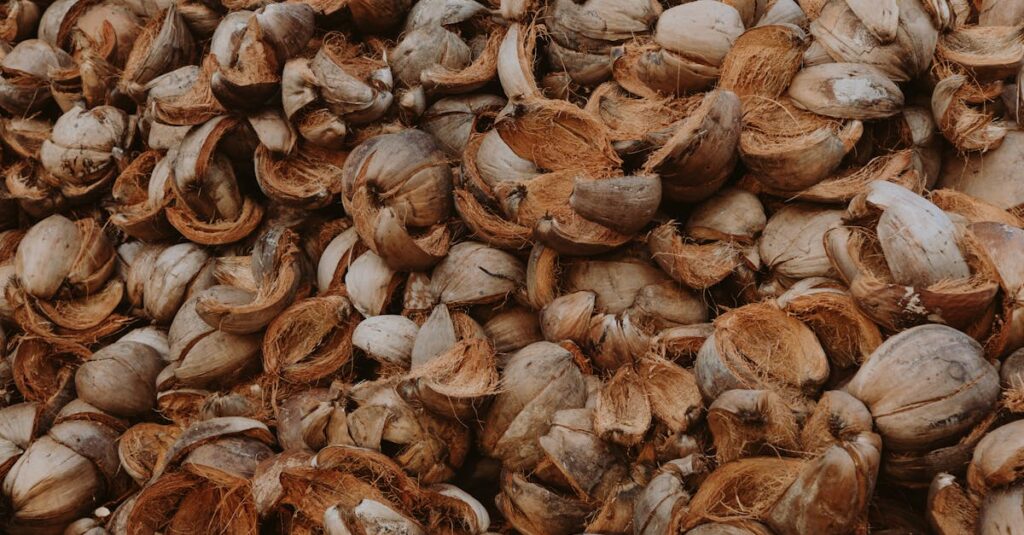
When people talk about Nigerian exports, the usual names come up: crude oil, cocoa, cashew nuts, ginger. But there is a quiet goldmine sitting right under our feet, or more accurately, right after our coconut sellers finish their business. Coconut shells.
Thousands of tons of them get thrown away every day across Lagos, Ogun, Ondo, and other southern states. Meanwhile, smart exporters are starting to buy these “wastes” for real money.
Here is why you should pay attention.
What Makes Coconut Shells So Valuable?
At first glance, a coconut shell looks like nothing special. Hard, brown, and usually headed for the dump. But inside that hardness is a material that international buyers are fighting for.
From Waste to Wealth
Coconut shells are processed into several high-demand products:
- Activated carbon – used in water filters, air purifiers, and even gold mining
- Coconut charcoal – a clean-burning fuel for hookahs and barbecues
- Coconut powder and grit – for industrial cleaning, drilling fluids, and fertilizer
- Handicrafts – bowls, buttons, jewellery, and home decor
The biggest money is in activated carbon. A single ton of high-quality coconut shell charcoal can sell for $1,500 to $3,000 on the international market. That is serious cash for something most Nigerians currently burn or leave to rot.
Why Nigeria Has a Natural Advantage
Nigeria produces over 270,000 tons of coconuts every year, according to the Food and Agriculture Organization. That is a lot of shells. The coconut belt runs from Lagos through Ogun, Ondo, Ekiti, and down to the coastal areas of Rivers and Akwa Ibom. These regions have cheap labour, existing coconut farms, and easy access to ports.
China, India, and Vietnam currently dominate the global coconut shell market. But they are facing rising labour costs and environmental regulations. Nigerian exporters can offer competitive prices because raw shells here are nearly free. You are not buying the coconut flesh or water. The shell is still treated as a waste product in most local markets. That is your margin.
The Real Challenges You Must Face (No Sugarcoating)
Let me be honest with you. Exporting coconut shells is not a get-rich-overnight thing. It comes with real problems.
Quality Control
International buyers are strict. Your shells must be clean, dry, and free from mould, sand, or rot. Most local waste shells fail these standards. You need a processing setup to wash, dry, and sort them properly.
Logistics
Shipping takes time and money. You need containers, fumigation certificates, and reliable freight forwarders who know the coconut shell trade. Port delays at Apapa or Tin Can Island can eat into your profits.
Finding the Right Buyers
You cannot just list “coconut shells” on Alibaba and expect orders. Serious buyers are often medium-sized factories in China, India, and Europe. They want consistency, not one-off shipments. Building trust takes months.
Price Volatility
Coconut shell prices go up and down with crude oil prices (because activated carbon competes with coal-based carbon) and with harvest seasons in Asia. Do not bet your entire savings on one shipment.
Step-by-Step: How to Start Exporting Coconut Shells from Nigeria
If you still want to go ahead, here is a realistic path.
1. Source Your Shells
Go to local coconut markets, fruit sellers, and coconut oil processors. Offer to take their shells away for free or a small fee. One smart strategy is to pay children or low-income collectors a few naira per shell. That builds a loyal supply chain.
Practical tip: Focus on mature brown shells, not young green ones. Mature shells are harder and produce better carbon.
2. Process and Clean Them Properly
You cannot ship raw, dirty shells. At minimum:
- Remove any remaining coconut flesh
- Wash off dirt and sand
- Sun-dry for several days until moisture drops below 12%
- Store in a dry, raised area to avoid ground moisture
For higher prices, you can crush shells into uniform chips (1–4 cm) using a simple hammer mill. Chips are easier for buyers to carbonize.
3. Find the Right Buyers
Do not waste money on expensive B2B directories. Instead:
- Search Google for “activated carbon manufacturer” in India, China, or Turkey
- Look up their procurement email or LinkedIn contacts
- Send a short, direct email with photos of your product, quantity available, and price
Also check the Nigerian Export Promotion Council (NEPC). They have lists of vetted international buyers and can help with documentation.
4. Handle Legal and Shipping Requirements
You will need:
- Certificate of Origin from NEPC
- Phytosanitary certificate (to prove shells are pest-free)
- Bill of lading from your shipping line
- Commercial invoice and packing list
Work with a freight forwarder who has done agricultural exports before. Ask them for references. Avoid agents who promise everything but deliver nothing.
5. Price Your Product to Win
A reasonable starting price for clean, dry, crushed shells is $150–$250 per metric ton FOB Lagos. For raw, unsorted shells, lower to $80–$120. Do not demand premium prices until you prove quality consistently.
How Much Can You Really Earn?
Let me give you realistic numbers, not hype.
If you collect and process 10 tons of shells per month, your costs include:
- Collection and transport: maybe ₦50,000–₦100,000
- Labour for washing and drying: ₦30,000–₦60,000
- Bagging and storage: ₦20,000
- Shipping and documentation: depends on container size
At $200 per ton FOB, your gross revenue is $2,000 (around ₦3 million at current rates). After all costs, net profit could be ₦1 million to ₦1.5 million per month. That is solid money. But it takes time to scale to 10 tons monthly. Most beginners start with 1–2 tons and reinvest everything into better drying equipment or a crushing machine.
Frequently Asked Questions
Do I need a licence to export coconut shells from Nigeria?
Yes, you need an exporter registration with NEPC and a Tax Identification Number. The process is straightforward and costs very little. You can also work through a licenced export agent if you want to start faster.
Can I export raw, unshelled coconuts instead?
You can, but raw coconuts have much stricter phytosanitary rules and shorter shelf life. Shells are easier because they are dry and not considered a fresh produce risk.
Which countries buy the most coconut shells?
China, India, Vietnam, the United States, and several European countries. Chinese buyers are the largest volume buyers, but they also pay the lowest prices. European buyers pay more but demand premium quality.
What is the biggest mistake new exporters make?
Trying to ship before they have consistent quality. One bad container full of mouldy shells will kill your reputation with that buyer forever. Start small, test a 500 kg sample shipment, and only scale after your buyer confirms quality.
Is this business suitable for someone with no export experience?
Yes, but you need patience. Learn by partnering with an experienced exporter on a profit-share basis. Offer to handle the local collection and processing while they handle the shipping and buyer connection. That is how many successful exporters started.
Conclusion
Coconut shells are not glamorous. But they are profitable, sustainable, and largely ignored by most Nigerian exporters. That is exactly why smart people are moving in now.
The window is open because global demand for activated carbon and eco-friendly charcoal keeps growing, while traditional suppliers are struggling with costs.
You do not need a big factory or a university degree. You need boots on the ground, a simple drying system, and the willingness to send a hundred emails until one buyer says yes.
What is stopping you from turning a waste product in your local market into a monthly cheque from overseas?
