
Former presidents don’t automatically stay protected after leaving office. But the conversation is more about politics than what the law actually says. Let’s break down the real facts.
The Short Answer
Yes, a former Nigerian president can legally be arrested.
The law is very clear on this point. The immunity provided by Section 308 of the 1999 Constitution only covers a president while they are actively in office. The moment a president’s tenure ends, that protection disappears completely.
But just because something is legal doesn’t mean it happens. No former Nigerian president has ever been arrested or prosecuted for crimes committed while in office.
So the real question is not “can it happen?” but “will it happen?”
Build Funnels, Email Lists & Sell Online With One Free Tool
Create funnels, send emails, and sell online using Systeme.io without paying for multiple tools.
Create Free AccountFree forever • No credit card • Beginner-friendly
What Nigerian Law Actually Says
Section 308 of the 1999 Constitution grants immunity to the president, vice president, governors, and deputy governors. The clause states that no civil or criminal proceedings can be instituted against these office holders. They cannot be arrested or imprisoned during their period of office.
This protection exists for a specific reason. The drafters of the constitution wanted sitting presidents and governors to focus on governing without constant legal distractions.
But here is what many people get wrong. The immunity clause has an expiration date. It is tied strictly to the period of office. The constitution does not grant lifetime immunity to anyone.
Professor Muhammed Tawfiq Ladan, a law professor at ABU Zaria, explains that a former president stops enjoying immunity the moment they leave office. Any individual can institute legal processes against them, whether civil or criminal.
This is backed by legal experts. Senior Advocate Femi Falana stated that President Muhammadu Buhari would lose his immunity by May 29, 2023, and become an ordinary citizen liable to be subpoenaed by any court after leaving office.
The SabiLaw legal resource confirms that a former governor, deputy governor, president or vice president of Nigeria can be prosecuted for any matter, including actions or inactions while in government, once their tenure ends.
The Political Reality
Here is where things get complicated.
The law says one thing. But Nigeria has a long history of treating former presidents differently. Several senior figures have noted that Nigeria has effectively created a situation where presidents enjoy de facto immunity even after leaving office.
Professor Itse Sagay, who served as President Buhari’s anti-graft adviser, gave a revealing reason why former presidents are not tried in Nigeria. According to him, putting a former leader on trial would be divisive for the country.
This is the core tension. The legal framework exists. But the political will does not.
Look at what has actually happened in Nigeria. The Economic and Financial Crimes Commission has never arrested a former president since the agency was created in 2003.
When former President Goodluck Jonathan was implicated in the $2.1 billion arms deal scandal through his National Security Adviser Sambo Dasuki, Jonathan himself was never invited for questioning. Dasuki spent years in custody. Jonathan faced no consequences.
The EFCC boss at the time, Ibrahim Magu, explained that no document had been traced to Jonathan giving approval for disbursement of money for political purposes. All memos approved by Jonathan were for arms purchase. This shows how carefully the system protects former presidents.
The Yahaya Bello Case That Shocked Everyone
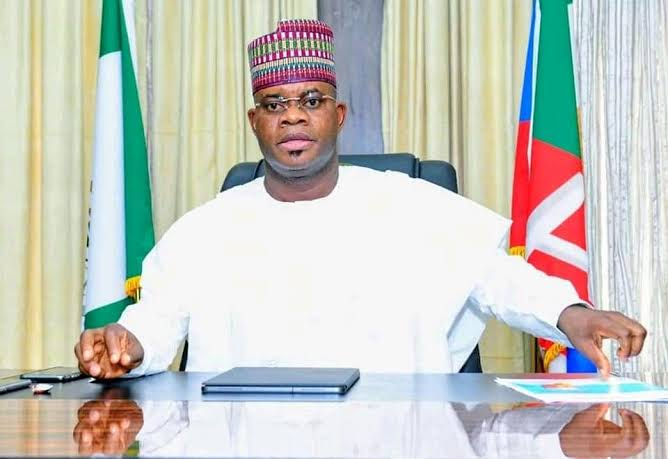
Something happened in April 2024 that brought this whole debate back to life.
EFCC operatives arrived at the Abuja residence of Yahaya Bello, the immediate past governor of Kogi State, to arrest him over alleged money laundering of N84 billion. Bello had already left office. He no longer had immunity.
But the sitting governor of Kogi State, Usman Ododo, arrived at the scene with heavily armed security men. He was allowed to enter Bello’s residence.
About two hours later, Ododo’s car zoomed out through an unmanned exit in a way that suggested he had taken Bello along with him. The EFCC operatives could not stop Ododo because as a sitting governor, he enjoyed immunity.
This case shows the real problem. Even when a former president or governor loses immunity, powerful friends who still hold office can shield them.
International Comparison
Nigeria stands out internationally in a way that is not flattering.
Around the world, former leaders have faced justice. Argentina, France, Croatia, South Korea, Malaysia, and South Africa have all tried, convicted, and jailed former presidents and prime ministers for various offences.
Nigeria is different. As one commentator put it, Nigeria is the only country where presidents enjoy constitutional immunity in power and have de facto immunity after they leave office.
This double protection does not exist in most mature democracies. Former leaders in other nations are held accountable for their actions in office. Nigeria has not yet crossed that threshold.
The Impeachment Alternative
There is another path that removes immunity immediately.
Under Section 143 of the 1999 Constitution, the president or vice president can be removed for gross misconduct. If impeachment happens, the protection under Section 308 ends instantly. The former president may then be investigated or prosecuted.
Since 1999, no Nigerian president has been successfully impeached. That includes Olusegun Obasanjo, Goodluck Jonathan, and Muhammadu Buhari.
The impeachment process is deliberately difficult. One third of all National Assembly members must sign a written notice of allegation. Each chamber must approve an investigation by a two thirds majority. A seven member panel investigates for three months. Both chambers must again vote by two thirds majority to remove the president.
This high bar explains why impeachment has never succeeded. It requires political will that simply does not exist when the person being judged is the most powerful figure in the country.
Build Funnels, Email Lists & Sell Online With One Free Tool
Create funnels, send emails, and sell online using Systeme.io without paying for multiple tools.
Create Free AccountFree forever • No credit card • Beginner-friendly
Key Takeaways
The legal position is straightforward. Any president, vice president, governor or deputy governor who has left office does not enjoy immunity anymore. Any individual can institute legal processes against them for civil or criminal charges.
The practical barriers are equally clear. No former president has ever been arrested in Nigeria. Powerful political networks protect former leaders. The anti corruption agencies often focus on lower level officials while leaving the top untouched. Prosecutions under the Buhari administration targeted former officials and associates rather than Buhari himself.
There is also a growing push for change. A bill seeking to remove immunity for sitting presidents, vice presidents, state governors and their deputies has passed second reading in the Senate. Senior lawyers like Mohammed Ndarani have called Section 308 the spinal cord of corruption in Nigeria and urged the National Assembly to expunge it from the constitution.
What Would It Take For An Arrest To Happen?
Several things would need to align.
First, a sitting president would need to have the political will to pursue legal action against a predecessor. That is rare because former presidents often belong to the same political networks or parties. The current president might be the former presidents former ally or even protégé.
Second, the anti corruption agencies like EFCC would need to operate completely independently of political influence. This is not currently the case. As critics have noted, the anti corruption drive often remains reactive and selective, gaining momentum only after officials leave office.
Third, the powerful interests that benefit from the system would need to be overcome. Former presidents retain significant political capital. They have loyal supporters. They have networks that can make life difficult for anyone who tries to pursue them.
Finally, the ethnic and regional dynamics of Nigerian politics cannot be ignored. Prosecuting a former president from one part of the country could be seen as a political attack by the current administration from another part. This is the divisiveness that Professor Sagay referenced.
Where Things Stand Now
No former Nigerian president has been arrested. That remains true as of this writing. But several former governors and top officials in the Buhari administration are currently facing investigations and prosecutions for alleged corruption totaling an estimated N3.47 trillion. Former ministers like Chris Ngige are being investigated. Former CBN governor Godwin Emefiele is facing trial. Former Minister of State for Petroleum Timipre Sylva was declared wanted with an arrest warrant issued.
These prosecutions target the people around former presidents. They do not yet target the former presidents themselves.
The EFCC also had to debunk false claims circulating on WhatsApp and social media that former presidents Obasanjo and Jonathan had been arrested. An EFCC spokesman confirmed these claims were entirely false.
Moving Forward
The immunity clause debate is not going away. Public pressure is growing. Legal experts continue to challenge the constitutionality of protecting governors and their deputies under Section 308, arguing it violates equality before the law.
Some prominent Nigerians have called for the complete removal of immunity protections. Former minister Isa Ali-Pantami has called for a review of immunity clauses for political office holders. Retired General Ishola Williams stated that the 1999 Constitution is corruption prone because immunity gives room for impunity.
But constitutional amendments require the cooperation of the very people who benefit from the current system. That is a significant obstacle.
Frequently Asked Questions
Can a former president be arrested immediately after leaving office?
Yes. The constitution implies that even a minute after leaving office, anyone can take legal action against a former president.
Has any Nigerian president ever been arrested?
No. No sitting or former Nigerian president has ever been arrested by the EFCC since the agency was created in 2003.
What crimes could lead to arrest?
Any criminal offence including corruption, money laundering, abuse of office, or criminal conspiracy. The constitution does not limit what crimes a former president can be charged with.
Can a former president be arrested while traveling internationally?
Theoretically yes, if an international arrest warrant is issued. In practice, no former Nigerian president has faced this situation. Nigeria has sought Interpol’s help to arrest suspects in other cases, but never for a former president.
What is de facto immunity?
This refers to the unofficial protection former presidents receive even after their legal immunity expires. It comes from political connections, ethnic loyalties, and the practical difficulty of prosecuting someone with immense influence.
Could the International Criminal Court prosecute a former Nigerian president?
Potentially yes, especially for crimes against humanity or large scale corruption that affects international stability. Senior Advocate Femi Falana noted the ICC Special Prosecutor is likely to open investigations that may implicate top Nigerian officials.
Conclusion
Can a former Nigerian president be arrested? The law says yes without question. The constitution is clear. Immunity expires when office ends. Any citizen or agency can pursue legal action.
But the law and reality do not always match. Nigeria has created a system where former presidents operate above accountability. Their aides and associates face prosecution while they remain untouched. This double standard undermines the country’s anti corruption efforts and sends a troubling message about equality before the law.
The conversation is shifting though. Public awareness is growing. Legal experts are speaking out. Some former governors are finally facing justice. The question is no longer just legal. It is political. It is about whether Nigeria will join the ranks of nations that hold their leaders accountable.
What do you think would happen if a sitting president actually tried to arrest a predecessor? Would the country be better off or would it plunge into deeper crisis? Share your thoughts.
