
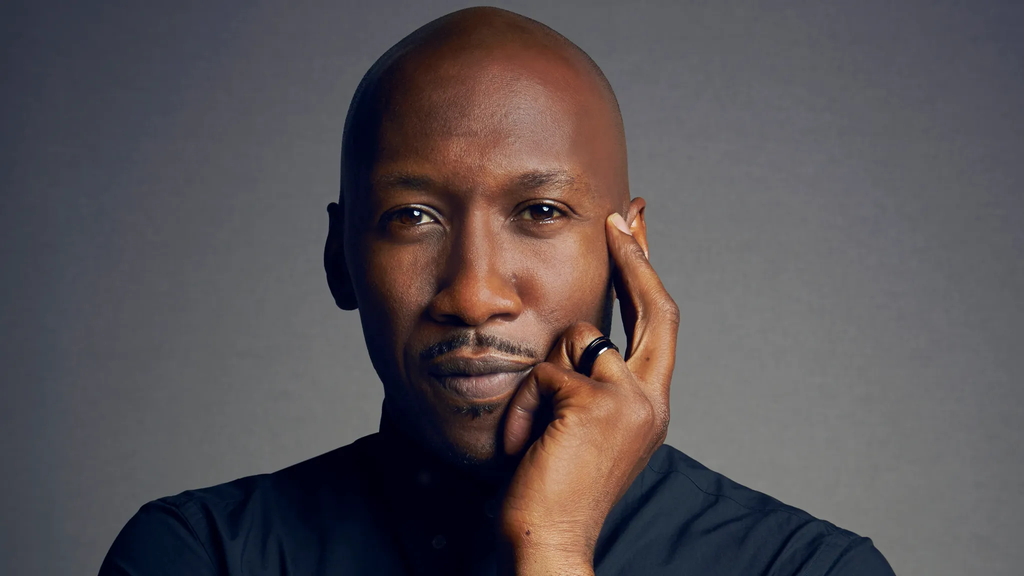
Most people assume that winning one Academy Award changes an actor’s life forever. Winning two is supposed to put you at the very top of Hollywood, with studios begging to hand you lead roles every week.
Mahershala Ali has two golden statues sitting on his shelf, yet he is telling the world that the trophy does not guarantee a thing. During a candid podcast appearance in November 2026, the acclaimed actor pushed back hard against the ongoing debate over what Oscar wins actually mean for Black performers.
His blunt verdict has sparked a massive conversation across the film industry and social media. According to Ali, all the online arguments about whether an Oscar puts a Black actor on the A-list are “kind of just talk” that “doesn’t translate to anything real”.
What Exactly Did Mahershala Ali Say on the 7PM in Brooklyn Podcast?
The viral moment happened on the November 13, 2026 episode of the 7PM in Brooklyn podcast, hosted by former NBA star Carmelo Anthony and co-host Kazeem “Kaz” Famuyide. Sitting down for an honest, relaxed chat, Ali opened up about the hidden realities of working in Hollywood after reaching the highest peak of critical praise.
Instead of giving a polished public relations answer, Ali spoke like someone tired of watching fans and commentators argue over trophies that do not pay the bills or write good scripts. He made it clear that he respects the Academy, yet he refuses to pretend that an award magically fixes the structural limits Black actors face every day.
The $0 Secret To Launching Your Entire Online Empire
Why pay hundreds every month for separate software? Build funnels, send emails, and make sales with Systeme.io completely free.
Get Started For $0Free Forever • No Credit Card Needed • Beginner-Friendly
Why Did Kazeem Famuyide Bring Up the Black Oscar Debate?
Co-host Kazeem Famuyide asked Ali a question that pops up every single awards season. He wanted to know if taking home an Oscar finally validates Black actors and officially places them in the coveted A-list tier of Hollywood.
For years, fans have debated why so many Black actors seem to disappear or struggle for major leading roles right after winning an Academy Award. People often treat Oscar night like a finish line that proves a performer has finally broken through every barrier in the movie business.
Ali did not hesitate to shut down that way of thinking. He replied simply, “I don’t know. It’s kind of just talk. It doesn’t translate to anything real”. In his eyes, public validation and internet debates do not put good scripts on an actor’s desk.
How Did Ali Compare the A-List Argument to LeBron James and Michael Jordan?
To explain why he avoids these endless status arguments, Ali compared the Black Oscar debate to the classic barbershop argument over LeBron James versus Michael Jordan. Sports fans can spend hours yelling about who is better, even though the obvious truth is that both players are all-time greats.
He pointed out that arguing over who counts as A-list misses the real issue completely. An actor can be respected, celebrated, and decorated with awards, yet still find themselves locked out of the rooms where big decisions get made.
For Ali, chasing outside approval is a trap. He told listeners that young actors should care far more about doing strong, meaningful work than collecting shiny hardware or winning online popularity contests.
Why Does Winning Two Oscars Still Leave Mahershala Ali Waiting for Roles?
If anyone in modern cinema should have their pick of top movie roles, it is Mahershala Ali. Still, he admitted on the podcast that winning two Oscars has not stopped him from waiting around just like everyone else.
He explained that being an Oscar winner does not automatically put you at the front of the line when major films are being developed. In fact, he noted that working in the film business remains “such an uphill battle” regardless of how many awards sit in your house.
Is There Really a Shortage of Good Scripts in Hollywood?
According to Ali, the biggest problem in the entertainment industry is not a lack of talented performers. “There’s a lot of great actors that don’t have Oscars, who are also looking for good material,” he said. “There’s more good actors than there is good material”.
He broke down the math in a way anyone can understand. Out of all the movies and television shows made each year, only a tiny fraction are actually well-written projects worth doing. Even when a script is great, it still has to fit the right actor at the right time.
More importantly, Ali revealed how narrow Hollywood’s imagination still is when studios approve new movies. “The vast majority of projects that get greenlit, there are not roles for me in those,” he said. “So, it doesn’t matter if I got 17 Oscars. If someone is not writing something for you or greenlighting something with you in mind, you’re like everybody else waiting and looking and searching”.
What Happens When an Actor Wins an Academy Award?
Many people picture an Oscar winner’s phone ringing off the hook with offers to star in massive blockbusters and prestige dramas. Ali confirmed that your phone does ring a lot after a big win, yet the reality behind those calls is far less glamorous than fans imagine.
He compared the flood of post-Oscar offers to sorting through junk mail. “It can almost be like spam, because you’ve got to go through it and go, ‘Ah, that doesn’t fit,'” he explained.
Getting lots of calls does not mean getting good calls. Studios often rush to attach an Oscar winner’s name to weak scripts just to help sell a movie, rather than building strong, complex characters designed for that actor’s strengths.
Why Does Mahershala Ali Reject the Label of the Diversity Project?
One of the sharpest points Ali made during the interview had to do with how Hollywood packages stories starring Black leads. Too often, studio executives treat films with Black casts as special seasonal initiatives rather than normal, everyday human stories.
Send, Spend & Hold Money Worldwide Without Hidden Fees
Transfer money internationally at the real exchange rate and hold 40+ currencies in one account.
Open a Wise AccountMid-market rate • Fast transfers • 40+ currencies
Ali made it clear that he wants no part of being treated like a checkbox for a studio’s public image. When a movie gets labeled as a diversity effort before audiences even see it, the art itself gets pushed to the side.
What Does He Mean by Not Wanting to Be Treated as an Exotic Other?
During the chat, Ali spoke directly about the frustration of feeling singled out simply because of his race. “You don’t want to find yourself in a situation where, oh, that’s ‘the diversity project,'” he said. “You just want to do great material as a Black person. You’re not thinking of yourself as this exotic other, per se. You just are living your life”.
That quote hit home for millions of viewers because it captures a universal truth. Black actors do not wake up in the morning thinking of themselves as symbols or corporate diversity goals. They wake up wanting to tell rich, honest stories about love, family, struggle, comedy, and adventure just like their white peers.
When studios view Black-led films as niche experiments, those movies often get smaller budgets, weaker marketing, and fewer chances to succeed at the box office. Then, if a film underperforms, executives blame the audience instead of their own lack of support.
How Does Typecasting Affect Even the Most Celebrated Actors?
Even after proving his range across drama, action, and animation, Ali still runs into the invisible walls of Hollywood casting. Decision-makers frequently stick Black performers into narrow lanes, assuming audiences only want to see them in specific types of roles.
When studio heads picture a lead for a romantic comedy, a sci-fi thriller, or a historical epic, they rarely write the part with a Black actor in mind unless the script is specifically about race. That unconscious habit shrinks the pool of available jobs before auditions even begin.
As Ali pointed out, trophies cannot override a script that was never written for you in the first place. Until writers, directors, and studio bosses picture Black actors in every kind of story, even a two-time Oscar winner has to sit back and wait for the rare project that opens the door.
Can Black Actors Just Create Their Own Movies Instead of Waiting?
Whenever a celebrity speaks out about limited roles in Hollywood, critics on social media love to say, “Why don’t you just write and produce your own movies?” It sounds like an easy fix on paper, yet Ali explained why that path comes with massive hurdles of its own.
Taking control behind the camera is something many top actors try to do. Still, making a movie from scratch is nothing like simply showing up on set to act.
Why Does Producing Your Own Film Take Three to Five Years?
Ali acknowledged on the podcast that developing personal projects is “always an option” for actors who want better material. However, he quickly reminded listeners of the brutal timeline involved in getting a single film off the ground.
The $0 Secret To Launching Your Entire Online Empire
Why pay hundreds every month for separate software? Build funnels, send emails, and make sales with Systeme.io completely free.
Get Started For $0Free Forever • No Credit Card Needed • Beginner-Friendly
“But start to finish, that’s a five-year journey itself, three to five years, depending,” Ali noted. Think about what that means for a working performer’s career. Spending up to five years finding a writer, securing financing, hiring a director, and fighting for distribution means you might only make two or three passion projects in a decade.
Meanwhile, other actors are stepping into ready-made studio films every six months because the industry’s machine is already built around them. Building your own table is noble, yet it requires an enormous amount of time, money, and patience.
What Do Ali’s Recent Projects Tell Us About the Studio System?
You only have to look at Mahershala Ali’s own recent schedule to see how unpredictable Hollywood can be. For years, fans have waited for Marvel’s Blade reboot, a massive superhero project that Ali was attached to lead. Creative delays, script rewrites, and director exits left that movie stuck in development limbo for years, costing Ali valuable time he could have spent on other films.
At the same time, Ali has stayed busy with major studio titles like Jurassic World Rebirth alongside smaller, director-driven films. In September 2026, he starred in Your Mother Your Mother Your Mother, directed by Bassam Tariq—the very same filmmaker who had earlier departed Marvel’s Blade.
Even with high-profile appearances at events like the Governors Awards in November 2026, Ali’s career shows the sharp contrast between public glamour and behind-the-scenes frustration. Big franchises pay well, yet finding deeply rewarding lead roles remains a constant battle.
What Does Mahershala Ali’s Career History Prove About Hollywood’s Blind Spots?
To understand why Ali’s words carry so much weight, it helps to look at the historic milestones he has already achieved. According to Mahershala Ali’s biography on Wikipedia, he is not just another talented actor—he is a trailblazer who broke records that stood for nearly a century.
His resume includes unforgettable turns in hit series like House of Cards, Luke Cage, and True Detective, plus beloved voice work in the Spider-Verse animated movies. Very few actors of his generation match his track record of critical acclaim.
How Did Moonlight and Green Book Make Him a Two-Time Winner?
Ali won his first Academy Award for Best Supporting Actor in 2017 for his deeply moving performance as Juan in Barry Jenkins’s coming-of-age drama Moonlight. Even though his character was only on screen for the first third of the movie, his quiet warmth and emotional depth left a lasting mark on audiences everywhere.
Just two years later, in 2019, Ali won his second Oscar for Best Supporting Actor for portraying real-life classical pianist Don Shirley in Green Book. As noted in Britannica’s profile of Mahershala Ali, those back-to-back victories made him the first Muslim actor to win an Oscar, the second Black actor after Denzel Washington to win multiple acting Oscars, and the first Black actor in history to win twice in the same category.
Why Hasn’t Historic Success Changed How Studios Greenlight Movies?
When Ali won his second statue in 2019, many commentators declared that the doors of Hollywood were finally wide open. People assumed studios would rush to build major leading franchises around him.
Yet both of his Oscars came in the supporting actor category. Hollywood has a long history of rewarding Black performers for supporting roles—often playing mentors, historical figures, or characters helping a white lead—while hesitating to hand them top billing in big-budget original movies.
Ali’s honesty on 7PM in Brooklyn pulls back the curtain on that exact pattern. Celebrating Black excellence on one Sunday night in March does not automatically change who holds the greenlight power on Monday morning.
What Should Young Actors Take Away From Mahershala Ali’s Honest Advice?
Despite his blunt critique of the industry, Mahershala Ali did not sound bitter or defeated during his interview. Instead, his message felt like a grounded reality check for anyone trying to build a lasting career in entertainment.
First, he urged performers to stop letting awards define their self-worth. Trophies are decided by committees and campaigns, and they cannot measure an artist’s true value.
Second, he reminded actors to stay focused on the craft itself. When a good script does come along, your job is to bring honesty, preparation, and humanity to the role—not to worry about how the industry labels your career.
Finally, his comments encourage audiences to pay closer attention to the movies they support. When fans show up to theaters for original, well-written films starring Black leads, studios finally get the financial proof they look for before approving the next project.
What Are the Most Common Questions About Mahershala Ali’s Oscar Comments?
Did Mahershala Ali Say He Regrets Winning His Academy Awards?
No, Ali made it very clear that he holds no disrespect toward the Academy or the honors he has received. His point was simply that winning an Oscar does not automatically solve the shortage of strong roles written for Black actors.
How Many Oscars Has Mahershala Ali Won in His Career?
Mahershala Ali has won two Academy Awards, both for Best Supporting Actor. He won his first in 2017 for Moonlight and his second in 2019 for Green Book, making him the first Black actor to win two Oscars in the same acting category.
Where Did Mahershala Ali Make These Comments About the Black Oscars Debate?
Ali shared his thoughts during an appearance on the November 13, 2026 episode of the 7PM in Brooklyn podcast, hosted by former NBA star Carmelo Anthony and co-host Kazeem “Kaz” Famuyide. Full coverage of his remarks was later highlighted by outlets including Inquisitr’s report on Ali’s interview.
What Is Mahershala Ali’s Advice to Up-and-Coming Black Actors?
Ali encourages younger actors not to chase Academy validation or worry about A-list labels. Instead, he advises them to focus on the quality of their work, stay patient through the slow stretches, and consider developing their own projects if they are willing to commit to the three-to-five-year process.
Why Are So Many People Agreeing With Mahershala Ali Online?
Fans and fellow actors have praised Ali’s honesty because his experience matches what viewers see on screen every year. Many past Black Oscar winners have spoken about experiencing a career slowdown after winning, proving that an award statue alone cannot fix Hollywood’s casting habits.
Where Does Hollywood Go From Here After Ali’s Wake-Up Call?
Mahershala Ali did not speak up to complain about his life—he spoke up because honest conversations are the only way real change happens. By admitting that two Oscars still leave him searching for great material, he stripped away the fairy tale that awards season sells to the public every year.
Real progress in Hollywood will not come from viral debates over who belongs on an imaginary A-list. It will come when studios consistently fund bold stories, hire diverse writers and directors, and treat Black actors as everyday leads rather than occasional diversity checkboxes.
