
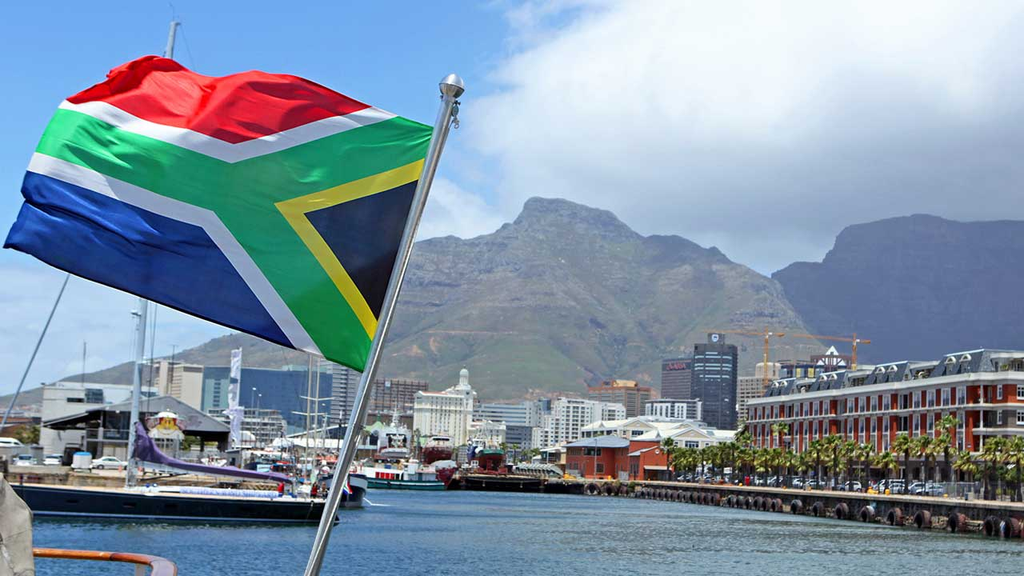
South Africa has officially widened its lead as the biggest economy in Sub-Saharan Africa after an economic rebasing exercise showed its gross domestic product is roughly 5% larger than previously calculated.
According to fresh data released by Statistics South Africa, the country’s nominal GDP for last year climbed to 8.04 trillion rand (about $483 billion), revised upward from the previous figure of 7.64 trillion rand. That single statistical recalculation added nearly $24 billion to the nation’s economic ledger.
With Nigeria recording a nominal GDP of 441.5 trillion naira (roughly $328 billion) over the same period, South Africa’s economy is now approximately 47% larger in dollar terms. The gap between the continent’s two economic heavyweights has stretched to an eye-popping $155 billion.
While the numbers look like a dramatic overnight surge, the real story lies in what rebasing actually is, why South Africa chose to recalculate its figures now, and why Nigeria keeps falling further behind in dollar comparisons.
What Does Economic Rebasing Actually Mean?
An economy does not suddenly produce billions of dollars worth of new goods overnight just because a statistics agency publishes a new report. Instead, rebasing is like updating the map you use to survey a city.
The $0 Secret To Launching Your Entire Online Empire
Why pay hundreds every month for separate software? Build funnels, send emails, and make sales with Systeme.io completely free.
Get Started For $0Free Forever • No Credit Card Needed • Beginner-Friendly
Gross domestic product measures the total monetary value of all goods and services produced inside a country over a specific period. To calculate that accurately, statisticians choose a “base year” to serve as a benchmark for prices and weights across different industries.
Over time, consumer habits shift, technologies emerge, and brand-new industries take shape. If an agency keeps using an outdated base year, large sections of the modern economy remain invisible on paper.
In this latest exercise, Statistics South Africa shifted its primary reference base year from 2015 to 2022. By doing so, government analysts updated the source data to reflect modern spending patterns, newly established business models, and economic activities that had slipped through the cracks for years.
Why Did South Africa’s Numbers Jump?
The upward revision to 8.04 trillion rand came from bringing previously non-observed and fast-growing sectors into the official formula.
The biggest contributors included:
- Self-Generated Electricity and Solar Power: Over the past few years, frequent power cuts forced thousands of South African households and commercial facilities to install private rooftop solar panels, battery backup setups, and industrial generators. Previously, this independent power generation was largely uncaptured in national accounts.
- The Digital and Gig Economy: Ride-hailing platforms like Uber and Bolt, short-term rentals, mobile app subscriptions, and freelance services were officially factored into household spending and service industry output.
- Informal and Non-Observed Activities: The update integrated hard-to-measure sectors, including informal township retail, artisanal manufacturing, and even illicit mining activities that contribute real cash flows within the borders.
- Financial and Real Estate Services: The sector saw an upward revision of over 9%, driven largely by better data on owner-occupied rent and modern banking services. MTN’s expansion into digital banking and data hubs across Africa reflects just how much institutional capital continues to pour into digital infrastructure and fintech in both economies.
All ten major sectors tracked by South Africa registered gains, with mining, finance, and trade recording the biggest boosts.
How Nigeria Lost the Top Spot in the Battle for African Supremacy
To understand how South Africa pulled so far ahead, it helps to look back at how Nigeria claimed the crown in the first place.
In 2014, Nigeria completed a historic rebasing exercise that moved its base year from 1990 to 2010. That single recalculation captured the explosion of Nigeria’s telecommunications market, its booming Nollywood entertainment industry, and its burgeoning retail landscape.
Virtually overnight, Nigeria’s GDP surged by 89% to roughly $510 billion, leapfrogging South Africa to become the undisputed economic giant of Africa. For years, Nigeria held onto that title with pride.
However, the dynamics shifted sharply over the past three years.
1. The Brutal Currency Devaluation
The primary reason South Africa sits at $483 billion while Nigeria sits at $328 billion is not industrial factory output alone; it is currency valuation.
GDP comparisons across nations are conducted in United States dollars. Following bold economic reforms initiated by the Nigerian government—including the unification of foreign exchange windows and the floating of the local currency—the naira lost more than 60% of its value against the dollar.
Even when Nigeria’s local output grew in raw naira terms, translating those numbers back into US dollars shrank the total headline size of the economy on international charts. Meanwhile, South Africa’s rand remained comparatively resilient against global currency shocks.
2. Industrial Hurdles and Factory Strains
Beyond currency swings, Nigeria’s productive sector has faced severe headwinds. High borrowing rates, persistent logistics bottlenecks, and surging energy costs have squeezed domestic manufacturers. Even though recent quarterly data showed Nigeria’s economy expanding through non-oil services, underlying industrial output has experienced persistent pressure.
Similar concerns surfaced when earlier reports revealed that Nigeria’s overall GDP grew while industrial and factory production plunged, highlighting the stark contrast between headline paper gains and real factory operations.
Send, Spend & Hold Money Worldwide Without Hidden Fees
Transfer money internationally at the real exchange rate and hold 40+ currencies in one account.
Open a Wise AccountMid-market rate • Fast transfers • 40+ currencies
3. Business Climate Pressures
A difficult operational environment has also led several major multinationals to adjust their footprint or exit entirely. The challenges facing foreign and local businesses sparked fierce debate nationwide, such as when corporate exits stirred political backlash over the domestic business climate.
Does a 5% Bigger GDP Mean Ordinary South Africans Are Richer?
The short answer is no. Rebasing changes how an economy is measured, not how much money sits in a citizen’s bank account.
South Africa continues to grapple with deep, structural socioeconomic problems that paper calculations cannot erase:
- High Unemployment: South Africa still suffers from one of the highest jobless rates in the world, with broad unemployment hovering above 30% and youth unemployment exceeding 50%.
- Income Inequality: The country remains among the most unequal societies on earth, where a small percentage of top earners command the majority of national wealth while millions live in informal settlements.
- Sluggish Real Growth: Stats SA clarified that while the absolute baseline size of the economy was lifted, real year-on-year economic growth remains modest, averaging under 1% in recent periods.
A larger GDP on paper does not hand out new paychecks to working families or lower the price of basic grocery baskets.
The Real Silver Lining: South Africa’s Debt Picture
If rebasing doesn’t hand cash to citizens, why do governments invest so much time and money doing it?
The real practical winner is the South African National Treasury.
A country’s fiscal health is judged globally using the debt-to-GDP ratio. When your nominal GDP expands by 5%, your existing debt burden immediately looks smaller as a percentage of the total economy:
- Before the revision, South Africa’s gross government debt was tracking near 78.4% of GDP.
- With the newly expanded denominator of 8.04 trillion rand, that debt ratio automatically drops down closer to 74.7% without the government spending a single extra rand to pay down loans.
A healthier debt-to-GDP ratio reassures international credit rating agencies, reduces sovereign borrowing costs, and gives the government more breathing room when issuing sovereign bonds on global capital markets.
What Needs to Happen for Nigeria to Catch Up?
Nigeria is preparing its own comprehensive GDP rebasing exercise through the National Bureau of Statistics.
Nigeria’s last rebasing happened over a decade ago. Since then, the country has witnessed a massive boom in fintech startups, creative tech hubs, remote freelancing, renewable mini-grids, and decentralized local commerce. Everyday platforms have scaled rapidly; for instance, digital lenders like FairMoney crossed 30 million registered users in Nigeria, demonstrating the immense volume of financial activity currently moving through unrecorded digital channels.
The $0 Secret To Launching Your Entire Online Empire
Why pay hundreds every month for separate software? Build funnels, send emails, and make sales with Systeme.io completely free.
Get Started For $0Free Forever • No Credit Card Needed • Beginner-Friendly
When Nigeria eventually rebases its own figures, the total nominal size in naira will almost certainly jump by double-digit percentages.
However, paper adjustments alone will not settle the rivalry. To genuinely overtake South Africa in sustainable terms, Nigeria must address key structural priorities:
Stabilizing Foreign Exchange
No country can maintain a dominant dollar-denominated GDP while its local currency experiences wild swings. Sustained liquidity, transparent monetary policies, and strong foreign direct investment are necessary to keep the naira steady.
Unlocking Industrial and Refining Capacity
Nigeria’s path to sustained wealth depends on transitioning from a raw crude exporter into an industrial value-adding powerhouse. Major domestic projects offer a blueprint; the landmark moves surrounding the Dangote Refinery multi-billion dollar domestic public offering show how private mega-investments can reshape national self-sufficiency and reduce foreign exchange drains.
Fixing Infrastructure and Power
South Africa’s private sector generated billions in solar energy to keep factories humming. Nigeria needs a similar decentralized power revolution to liberate small businesses from crushing generator fuel expenses.
Frequently Asked Questions
What is GDP rebasing?
GDP rebasing is the process of updating the benchmark year and methodology used to calculate a nation’s Gross Domestic Product. It allows statisticians to capture newly formed industries, modern technologies, and changes in consumer spending that were previously omitted.
Did South Africa’s economy grow by 5% in real terms?
No. The 5% increase represents a statistical revision to the size of the economy, not actual physical output growth. Real economic growth in South Africa has remained modest, hovering below 1% to 2% annually over recent years.
Why is South Africa’s GDP higher than Nigeria’s in dollars?
Although Nigeria possesses a much larger population and a bustling informal economy, recent massive devaluations of the Nigerian naira drastically lowered its economic value when converted into US dollars. South Africa’s rand has maintained stronger relative value, keeping its dollar GDP higher.
Will Nigeria rebase its economy soon?
Yes. Nigeria’s National Bureau of Statistics is currently working on an updated rebasing exercise. Because Nigeria’s base year dates back to 2010, the forthcoming update will incorporate the explosive growth of fintech, remote tech jobs, logistics startups, and renewable energy investments.
What are the main benefits of a bigger rebased GDP?
A larger nominal GDP improves critical national economic indicators, most notably the debt-to-GDP ratio. It makes sovereign debt appear more manageable, which can boost credit ratings and lower the interest rates a country pays when borrowing on international markets.
The widening gap between South Africa and Nigeria shows that national prosperity is a marathon determined by currency stability, accurate data reporting, and resilient infrastructure. While South Africa holds the statistical crown for now, both nations still face the same fundamental challenge: turning massive headline figures into meaningful improvements in the daily lives of their people.
