
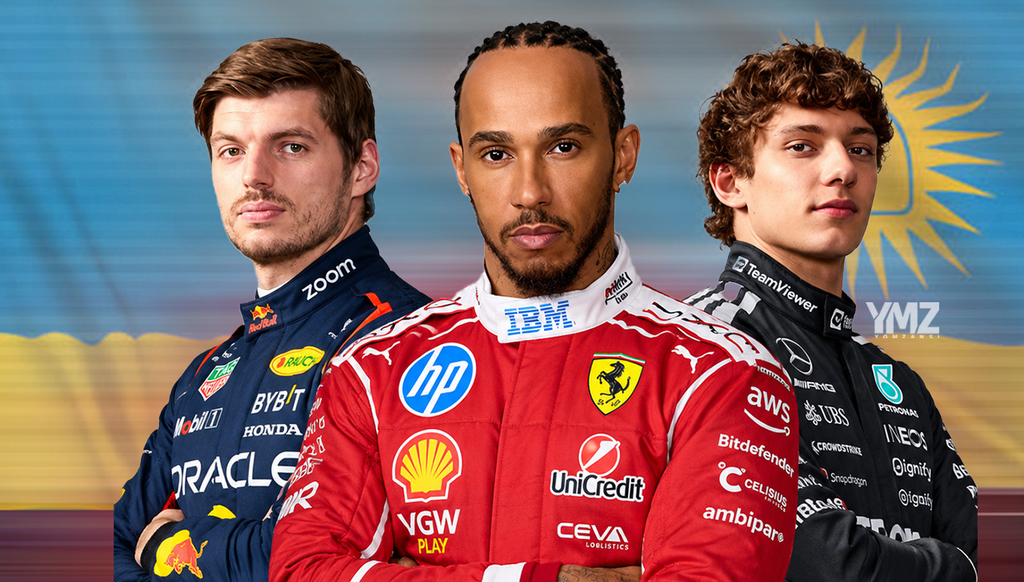
Formula 1 is officially heading back to the African continent for the first time in more than three decades. After years of speculation, missed negotiations with other host cities, and loud calls from top drivers, Rwanda has officially secured a 10-year contract to host the African Grand Prix starting in the early 2030s.
The landmark announcement ends a massive drought that dates all the way back to 1993, when Formula 1 last roared across African tarmac at the Kyalami circuit in South Africa. For millions of motorsport lovers across the continent, this is the announcement they have spent an entire generation waiting to hear.
The high-speed action will unfold on a brand-new, purpose-built circuit in Bugesera, located about 25 miles southeast of the capital city of Kigali. By placing the circuit directly beside the new Bugesera International Airport, the project creates an ultra-modern travel and sporting hub designed to welcome teams, cars, and tens of thousands of global fans with minimum friction.
Here is the full breakdown of how Rwanda pulled off this historic deal, what it means for the continent, how the circuit will be built, and why this race marks a massive shift in global sports.
Why Formula 1 Picked Rwanda Over Everyone Else
For a long time, most motorsport insiders assumed that if Formula 1 ever returned to Africa, it would land in South Africa. The Kyalami circuit outside Johannesburg already had the racing pedigree, having hosted world championship rounds in decades past. However, repeated attempts to revive a South African race fell apart due to steep commercial fees, political hesitations, and private funding disagreements.
The $0 Secret To Launching Your Entire Online Empire
Why pay hundreds every month for separate software? Build funnels, send emails, and make sales with Systeme.io completely free.
Get Started For $0Free Forever • No Credit Card Needed • Beginner-Friendly
Rwanda noticed the opening and moved fast. Over the past decade, the East African nation has positioned itself as an ambitious center for global tourism and international sporting events. The government did not approach Formula 1 as just an event organizer looking for a quick weekend spectacle. Instead, they presented a unified national vision backed directly by state leadership and clear infrastructure guarantees.
Formula 1 leadership, headed by Chief Executive Officer Stefano Domenicali, made multiple visits to Kigali to review venue proposals, economic feasibility studies, and logistical routes. Rwanda presented a clean slate: a dedicated development zone in Bugesera with direct government backing, seamless airport access, and a clear timeline to get everything built to strict international specifications.
When Formula 1 looked at the choices on the table, Rwanda offered political stability, immense organizational drive, and a long-term commitment that South Africa simply could not guarantee at the time.
The Long Road Back: Africa’s 40-Year Wait for Grand Prix Racing
To understand why this announcement is causing such excitement, you have to look at the history books. Formula 1 loves to market itself as the pinnacle of global motorsport. Yet, for more than thirty years, the championship calendar had an enormous hole right in the middle of the world map.
Africa hosted its first world championship round in 1958 at the Ain-Diab circuit near Casablanca, Morocco. After that, South Africa hosted races at Prince George Circuit in East London before settling into Kyalami. The 1993 South African Grand Prix, famously won by French racing legend Alain Prost with Ayrton Senna finishing second, was the last time a Formula 1 race took place on African soil.
Since that afternoon in 1993, the world changed completely. Formula 1 expanded into the Middle East, added multiple races across the Americas, and built lavish street circuits throughout Asia and Europe. Meanwhile, Africa—a continent of 1.4 billion people with a median age under 20—was left on the sidelines.
Formula 1 estimates that over 100 million people across Africa actively follow the championship on television and digital platforms. Fans regularly tune in every Sunday to watch the drama unfold in Silverstone, Monza, and Monaco. Now, African racing fans will finally get to experience the deafening roar of turbocharged engines and 200-mph straightaways right in their own backyard.
Inside the Bugesera Circuit: What We Know So Far
Hosting a Formula 1 race is completely different from hosting any other sport. You cannot simply pave a long strip of asphalt and call it a race track. Every Formula 1 circuit must receive a Grade 1 license from the Federation Internationale de l’Automobile (FIA), the governing body of world motorsport.
Strict FIA Grade 1 Standards
To obtain Grade 1 status, the Bugesera facility must meet rigid safety, technical, and operational rules:
- The track must feature precise run-off areas, high-tech energy-absorbing barriers, and specialized kerbs designed to handle modern downforce levels.
- The venue must include a full medical center with emergency trauma capabilities, surgical suites, and direct helicopter evacuation access.
- The pit lane, paddock garages, team hospitality motorhomes, and media facilities must accommodate thousands of engineers, mechanics, journalists, and broadcast crews.
- The circuit layout must offer high overtaking potential with a blend of technical low-speed corners and long DRS passing zones to guarantee exciting racing.
The Bugesera International Airport Advantage
One of the smartest decisions in Rwanda’s bid was locating the track in Bugesera, right beside the country’s brand-new international airport. Formula 1 is a logistical monster. During race season, teams ship hundreds of metric tons of cargo around the world in cargo planes, including sensitive carbon-fiber chassis, hybrid power units, spare wings, and complete toolkits.
Because the track sits right next to the airport runway, heavy transport cargo can move directly from cargo holds to team garages within minutes. This cuts out hours of highway transport, minimizes security risks, and keeps logistical costs manageable for visiting teams.
The Push from Lewis Hamilton and Driver Representation
Rwanda’s successful bid also marks a major personal victory for seven-time World Champion Lewis Hamilton. For years, Hamilton has been the most vocal champion inside the paddock demanding a race in Africa.
During press conferences and team interviews, Hamilton repeatedly pointed out the obvious flaw in calling Formula 1 a true world championship when it refused to set foot on African soil. He consistently argued that racing on the continent would inspire local engineers, open doors for young drivers, and connect the sport to a young, dynamic audience.
Other current drivers, team bosses, and motorsport executives backed that sentiment. They recognized that expanding into Africa is essential if Formula 1 wants to maintain long-term global cultural relevance.
This excitement mirrors the wider boom in African sports visibility on the global stage. From local tracks to international arenas, African athletes and fans are making their voices heard everywhere. We have already seen this energy with nine African nations advancing to the 2026 FIFA World Cup knockouts, showing that the continent is ready to compete and host at the very top level.
Send, Spend & Hold Money Worldwide Without Hidden Fees
Transfer money internationally at the real exchange rate and hold 40+ currencies in one account.
Open a Wise AccountMid-market rate • Fast transfers • 40+ currencies
Rwanda’s Bigger Plan: Sports Tourism as an Economic Engine
Hosting Formula 1 is not a cheap exercise. Annual race hosting fees alone can easily run between $30 million and $55 million, not counting the hundreds of millions needed to construct the circuit, grandstands, access roads, and utility lines.
So why is Rwanda committing this level of capital?
The answer lies in Rwanda’s broader economic master plan. The country has deliberately avoided trying to compete strictly as an industrial manufacturing hub. Instead, it is transforming itself into a premier luxury tourism, business, and high-profile conference destination.
The Visit Rwanda Blueprint
Over the last few years, the government has used strategic sports partnerships to put the country on the international map:
- High-profile sponsorship deals with major European football clubs like Arsenal, Paris Saint-Germain, and Bayern Munich brought the “Visit Rwanda” logo to billions of television screens worldwide.
- The construction of the modern BK Arena in Kigali helped the country become the permanent home for the Basketball Africa League playoffs.
- Rwanda successfully bid to host the 2025 UCI Road World Championships, marking the first time the prestigious cycling competition came to Africa.
- Major global assemblies, such as the 2023 FIFA Congress, proved that Kigali has the organizational discipline to host top-tier sporting administrators safely.
A 10-year Formula 1 contract is the ultimate crown jewel in this strategy. President Paul Kagame highlighted that the goal was never just to host a race for three days every autumn. The objective is to build lasting engineering schools, technical training academies, mechanic apprenticeships, and service-industry jobs that remain active year-round.
This strategy of using sports and tourism to trigger broader national growth is gaining traction across the continent. You can see similar thinking in places where leaders are rethinking local development, such as when President Tinubu praised Team Nigeria’s Commonwealth Games success and vowed bigger sports funding to build lasting athletic pipelines. Similarly, regional leaders are launching bold destination projects, just like Governor Biodun Oyebanji’s plan to turn Ekiti State into West Africa’s premier tourism destination.
What This Deal Means for Local Fans and African Car Culture
Motorsport interest across Africa is growing at an incredible speed. For decades, rally racing held the spotlight, with events like the East African Safari Rally drawing massive crowds across Kenya and Tanzania.
In recent years, urban car culture, sim racing leagues, and Formula 1 watch parties have exploded in popularity in cities like Lagos, Nairobi, Johannesburg, and Accra. In some cities, youth passion for cars has grown so rapidly that authorities have had to intervene to create safer environments, as seen when Wike vowed to stop illegal car racing in residential areas across the FCT and channel that automotive enthusiasm toward structured events.
A Formula 1 Grand Prix in Kigali brings that passion into the mainstream. It gives young African kids a chance to look past the grandstand fences and see African mechanics, telemetry engineers, track marshals, and data analysts working alongside world championship teams.
Furthermore, it opens the door to developing regional junior karting circuits. You cannot discover the next African Formula 1 driver without professional karting tracks, and having a Grade 1 circuit in Bugesera provides the foundation for local grassroots racing series.
The $0 Secret To Launching Your Entire Online Empire
Why pay hundreds every month for separate software? Build funnels, send emails, and make sales with Systeme.io completely free.
Get Started For $0Free Forever • No Credit Card Needed • Beginner-Friendly
The Public Debate: Scrutiny and Skepticism
While the announcement has brought widespread praise from motorsport enthusiasts, it has also sparked serious public conversation and debate.
The Question of Public Spending
A major criticism raised by economic analysts revolves around return on investment. Building a brand-new racing facility and paying multi-million-dollar annual sanctioning fees to Formula 1 requires a massive financial commitment.
Critics question whether developing nations should dedicate hundreds of millions of dollars to elite motorsport when basic public healthcare, rural education, and poverty alleviation remain critical needs. Formula 1 race weekends are famously expensive, with three-day grandstand passes often running into hundreds of dollars—prices that sit far above what average local residents can afford.
Human Rights and Image Management
International non-governmental organizations, including Amnesty International UK, have voiced concern regarding the deal. Critics argue that hosting glamorous global sporting events is an intentional effort to polish the country’s international image and distract global media from domestic political criticisms and regional conflicts.
Supporters counter that international events provide vital foreign direct investment, elevate local hospitality workers, build world-class infrastructure, and generate revenue that feeds back into national development.
Similar debates occur whenever emerging economies make bold international investment plays. We see this dynamic play out across the region, whether observing why foreign investment in Nigeria surged while parts of Africa saw a slump or analyzing major corporate moves like when Aliko Dangote handed East Africa a $300 million opportunity inside his refinery IPO. Big money moves always bring intense scrutiny, and this F1 deal will be watched under a microscope.
Planning Ahead: What Visitors Need to Know
If you are planning to travel to Rwanda for the inaugural race in the early 2030s, preparation will be key. Grand Prix weekends attract anywhere from 100,000 to 300,000 visitors over three days, putting enormous demand on local flights, hotels, and ground transit.
Rwanda has one huge advantage for travelers: its welcoming visa policy. Citizens of all countries can receive a visa on arrival or enter visa-free, making it one of the easiest countries to visit anywhere in the world.
To make the trip smooth, international travelers should keep a few practical points in mind:
- Book accommodation very early: Kigali has built an impressive roster of five-star and boutique hotels, but an event of this scale will fill rooms across the entire country. Booking far in advance will be necessary.
- Combine racing with ecotourism: Most international fans will pair the race weekend with mountain gorilla trekking in Volcanoes National Park, boat trips on Lake Kivu, or wildlife safaris in Akagera National Park.
- Keep your digital travel tools ready: Managing airline itineraries, local transport apps, and hotel reservations requires smart preparation. Make sure your smartphone is loaded with essential travel apps you need to install to navigate flight changes, translation, and mobile money payments seamlessly.
Frequently Asked Questions (FAQs)
When will the first Formula 1 race take place in Rwanda?
The agreement is signed for 10 years, with racing scheduled to begin in the early 2030s. The exact year of the inaugural Grand Prix will depend on circuit construction milestones and FIA safety inspections.
Where exactly is the new circuit being built?
The track is being constructed in Bugesera, roughly 25 miles (40 kilometers) southeast of Kigali. It will sit adjacent to the new Bugesera International Airport.
When was the last time Formula 1 raced in Africa?
The last Formula 1 World Championship race in Africa took place in 1993 at the Kyalami circuit in South Africa. The race was won by Alain Prost driving for Williams-Renault.
Has any other African country hosted Formula 1?
Yes. South Africa hosted numerous Grands Prix between 1962 and 1993. Before that, Morocco hosted an official Formula 1 World Championship race in 1958 at the Ain-Diab circuit near Casablanca. Rwanda will become the third African country to host a round of the world championship.
Why was Rwanda chosen instead of South Africa?
South Africa attempted to negotiate a return to Kyalami for several years, but discussions collapsed due to funding gaps, political disagreements, and high commercial fees. Rwanda presented a fully unified, government-backed plan with dedicated land, new airport logistics, and a long-term economic vision.
Will tickets be affordable for local African fans?
While VIP paddock club passes and premium grandstand seats will target high-net-worth international visitors, Rwandan organizers and Formula 1 have indicated they plan to include affordable general admission tickets, public fan zones, and community open days to ensure local motorsport fans can participate.
Formula 1’s return to Africa marks a massive turning point for global sport. For more than thirty years, the championship called itself global while ignoring an entire continent filled with passionate sports enthusiasts. By partnering with Rwanda for a full decade starting in the early 2030s, Formula 1 is finally backing up its global identity with real action.
Building a brand-new circuit from the ground up will require intense work, huge capital, and strict engineering discipline, but the reward will be unforgettable. When the five red lights go out over the Bugesera circuit, it will not just be the start of another race. It will be the moment African motorsport permanently takes its rightful place on the world stage.
