
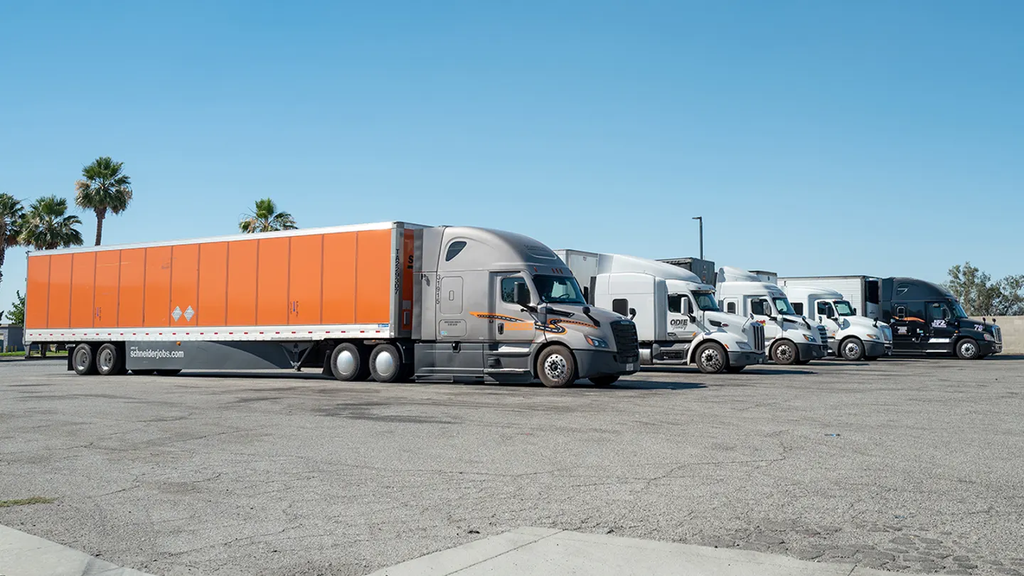
The backbone of the nation’s supply chain is quietly crumbling under the weight of historic fuel prices. Across the country, trucking companies big and small are closing their doors and filing for bankruptcy at an alarming rate. With national diesel prices skyrocketing past six dollars a gallon and climbing even higher in several states, haulers can no longer afford to keep their big rigs on the road.
This wave of financial collapse is not just a disaster for truck drivers and fleet owners. It is a slow-motion crisis that threatens to touch every single household. Virtually everything you buy at the grocery store, order online, or pick up at a retail store gets there on the back of a semi-truck. When transport companies go under, delivery networks break down, shipping costs soar, and everyday prices for consumer goods shoot through the roof.
The situation has reached such a critical point that emergency measures are being rolled out at the national level to keep diesel flowing and rigs rolling. Understanding how this crisis unfolded, why drivers are caught in an impossible financial vise, and what it means for your wallet is vital as the transport industry faces its tougher test in decades.
Inside the Diesel Crisis Destroying America’s Trucking Companies
The trucking industry is experiencing a sudden, brutal wave of court filings as operating expenses outpace earnings. Over the past month alone, a growing list of transportation firms has sought Chapter 11 bankruptcy protection. Notable carriers including Globemaster Inc., CLJ Transporting, Pacer Transport, Jett Transport and Materials, Mill Creek Logistics, RP Hay Hauling, and Xoco Transport have all landed in insolvency court.
The primary trigger for this breakdown is a staggering spike in the price of diesel fuel. National average diesel prices recently surged to around $6.32 per gallon. That represents a massive jump of more than 70 percent compared to the $3.69 per gallon rate seen just a year earlier. In state markets like California, fuel stations are charging over $8.35 per gallon, leaving long-haul truckers facing fuel bills that wipe out all potential profits.
The $0 Secret To Launching Your Entire Online Empire
Why pay hundreds every month for separate software? Build funnels, send emails, and make sales with Systeme.io completely free.
Get Started For $0Free Forever • No Credit Card Needed • Beginner-Friendly
Truckers traveling through key commercial corridors in the Midwest and South report seeing prices at the pump hit $7.40 or higher. For a commercial semi-truck with a standard 120 to 150-gallon fuel tank, a single fill-up now costs well over $1,000. When drivers have to fill up multiple times a week just to complete basic cross-country routes, the math simply stops making sense.
Small fleet owners and independent owner-operators are bearing the absolute worst of this storm. Unlike massive national carriers that can leverage bulk fuel contracts or cushion losses across thousands of vehicles, smaller operations run on paper-thin margins. When fuel costs double overnight, cash reserves burn up in a matter of weeks.
Why Diesel Prices Skyrocketed Out of Control
To understand why fuel costs escalated so rapidly, you have to look at a combination of international conflicts, tight refining capacity, and domestic policy shifts. The global energy market has been rocked by ongoing military conflicts in major oil-producing regions, particularly escalated tensions involving Iran and disruptions around key maritime trade lanes. These geopolitical shocks sent crude oil trading sharply higher, dragging refined fuel prices up along with it.
At the same time, refining capacity for diesel fuel has struggled to keep pace with demand. Converting crude oil into usable ultra-low sulfur diesel requires specialized refining infrastructure. Over recent years, several major refineries across North America and Europe were decommissioned, shut down, or converted to produce alternative fuels.
When global supply tightened suddenly, there was very little extra refining capacity available to soften the impact. This supply squeeze created a classic supply-and-demand emergency where available fuel supplies were bid up to historic highs.
Adding fuel to the fire, trucking companies have also been hit by a parallel spike in insurance costs. Commercial auto insurance premiums for transport companies have surged dramatically due to rising vehicle replacement costs, higher litigation settlements, and increased repair expenses. When elevated insurance bills are added on top of unprecedented fuel prices, operating a freight business becomes nearly impossible.
The Double Whammy: High Fuel and Dead Freight Rates
If high fuel prices were the only problem, trucking companies might have been able to pass those costs along to shippers. However, the industry is currently trapped in a severe structural mismatch known as a freight recession. While the cost to run a truck has skyrocketed, the rates that freight brokers and shippers are paying to move goods have stayed stubbornly low or even dropped.
This creates a devastating squeeze for drivers on the road. Independent truckers report that freight pay rates have not risen to reflect the reality of six-dollar or eight-dollar diesel. Shippers are unwilling to pay higher rates because consumer demand for non-essential physical goods has cooled off after years of high inflation.
When a trucker takes on a load, they are often given a flat payment or a minimal fuel surcharge that fails to cover the actual cost of diesel needed to complete the trip. Drivers end up paying out of their own pockets just to haul freight across state lines.
Many drivers face a heartbreaking choice: take a job where they actually lose money on fuel, or park their trucks and earn nothing at all. As more small operators park their trucks or file for bankruptcy, industry experts warn that a major consolidation is taking place. Small, family-owned trucking businesses are falling off one by one, leaving fewer options for businesses that rely on regional freight transport.
Emergency Government Moves to Keep Trucks Moving
The rapid wave of bankruptcies and potential threats to the national supply chain have forced government leaders to intervene with emergency policy decisions. To provide immediate relief to struggling drivers, an executive order was recently signed to temporarily allow trucks to burn off-road red-dyed diesel on public highways.
Red-dyed diesel is functionally identical to regular ultra-low sulfur highway diesel, but it is normally reserved strictly for agricultural equipment, construction machinery, and off-road generators. Because off-road fuel is exempt from state and federal highway fuel taxes, it is significantly cheaper than standard commercial diesel.
Industry experts estimate that allowing trucks to use red-dyed diesel could save drivers between 50 cents and a full dollar per gallon at the pump. While this is an unusual temporary fix, it provides immediate breathing room for drivers struggling to keep their tanks full.
In addition to domestic tax relief, international diplomatic actions are underway to boost global fuel supply. Agreements have been reached with European partners to release approximately 100 million barrels of refined diesel and crude oil from strategic energy reserves over the coming months.
The goal of this strategic release is to flood the market with refined fuel, driving down wholesale prices and stabilizing fuel costs for logistics networks. However, market analysts caution that strategic reserves are a short-term patch rather than a permanent solution to deeper structural supply deficits.
Send, Spend & Hold Money Worldwide Without Hidden Fees
Transfer money internationally at the real exchange rate and hold 40+ currencies in one account.
Open a Wise AccountMid-market rate • Fast transfers • 40+ currencies
What This Trucking Collapse Means for Everyday Shoppers
It is easy to view trucking bankruptcies as an isolated problem for transport companies, but the reality is that fuel spikes ripple through every corner of the consumer economy. As industry analysts often point out, when transport costs go up, everything that moves from point A to point B becomes more expensive.
Consider how food gets to your dinner table. Agricultural equipment runs on diesel, transport trucks bring crops from farms to processing plants, refrigerated trailers move packaged food to distribution warehouses, and local delivery trucks bring those goods to neighborhood grocery stores. At every single step of that supply chain, higher diesel costs add extra expenses.
Consumers are already seeing the impact on store shelves. Beyond daily essentials like milk, bread, and meat, seasonal goods are taking a hit as well. For example, holiday items and specialty goods are experiencing noticeable price jumps this season as retailers pass along elevated freight surcharges to shoppers.
Beyond higher prices, a wave of trucking bankruptcies creates logistical bottlenecks. When fewer trucks are available to move cargo off container ships at ports or haul freight out of warehouses, shipping delays become common. Stores may struggle to keep popular items in stock, leading to temporary shortages and longer wait times for online orders.
How Transport Businesses Can Survive This Brutal Fuel Spike
For owner-operators and fleet managers trying to navigate this chaotic market, survival requires strict cost discipline and strategic operational adjustments. While nobody can control global oil prices, taking direct control over daily operating habits can mean the difference between staying afloat and closing down.
Utilize Fleet Fuel Discount Cards
Independent drivers should never pay the retail sticker price at big truck stops. Joining reputable fleet fuel discount programs can yield instant savings of 30 to 70 cents per gallon at participating fuel stations. Combining fuel card discounts with optimized routing apps ensures drivers stop only at the most affordable fuel stations along their route.
Reduce Cruising Speeds and Idle Time
Fuel efficiency drops dramatically at high speeds. Aerodynamic drag increases significantly once a commercial truck exceeds 60 miles per hour. By slowing down from 70 mph to 62 mph, drivers can improve their fuel economy by up to one full mile per gallon. Over thousands of miles, that simple speed reduction translates into thousands of dollars in fuel savings. Minimizing engine idling during rest breaks also prevents unnecessary fuel waste.
Renegotiate Contracts and Fuel Surcharges
Brokers and shippers must understand that baseline rates from past years are no longer viable. Carriers should review their freight agreements and insist on transparent, floating fuel surcharge clauses that automatically adjust pay rates whenever diesel prices breach key thresholds. If a shipper refuses to offer fair fuel adjustments, it may be wiser to decline the load than to haul at a net loss.
Invest in Preventative Maintenance
Keeping a truck running at peak efficiency is critical when fuel is expensive. Simple maintenance steps like keeping tires inflated to recommended pressure levels, replacing air filters regularly, and ensuring fuel injectors are clean can boost overall miles per gallon. Proper vehicle maintenance also prevents costly unexpected breakdowns that drag down cash flow.
Frequently Asked Questions (FAQs)
Why are diesel prices higher than regular gasoline?
Diesel prices are often higher than regular gasoline because diesel requires more intensive refining processes to meet low-sulfur environmental standards. Additionally, global demand for industrial heating oil, shipping fuel, and heavy machinery competes for the same refined distillate oil, driving prices up during periods of tight supply.
The $0 Secret To Launching Your Entire Online Empire
Why pay hundreds every month for separate software? Build funnels, send emails, and make sales with Systeme.io completely free.
Get Started For $0Free Forever • No Credit Card Needed • Beginner-Friendly
How does red-dyed diesel differ from regular road diesel?
Chemically, red-dyed diesel is virtually the same as standard clear highway diesel. The dye is added simply to identify fuel that has not been taxed for highway use. It is typically reserved for farm tractors, construction gear, and heating units. Temporary emergency policy changes have permitted its use on highways to give commercial truckers immediate tax relief.
Will trucking bankruptcies cause store shortages?
Yes, widespread bankruptcies among trucking companies can lead to localized store shortages and delivery delays. When freight carriers exit the market suddenly, shippers must compete for a smaller pool of available trucks, which slows down the movement of goods from warehouses to retail store shelves.
What percentage of a trucker’s expenses goes toward fuel?
Under normal economic conditions, fuel represents about 25 to 30 percent of a commercial truck’s total operating expenses. However, during severe price spikes like the current crisis, fuel costs can jump to over 50 percent of total operating expenses, making it the single largest cost for fleet operators.
How long will high diesel prices last?
Fuel price duration depends heavily on global crude oil production, geopolitical stability in key oil-producing regions, and domestic refining capacity. Emergency releases from strategic petroleum reserves and tax relief measures offer short-term relief, but long-term stabilization requires sustained improvements in global oil supplies and expanded refining infrastructure.
Final Thoughts on the Trucking Shakeout
The wave of bankruptcy filings hitting the trucking industry serves as a stark reminder of how fragile global supply networks can be when energy costs spike. Truck drivers perform essential work that keeps food on store shelves, medicine in pharmacies, and goods moving through local communities. Supporting independent haulers and implementing practical fuel relief solutions is critical to keeping the national economy moving forward.
