
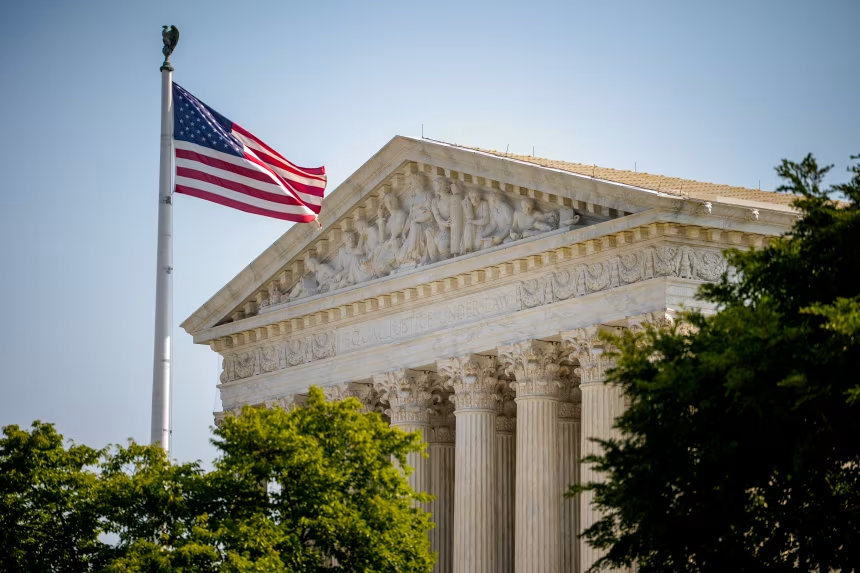
The United States Supreme Court has delivered a major ruling that reshapes immigration enforcement across North America. In a fast-tracked emergency order, the high court agreed to let the Trump administration resume its controversial practice of deporting undocumented immigrants to “third countries”—nations where these individuals have no citizenship, no family, and no prior personal ties.
This green light stays in effect while federal judges continue to weigh the legal merits of the policy. The decision temporarily reverses a lower court order that had blocked the Department of Homeland Security from carrying out these swift removals without giving noncitizens advance notice or a meaningful chance to seek asylum.
The emergency order marks another high-stakes legal victory for the administration’s aggressive border security agenda. It also sets up a monumental constitutional showdown scheduled for full oral arguments before the Supreme Court later this winter.
What Is the ‘Third Country’ Deportation Policy?
To understand why this decision is causing such widespread reaction, you have to look at how deportation normally works under traditional United States immigration law.
Historically, when the federal government decides to deport someone who lacks legal status, the law directs officials to send that person back to their home country. If that country refuses to accept them, or if there are severe logistical barriers, immigration authorities usually look to countries where the person previously lived or held legal residency.
The $0 Secret To Launching Your Entire Online Empire
Why pay hundreds every month for separate software? Build funnels, send emails, and make sales with Systeme.io completely free.
Get Started For $0Free Forever • No Credit Card Needed • Beginner-Friendly
The Trump administration’s updated policy flips that long-standing framework on its head. Under executive guidance issued by the Department of Homeland Security, immigration officers are instructed to evaluate non-detained migrants and identify alternative third countries that are willing to accept them.
Under this policy, a person who fled persecution in one country can be loaded onto a transport flight and flown to an entirely different nation, such as Honduras, Guatemala, or various nations across Africa, even if they have never set foot there before.
This aggressive strategy is part of a broader push to reduce the overall backlogged immigration docket. It builds directly on earlier administrative efforts, such as the massive surge in revoking nonimmigrant statuses, detailed in our report on how the US revoked over 175,000 visas.
How the Policy Operates on the Ground
The mechanics of third-country deportations are fast, sweeping, and designed to minimize procedural delay.
Immigration and Customs Enforcement officers are not required to give deportees extensive advance written notice regarding which specific country they are being sent to. In some court filings, government attorneys acknowledged that under the policy, a deportee’s destination country could theoretically be changed early in the morning, with the individual placed on an international flight just minutes or hours later.
The administration argues that fast removals are necessary to deter illegal border crossings, prevent long-term overcrowding in detention facilities, and clear up millions of open cases. Officials maintain that diplomatic assurances from receiving governments are sufficient to guarantee that deportees will not face severe harm.
Critics and legal defense teams counter that this rapid procedure strips immigrants of basic human rights. Noncitizens are rarely given an explicit, proactive invitation to explain why they might face danger or torture in the receiving country. Unless a person spontaneously states a fear of removal to that specific nation, they are generally put straight on the plane.
The Legal Battle Leading to the High Court
This policy did not go into effect without fierce opposition from legal advocates and federal judges across the country.
Earlier this year, immigrant rights groups filed a class-action lawsuit in a federal district court in Massachusetts. They argued that deporting people to unfamiliar countries without adequate notice violates federal statutes, international treaties, and the constitutional right to due process.
The district court judge agreed with the plaintiffs and issued a preliminary injunction. The court ordered the federal government to stop third-country removals unless migrants received clear written notice of the proposed destination and a fair chance to apply for protection under international agreements like the United Nations Convention Against Torture.
The government immediately appealed the ruling to the First Circuit Court of Appeals, requesting a stay on the injunction. When the First Circuit refused to pause the lower court’s ban, the Department of Justice brought an emergency application straight to the Supreme Court.
By granting the emergency stay, the Supreme Court allowed the administration to fully restart third-country deportations nationwide while the main lawsuit works its way through the judicial system.
What Proponents and Government Officials Are Saying
Supporters of the administration’s strategy view the Supreme Court’s order as a crucial validation of executive branch authority over national borders.
Department of Homeland Security leadership praised the decision, calling it a victory for law enforcement and border security. Officials contend that strict, unpredictable enforcement is the only effective tool to curb unauthorized immigration and disband human smuggling networks.
Proponents also highlight that federal law grants the executive branch broad discretion to execute removal orders. From their perspective, requiring lengthy hearings for every single third-country transfer creates unsustainable administrative bottlenecks that cripple law enforcement.
Send, Spend & Hold Money Worldwide Without Hidden Fees
Transfer money internationally at the real exchange rate and hold 40+ currencies in one account.
Open a Wise AccountMid-market rate • Fast transfers • 40+ currencies
This victory follows a series of executive policy moves aimed at reshaping US population dynamics and immigration enforcement. It mirrors similar legal debates covered in our analysis of how moving to America is getting harder for legal immigrants.
Why Human Rights Groups and Civil Advocates Are Alarmed
On the other side of the debate, human rights organizations and legal scholars have expressed profound alarm over the high court’s decision.
Advocates point out that sending vulnerable people to countries where they have zero social safety nets, no family connections, and no legal standing exposes them to immediate peril. Reports from immigration clinics indicate that migrants previously sent to third countries have faced arbitrary detention, extortion, physical violence, and sexual assault.
Another grave concern raised by civil rights attorneys is the threat of “chain refoulement.” This occurs when a third country receives a deported individual and subsequently sends them right back to their home country—the very place they originally fled because of persecution, warfare, or violence.
Justice Sonia Sotomayor issued a sharp dissent against the court’s emergency order, warning that bypassing standard notice requirements deprives individuals of their fundamental right to seek judicial protection against torture and unlawful persecution.
The Broader Impact on Global Migrants and Travel
The Supreme Court’s decision sends ripples far beyond the immediate parties in the lawsuit. It fundamentally changes the risk landscape for millions of noncitizens living in or traveling to the United States.
For undocumented immigrants, asylum seekers, and individuals with temporary legal statuses, the threat of rapid removal to an unfamiliar third country creates intense uncertainty. It signals that even if a migrant cannot be returned to their country of origin due to diplomatic friction or safety concerns, they are not immune from immediate deportation elsewhere.
This development also intersects with broader shifts in global travel rules and international border policies. Immigrants around the world are navigating increasingly strict document checks, financial bonds, and visa restrictions.
For instance, international travelers facing shifting entry rules can read our breakdown on the US visa bond rule for international visitors to understand how global mobility policies are tightening.
Similarly, dual citizens and frequent international travelers must stay alert to evolving regulations, as discussed in our piece on how the US warns dual citizens traveling on foreign passports.
The $0 Secret To Launching Your Entire Online Empire
Why pay hundreds every month for separate software? Build funnels, send emails, and make sales with Systeme.io completely free.
Get Started For $0Free Forever • No Credit Card Needed • Beginner-Friendly
The Political Consequences and the Upcoming Supreme Court Term
This immigration decision comes at a delicate political moment, with both parties preparing for high-stakes midterm elections.
Border security remains one of the most polarizing issues on the American political stage. Conservative lawmakers have hailed the ruling as proof that executive powers must remain unhindered, while progressive leaders argue that the administration is overreaching and ignoring basic human rights laws.
Interestingly, this debate does not follow strict party lines everywhere. Some moderate lawmakers and local officials have voiced concerns about the legal precedents being set, similar to the internal debates highlighted when a Republican congresswoman called out national immigration strategy.
The Supreme Court has instructed both sides to submit formal briefs addressing whether third-country removals comply with federal immigration statutes and international law. Oral arguments are scheduled for December, meaning a definitive, permanent ruling will likely be delivered in early 2027.
Until that final decision arrives, the Department of Homeland Security holds full legal authorization to carry out third-country deportations across all US jurisdictions.
What Should Impacted Individuals Do Right Now?
If you or someone you know is currently navigating the United States immigration system, staying informed and proactive is critical.
First, ensure that you always have access to qualified, licensed immigration attorneys. Because procedural timelines can move within hours rather than weeks under new administrative guidelines, having legal representation ready is essential.
Second, keep all personal documentation, identification, and proof of legal presence organized and easily accessible. Knowing your rights during an interaction with law enforcement or immigration officials remains vital.
Finally, keep track of official legal updates from verified legal aid organizations and trusted news outlets. You can explore more about legal pathways and visa options in our comprehensive guide on 5 US work visas that allow foreigners to build a life.
Frequently Asked Questions (FAQs)
What is a third-country deportation?
A third-country deportation occurs when a government deports a noncitizen to a nation other than their home country or country of origin, even if the individual has no personal, familial, or legal ties to that third nation.
Why did the Supreme Court allow the policy to continue?
The Supreme Court granted an emergency stay requested by the Department of Justice. This stay temporarily lifts lower court injunctions, allowing the Department of Homeland Security to enforce its policy while the justices evaluate the full legal merits of the case during their upcoming term.
Can deportees challenge their removal to a third country?
Under current administrative guidelines, deportees do not automatically receive formal advance notice of their destination or a dedicated hearing to challenge a third-country transfer. A fear-of-persecution screening is only initiated if the individual explicitly and unprompted states a fear of being sent to that specific third country.
When will the Supreme Court make a final ruling?
The Supreme Court has scheduled oral arguments for December. A final, binding decision on whether the third-country deportation policy complies with federal statutes and constitutional due process is expected in late winter or early spring.
How does this affect people applying for legal US visas?
While this specific ruling targets noncitizens subject to removal orders, it reflects an overall tightening of US border enforcement and immigration oversight. Legal applicants should ensure all paperwork is accurate, follow proper embassy protocols, and stay informed on changing visa regulations, such as updates detailed in our report on how the US moved visa processing to regional hubs.
Navigating global news, legal shifts, and trending policy updates can feel overwhelming, but staying informed is your best advantage. To learn more about our mission and editorial team, visit our About Us page, or reach out directly through our Contact Us page.
Stay connected with our community and get real-time updates across all major social media platforms. Follow our official channels on Instagram, join our community on Facebook, and join the conversation on X (formerly Twitter).
