
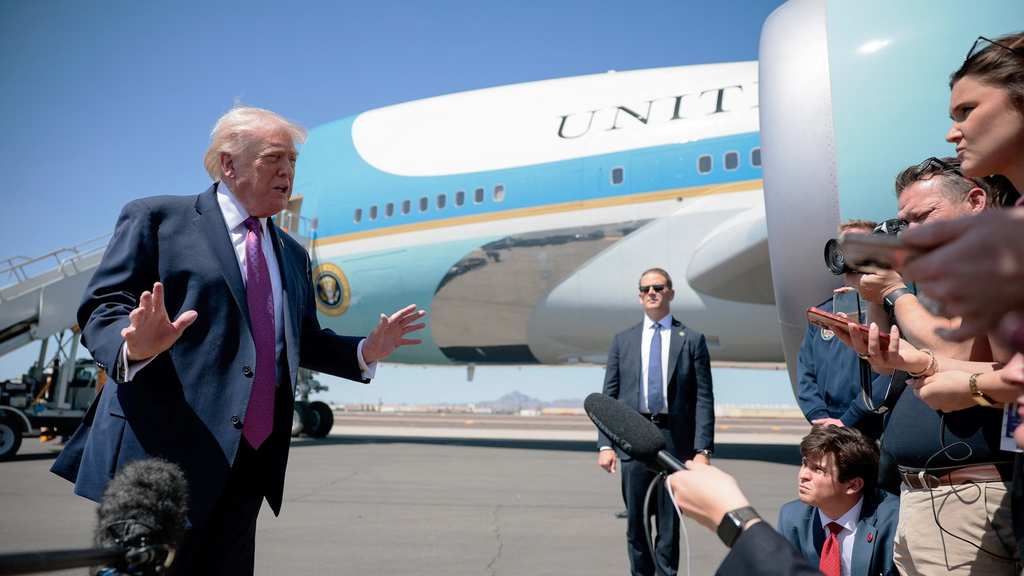
US President Donald Trump wrapped up his two-day visit to Ireland with a major announcement for drink makers and spirit fans. Speaking to a crowd of golf fans on the 18th green at his Doonbeg golf resort in County Clare, Trump announced that he is removing the 10% tariff on Irish whiskey imports into the United States.
The sudden announcement came as Trump presented the trophy at the Amgen Irish Open golf tournament. Standing beside Irish golfer Shane Lowry, who won the tournament, Trump told the crowd that everyone had been asking him to fix the trade issue. He explained that both Lowry and Irish Prime Minister Micheál Martin had brought up the tariff during his visit.
Trump told the cheering audience that he decided to take the tax off Irish whiskey on behalf of the United States. The decision ends months of stress for Irish distillers who were paying extra taxes to ship their bottles across the Atlantic. It also levels the playing field with Scotch whiskey, which had its US tariffs removed earlier in the year.
Here is a full look at how this decision happened, why Irish whiskey was taxed in the first place, how the industry reacted, and what it means for consumers around the world.
The Big Announcement on the 18th Green
The scene at the Doonbeg golf resort was full of energy on Sunday afternoon. Trump was wearing his signature white baseball cap with USA written on the front as he took the microphone. He was there to present the trophy to Shane Lowry, a popular Irish golfer from County Offaly who had just secured a big victory.
Build Funnels, Email Lists & Sell Online With One Free Tool
Create funnels, send emails, and sell online using Systeme.io without paying for multiple tools.
Create Free AccountFree forever • No credit card • Beginner-friendly
Before handing over the trophy, Trump shared what went on behind closed doors during his trip. He mentioned that Irish leaders and sports figures had been talking to him about the trade policy throughout his stay.
“Everybody’s been bugging me,” Trump told the crowd. He said people kept asking if he could do them a favor because the situation felt unfair to Irish makers. He then announced that the tax on Irish whiskey would be completely lifted.
The announcement caused immediate cheers and applause from the crowd of spectators gathered around the green. For many in Ireland, it was the highlight of an event-filled two days that had dominated international news headlines.
Why US Tariffs Were Placed on Irish Whiskey
To understand why this news is such a big deal, it helps to understand how tariffs work in simple terms. A tariff is basically a tax that a government places on goods brought in from another country. When a foreign product enters the country, the importer has to pay extra money to the government. This extra cost usually makes the product more expensive for regular people buying it at the store.
Over the past year, trade agreements between the United States and the European Union led to tariffs on many European goods. Wine, spirits, and other classic European exports were hit with a 15% tariff. That meant for every bottle of Irish whiskey shipped to the US, extra taxes had to be paid before it could hit the shelves.
In July, that tariff rate was lowered from 15% down to 10% as part of updated US trade policies. While a 10% tax was better than 15%, it still created a tough burden for distillers in the Republic of Ireland.
Because of this tax, smaller distilleries found it harder to compete in the massive American market. It raised costs across the board for shipping companies, store owners, and consumers who just wanted to enjoy their favorite brand.
The Scotch Advantage: How an Unfair Gap Was Created
The biggest frustration for Irish distillers was not just the tax itself, but how rival drinks were being treated. In April, Trump removed tariffs on spirits coming from the United Kingdom. That move allowed Scotch whisky to enter the US market completely tax-free.
Trump publicly stated that he dropped the tax on UK spirits as a friendly gesture to honor King Charles III after a state visit to the US. While that was great news for Scottish makers, it created a strange situation for the island of Ireland.
Northern Ireland is part of the UK, so whiskey made there had zero tariffs when sold in America. But whiskey made just a few miles south in the Republic of Ireland was still subject to the 10% tax.
This created a direct disadvantage for Irish brands. Scotch already holds a massive share of the US liquor market. Having a 10% tax on Irish bottles while Scotch had 0% made it hard for Irish companies to grow their business fairly.
Trade groups spent months arguing that the rule was unfair. They pushed hard for what they call a “zero-for-zero” setup, where neither side taxes the other’s spirits.
How Irish Distillers and American Businesses Reacted
The reaction from business groups on both sides of the Atlantic was quick and positive. Trade leaders praised the decision as a massive win for jobs and trade.
The Irish Whiskey Association was quick to welcome the news. They pointed out that Irish whiskey is one of the nation’s most important export products. Last year alone, Irish distillers exported around €450 million worth of whiskey to the United States. At the same time, Irish makers bought over €80 million worth of American oak barrels to age their spirits.
This shows how closely connected the two economies really are. When Irish distillers sell more product, American barrel makers also win.
American business groups were just as happy about the news. The Distilled Spirits Council of the United States released a statement calling the decision a positive step for lowering trade barriers. They noted that removing the tax will help American restaurants, bars, and liquor shops, especially as they prepare for the busy holiday shopping season.
Trump’s Unfiltered Comments on Irish Unity
While the whiskey announcement was the biggest economic surprise of the trip, Trump’s comments on Irish politics also caused a huge reaction throughout the weekend.
During his stay, Trump spoke openly about the political future of Northern Ireland and the Republic of Ireland. On Saturday, he told reporters that he would love to see Ireland unified as a single nation. He added that he believed reunification was “going to happen anyway” and called it a very cool thing.
On Sunday, Trump doubled down on those thoughts. He stated that putting Northern Ireland and Ireland together seemed like “one of the naturals of all time.”
These remarks caused plenty of discussion among politicians and diplomats. Northern Ireland’s constitutional future is governed by the 1998 Good Friday Agreement, which states that any change in status must be decided by the people through a voting referendum.
Some political figures felt Trump’s casual comments brushed aside a very sensitive political topic. But Trump dismissed the diplomatic reaction, telling reporters he loved his comments and saw no issue with sharing his honest opinion.
He also shared his thoughts on Irish business leaders during his trip. While he praised the friendliness of the Irish people, he joked that they can be tough negotiators in business. Even so, ending his trip by lifting the whiskey tax left things on a warm note.
What This Means for Global Markets and Modern Industry
Decisions like this show how quickly trade landscapes can change. A single conversation during an international trip can change how millions of dollars in products flow across borders.
For people following business trends, this event is a great example of how politics, sports, and economics connect in real life. When trade barriers fall, companies can spend more money on expanding their reach, improving their products, and using modern technology to scale up.
If you are interested in how modern businesses use new tools to build global audiences, check out our guide on YouTube Automation. It breaks down how content creators build automated digital systems without needing to stand in front of a camera every day.
Similarly, staying informed about shifting global trends requires keeping up with tech developments. You can explore our coverage on Technology & AI to see how modern tools are changing industries ranging from production to retail.
What Happens Next for Buyers and Distillers?
Now that Trump has made the announcement, many people are wondering when the tax removal actually goes into effect.
Build Funnels, Email Lists & Sell Online With One Free Tool
Create funnels, send emails, and sell online using Systeme.io without paying for multiple tools.
Create Free AccountFree forever • No credit card • Beginner-friendly
Usually, when a president announces a trade change, official paperwork must be signed by trade representatives to update the tax rules. Exact details on the timeline are still being worked out by government officials. However, industry leaders expect the change to move quickly so businesses can take advantage of it before the end-of-year holidays.
Here is what consumers and business owners can expect in the coming months:
For US Consumers
- Bottle prices on high-end Irish whiskeys should stabilize or drop slightly once current store inventory cycles out.
- A wider variety of small-batch Irish whiskeys should start appearing on store shelves in North America.
- Holiday gift packs and specialty bottles will be easier for importers to stock without paying heavy import fees.
For Distillers and Bar Owners
- Irish distilleries can invest more money in production, marketing, and export expansion.
- American bar owners and restaurant operators will benefit from lower costs when ordering popular Irish brands.
- US barrel makers will likely see an increase in orders for American oak casks as Irish production grows.
Frequently Asked Questions (FAQs)
Why did Donald Trump decide to remove the US tariff on Irish whiskey?
Trump stated that he decided to lift the tariff after being repeatedly asked by Irish leaders, including Taoiseach Micheál Martin, as well as Irish golfer Shane Lowry. He explained that people explained how unfair the tax was compared to Scotch whiskey.
What was the tariff rate on Irish whiskey before this announcement?
Irish whiskey was subject to a 10% tariff when imported into the United States. Earlier in the year, the tariff was set at 15% before being reduced to 10% in July.
Why was Scotch whiskey already tax-free in the United States?
In April, Trump removed tariffs on UK spirits, including Scotch and Northern Irish whiskey, to honor King Charles III following his visit to the US. This left spirits from the Republic of Ireland as the only major regional whiskey facing a 10% tax.
How does this decision impact the American economy?
Lowering tariffs on Irish whiskey helps American hospitality businesses like bars, restaurants, and liquor stores by lowering inventory costs. It also supports American barrel manufacturers, as Irish distillers purchase tens of millions of euros worth of US oak barrels each year.
Did Donald Trump make any other major statements during his visit to Ireland?
Yes, Trump made headlines by expressing strong support for Irish unity, stating that combining Northern Ireland and the Republic of Ireland seemed natural and was likely to happen eventually.
The end of the Irish whiskey tariff brings a welcome relief to distillers, store owners, and consumers alike. By taking off the 10% tax, the US market opens back up for fair competition between Irish whiskey and its global rivals.
If you want to read more about our mission to bring you clear, straightforward news on trending global topics, visit our About Us page. If you have questions or feedback on this story, feel free to reach out to our team directly through our Contact Us page.
Stay connected with us across social media for daily updates on viral stories, tech news, and trending global events. You can follow our official pages on Instagram, Facebook, and X (formerly Twitter).
