
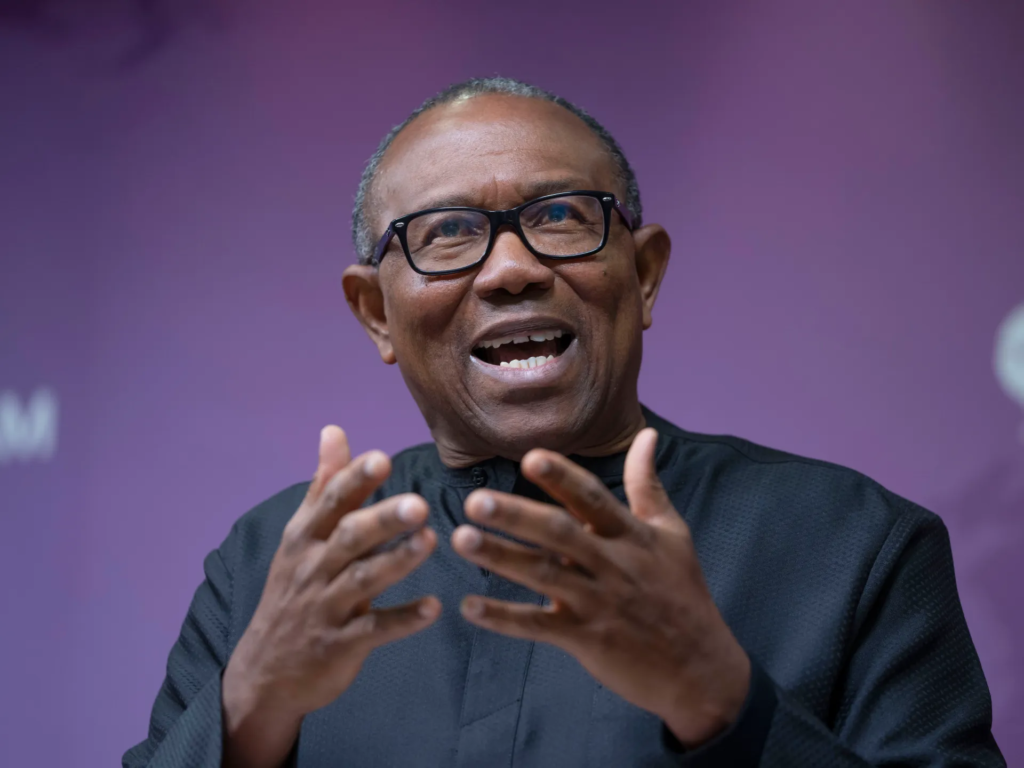
A planned humanitarian visit turned into a tense standoff on the streets of Makurdi, Benue State. Former Anambra State Governor and Nigeria Democratic Congress presidential candidate Peter Obi was forced to cancel his journey to Yelewata in Guma Local Government Area after a group of angry youths blocked his convoy.
The incident happened early Tuesday morning along the Makurdi-Gboko Road, just a short distance from the airport. Obi had arrived in the state with plans to meet families affected by tragic attacks in the area, offer his condolences, and provide direct aid to survivors. Instead, his team met a barricaded road filled with young men carrying sticks, throwing stones, and shouting for him to turn back.
Rather than risking an escalation or causing harm to anyone in the area, Obi chose to turn his convoy around, return to the airport, and board his plane. The entire event has sparked fierce debates across the country about free movement, political tolerance, and who was truly behind the blockage. You can read the original reporting on this event on Vanguard News.
The Detailed Timeline of Events in Makurdi
Peter Obi landed at the Makurdi airport around 9:00 AM. His planned destination was Yelewata, a community in Guma Local Government Area that suffered heavy losses during violent attacks. The main purpose of the visit was to show solidarity, meet grieving relatives, and make personal donations to help victims rebuild their lives.
However, the journey ended almost as soon as it began. Less than two kilometers from the airport, near the Nigerian Air Force Base, the convoy ran into a massive roadblock set up by local youths. The protesters blocked the main road, disrupting regular traffic and preventing any vehicles in the convoy from passing.
Build Funnels, Email Lists & Sell Online With One Free Tool
Create funnels, send emails, and sell online using Systeme.io without paying for multiple tools.
Create Free AccountFree forever • No credit card • Beginner-friendly
Videos shared from the scene showed a chaotic environment. Young men held wooden sticks, threw stones at the vehicles, and repeatedly chanted slogans demanding that Obi leave the state. Armed security personnel were present at the scene, but they did not forcefully disperse the crowd to avoid triggering a larger fight.
Facing a hostile crowd and wanting to prevent any risk to human life, Obi instructed his driver and security team to turn around. The convoy headed straight back to the airport, where Obi addressed reporters before flying out of Benue State. More details on how the event unfolded are documented by THISDAY Live.
Why Peter Obi Was Visiting Yelewata
The community of Yelewata has been one of the hardest-hit areas in Benue State due to recurring violent attacks. Previous incidents in the region left over 200 people dead, destroyed homes, and forced thousands of residents into camps for internally displaced persons.
Obi explained that his visit was purely humanitarian. He wanted to offer comfort to grieving families, assess the living conditions of displaced survivors, and provide financial relief out of his personal pocket.
He stressed that he was not visiting to host an election rally or violate local laws. According to Obi, every Nigerian citizen should be allowed to travel anywhere in the country to mourn with hurting communities without facing threats or violence.
Peter Obi Speaks Out: “It Is Ridiculous and Very Worrisome”
Speaking to journalists at the airport before his departure, Peter Obi expressed sadness and deep concern over what had taken place. He described the experience as unacceptable in a democratic nation where freedom of movement is protected by law.
Obi noted that he chose to step back and leave rather than allow his supporters to clash with the protesters. He stated that his team had enough people present to confront the crowd, but doing so would have endangered innocent lives, which went against his principles.
He also addressed a direct message to the young people who participated in blocking the road:
“I call on the youths that are being used. The abuse you are allowing them to use you for today will take its revenge on you. People are using you. They are not using their children. They are using you to stop opportunities of building a better life for you.”
Drawing from his experience as a former governor who served for eight years, Obi argued that an incident like this could not happen without the knowledge or political backing of local authorities. He called on the Inspector-General of Police and the Department of State Services to intervene and ensure that leaders across all states allow peaceful movements across Nigeria.
The Clash of Accounts: Benue Government vs. Police Command
Following the public outcry, a major debate broke out regarding who knew about the visit and who was responsible for the roadblock.
What Governor Hyacinth Alia’s Administration Said
The Benue State Government quickly issued a statement denying any involvement in the incident. Chief Press Secretary Kula Tersoo and Information Commissioner Dennis Iorpev stated that Governor Hyacinth Alia does not support political thuggery and did not hire anyone to block the road.
Government representatives claimed that Obi failed to formally notify the state governor or writing official letters to state authorities ahead of his visit. They argued that high-profile figures must follow formal channels so that state protocols and security details can be properly arranged. They also suggested that the roadblock might have been an unscheduled gathering of local youths rather than a sponsored attack.
What the Police Commissioner Confirmed
However, the account given by the Benue State Police Command contradicted the state government’s claim of total ignorance.
Benue State Commissioner of Police Cletus Nwadiogbu confirmed that the police command was officially notified of Obi’s planned visit on Monday evening. In response to the notification, the police deployed personnel to escort the presidential candidate, with the Assistant Commissioner of Police in charge of Operations personally leading the team.
The police chief explained that when the crowd blocked the road, officers managed the situation carefully to avoid using force that could cause injuries or deaths. He praised Obi for acting responsibly by turning back peacefully, noting that his calm decision kept the situation from turning violent. The police command has opened an investigation to identify the individuals behind the blockade. Additional coverage of these conflicting statements can be found on ICIR Nigeria.
Widespread Outrage Across the Political Landscape
News of the blockade spread quickly, drawing sharp criticism from political leaders, activists, and civil society groups across Nigeria.
Vice Presidential candidate Senator Rabiu Kwankwaso called the event a dark day for Nigerian democracy. He reminded political leaders that the Nigerian Constitution gives every citizen the right to travel freely throughout the country without fear of harassment. Kwankwaso urged security agencies to hold those responsible accountable so that a dangerous precedent is not set for future political activities.
Human rights activist Omoyele Sowore condemned the blockade as sponsored political disruption. He emphasized that blocking political figures or humanitarian leaders from visiting communities sets a dangerous example that harms peace and open democratic dialogue.
Organizations such as the Human Rights Writers Association of Nigeria (HURIWA) and activist Deji Adeyanju also issued statements calling the event completely unacceptable. They called on federal authorities to ensure that state governments do not use local power to restrict the freedom of opposition leaders.
Why the Yelewata Community Remains a Sensitive Area
To fully understand why this incident caused so much tension, it helps to look at the history of the region.
Yelewata is a border community in Guma Local Government Area of Benue State. Over the years, the area has suffered repeatedly from violent conflicts that have cost hundreds of lives, ruined farmland, and forced families out of their homes. The human suffering in Yelewata has made it a central focus for relief organizations, human rights groups, and political leaders seeking to draw attention to security issues.
Because the security situation in Benue State remains delicate, visits by major political figures often carry heavy symbolic weight. While supporters view humanitarian visits as essential acts of compassion and leadership, political opponents sometimes view them as attempts to score political points.
This tension has created an environment where visits to IDP camps and affected communities require careful coordination, open dialogue, and a strong commitment to keeping humanitarian work separate from political rivalry.
Freedom of Movement and What This Means for Nigerian Politics
The event in Makurdi raises major questions about the state of democracy and security in Nigeria as political activities increase across the country.
Protecting Constitutional Rights
Section 41 of the 1999 Constitution of Nigeria guarantees every citizen the right to move freely throughout the country and reside in any part of it. When public figures or ordinary citizens are blocked from travelling along public highways, it weakens the rule of law and creates fear.
Protecting Young People from Exploitation
One of the most important points raised during this event was the warning about young people being used for political disruption. In many parts of the country, high youth unemployment makes young men vulnerable to being hired for protests, blockades, or political intimidation.
Build Funnels, Email Lists & Sell Online With One Free Tool
Create funnels, send emails, and sell online using Systeme.io without paying for multiple tools.
Create Free AccountFree forever • No credit card • Beginner-friendly
Creating real economic opportunities, quality education, and job training is the best way to prevent young people from being used as tools for violence.
Improving Coordination Between States and Visitors
To avoid similar standoffs in the future, clear communication is essential. While citizens have the legal right to travel, high-profile figures benefit from coordinating with local security heads to ensure public safety without giving up their freedom of movement.
At the same time, state governments must ensure that official channels are used to protect visitors rather than create unnecessary barriers or political roadblocks. Video reports and commentary on this incident are also available on Channels TV.
Staying Connected with Useful Information
Keeping up with fast-moving events around the country requires trustworthy, straightforward information.
To learn more about our mission to bring you clear and engaging stories, visit the WhatsBuzzn About Us page. If you have questions, story suggestions, or feedback, you can reach out through the WhatsBuzzn Contact page.
For those interested in exploring modern digital tools, online creation strategies, and technical trends, check out our dedicated guides in the YouTube Automation Section and stay informed on digital advances in our Technology & AI Section.
You can also join our growing community on social media to share your thoughts on trending stories:
- Follow our visual updates on Instagram
- Join community discussions on Facebook
- Catch real-time news updates on X (formerly Twitter)
Frequently Asked Questions (FAQs)
Why did youths block Peter Obi from entering Yelewata?
A group of youths set up a blockade along the Makurdi-Gboko Road carrying sticks and throwing stones while shouting for Obi to turn back. While the exact organizers of the blockage are still under police investigation, the youths prevented his convoy from proceeding to Yelewata.
Was Peter Obi visiting Benue State for a political campaign?
No, Obi stated that his visit was strictly a humanitarian mission. He planned to visit Yelewata to pay condolences to families affected by violent attacks and provide personal financial aid to displaced survivors.
Did the Benue State Government know about Peter Obi’s visit?
The Benue State Government claimed it received no official written notification prior to his arrival. However, the Benue State Police Commissioner confirmed that the police command was officially notified on Monday evening and deployed officers to provide security for the trip.
How did Peter Obi react when his convoy was stopped?
Peter Obi decided to avoid any violent conflict by turning his convoy around and returning to the airport. He stated that he had enough supporters to push through, but chose not to endanger lives. He called the situation worrisome and urged young people not to let politicians use them for violence.
Are security agencies investigating the incident in Makurdi?
Yes, the Benue State Police Command confirmed that an investigation is underway to determine who mobilized the youths and caused the blockage. National political leaders have called for those involved to be identified and prosecuted.
The events in Benue State serve as a reminder of how important it is to protect peaceful movement and public safety across Nigeria. When political differences interfere with humanitarian relief, it is vulnerable communities that suffer the most. Ensuring that every leader can move safely and offer support where it is needed remains vital for peaceful political growth and national unity.
