
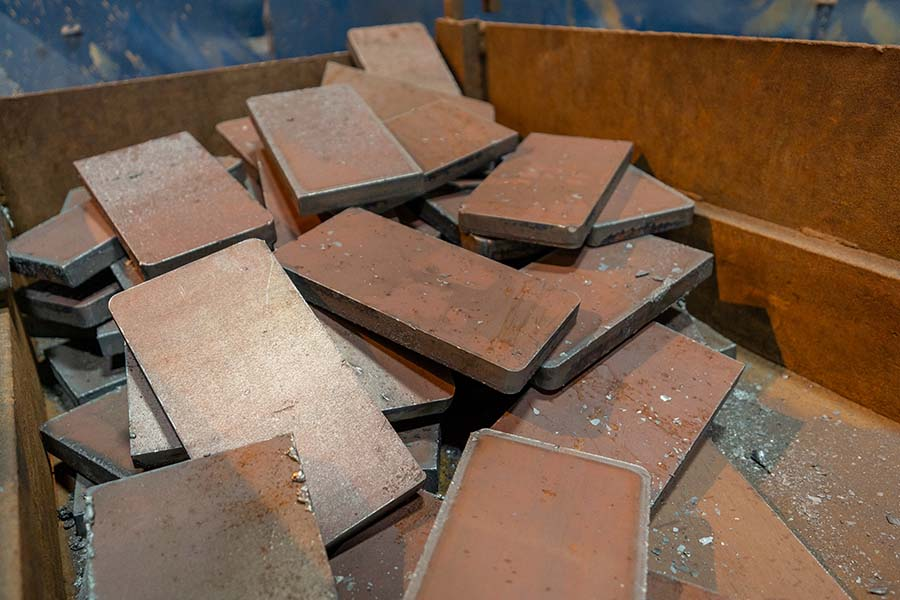
Nigeria is spending staggering amounts of foreign currency every single year to bring in iron and steel from foreign countries. Official figures from the National Bureau of Statistics show that iron and steel imports crossed N1 trillion in 2025 alone. When you look at broader estimates from industry experts and government officials, the total annual loss reaches around $4 billion, which translates to over N5.6 trillion leaving the country each year.
That is a massive pool of cash flowing out of the domestic economy. What makes this situation painful is that Nigeria has almost everything required to produce its own steel. The nation sits on vast deposits of high-grade iron ore, holds vast amounts of scrap metal, and has millions of eager workers looking for jobs. Yet, basic building materials, railway tracks, heavy machinery, and metal sheets are routinely purchased from foreign manufacturers in China, Turkey, India, and Europe.
This structural weakness touches every citizen. When billions of dollars leave the local financial system to pay foreign steel mills, the domestic currency feels the heat. It fuels inflation, makes construction projects far more expensive, and leaves young engineering graduates without real jobs. Understanding why this is happening and what must be done to fix it is critical for anyone interested in the future of the nation’s economy.
The Massive Financial Drain of Steel Imports
To really get a clear picture of what is going on, you have to look at how foreign exchange works in heavy industry. Whenever a private contractor or government agency wants to build a major bridge, real estate estate, or railway line, they need steel. Because local steel mills cannot meet the quality or volume needed, those builders must apply for foreign currency to buy finished steel products abroad.
This process creates constant demand for scarce foreign exchange. When dollars are heavily spent importing raw materials that could easily be produced at home, the domestic currency loses ground against major foreign currencies. That depreciation spreads everywhere, raising the price of everything from imported food to transportation and household items.
Build Funnels, Email Lists & Sell Online With One Free Tool
Create funnels, send emails, and sell online using Systeme.io without paying for multiple tools.
Create Free AccountFree forever • No credit card • Beginner-friendly
The Real Cost Beyond the Numbers
The damage goes deeper than just exchange rates. When a nation imports finished steel, it is essentially paying for foreign jobs, foreign infrastructure, and foreign taxes. The money spent on foreign steel factories funds their research, pays their workers, and expands their industrial capabilities.
Meanwhile, local factories struggle to survive or operate far below capacity. Local scrap metal is often bought cheap, shipped overseas, processed into structural steel, and then sold back at five times the price. It is an economic cycle that drains national wealth while leaving domestic industries stagnant.
The Story of Ajaokuta Steel Complex: Potential Lost in Limbo
No discussion about steel in Nigeria is complete without talking about the Ajaokuta Steel Complex in Kogi State. Conceived decades ago as the backbone of industrial growth across West Africa, the massive project was designed as an integrated steel plant capable of producing millions of tonnes of liquid and finished steel every single year.
The initial plan was brilliant. Ajaokuta was built to supply heavy plates, structural beams, wire rods, and chemical by-products. It was supposed to power automobile assembly lines, railway projects, structural building projects, and military manufacturing.
Why Ajaokuta Has Stayed Silent
Despite billions of dollars spent since construction began in the late 1970s, the facility has never produced a single commercial batch of steel. Technical audits over the years have shown that the plant was over 90 percent complete, yet it remains idle due to a combination of political issues, bad management decisions, legal battles, and outdated technology choices.
Previous attempts to hand over the complex to foreign concessionaires ended in legal disputes, asset stripping, and expensive court settlements. Over the years, billions of Naira have gone toward paying personnel salaries, basic maintenance, and administrative overhead for a factory that does not generate revenue.
The Cost of Outdated Thinking
Part of the issue comes down to design. Ajaokuta was designed using heavy blast furnace technology. That model requires massive dedicated power plants, specialised metallurgical coal that must be imported, and hundreds of highly specialized engineers operating under a rigid system.
Trying to run a massive 1970s mega-plant without reliable local power grids or simple regional supply chains has proved extremely difficult. Many economic experts now suggest that instead of waiting endlessly for one massive plant to start working, smaller and more flexible modern mills should be established across different regions.
Why Local Steel Matters for National Growth
Steel is often described as the foundation of modern civilization. You cannot build a modern city, power network, or transport system without it. When a nation produces its own steel, the ripple effects spread across every single sector of the economy.
Infrastructure Development Gets Cheaper
Right now, building roads, bridges, and housing developments is expensive partly because reinforcement bars and steel beams must be imported at high dollar rates. If steel was made locally, construction costs for public and private projects would drop significantly.
Consider the ongoing expansion of national railway lines. Laying thousands of kilometres of standard-gauge track requires hundreds of thousands of tonnes of heavy rail steel. Importing all that rail profile costs hundreds of millions of dollars. Producing that specialized rail steel domestically would save massive amounts of tax money and accelerate transportation projects across the country.
Creating Real Opportunities for Youth
Nigeria graduates thousands of brilliant engineers, technicians, and scientists every year. Unfortunately, many cannot find hands-on positions in heavy manufacturing because local steel plants are silent.
A thriving domestic steel sector creates direct jobs for metallurgists, machine operators, quality inspectors, and logistics planners. It also creates millions of indirect jobs in scrap collection, mining, transportation, marketing, and equipment repair.
Supporting Local Manufacturing
Beyond big construction sites, small and medium enterprises need steel. Local fabricators making agricultural equipment, storage tanks, roofing sheets, vehicle parts, and household gates all rely on metal sheets and bars. When imported steel costs fluctuate, these local business owners struggle to price their goods fairly, making it hard to grow.
Main Barriers Stopping Local Production
If the benefits of local production are so obvious, why is progress moving so slowly? Several key obstacles continue to hold back the local steel industry.
1. Unstable Power Supply
Steel production is an energy-intensive process. Electric arc furnaces and rolling mills require uninterrupted electricity to melt raw ore and scrap metal. Operating heavy machinery on industrial diesel generators increases production costs so much that local steel cannot compete with cheap imports.
2. Export of Unprocessed Scrap Metal
Every day, metric tonnes of scrap metal are collected across neighborhoods and industrial zones. Instead of processing this scrap locally in mini-mills, vast quantities are exported out of the country for cheap cash. Foreign factories melt this scrap down and export it back as finished rebar at premium prices.
3. High Cost of Investment and Financing
Setting up a modern steel mill requires millions of dollars in capital upfront. High interest rates from local commercial banks make long-term industrial borrowing very difficult for private investors. Without low-interest development loans or private equity support, building modern mills remains out of reach for many local operators.
4. Technical Workforce Gap
While there are plenty of university graduates, there is still a shortage of practical technical training facilities for modern electric arc furnace technology and automated rolling mills. Building a strong industrial base requires continuous vocational training and technical skill development programs.
How Modern Technology and Innovation Can Change the Game
Fixing the steel sector does not mean copying 20th-century methods. Modern manufacturing offers faster, cheaper, and smarter ways to build industrial capacity.
Modular Electric Arc Furnaces
Instead of relying solely on massive, centralized mega-complexes, modern industrial strategy points toward modular mini-mills powered by Electric Arc Furnace (EAF) technology.
- These mills cost a fraction of traditional blast furnaces.
- They can be built and brought online in three to four years rather than decades.
- They use locally available scrap metal and direct reduced iron.
- They can be placed strategically near major port cities or industrial corridors to reduce transport costs.
Industry 4.0 and Automation
Modern steel production relies heavily on automation, sensor arrays, and smart analytics. Computerized systems monitor furnace temperatures in real time, check metal purity, and control automated rolling processes to eliminate waste.
Applying practical insights from technology and AI solutions allows local manufacturers to optimize supply chains, predict machine maintenance needs, and keep operational costs low.
Digital Skills and Modern Business Growth
Building a vibrant economy requires embracing multiple paths of modern work. While engineers build physical infrastructure on site, thousands of young creators are finding success through online business models. Exploring opportunities like YouTube automation strategies shows how digital skills and structured systems can build sustainable income streams in today’s digital landscape.
A Practical Roadmap to Fix the Steel Sector
Turning the steel sector around requires clear, actionable steps from both government leadership and private investors.
Step 1: Restrict Unprocessed Scrap Metal Exports
Government policies should encourage domestic recycling by limiting the export of raw scrap metal. Keeping scrap metal inside the country gives local mini-mills affordable raw material, lowers final steel prices, and keeps workers employed.
Step 2: Create Dedicated Industrial Energy Zones
Steel mills need reliable power. Creating dedicated industrial clusters where gas power plants supply uninterrupted electricity directly to nearby steel plants eliminates the heavy burden of private generator fuel.
Build Funnels, Email Lists & Sell Online With One Free Tool
Create funnels, send emails, and sell online using Systeme.io without paying for multiple tools.
Create Free AccountFree forever • No credit card • Beginner-friendly
Step 3: Partner with Proven International Technical Experts
Instead of relying solely on public funds, the government can establish Special Purpose Vehicles (SPVs). Bringing together private equity investors, local pension funds, and foreign technical partners ensures projects get completed on time and managed professionally without bureaucratic delays.
Step 4: Enforce Strict Quality Standards
Substandard imported steel sometimes makes its way into local markets, putting building safety at risk. Regulatory bodies must enforce strict quality checks on all metal products sold in the market. This protects buyers and creates a level playing field for quality domestic producers.
Frequently Asked Questions (FAQs)
How much does Nigeria spend on steel imports every year?
Official data from the National Bureau of Statistics show that iron and steel imports exceeded N1 trillion in 2025. Comprehensive estimates from industry leaders put total annual foreign exchange losses at roughly $4 billion (about N5.6 trillion).
Why is the Ajaokuta Steel Plant still non-operational?
Ajaokuta has struggled with legal disputes, poor concession management, political delays, and reliance on outdated blast furnace designs that require massive dedicated power networks and specialized imported coal.
How does importing steel affect everyday prices?
Importing steel requires spending massive amounts of foreign exchange. This high dollar demand weakens the domestic currency, driving up construction costs, transport costs, and inflation across the broader economy.
Can Nigeria produce steel without finishing Ajaokuta first?
Yes. By investing in modern, modular Electric Arc Furnace (EAF) mini-mills, Nigeria can process local scrap metal and raw iron ore efficiently. These modern mills cost less, take less time to construct, and can generate up to 90 percent of local steel needs.
What industries benefit most from domestic steel production?
Road construction, housing development, railway expansion, automobile assembly, shipbuilding, metal fabrication, and agricultural machinery manufacturing all gain directly from local steel availability.
Building a Self-Reliant Economic Future
Ending Nigeria’s heavy reliance on imported steel is not just an industrial goal; it is an economic necessity. Continuing to spend billions of dollars overseas for materials that lie right under our feet slows down national development and drains wealth.
By encouraging private sector investments, adopting modern furnace technology, securing industrial power supply, and protecting domestic recycling, Nigeria can transform its steel sector into a powerful engine of job creation and financial stability. The tools, resources, and talent are already available. Taking decisive action will keep national wealth at home and build a stronger foundation for generations to come.
Want to learn more about what we do? Head over to our about page for the full story, or reach out anytime through our contact page. Stay connected with the latest updates by following us on Instagram, Facebook, and X (Twitter).
