
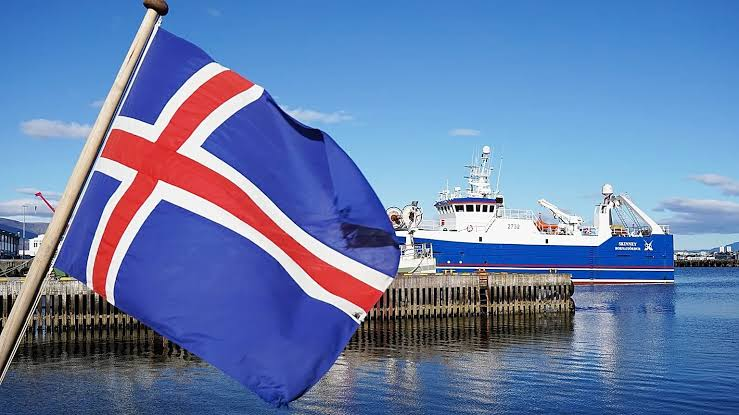
Iceland voters have officially decided not to reopen negotiations to join the European Union. In a historic nation-wide vote, 52.8% of voters chose “No,” while 47.2% voted “Yes”.
The result brings a clear answer to a debate that has simmered across the North Atlantic island for more than ten years. Voting took place across the country with a high voter turnout of 82.5%. Out of more than 223,000 valid ballots cast, the margin came down to roughly 12,700 votes.
This vote was not even about joining the European Union right away. Instead, it asked voters one straightforward question: should Iceland restart official talks with Brussels to see what a membership deal would look like?
Because the “No” campaign won, those talks will remain completely frozen. Icelandic Prime Minister Kristrún Frostadóttir had promised to respect the public’s voice, declaring that the issue will not return to the political agenda during her current term.
Understanding why this decision happened requires looking at the history of the island, its rich ocean waters, and the unique challenges facing its people today.
The $0 Secret To Launching Your Entire Online Empire
Why pay hundreds every month for separate software? Build funnels, send emails, and make sales with Systeme.io completely free.
Get Started For $0Free Forever • No Credit Card Needed • Beginner-Friendly
The Breaking Point: How the Referendum Came to Be
Iceland first applied to join the European Union back in 2009. At the time, the country was recovering from a massive financial crisis that shattered its banking system. Many leaders felt that joining Europe and adopting the Euro currency would protect the economy from future economic shocks.
However, as the economy recovered over the following years, enthusiasm began to cool. By 2013, official negotiations were put on pause. For years, political parties argued over whether the government should officially withdraw the application or ask the public in a direct vote.
When a new coalition government took office, leaders promised to resolve the question once and for all through a public referendum. Prime Minister Kristrún Frostadóttir eventually decided to bring the vote forward to August 2026.
The decision to hold the vote earlier than expected was influenced by shifting global politics and growing debate over international security in the Arctic region. Supporters hoped that starting fresh talks would give Iceland more influence on the global stage. Opponents argued that reopening the conversation was an unnecessary distraction that threatened the country’s national control.
Why the “No” Campaign Won
To understand why the majority of Icelanders rejected EU talks, one must look at the factors that shaped the “No” campaign.
The argument was not built on hostility toward Europe. Rather, it was rooted in practical concerns about local industries, national decision-making, and historical identity.
Protecting the Oceans and Fishing Rights
The biggest factor in the entire campaign came down to fish. Marine products account for nearly 40% of Iceland’s total exports of physical goods. For generations, the fishing industry has been the lifeblood of coastal communities and a central pillar of the national economy.
Opponents of EU membership pointed out that joining the European Union means accepting the Common Fisheries Policy. Under those rules, EU authorities in Brussels have a major say in setting fishing quotas and managing ocean waters across member countries.
Icelanders take intense pride in managing their own ocean resources. The country famously fought for its fishing grounds during the “Cod Wars” against Great Britain between the 1950s and 1970s. Having fought so hard in history to control its 200-nautical-mile exclusive fishing zone, many voters refused to risk handing any control over to outside authorities.
Reports showed that around 90% of businesses in Iceland’s fisheries sector were firmly against restarting EU talks. Even though Foreign Minister Þorgerður Katrín Gunnarsdóttir argued that Iceland could negotiate special protections for its waters, voters simply did not want to take the gamble.
Protecting National Sovereignty
Sovereignty means having full power to make your own laws and rule your own country without outside interference. This was the second major pillar of the “No” campaign.
Iceland is already a member of the European Economic Area (EEA) and the Schengen free-travel zone. This means Icelanders can easily travel, live, work, and trade across Europe without being a full political member of the EU.
The “No” campaign argued that the current setup gives Iceland the best of both worlds. The country gets access to European markets while keeping complete control over its farming, fishing, and internal laws. Opponents claimed that becoming a full EU member would mean taking on unnecessary red tape and giving up independent decision-making power.
Confidence in the Local Economy
Iceland is one of the wealthiest countries per person in the world. Following the 2008 banking crash, the island rebuilt its economy through strong tourism, green energy, technology, and seafood exports.
Many voters believed that Iceland’s fast economic recovery proved that a small, nimble country can thrive on its own. They felt that keeping full control over local taxes and economic choices was safer than tying the national economy to a large bloc of 27 nations.
Send, Spend & Hold Money Worldwide Without Hidden Fees
Transfer money internationally at the real exchange rate and hold 40+ currencies in one account.
Open a Wise AccountMid-market rate • Fast transfers • 40+ currencies
Why Nearly Half of the Country Voted “Yes”
While the “No” vote carried the day, 47.2% of voters wanted to reopen negotiation talks. This shows that the country was divided almost straight down the middle.
Supporters of the “Yes” campaign offered compelling reasons why they believed closer ties with Europe were necessary for the nation’s long-term future.
Fighting High Interest Rates and Inflation
The strongest argument for the “Yes” side was economic stability.
Iceland uses its own currency, the Icelandic króna. Because the population is small—around 400,000 people—the króna can be unpredictable. Over the years, sharp shifts in the currency’s value have led to periods of high inflation and elevated interest rates.
For regular families, this has meant higher costs for groceries and expensive home mortgage payments. The “Yes” campaign argued that starting EU talks could eventually lead to adopting the Euro currency. They believed replacing the króna with the Euro would stabilize prices, lower mortgage costs, and protect household savings.
Having a Seat at the Decision Table
Because Iceland is part of the European Economic Area, it already adopts many EU laws and market regulations.
However, because Iceland is not a full EU member, it does not have a vote or a direct voice when those rules are written in Brussels.
The “Yes” campaign called this “taxation without representation” in a regulatory sense. They argued that since the country already follows many European regulations, it makes sense to sit at the table, vote on those laws, and help shape the future of Europe.
Geopolitical Security in a Changing World
International affairs also played an interesting role during the referendum campaign.
Heightened geopolitical tension in the North Atlantic and statements made by global leaders—including former US President Donald Trump mentioning neighboring Greenland—created chatter about northern security.
The $0 Secret To Launching Your Entire Online Empire
Why pay hundreds every month for separate software? Build funnels, send emails, and make sales with Systeme.io completely free.
Get Started For $0Free Forever • No Credit Card Needed • Beginner-Friendly
Some “Yes” voters felt that closer political ties with European neighbors would provide extra security and international solidarity during uncertain times. However, “No” voters pointed out that Iceland is already a founding member of NATO, which provides its primary defense safety net.
City vs. Country: A Deep Geographic Divide
The official results revealed a clear geographical split across the country.
In the capital city of Reykjavík and surrounding urban areas, a majority of citizens voted “Yes” to restarting negotiations. Urban voters tend to work in technology, services, tourism, and education. For many city dwellers, currency stability, global integration, and lower interest rates were top priorities.
In contrast, rural and coastal constituencies voted overwhelmingly “No”. In some rural districts, the “No” vote won by margins as wide as three to two.
In these regions, fishing, processing plants, and agriculture are the foundation of local life. For people living outside the capital, protecting local ocean waters and farming communities far outweighed any theoretical benefits of adopting the Euro.
What Happens Next for Iceland?
Now that the voters have spoken, the immediate political path is set.
Prime Minister Kristrún Frostadóttir confirmed that the government will honor the non-binding result fully. She stated that the question of EU membership will not be brought back during her government’s mandate, which runs through 2028.
Parliament may now debate whether to formally withdraw the 2009 membership application to close the book completely.
For everyday life, little will change on the surface. Iceland remains a member of the European Economic Area. Citizens will continue to travel across Europe without passport checks, trade will move freely, and joint research projects will continue as normal.
What This Result Means for the European Union
The decision in Reykjavík was closely watched by leaders in Brussels and across Europe.
In recent years, the European Union has focused heavily on expansion. Countries like Ukraine, Moldova, and several Western Balkan nations are actively working to join the bloc. EU officials hoped that welcoming a prosperous, stable country like Iceland back into talks would show the strength and appeal of European unity.
Iceland’s choice to stay out highlights a key reality: for wealthy countries with strong independent industries, the trade-offs of EU membership can be tough to sell.
European diplomats acknowledged that Iceland’s deep ties to fishing and unique geographic position meant it was always going to be a challenging sell. Leaders from across the political spectrum in Europe reacted to the news with mixed views. Some expressed disappointment that talks would not move forward, while others congratulated Icelanders for choosing independent sovereignty.
How Information and Digital Trends Shape Public Debate
The campaign leading up to this referendum showed how modern politics relies on clear communication. Citizens no longer just watch traditional news channels. They turn to digital platforms, social media commentary, and online breakdowns to understand big economic policy choices.
In today’s media world, explainers and digital content play a massive role in breaking down complex topics—whether it is international diplomacy, local politics, or artificial intelligence.
Creators who use modern tools like YouTube automation help build fast, educational videos that break down global stories for millions of viewers. At the same time, developments in technology and AI are changing how fast information travels across borders during elections and referendums.
Understanding these shifts is central to our mission. You can read more on our About page to see how we track trends, or head over to our Contact page if you want to reach out to our editorial team.
Stay connected with us across social media for quick news updates, viral stories, and daily commentary:
- Follow our latest updates on Instagram
- Join the conversation on Facebook
- Catch real-time news on X (formerly Twitter)
Frequently Asked Questions (FAQs)
Did Iceland vote to leave the European Union?
No. Iceland was never a member of the European Union. The vote was about whether the government should restart official negotiations to join. Because the “No” side won, Iceland remains an independent non-member.
Will Iceland hold another vote on the EU anytime soon?
It is very unlikely in the near future. Prime Minister Kristrún Frostadóttir confirmed that the government will respect the vote and will not raise the issue again during her current term, which lasts until at least 2028.
Can Icelanders still travel and work in EU countries?
Yes. Iceland is part of the European Economic Area (EEA) and the Schengen Agreement. Icelandic citizens retain the right to travel, live, study, and work across EU member states without needing special visas.
Why is fishing such a dealbreaker for Iceland?
Seafood and marine exports make up roughly 40% of Iceland’s total physical exports. Joining the EU would require adopting the Common Fisheries Policy, which opponents fear would hand control over local fishing quotas to officials in Brussels.
What was the final vote breakdown in the referendum?
The “No” choice received 52.8% of the vote (118,040 votes), while the “Yes” choice received 47.2% (105,339 votes). Voter turnout was remarkably high at 82.5%.
Final Thoughts
Iceland’s referendum outcome sends a clear signal about how the nation views its place in Europe. By choosing not to reopen membership negotiations, voters decided that preserving full control over their ocean waters, farms, and national laws matters more than the economic promises of EU membership.
While the country stays closely connected to Europe through trade and travel, it will continue to chart its own course as an independent North Atlantic nation. As global politics and economic conditions evolve, Icelanders have proven once again that when it comes to their natural resources and sovereignty, they prefer to keep the steering wheel firmly in their own hands.
