
Venezuela is stepping into a massive new energy chapter after announcing key details of a historic 25-year oil agreement with the United States. According to Venezuelan officials, the long-term energy deal targets a production increase of 1.5 million barrels per day across 17 strategic oilfields in its initial phase. Government projections suggest the arrangement could generate over $200 billion in tax revenue and state income over its lifetime, while attracting around $100 billion in fresh private investment into the country’s damaged energy sector.
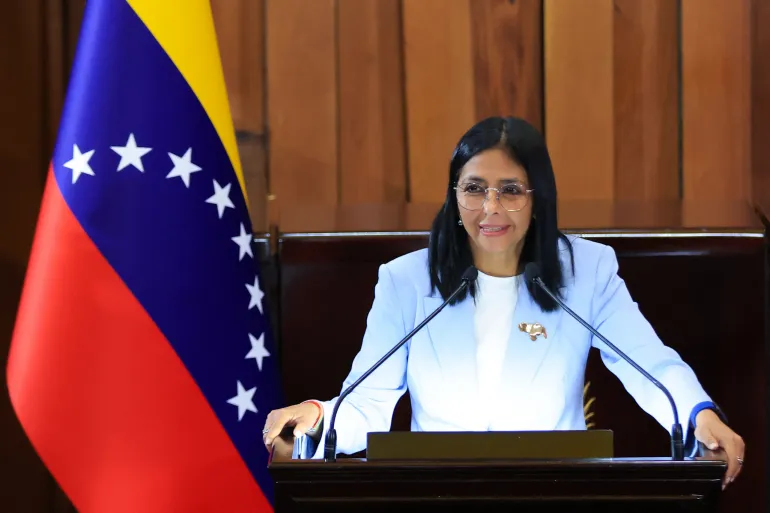
The agreement, announced following direct negotiations between President Donald Trump and Venezuela’s interim leadership under Delcy Rodriguez, marks one of the biggest geopolitical energy shifts in South American history. The deal gives the United States broad access to commercialize and help restore operations in some of the largest proven crude reserves on the planet.
While supporters view the deal as a necessary rescue plan for Venezuela’s collapsing economy, critics inside the country are calling it a controversial surrender of national sovereignty. Here is a complete look at what the deal contains, how the money will flow, and why it matters for global energy markets.
The Big Break: Inside the 25-Year US-Venezuela Energy Pact
The core of this new energy pact centers on a 25-year operational framework designed to revive Venezuela’s heavily neglected oil production facilities. For decades, Venezuela held the title of having the largest proven crude oil reserves in the world, sitting on an estimated 300 billion barrels. However, political instability, lack of domestic funding, strict international sanctions, and poor management caused national output to drop drastically from its historical peak of over 3 million barrels per day down to less than 900,000 barrels.
Under the terms released by interim leader Delcy Rodriguez, American energy partners will gain operational access to 17 primary oilfields situated mainly in the Orinoco Petroleum Belt. This region holds heavy crude that requires specialized refining capabilities—the exact kind of crude that petroleum refineries along the United States Gulf Coast were originally built to process.
The $0 Secret To Launching Your Entire Online Empire
Why pay hundreds every month for separate software? Build funnels, send emails, and make sales with Systeme.io completely free.
Get Started For $0Free Forever • No Credit Card Needed • Beginner-Friendly
The agreement allows American firms to step in with modern management, heavy machinery, advanced technology, and financial backing. In return, the United States secures a direct, long-term supply of heavy crude oil, reducing reliance on energy imports from less stable regions around the globe.
Breaking Down the Numbers: 1.5 Million Barrels and $200 Billion
The financial and operational numbers attached to this agreement are massive. To understand how significant this partnership is, it helps to break down the key figures provided by negotiators on both sides.
Target Output: 1.5 Million Barrels Daily
The immediate operational goal is to boost production by 1.5 million barrels per day. Achieving this number would effectively double Venezuela’s current oil output. Foreign energy analysts note that hitting 1.5 million barrels per day will not happen overnight. It will require extensive repairs to pumps, drilling rigs, electrical grids, and export terminals that have been sitting idle or damaged for years.
Expected Revenue: Over $200 Billion
Venezuelan officials state that the deal could bring in around $209 billion in total tax revenues and royalties for the state treasury over the 25-year period. This calculation uses a baseline crude price estimate of approximately $65 per barrel. If global oil prices rise higher over the coming decades, total revenues could end up significantly higher.
Upfront Capital Investment: $100 Billion
Because state oil company PDVSA lacks the liquid capital needed to repair its own infrastructure, the pact relies heavily on private capital. Foreign energy consortiums and private investors are expected to inject up to $100 billion into field development, pipeline upgrades, and environmental cleanup efforts over the lifetime of the agreement.
How the 25-Year Framework Actually Works
One of the most talked-about aspects of this historic deal is its corporate and legal structure. Negotiators set up a unique ownership framework to keep the partnership stable even if leadership changes occur in either country down the road.
A major part of the strategy involves North American Blue Energy Partners, a specially structured corporate vehicle. Under this arrangement, the United States government or designated entities will hold a 35 percent passive stake. This structure was crafted to ensure that future Venezuelan administrations cannot easily cancel or alter the contract without facing legal and economic consequences.
Delcy Rodriguez reassured the Venezuelan public in official broadcasts that the state will maintain legal sovereignty over its underground resources. She emphasized that ownership of the land and oil reserves remains with the nation, while the commercial rights to extract, refine, and sell the oil are shared with American commercial partners under strict regulatory supervision.
External legal analysts at reporting outlets like Fox Business and global news agencies point out that balancing national ownership with heavy foreign management is delicate. Previous attempts at shared energy control in Latin America ran into trouble when political winds shifted, which is why this 25-year legal safety net was made so strict.
The Broken Pipeline: Why Venezuela Needs Massive Energy Investments
To realize why Venezuela is opening its oil sector so wide to foreign involvement, you have to look at the severe condition of its domestic infrastructure. For almost two decades, Venezuela’s energy grid suffered from chronic underinvestment, corruption, and a massive loss of skilled technical workers who fled the country during economic crises.
Aging Refineries and Pipelines
Most of the refineries inside Venezuela are operating at a tiny fraction of their built capacity. Pipelines that transport heavy crude from inland wells to coastal ports have suffered frequent leaks, pressure drops, and electrical failures. Fixing this network requires specialized engineering expertise and modern computing systems.
Energy companies rely heavily on cutting-edge software, automated machinery, and data analytics to monitor real-time pipeline pressure and prevent spills. Readers interested in how modern technology is reshaping legacy industries can check out our latest breakdowns in technology and AI updates to see how digital systems keep energy fields running safely.
Restoring Refueling Terminals
Shipping 1.5 million barrels of crude every single day requires deep-water ports capable of loading massive supertankers quickly and safely. Currently, several key loading docks off the Venezuelan coast need dredging, structural repairs, and updated navigational radar systems before they can handle heavy maritime traffic again.
The Global Oil Market: How Higher Production Changes Gas Prices
When a major oil-producing nation announces plans to throw open its doors and add 1.5 million barrels of daily output, global energy traders pay close attention. Oil is a globally traded commodity, and changes in overall supply directly influence what businesses and everyday drivers pay for fuel.
What Happens to Crude Prices?
Basic supply and demand rules apply to energy markets. If global oil demand remains steady while supply increases by over a million barrels per day, price pressures tend to ease. Brent Crude and West Texas Intermediate (WTI) benchmarks could see lower price ceilings over the long term as Venezuelan crude flows back onto global markets.
Send, Spend & Hold Money Worldwide Without Hidden Fees
Transfer money internationally at the real exchange rate and hold 40+ currencies in one account.
Open a Wise AccountMid-market rate • Fast transfers • 40+ currencies
Gulf Coast Refineries Stand to Win
United States oil refiners located along the Texas and Louisiana coasts are among the biggest immediate winners of this deal. These complex refineries were engineered specifically to process heavy, sour crude oil, which yields higher margins for fuels like diesel, jet fuel, and heating oil.
For years, US refiners had to source heavy crude from distant suppliers or pay higher transport fees. Getting heavy crude directly from nearby Venezuelan ports reduces transit times from weeks to just a few days, dropping shipping costs significantly.
The Impact on OPEC+
Venezuela is a founding member of the Organization of the Petroleum Exporting Countries (OPEC). However, due to its years of declining output, it was exempted from OPEC production quotas. As Venezuelan production ramps back up toward 1.5 million barrels per day, OPEC+ leadership will eventually have to decide how to integrate these extra barrels without flooding the market and causing prices to crash.
Political Firestorm: Opposition Pushback and Sovereignty Debate
While government officials in Caracas celebrate the deal as an economic lifeline, the political opposition inside Venezuela is fiercely condemning it. The deal has reignited a deep debate over constitutional rights, political legitimacy, and national sovereignty.
Criticisms from Opposition Leaders
Prominent opposition figures and legal experts have raised serious objections regarding the legality of the 25-year contract. Former cabinet minister Diego Arria publically described the arrangement as unconstitutional, arguing that an interim government does not hold the legal authority to sign away multi-decade energy rights without full ratification by a democratically elected National Assembly.
Members of Maria Corina Machado’s Vente Venezuela party echoed these concerns. Opposition legal spokespeople stated that because the deal was negotiated behind closed doors without open legislative debate or opposition input, any future government could challenge its validity in international courts.
Political Stability vs. Democratic Elections
Political risk analysts at the Eurasia Group noted that this massive oil deal could change the political dynamics inside Venezuela. By locking in steady revenue and securing economic ties with Washington, the interim administration may feel less pressure to hold free democratic elections quickly. International partners appear to be prioritizing economic stability, reliable energy supply, and regional security over an immediate political transition.
What This Means for Everyday Consumers and Investors
Big geopolitical headlines often feel distant, but energy deals of this size eventually touch the lives of everyday working people and investors around the world.
Lower Prices at the Pump
For average consumers, increased global crude supplies generally translate into more stable gas prices at the pump. When oil prices remain predictable, transportation costs for groceries, manufactured goods, and online deliveries stay lower, helping ease broader consumer inflation.
Opportunities for Energy Sector Workers
The scale of investment needed in Venezuela means thousands of high-paying technical jobs will open up. Engineering firms, drilling contractors, environmental consultants, and logistics providers stand to gain long-term service contracts as field restoration work gets underway.
The $0 Secret To Launching Your Entire Online Empire
Why pay hundreds every month for separate software? Build funnels, send emails, and make sales with Systeme.io completely free.
Get Started For $0Free Forever • No Credit Card Needed • Beginner-Friendly
Economic Relief for Venezuelan Families
For ordinary Venezuelans who have endured hyperinflation, severe fuel shortages, and power outages, any deal that restores basic economic stability brings hope. If tax revenues are properly channeled into public infrastructure, power plants, and healthcare, daily living conditions across the nation could improve gradually over the coming years.
Digital Media and How Foreign Policy News Spreads Today
In past decades, news of international energy treaties took days or weeks to filter through official diplomatic channels and print newspapers. Today, breaking foreign policy updates go viral within minutes across social platforms and automated digital channels.
The rapid spread of this story shows how modern digital media operates. Political announcements made in Caracas or Washington are immediately parsed by automated news channels, video creators, and independent commentators. Content creators who want to build automated media channels covering global events can learn more by checking out our guide on YouTube automation guides.
If you want to stay updated on breaking world headlines, trending commentary, and community discussions, connect with our social media community channels on Instagram, follow our daily updates on Facebook, and join the real-time conversation on X (formerly Twitter).
What to Watch Next: The Timeline for Execution
Executing a 25-year oil pact involving 17 fields and $100 billion in private capital is a long, complex process. Here are the key phases and milestones to keep an eye on over the coming months:
Phase 1: Legal Assessments and Initial Inspections
Before heavy equipment arrives, joint engineering teams from North American partners will conduct physical assessments of all 17 target oilfields. They need to evaluate well integrity, environmental risks, and electrical capacity.
Phase 2: Ordering Heavy Equipment and Machinery
Once field audits are complete, energy companies will begin placing orders for specialized drilling rigs, pumps, and refining chemicals. Due to global supply chain backlogs, sourcing and shipping this heavy equipment to Venezuelan ports could take six to twelve months.
Phase 3: First Output Gains
Initial production boosts will likely come from simple maintenance work on existing, semi-functional wells rather than brand-new drilling. Energy experts estimate that output could increase by 200,000 to 300,000 barrels per day within the first year of active repairs, with the full 1.5 million daily target taking several years to achieve.
Phase 4: Legal and Legislative Challenges
Keep a close watch on legal filings in international arbitration courts. If Venezuelan opposition groups file lawsuits challenging the 25-year structure, foreign investors may move cautiously before releasing full funding packages.
Frequently Asked Questions (FAQs)
What is the main goal of the US-Venezuela oil deal?
The main goal is to boost Venezuela’s crude oil production by 1.5 million barrels per day across 17 initial oilfields while restoring damaged energy infrastructure. The deal gives the United States long-term access to heavy crude reserves while generating an estimated $200 billion plus in revenue for Venezuela over 25 years.
How long does the energy agreement last?
The agreement is structured as a 25-year pact. It includes legal provisions designed to keep the partnership active even if political leadership changes take place in either country.
How much money is expected from this oil deal?
Venezuelan officials state the deal can generate over $209 billion in tax revenues and state funds, assuming an average crude oil benchmark price of $65 per barrel. In addition, foreign energy partners are expected to invest around $100 billion in direct capital upgrades.
Why is the opposition in Venezuela against the deal?
Opposition leaders argue that the deal is unconstitutional because it was negotiated by an interim administration without approval from an elected National Assembly. They claim it compromises national sovereignty and gives away valuable state resources without democratic transparency.
Will this oil deal lower gas prices for everyday drivers?
Adding 1.5 million barrels of daily crude to global supply helps stabilize global oil markets. Over time, increased supply can ease upward pressure on crude prices, which helps keep gasoline and diesel prices more predictable at fuel stations.
Where can I learn more about the publishers and get in touch?
You can find more background information on our mission by visiting our about page. If you have news tips, editorial inquiries, or partnership proposals, feel free to reach out directly through our contact page.
This historic 25-year energy deal marks a dramatic turning point in international energy diplomacy and South American economics. Rebuilding Venezuela’s oil industry will take years of hard technical work, billions in private investment, and careful navigation of complex political debates. Whether the partnership achieves its target of 1.5 million barrels per day or faces hurdles in foreign courts, its outcome will shape global crude markets, energy security, and regional politics for decades to come.
