
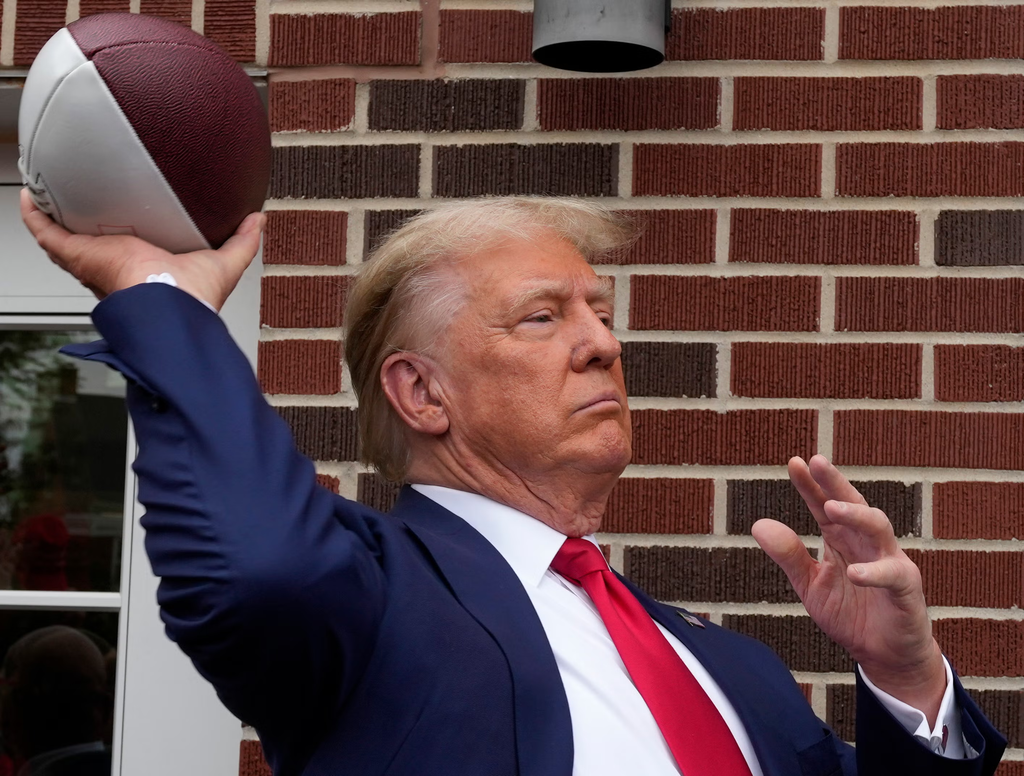
Football season is officially getting under way, but the drama off the field is already making headline news. Supporters of Donald Trump are threatening to boycott the National Football League once again. This latest wave of anger was not sparked by a player taking a knee or a political rally on the field. Instead, it started with a brief joke made by legendary sports broadcaster Al Michaels during a preseason game.
During a recent broadcast between the Cleveland Browns and the New England Patriots, Michaels made a light comment about Trump’s recent public statements regarding geographical names. Within hours, political commentators and online groups started discussing a potential boycott of the league. The event shows how quickly political tension can spill into professional sports, even over simple TV commentary.
Understanding why a single line during a exhibition game caused such a big reaction requires looking closely at what was actually said, who said it, and why the history between Trump and the NFL makes every small comment feel like major news.
What Al Michaels Said on National Television
The incident happened during a Thursday night preseason game in Cleveland. As the broadcast returned from a commercial break, the camera showed a scenic view of Lake Erie, which sits right next to the stadium.
Michaels took that visual opportunity to reference a recent news event involving Donald Trump. Trump had made headlines by issuing an executive order expressing his desire to rename Lake Ontario to “Lake America”.
The $0 Secret To Launching Your Entire Online Empire
Why pay hundreds every month for separate software? Build funnels, send emails, and make sales with Systeme.io completely free.
Get Started For $0Free Forever • No Credit Card Needed • Beginner-Friendly
Taking a light jab at the news, Michaels pointed to the screen and gave his thoughts on live television.
“That is Lake Erie. We think it is still called Lake Erie. We’re not quite sure at this point,” Michaels said on air. “But we’ll be by Lake something like Ontario or whatever it’s going to be called by the time we get to Buffalo.”
He finished the thought with a laugh, adding, “Anyway, you know what I’m talking about. Some of you do. Read the news.”
To most viewers, it seemed like a standard joke about current events. Broadcasters often talk about headlines to keep the broadcast fun, especially during preseason games when the action on the field is slower. But online, a very different reaction was taking shape.
The Spark on Social Media: How the Boycott Rumor Started
The quiet moment on TV did not stay quiet for long. Shortly after the game aired, political analyst Brian Allen, who runs the commentary platform The Allen Analysis, posted about the clip on X.
Allen stated that supporters of Donald Trump were calling for a boycott of the NFL because of what Michaels had said. He claimed that fans felt the league and its broadcasters were unfairly mocking the former president.
While Allen did not share specific lists or big groups organizing the protest, the claim spread very quickly across social media platforms. Posts about the alleged boycott racked up thousands of likes, shares, and passionate arguments.
This rapid spread is common in modern digital media. Online algorithms love controversial topics, and sports mixed with politics is one of the most explosive combinations on the internet.
How Online Outrage Feeds Video Content Creators
When political events like this break, thousands of independent content creators make videos analyzing every single detail. Many digital creators use automated tools to build channels dedicated to daily sports and political news. If you want to learn how creators build channels around trending news, check out these helpful YouTube automation guides.
Viral stories about boycotts create huge traffic spikes for digital channels. People on both sides of the issue click on videos to see what happened, leaving comments and sharing the links with friends. That endless cycle of attention keeps stories alive long after the actual game ends.
Public Reactions and Media Figures Weigh In
As news of the boycott spread, sports journalists and political commentators quickly shared their own thoughts. Many felt the outrage over a simple joke was unnecessary, while others argued that broadcasters should stick strictly to sports.
Former New York Times reporter Bill Carter criticized the call for a boycott, posting on social media that fans were getting angry over nothing serious. He wrote that turning every small joke into a political battle makes enjoying simple entertainment much harder than it needs to be.
Other commentators pointed out how unusual it was to see conservative fans turn on Al Michaels specifically.
The Irony of Targeting Al Michaels
One of the most interesting parts of this controversy is the history of Al Michaels himself. Michaels is widely known in broadcasting circles as holding conservative personal views. He has been calling games for decades and is usually seen as a traditional, old-school announcer.
Norman Ornstein, a political scientist and author, noted this exact detail on X. He pointed out that Michaels has long been considered right-leaning, making the angry response from conservative fans somewhat ironic.
Send, Spend & Hold Money Worldwide Without Hidden Fees
Transfer money internationally at the real exchange rate and hold 40+ currencies in one account.
Open a Wise AccountMid-market rate • Fast transfers • 40+ currencies
Former White House reporter Ron Fournier had a similar take, asking how stating basic facts about news headlines could be seen as an attack. He noted that Michaels was simply talking about an official executive statement that had already been reported across major news outlets.
Meanwhile, broadcaster Jon Easter joked that threats to boycott the league seem to happen almost every season, regardless of the reason.
A History of Feuds: Trump and the NFL
To understand why this situation blew up, you have to look at the long history between Donald Trump and professional football. This is not a new disagreement; it is a relationship built on decades of tension.
The friction dates back to the 1980s. Trump owned the New Jersey Generals in the United States Football League (USFL), a rival league to the NFL. He led a push to move USFL games to the fall to compete directly with the NFL and filed an antitrust lawsuit against the NFL. While the USFL won a technical victory in court, the outcome financially ruined the league, and the NFL remained dominant.
Over the years, Trump also made several attempts to purchase NFL franchises, including the Baltimore Colts, the New England Patriots, and the Buffalo Bills. None of those bids succeeded, leaving behind a tricky relationship with league owners.
- 1980s: Trump owns USFL team, sues NFL in antitrust lawsuit.
- 1988-2014: Unsuccessful bids to buy NFL teams (Colts, Patriots, Bills).
- 2016: Colin Kaepernick begins national anthem protests.
- 2017: Trump publicly urges fans to boycott NFL over player kneeling.
- 2020: NFL official stance shifts on social issues; tension remains.
- 2026: Preseason joke by Al Michaels sparks new boycott calls.
The 2016 and 2017 Anthem Protests
The most intense clash happened nearly ten years ago. In 2016, former San Francisco 49ers quarterback Colin Kaepernick began kneeling during the national anthem to raise awareness about racial injustice and police brutality.
During his presidency in 2017, Trump strongly criticized players who joined the protest. Speaking at a rally, he suggested that team owners should fire any player who kneeled. He also posted directly on social media encouraging fans to leave stadiums and stop watching games until the protests ended.
That call led to widespread calls for boycotts among conservative fans. Millions of viewers took sides, and football became a central battleground in American political culture.
Because of that history, any situation where the NFL or its broadcasters touch on political topics reopens old wounds.
Do Sports Boycotts Actually Work?
Whenever fans threaten to boycott a sport, people wonder if it will hurt the league’s bottom line. Past evidence shows that while outrage generates endless headlines, the actual financial impact on the NFL is usually minimal.
The $0 Secret To Launching Your Entire Online Empire
Why pay hundreds every month for separate software? Build funnels, send emails, and make sales with Systeme.io completely free.
Get Started For $0Free Forever • No Credit Card Needed • Beginner-Friendly
When boycott calls went out in 2017, NFL television ratings did see a minor drop, but analysts pointed out that rating shifts were happening across all network TV at the time. Within a couple of seasons, NFL viewership rebounded completely.
Today, the NFL is financially stronger than ever before. Network TV deals, massive streaming contracts, and international expansion have made professional football the most valuable entertainment property in American media.
Here are a few reasons why NFL boycotts rarely cause long-term damage:
- Massive Fan Base: The NFL has millions of viewers across every demographic. If one group tunes out, another group usually fills the gap.
- Habit and Tradition: Watching football on Sundays is a deeply rooted habit for millions of families, making it hard for fans to stop watching permanently.
- Fantasy Football and Sports Betting: Millions of fans participate in fantasy leagues or place casual bets, giving them a personal reason to watch games regardless of political news.
- Short Outrage Cycles: Internet drama moves fast. A topic that dominates news feeds on Friday is often forgotten by the time kickoff arrives on Sunday.
Modern Media and Audience Realities
Understanding how online news turns into real-world action is easier today thanks to modern analytics. If you want to explore how modern digital systems process trends, read our coverage on technology and AI updates.
Data shows that what trends on social media does not always match what normal people do in real life. A topic can trend number one on X while millions of regular fans tune into the game without ever knowing a boycott was being discussed.
Politics, Pop Culture, and the Modern Fan
The line between sports, entertainment, and politics gets thinner every year. Decades ago, sports broadcasts were isolated bubbles where announcers strictly called the plays. Today, live television events exist alongside constant real-time commentary on smartphones.
Broadcasters like Al Michaels know that viewers are holding phones in their hands while watching the game. Mentioning headlines or viral news is a natural way to connect with an audience that is constantly online.
However, this creates a major challenge for networks. Half the audience might chuckle at an offhand comment, while the other half might view it as political bias. In an environment where viewers are quick to feel offended, even harmless humor carries a risk.
Despite those risks, live sports remain the last venue where millions of people with different backgrounds gather to watch the exact same thing at the exact same time. That massive shared audience is precisely why political figures and commentators keep coming back to sports as a place to make their voices heard.
Frequently Asked Questions
Why are Donald Trump supporters threatening to boycott the NFL?
Supporters expressed anger after broadaster Al Michaels made a light joke about Donald Trump during a preseason game. Political commentator Brian Allen posted that fans were calling for a boycott over what they viewed as unfair commentary.
What exactly did Al Michaels say during the broadcast?
While showing a camera shot of Lake Erie, Michaels joked about Trump’s executive order proposing to rename Lake Ontario to “Lake America”. He joked that he wasn’t sure what the lake would be called by the time they visited Buffalo and told viewers to read the news.
Has Donald Trump called for an NFL boycott before?
Yes. In 2017, Trump urged fans to boycott the NFL and walk out of games to protest players kneeling during the national anthem.
Will this new boycott threat affect NFL viewership?
It is very unlikely to cause major damage. Historically, social media boycott calls produce a lot of online discussion, but the NFL’s actual TV ratings and fan attendance remain strong.
Is Al Michaels considered a political broadcaster?
No, Al Michaels is a veteran sports announcer known primarily for his play-by-play work. Media observers note that Michaels is generally known for holding conservative views, making the backlash against his joke unexpected.
The debate surrounding Al Michaels and the NFL shows how deeply political news is woven into sports culture. A brief ten-second comment during a preseason broadcast can ignite debate across social media within minutes. While some fans feel sports should stay free of political references, others see light commentary as a natural part of live TV.
Whether this situation blows over quickly or remains a topic into the regular season, one thing is clear: the intersection of sports, politics, and media isn’t going away anytime soon.
Want to learn more about our team or get in touch? You can read more about our team or visit our page to contact us directly.
Join the conversation and let us know what you think on our official social channels:
