
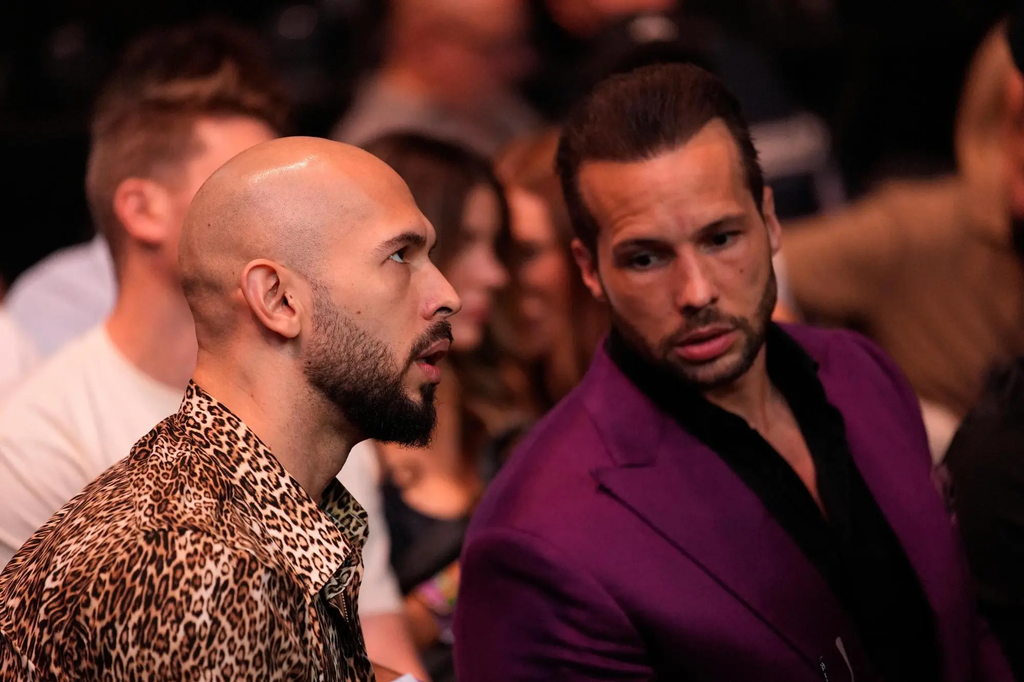
Social media influencers Andrew Tate and his brother Tristan Tate took the witness stand in a Miami federal court to ask a judge to release them from jail. They are currently locked up in Florida while fighting an attempt by the United Kingdom to extradite them on serious criminal charges.
During the emotional and tense court session, both brothers argued that staying in federal detention makes it impossible for them to properly defend themselves against sexual assault and human trafficking allegations. Wearing tan prison jumpsuits and heavy leg shackles, they told the court that their online image of extreme wealth and power was largely an act created to build their brand.
The hearing gave the public its first clear look at the brothers since their surprise arrest in Miami on July 18. It also showed the complex legal battle they face as authorities from two different countries try to put them on trial. Here is a full breakdown of what happened inside the courtroom, what the lawyers argued, and what comes next in this high-profile legal fight.
Inside the Miami Courtroom: Shackles and Jumpsuits
The hearing took place at the C. Clyde Atkins U.S. Courthouse in downtown Miami before U.S. Magistrate Judge Lauren Louis. Outside the building, small groups of supporters held signs demanding the release of the brothers, while journalists from around the world filled the spectator seats inside.
Andrew Tate, 39, and Tristan Tate, 38, walked into the courtroom wearing tan jail-issued clothing. Chains were wrapped around their waists and attached to their ankles, making loud clinking sounds as they walked to the defense table. Both men had grown thick beards during their six weeks in federal custody.
The $0 Secret To Launching Your Entire Online Empire
Why pay hundreds every month for separate software? Build funnels, send emails, and make sales with Systeme.io completely free.
Get Started For $0Free Forever • No Credit Card Needed • Beginner-Friendly
They sat alongside their high-powered legal team, which includes veteran defense attorneys Joseph McBride, Howard Srebnick, and Andrew Ford. For nearly two hours, the courtroom listened as both brothers took the stand to give sworn testimony about their living conditions and their ongoing legal trouble.
Tristan Tate Testifies About Harsh Jail Conditions
Tristan Tate was the first of the two brothers to take the witness stand. He spoke directly to Judge Louis about the physical and mental toll that federal detention has taken on him since mid-July.
He described the conditions inside the Miami federal detention center as extremely difficult. Tristan stated that he has lost 14 pounds while behind bars, mainly because he has been living off junk food from the jail commissary. He also complained about insect problems inside his cell, telling the court that ants crawl around his living space.
Privacy was another major point in his testimony. Tristan explained that the single toilet in his cell is located where anyone walking down the jail corridor can see him. He emphasized that being kept in the secure housing unit restricts his ability to review legal paperwork or talk freely with his defense team.
“I need to clear my name. I need to take part in these proceedings, I can’t do that from the secure housing unit,” Tristan testified under oath. He urged the judge to allow him out on bail so he can properly work on his defense.
Andrew Tate Fears Unfair Conviction Abroad
When Andrew Tate took the witness stand, he focused his testimony on the overwhelming nature of fighting serious criminal charges in multiple countries at the same time. He explained that being locked up in the United States completely cuts him off from his legal team in Romania, where he and his brother are already facing trial for human trafficking.
Andrew told the court that missing scheduled hearings in Eastern Europe could result in severe penalties or even an automatic life sentence because he would be unable to present evidence or testify. He stressed that he wants his day in court, but he needs access to his files and advisors to get a fair trial.
“If I lose a fair fight I can take it,” Andrew stated during his testimony. He insisted that he is innocent of all sexual assault, rape, and human trafficking claims brought against him in both the United Kingdom and Romania.
He told the court that he has always cooperated with judicial authorities whenever called upon and has never tried to flee from law enforcement in any country.
The Defense Strategy: “It Was All an Internet Character”
One of the most notable moments during the court hearing was how the defense team addressed the brothers’ massive online presence. Over the past several years, the Tate brothers built an audience of millions by posting videos showcasing supercars, private jets, luxury mansions, and heavy stacks of cash.
However, inside the courtroom, their defense lawyers painted a very different picture. Defense attorney Howard Srebnick told Judge Louis that the flashy, aggressive internet personas were largely exaggerated characters created to generate views, gain followers, and sell online courses.
The defense team claimed that expensive items featured in their most famous videos did not actually belong to them. For example, they testified that a $2.1 million Aston Martin hypercar and a $50 million superyacht shown on social media were either rented or borrowed for video shoots.
Lawyer Howard Srebnick even compared Andrew Tate’s public image to the comical and provocative character Ali G, played by British comedian Sacha Baron Cohen. Srebnick argued that statements made online about dominating women or living outside the law were meant as provocative online entertainment rather than literal statements of intent or real-life practice.
Attorney Joseph McBride added that the global fame of the brothers actually makes it impossible for them to run away. Because their faces are recognized everywhere in the world, McBride argued that hiding from law enforcement would be an impossible task.
Why Defense Lawyers Say the Tates Are Not a Flight Risk
To convince the judge to grant bail, the defense team leaned heavily on the history of the brothers’ legal proceedings in Romania. In that case, Romanian judges placed the brothers under judicial supervision, which allowed them to live in their Bucharest home while awaiting trial.
Send, Spend & Hold Money Worldwide Without Hidden Fees
Transfer money internationally at the real exchange rate and hold 40+ currencies in one account.
Open a Wise AccountMid-market rate • Fast transfers • 40+ currencies
Defense attorneys pointed out that during their time on judicial release in Romania, neither Andrew nor Tristan made any attempt to escape or ignore court orders. They checked in regularly with police and appeared for every scheduled court date.
The lawyers argued that if Eastern European authorities felt safe allowing the brothers to remain free before trial, the U.S. justice system should follow suit. They proposed strict conditions for bail, including posting a large financial bond, surrendering all passports, and wearing electronic GPS tracking ankle monitors.
“They have never run away from the law. They have leaned into the court process everywhere they go,” attorney Joseph McBride told reporters outside the courthouse according to reports covered by news outlets like Associated Press.
The Prosecution Fights Back: High Flight Risk and Severe Allegations
Federal prosecutors with the U.S. Attorney’s Office in Miami pushed back aggressively against the request for bail. Assistant U.S. Attorneys reminded the judge that international extradition cases operate under very strict legal rules.
Under U.S. law, there is a strong presumption against granting bail to individuals who are being held for foreign extradition. The legal standard requires the defense to show special circumstances before a judge can allow a suspect out of custody.
Prosecutors argued that the Tate brothers represent an extraordinary flight risk due to their vast global connections, financial resources, and past statements. They noted that for years, both brothers boasted to their millions of followers about having multiple passports, access to foreign bank accounts, and alternative escape plans if legal troubles arose.
To prove their point, prosecutors brought out a Mexican passport under the name “Vladimir Scorpius”. The document contained Tristan Tate’s photo, date of birth, and an official Mexican identification number. Prosecutors argued that having access to official documents under different names proves that the brothers have the capability to flee the country if released from jail.
The Serious Nature of the UK Charges
The prosecution also detailed the severe criminal accusations that form the basis of the United Kingdom’s extradition request. British law enforcement authorities issued warrants for the brothers based on allegations involving four women, with claims dating back between 2010 and 2017.
The charges from the Crown Prosecution Service in the U.K. include rape, sexual assault, physical violence, and facilitating human trafficking for commercial sexual exploitation.
Prosecutor Alexander Waxman told the court that British authorities accuse the brothers of using extreme physical violence, including strangulation, during alleged sexual assaults. Waxman stated that these accusations match the violent themes often promoted in their online media content.
The $0 Secret To Launching Your Entire Online Empire
Why pay hundreds every month for separate software? Build funnels, send emails, and make sales with Systeme.io completely free.
Get Started For $0Free Forever • No Credit Card Needed • Beginner-Friendly
Additionally, prosecutors cited information from Romanian law enforcement alleging that the brothers tried to tamper with witnesses. They presented claims that the Tates threatened to leak private personal information about alleged victims and offered cash payments to influence witness testimony.
Because of the extreme violence alleged in the charges and the potential for witness intimidation, prosecutors argued that releasing the brothers would pose a direct danger to the community.
Understanding the Legal Trap: Dual Extradition and Two Nations
The legal struggle surrounding Andrew and Tristan Tate is unusually complicated because it involves three separate judicial systems: the United States, the United Kingdom, and Romania.
Both brothers hold dual citizenship in the United States and Great Britain. They were visiting Florida in July 2026 when U.S. Marshals executed an arrest warrant requested by the British government.
However, the primary criminal trial against them was already underway in Romania, where they had been living and operating their business operations for several years. Defense lawyers argued that the U.K. extradition attempt is jumping the line and interfering with the ongoing Romanian trial.
U.S. Magistrate Judge Lauren Louis acknowledged the tricky nature of balancing foreign court schedules. However, she reminded the defense team that her primary duty is to enforce U.S. federal law regarding international extraditions.
Instead of issuing an immediate decision at the end of the hearing, Judge Louis delayed her ruling. She ordered the defense attorneys to submit a formal update by Monday detailing what specific legal consequences the Tates would face in Romania if they remain jailed in Miami and miss their scheduled court appearances overseas.
The Rise of the Tate Empire and Content Creation Culture
To fully understand how this courtroom battle developed, it helps to look at how Andrew and Tristan Tate rose to global prominence in the first place.
Andrew Tate originally gained recognition as a professional kickboxer, winning several world championship titles in his weight class. In 2016, he appeared on the U.K. reality television show Big Brother, but was removed from the house after a video surfaced showing him striking a woman with a belt.
Following his departure from television, Andrew joined forces with his younger brother Tristan to launch several commercial ventures. They started a webcam business in Europe and later launched an online subscription program called Hustler’s University, which promised to teach young men how to make money online.
Their fast growth was fueled by aggressive social media distribution. Members of their online program were encouraged to clip short, controversial statements from Andrew’s podcasts and post them across short-form video platforms.
This content strategy mirrors techniques used in modern digital publishing and YouTube automation, where short, provocative video clips are optimized for algorithms to maximize reach, engagement, and traffic.
While this approach gained them millions of followers and immense online attention, it also led to widespread bans on platforms like YouTube, TikTok, Meta, and Instagram over violations of hate speech guidelines.
How Modern Digital Strategy and AI Impact Public Cases
The legal challenges facing the Tate brothers show how online content creation strategies can create major vulnerabilities when real-world legal issues arise.
For years, the brothers posted thousands of hours of video content bragging about money, passports, and defying legal authorities. In court, federal prosecutors turned those exact clips against them, using their own words to argue that they represent an extraordinary flight risk.
This situation highlights how modern digital media is captured, archived, and analyzed by investigators. In the modern digital age, public statements posted online remain permanently available for law enforcement agencies to examine during criminal proceedings.
As tracking tools in technology and AI become more sophisticated, international law enforcement agencies can cross-reference social media claims, facial recognition data, and travel records faster than ever before. What started as sensational internet branding ended up becoming formal evidence in a Miami courtroom.
What Comes Next in the Tate Extradition Fight?
The fight over bail is only the initial chapter of what promises to be a drawn-out legal process in the United States federal court system.
Judge Louis will review the additional court filings due from the defense team before deciding whether to grant conditional release or keep the brothers behind bars. If bail is denied, both brothers will stay in the federal detention center in Miami as the extradition proceedings move forward.
The United Kingdom has until mid-September to formally present its full set of evidence to the U.S. Department of State to support the extradition request.
Once the evidence is submitted, a formal extradition hearing will be scheduled in federal court. During that hearing, a judge will decide if there is sufficient legal cause under the bilateral extradition treaty between the United States and the United Kingdom to order the transfer of the brothers.
Even if the court approves the extradition, the final signature must come from the U.S. Secretary of State. Appeals can take months or even years to work through federal court channels, meaning this high-profile legal battle is far from over.
Frequently Asked Questions (FAQs)
Why were Andrew and Tristan Tate arrested in Miami?
Andrew and Tristan Tate were arrested in Miami on July 18 by U.S. Marshals acting on an international arrest warrant issued by the United Kingdom. British authorities requested their extradition to face criminal charges including rape, sexual assault, and human trafficking alleged to have occurred between 2010 and 2017.
Are the Tate brothers getting released on bail?
As of late August 2026, U.S. Magistrate Judge Lauren Louis has not made a final decision on bail. The judge requested additional information from the defense regarding how staying in jail affects their ongoing trial in Romania before making her ruling. Under U.S. federal law, international extradition cases carry a strong legal presumption against granting bail.
What charges do the Tate brothers face in the UK?
In the United Kingdom, the Crown Prosecution Service has brought charges against the brothers involving allegations from four women. The charges include multiple counts of rape, physical assault, strangulation, and facilitating human trafficking for sexual exploitation.
Why did their lawyers claim their wealth was exaggerated?
In court, defense lawyers argued that the luxury lifestyle displayed online—such as $50 million superyachts and $2.1 million hypercars—was largely staged using rented or borrowed items. They made this argument to counter prosecutors’ claims that the brothers have unlimited wealth to fund an escape from the country.
How does their Romanian legal case affect the U.S. court decision?
The brothers are already undergoing legal proceedings in Romania for human trafficking. Their defense team argues that staying in a Miami jail prevents them from appearing in Romanian court, which could lead to unfair default judgments. Judge Louis asked for a detailed update on Romanian court rules before deciding on their U.S. bail request.
How long could the extradition process take?
International extradition cases in the United States can take anywhere from several months to over a year. The process involves formal evidence submission by the requesting country, formal court hearings, and potential appeals, followed by a final decision by the U.S. Department of State.
The court appearance in Miami marks a major turning point in the global legal saga of Andrew and Tristan Tate. Moving from viral online videos to wearing prison jumpsuits in a federal courtroom, the brothers face their most challenging legal battle yet as authorities in multiple countries seek to hold them accountable.
To discover more about our editorial team, mission, and background, visit our About Us page.
If you have news tips, questions, or comments about this story, feel free to visit our Contact Us page to get in touch with our editorial desk.
Stay connected with all our breaking news coverage by following us on social media via Facebook, Instagram, and X (formerly Twitter).
