

Running an online store without knowing what your rivals are doing is like driving down a dark highway with your lights turned off. You might keep moving for a little while, but eventually, you are going to hit an unexpected turn.
The online shopping market moves fast. Every single day, competing brands launch new ad campaigns, adjust their prices, change their website designs, and test fresh discount strategies. If you rely only on guesswork to make big business decisions, you will waste money on tactics that simply do not work.
Spying on your competitors is not about stealing or doing anything illegal. It is simply smart market research. When you look at what successful stores in your niche are already doing, you get a clear roadmap of what customers actually want to buy right now.
Instead of spending thousands of dollars testing ad images, product prices, or email subject lines from scratch, you can look at proven formulas that are already turning visitors into paying customers. This saves you time, protects your budget, and gives your store a clear path to higher monthly profits.
Here is a full breakdown of seven powerful tools that reveal your competitors’ exact strategies, from the social media ads they run to the secret software behind their websites.
Build Funnels, Email Lists & Sell Online With One Free Tool
Create funnels, send emails, and sell online using Systeme.io without paying for multiple tools.
Create Free AccountFree forever • No credit card • Beginner-friendly
Why You Need to Track Your E-Commerce Competitors
Many store owners make the mistake of focusing only on their own store dashboard. They watch their daily traffic, look at their sales numbers, and wonder why conversions drop during certain weeks.
Tracking your rivals gives you complete context for what is happening in your industry. When you monitor other online stores, you can quickly spot emerging shopping trends before your market gets flooded.
You can also identify gaps that your competitors are completely ignoring. For example, if every rival store in your market takes five days to ship orders or ignores customer questions on social media, you can make fast shipping and responsive support your main selling points.
Digital commerce changes quickly because of advances in technology and AI. Software tools now automate market tracking so you do not have to spend hours doing manual checks every single day.
When you use automated monitoring tools, you gain clear advantages that directly boost your bottom line:
- You stop wasting ad spend on marketing ideas that customers ignore.
- You discover high-converting product offers and bundle deals that sell.
- You spot pricing shifts immediately so you do not lose price-sensitive buyers.
- You copy proven website layout features that increase average order values.
7 Powerful Tools to Spy on E-Commerce Competitors
1. Meta Ads Library (Best for Free Social Ad Intelligence)
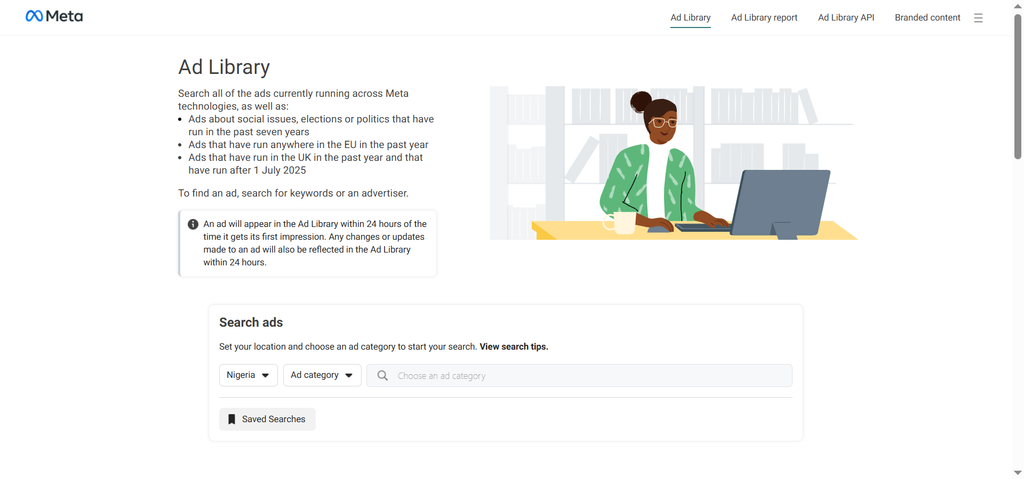
The Meta Ads Library is a completely free database created by Meta that allows anyone to look up active advertisements across Facebook and Instagram. Because Facebook and Instagram drive massive sales for physical products, this tool gives you direct access to your competitors’ advertising playbooks.
You can search by company name, brand handle, or specific product keywords. The tool displays every active ad creative, video, graphic, and piece of ad text that a store is currently running.
To make real money with this tool, look for ads that have been running continuously for several months. E-commerce stores turn off losing ads very quickly because running ads costs money. If an ad has been active for 60 or 90 days straight, you can bet that ad is making money for the brand.
Study the first three seconds of their video ads to see how they grab attention. Look at the language they use in their headlines and main text. Pay close attention to the specific problems they highlight and the special discounts they offer. You can adapt these successful hooks and formats for your own store campaigns.
2. Semrush (Best for Paid Search Keywords and Organic SEO Traffic)
Search engine traffic remains one of the highest-converting traffic sources for online stores because buyers on search engines actively look to purchase. Semrush is an industry-leading marketing software platform that allows you to see every keyword your competitors rank for in search results.
When you plug a competitor website address into Semrush, you get a full breakdown of their monthly organic search traffic, top-ranking product pages, and exact Google Ads campaigns. You can see the exact keywords they bid on, how much they pay per click, and the exact ad text they display to searchers.
This tool helps you make money by finding high-intent commercial keywords that your competitors are ranking for, but your store is missing out on. These are often long-tail product terms that carry low competition but attract buyers who are ready to order immediately.
By building product pages or writing targeted blog posts around these specific keywords, you can capture free search traffic that previously went straight to rival stores. You can also target profitable Google Ads keywords that your competitors have already tested and proven out.
3. Similarweb (Best for Traffic Sources and Market Insights)
Understanding where a competitor gets their website visitors is vital for planning your overall marketing budget. Similarweb provides complete visibility into another website’s traffic volume, main traffic channels, and overall visitor behavior.
Similarweb shows you the exact percentage of traffic coming from direct visits, organic search, paid search, social media platforms, email marketing, and external referral links. If you notice that your top competitor gets 60 percent of their customer base from Pinterest or video blogs, you immediately know where to focus your marketing efforts.
The platform also reveals which external websites send referral traffic to your competitors. If a specific product review site or news outlet sends thousands of buyers to a rival store each month, you can reach out to that site owner and negotiate a placement for your own products.
For stores looking to expand into video marketing or secondary acquisition channels, seeing competitor social breakdowns saves months of wasted effort on channels that your target audience does not use. Brands exploring automated video content distribution can even look into strategies like YouTube automation to capture market share across fast-growing media channels.
4. BuiltWith (Best for Uncovering Store Tech Stacks and Apps)
Two online stores can sell similar products, but one might convert twice as many visitors simply because of the tools installed behind the scenes. BuiltWith is a technology lookup tool that reveals the exact software stack running on any website.
When you enter a competitor’s domain name into BuiltWith, it lists every script, plugin, and application installed on their site. You can instantly see their e-commerce platform, email provider, customer review tool, live chat widget, cart abandonment app, and upsell software.
This software helps you boost sales by revealing the conversion tools top brands rely on. For example, if you notice that all successful stores in your niche use a specific post-purchase upsell app or a specific multi-currency converter, you can add those exact tools to your own checkout process.
Improving your checkout flow with proven apps reduces cart abandonment rates and increases average order values without requiring you to spend more money on ads.
5. Prisync (Best for Price Tracking and Dynamic Pricing)
Pricing products incorrectly can destroy an e-commerce business. If your prices are too high, potential customers leave to buy from cheaper options. If your prices are too low, you lose profit margins and risk looking cheap to high-value shoppers.
Prisync is an automated price tracking and dynamic pricing software designed specifically for e-commerce retailers. It monitors your competitors’ product catalogs around the clock and sends instant notifications whenever a rival changes a price or runs out of inventory.
You can use Prisync to establish dynamic pricing rules that automatically adjust your prices based on competitor movements. If a competitor runs out of stock on a popular item, you can raise your price slightly to maximize profit while demand is high.
Conversely, if a competitor lowers their price during a seasonal sale, Prisync helps you match their offer so you do not lose loyal shoppers. Keeping your pricing competitive in real-time ensures you protect your profit margins while continuing to win sales volume.
6. Panoramata (Best for Email Funnel and Campaign Tracking)
Email marketing produces one of the highest returns on investment in digital retail. However, seeing what email campaigns your competitors send to their subscribers can be difficult without cluttering your personal inbox.
Panoramata automatically collects and organizes marketing campaigns from competing e-commerce brands in one organized dashboard. It tracks competitor email newsletters, automated welcome flows, abandoned cart sequences, SMS messages, and landing page updates.
Build Funnels, Email Lists & Sell Online With One Free Tool
Create funnels, send emails, and sell online using Systeme.io without paying for multiple tools.
Create Free AccountFree forever • No credit card • Beginner-friendly
Instead of manually subscribing to dozens of rival newsletters, Panoramata lets you view full historical email sequences, subject lines, send frequencies, and promotional discount strategies.
You can make money with this data by analyzing how your competitors re-engage buyers who abandon their shopping carts. You can see what discount percentages they offer, how many days they wait between follow-up messages, and what urgency triggers they use. You can then write stronger email sequences that recover lost revenue for your own store.
7. Ahrefs (Best for Backlink Opportunities and Content Gaps)
Search engines use backlinks—links from external websites pointing to your store—as a major signal to determine search rankings. Ahrefs is a dominant SEO software suite that reveals every backlink pointing to any website on the internet.
With Ahrefs, you can inspect the exact websites, blogs, magazines, and review portals linking to your competitors. You can also analyze their top-performing content assets to see which articles or buying guides attract the most social shares and backlinks.
To convert this information into profits, you can target the same websites that already feature your competitors. If an industry blog wrote a round-up article featuring the top ten products in your market, you can contact the writer, offer a sample product, and ask to be added to the list.
Securing backlinks from sites already interested in your product category brings direct, warm referral traffic to your store while boosting your domain authority in search engine rankings.
Practical Steps to Turn Competitor Insights Into Sales
Collecting data from competitor spy tools is only useful if you act on what you learn. Having dashboards full of charts will not grow your bank account unless you convert those findings into clear store updates.
First, focus on your top three direct competitors rather than trying to monitor fifty different stores at once. Direct competitors sell similar products to the same target audience at similar price points. Tracking a small, relevant group keeps your focus tight and actionable.
Second, build a clear checklist for your weekly analysis. Spend time reviewing their active ad creatives, testing their checkout process, reviewing their social media posts, and checking for price updates. Document what works well and what feels weak or confusing.
Third, look for places where competitors make mistakes. Read their negative customer reviews on platforms like Trustpilot or Google Reviews. If buyers complain about poor packaging, slow delivery times, or confusing product instructions, fix those exact issues in your store and highlight your improvements on your sales pages.
Fourth, implement small tests quickly. If you discover a competitor running a buy-one-get-one promotion that generates strong engagement, set up a similar offer on your store for a weekend. Measure the results carefully against your baseline sales figures to confirm if the tactic raises your total profit.
Frequently Asked Questions
Is it legal to spy on online store competitors?
Yes, using competitor spy tools is completely legal. These tools only gather public data that is freely available on the internet, such as active social media ads, search rankings, website technologies, and public prices. You are simply analyzing publicly accessible market information to make better business decisions.
How much money do I need to start using these tools?
You do not need a large software budget to start tracking competitors. Meta Ads Library and BuiltWith offer robust free features that provide instant value. As your store grows and generates regular cash flow, you can invest in paid platforms like Semrush, Similarweb, or Prisync to automate your market analysis.
How often should I check on what my competitors are doing?
Checking your competitors once a week or once every two weeks is usually enough for most e-commerce store owners. Checking every single day can cause unnecessary stress and take your attention away from servicing your customers. Set aside a dedicated hour each week to review competitor ad campaigns, pricing shifts, and new product additions.
Can competitors block me from seeing their ad campaigns or software tools?
No, individual store owners cannot block public tools from viewing their active ads or public tech stacks. Platforms like Meta Ads Library are mandated to show active advertisements for public transparency. Similarly, technology tools look at public website code that must be visible for browsers to load the store properly.
What is the most important metric to track when analyzing another store?
The most valuable element to track is customer acquisition strategy, particularly long-running ad creatives and top traffic channels. When you know where a competitor gets their traffic and which ad messages convert those visitors into buyers, you can build effective marketing campaigns with far less risk.
Taking Action to Grow Your Online Store Revenue
Staying competitive in digital retail requires continuous learning and fast execution. By using the spy tools outlined in this guide, you remove guessing from your business strategy and gain direct insight into proven retail tactics.
Pick one or two tools from this list today to analyze your closest competitor. Take notes on their active ads, review their tech stack, and check where their traffic originates. Apply one improvement to your store based on your findings, whether that means rewriting an ad headline, tweaking a product price, or installing a cart recovery app.
If you want to discover more about our team and why we share business growth strategies, take a look at our About WhatsBuzzn page. Have questions or want to share your own experience using spy tools? We would love to hear from you through our Contact Us page.
You can also stay connected with our community and get real-time updates across social media by following our official pages on Instagram, Facebook, and X (formerly Twitter). Start tracking your market today and build a stronger, more profitable online store.
