
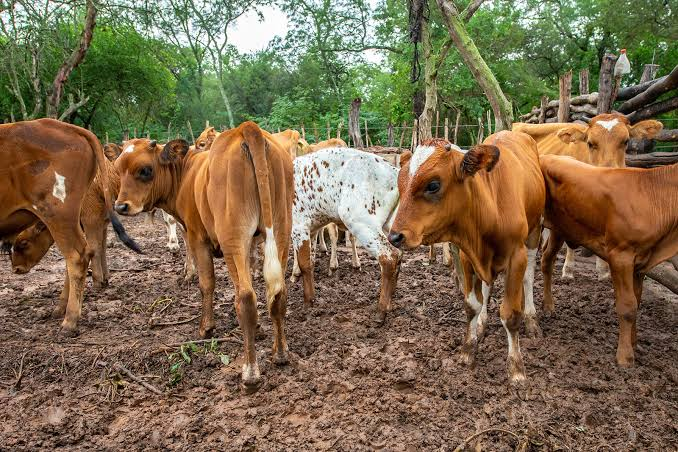
Leaders from Southern Nigeria and the Middle Belt have officially rejected the Federal Government’s proposed pilot cattle ranching scheme under the New National Livestock Policy.
The coalition describes the policy as an unfair attempt to take over ancestral lands belonging to indigenous communities under the guise of livestock development.
What Just Happened? Breaking Down the Joint Statement
The rejection comes directly from the Southern and Middle Belt Leaders Forum (SMBLF), a major coalition representing prominent regional organizations across the country. In a detailed joint statement, key leaders declared that local communities will not hand over their land for government-sponsored pilot ranches.
The official statement was signed by leading figures across four key geopolitical zones:
- Oba Oladipo Olaitan, Chairman of the forum and leader of Afenifere.
- Dr Bitrus Pogu, President of the Middle Belt Forum.
- Senator John Azuta-Mbata, President-General of Ohanaeze Ndigbo Worldwide.
- Ambassador Godknows Igali, National Chairman of the Pan Niger Delta Forum (PANDEF).
Together, these leaders represent millions of people who depend on traditional farming and local land ownership for their daily survival. They made it clear that while they support modernizing agriculture and livestock production, they strongly oppose any government plan that forces communities to give up their land.
The $0 Secret To Launching Your Entire Online Empire
Why pay hundreds every month for separate software? Build funnels, send emails, and make sales with Systeme.io completely free.
Get Started For $0Free Forever • No Credit Card Needed • Beginner-Friendly
Reports published by major media outlets like Punch Newspaper highlight that the proposed pilot scheme focuses heavily on specific areas. The leaders argue that this approach puts unfair pressure on regions that have already suffered deeply from past security challenges and displacement.
The Selected States: Why the Focus on the Middle Belt Raises Serious Questions
The Federal Government’s pilot ranching scheme identifies several specific locations to launch the project. These target areas include:
- Benue State
- Plateau State
- Nasarawa State
- Southern Kaduna
- Taraba State
- The Federal Capital Territory (FCT)
Looking at this list, one major question immediately comes up: why focus almost entirely on the Middle Belt?
The regional leaders pointed out that the far northern part of Nigeria contains vast stretches of open, sparsely populated land. Much of this land is controlled by traditional rulers who already support livestock rearing. If the goal is to set up large-scale cattle ranches, starting in areas with available open space and established pastoral traditions would make practical sense.
Instead, the pilot project targets regions where farming communities live closely together on limited land. For generations, families in Benue, Plateau, and Southern Kaduna have relied on small agricultural plots to grow food for their families and local markets. Taking these farming lands to create cattle ranches threatens food supply and increases local anxiety.
Furthermore, leaders in the South warned that if this pilot scheme is accepted in the Middle Belt without resistance, it will eventually spread to Southern states as well. They called on Southern state governments and community members to remain alert and reject any attempt to introduce similar policies in their territories.
Ranching is a Private Business, Not a Public Land Takeover
One of the central arguments made by the regional leaders is that cattle farming is a private economic business. Livestock owners raise cattle to make a profit, just as crop farmers grow cassava, maize, or yam to sell in the market.
Because cattle rearing is a private commercial venture, leaders argue that private business owners should buy or lease land through voluntary market agreements. The government should not step in to take land from one group of citizens and give it to another group for private business purposes.
Imagine a scenario where the federal government takes farmland from private citizens to build a private shopping mall or factory without community consent. People would rightfully complain. The leaders argue that using state power to acquire land for cattle herders is no different.
If an investor wants to start a large poultry farm, fish farm, or commercial crop plantation, they negotiate directly with landowners or rent space legally. The same rule ought to apply to cattle ranching. Forcing communities to give up ancestral land for private livestock businesses creates deep resentment and destroys trust between citizens and the state.
Understanding the Land Use Act of 1978 Without the Legal Confusion
To understand this debate, it helps to look at how land ownership works under Nigerian law. The federal government often relies on the Land Use Act of 1978 when introducing land policies. However, the regional leaders explained that the law does not give the federal government unlimited power to take land.
Here is how the Land Use Act works in basic terms:
State and Local Authority Over Land
The law places control of rural lands in the hands of state governors and local government councils, not the federal government directly. Local communities hold customary rights to their land, which means their historical ownership is recognized by law.
The Requirement of Overriding Public Interest
The government can only take back land rights for what the law calls an “overriding public interest”. Public interest usually means building public roads, hospitals, schools, or government infrastructure that benefits everyone equally.
Setting up a private commercial cattle ranch for individual livestock owners does not qualify as an overriding public interest. Converting community farmland into private pastures misuses legal terms to favor specific business actors.
Send, Spend & Hold Money Worldwide Without Hidden Fees
Transfer money internationally at the real exchange rate and hold 40+ currencies in one account.
Open a Wise AccountMid-market rate • Fast transfers • 40+ currencies
Protection of Fallow and Agricultural Lands
Under the law, agricultural land and land left temporarily unused to regain fertility remain community property. Leaving land uncultivated for a season does not mean it is abandoned or open for government takeover.
By highlighting these legal realities, the leaders demonstrated that their opposition is grounded in established law. You can learn more about how policy and societal shifts impact different sectors on our about us page.
Echoes of the Past: How This Relates to RUGA and Cattle Colonies
This is not the first time Nigerians have debated federal livestock policies. Over the past decade, several similar proposals were introduced and faced strong opposition across the country.
Many citizens remember previous programs like:
- Cattle Colonies: A proposal to set up large reserves across states for cattle grazing.
- RUGA Settlements: An initiative designed to establish dedicated settlement areas for pastoral communities.
Both RUGA and Cattle Colonies were met with widespread protest. Communities feared that establishing permanent settlements for nomadic herders would lead to demographic shifts and loss of ancestral lands. Due to public outcry, those initiatives were eventually suspended or abandoned.
The Southern and Middle Belt Leaders Forum warned that the current pilot ranching scheme under the New National Livestock Policy is simply an old idea wearing a new name. They suspect the ultimate goal remains the creation of permanent settlement zones for nomadic pastoralists on lands belonging to indigenous farming communities.
For communities that have already suffered loss of life, property, and farmlands during years of clashes, seeing government policies that appear to reward aggressors with land causes deep pain. Leaders firmly stated that victims of violence should not lose their lands to government schemes.
The Demands: What Leaders Want the Federal Government to Disclose
Rather than making vague promises, the regional leaders demanded total transparency from the federal government. Before any livestock scheme moves forward anywhere in the country, they insist that seven key questions must be publicly answered:
- Where are the exact locations and boundaries of all proposed ranching sites?
- What specific legal laws are being used to acquire these lands?
- Who will legally own the ranches once they are built?
- Who are the direct individual or corporate beneficiaries of this project?
- Exactly how many hectares or square kilometers of land will be taken?
- What security arrangements are in place to protect host communities from intimidation or conflict?
- Where is the funding coming from, and how will public funds be managed?
Until the government provides clear, written answers to these seven points and guarantees the rights of indigenous communities, the leaders declared that their rejection stands firm.
If you have thoughts on this topic or want to reach out to our team with feedback, feel free to visit our contact us page.
The $0 Secret To Launching Your Entire Online Empire
Why pay hundreds every month for separate software? Build funnels, send emails, and make sales with Systeme.io completely free.
Get Started For $0Free Forever • No Credit Card Needed • Beginner-Friendly
Modern Agriculture, Innovation, and the Future of Farming
Finding long-term solutions to Nigeria’s agricultural challenges requires looking at modern methods that work elsewhere in the world. Modern livestock management relies on technology, proper planning, and sustainable business models rather than open roaming or forced land takeovers.
In many successful agricultural economies, cattle owners grow feed, store silage, and harvest water within private enclosed ranches. This approach yields healthier cows, higher milk production, and better quality meat while avoiding conflict with crop farmers.
Technological advancements play a huge role in modernizing farms today. From smart tracking systems to automated feeding, agricultural technology helps farm owners manage large herds efficiently on smaller plots of land. If you are interested in how modern technology is changing traditional industries, check out our insights on technology and AI to see how digital solutions are transforming businesses.
At the same time, many young entrepreneurs are building independent businesses and sharing knowledge online. For those exploring digital business models and content creation in the modern economy, our guide to YouTube automation offers helpful tips on how to grow online platforms.
What Needs to Happen Next to Resolve the Crisis Peacefully
Solving the farmer-herder crisis requires practical, honest steps that protect everyone’s rights without taking land by force. Here are four constructive ways forward:
1. Focus on Private Business Investments
Cattle owners should be encouraged and supported to purchase or lease land in states where land is abundant and local communities welcome livestock investments. When transactions are voluntary, partnerships flourish naturally.
2. Prioritize Northern Commercial Ranches
The far northern states possess massive land areas that are well-suited for livestock development. Building modern ranches, water reservoirs, and feed processing centers in those areas makes ecological and economic sense.
3. Consult Local Communities Respectfully
No land policy should be forced on communities from above. Government officials must consult local elders, farmers, and traditional authorities before planning any agricultural projects.
4. Enforce Law and Order Neutrality
Security forces must protect farmlands and livestock producers equally. Resolving security concerns and prosecuting land grabbers or violent trespassers builds the trust needed for long-term peace.
Frequently Asked Questions (FAQs)
What is the New National Livestock Policy?
The New National Livestock Policy is a federal government initiative designed to modernize livestock production, reduce farmer-herder conflicts, and boost meat and dairy production in Nigeria.
Why did Southern and Middle Belt leaders reject the ranching plan?
Leaders rejected the plan because it concentrates pilot ranching sites in areas that have suffered severe past conflicts, raises fears of compulsory land acquisition, and appears to favor private cattle owners at the expense of local farming communities.
Is ranching legal under Nigerian law?
Yes, ranching is completely legal. However, regional leaders argue that because ranching is a private commercial business, owners should acquire land through voluntary market agreements rather than government-forced acquisition.
Which states are targeted in the proposed pilot scheme?
The pilot scheme targets Benue, Plateau, Nasarawa, Southern Kaduna, Taraba, and the Federal Capital Territory.
What was the RUGA initiative?
RUGA was a previous federal proposal aimed at building settled communities for nomadic herders across various states. It was suspended following strong public opposition over land ownership concerns.
How can the farmer-herder crisis be solved fairly?
Fair solutions include encouraging private ranching through voluntary land leases, developing livestock infrastructure in northern states with abundant open land, respecting community property rights, and enforcing laws against violent land trespass.
The debate surrounding the Federal Government’s ranching plan highlights how crucial land ownership, security, and community consent remain in Nigeria. As political leaders, local communities, and policy makers continue to discuss the best paths forward, staying informed on how these decisions affect daily life, agriculture, and local economies is essential. For regular updates on trending topics, cultural shifts, and major news stories across the nation, stay connected with us on Instagram, join the conversation on Facebook, and follow our latest updates on X (formerly Twitter).
