
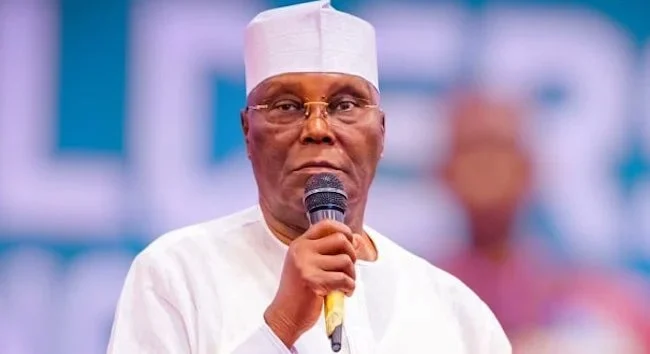
Former Vice President Atiku Abubakar has called out the Federal Government, demanding a clear and public accounting of how trillions of Naira saved from the fuel subsidy removal have been spent.
Ever since petrol subsidies were officially removed, fuel prices across Nigeria have skyrocketed, taking transport costs and food prices along for the ride. While the government insists that subsidy removal was necessary to save the economy from collapsing, millions of everyday citizens are left asking a basic question: where is the money actually going?
The debate over fuel subsidy savings has become one of the country’s biggest economic discussions. When the government asked citizens to tighten their belts, the understanding was that money previously wasted on fuel subsidies would be redirected into health, education, roads, and salary updates. However, recent figures from public government accounts have raised fresh concerns, leading opposition leaders and economic analysts to demand full fiscal transparency.
The Core Debate Over Subsidy Windfalls
The core of Atiku Abubakar’s argument centres on the massive increase in revenues shared among government tiers since May 2023. Monthly distributions from the Federation Account Allocation Committee have reached historic highs. In many recent months, total gross revenues collected from taxes, crude sales, and foreign exchange adjustments exceeded ₦4 trillion per month.
Despite these record-breaking allocations to federal, state, and local governments, everyday conditions on the ground have not reflected this financial boom. The price of premium motor spirit (petrol) rose from under ₦200 per litre to well above ₦1,000 per litre in most regions. This sudden shift multiplied the cost of moving goods and people across the nation.
The $0 Secret To Launching Your Entire Online Empire
Why pay hundreds every month for separate software? Build funnels, send emails, and make sales with Systeme.io completely free.
Get Started For $0Free Forever • No Credit Card Needed • Beginner-Friendly
Atiku points out that while state governors and federal ministries are receiving significantly larger monthly allocations, ordinary families are struggling with reduced purchasing power. The argument is simple: if government coffers are swelling by trillions of Naira because subsidies were cut, citizens ought to see visible, measurable improvements in public infrastructure and basic social services.
What the Government Claims vs What Official Numbers Show
To address growing public concern, government spokespersons and finance officials stated that money saved from fuel subsidies is being used to clear inherited national debts and stabilize the economy. The official position suggests that without ending the subsidy, the country would have struggled to service its foreign and domestic loan obligations.
However, a closer examination of official financial releases reveals a different picture. Atiku cited public data from the Central Bank of Nigeria showing that the Federal Government’s total exposure to the central bank actually grew from approximately ₦26.9 trillion in May 2023 to over ₦40.38 trillion.
- Debt restructuring is not debt repayment: Critics argue that converting short-term overdrafts (known as Ways and Means advances) into long-term Treasury Bills and bonds is simply shifting debt around on paper rather than paying it off.
- Fresh obligations are piling up: While old debts were rescheduled into longer repayment terms, new borrowing continued, increasing overall debt exposure.
- Interest costs remain high: High central bank interest rates mean that paying interest on national debt takes up a huge percentage of monthly revenue.
This gap between official explanations and public debt reports has fuelled demands for an independent audit of government records. Citizens want straightforward explanations regarding how debt figures rose so quickly even after billions of dollars in petrol subsidies were stopped.
What Happened to Worker Welfare and Education Grants?
When the subsidy ended, the administration announced several relief measures intended to soften the blow for workers and students. Key promises included a new national minimum wage, special wage awards for public servants, and direct funding for student higher education loans.
Atiku challenged these claims, pointing out inconsistencies between policy declarations and actual financial releases.
- Student loan funding sources: The management of the Nigerian Education Loan Fund (NELFUND) publicly confirmed that a significant portion of its starting capital came from funds recovered by the Economic and Financial Crimes Commission rather than direct allocations from petrol subsidy savings.
- Delayed wage allowances: Many public sector workers across federal agencies and state governments reported that agreed-upon wage awards and special allowances were delayed or left unpaid long after their announced start dates.
- State-level implementation gaps: Although state governments received much larger monthly allocations from the Federation Account, many states delayed implementing the new national minimum wage, citing high administrative overheads.
These issues highlight a recurring challenge in national administration: major financial announcements frequently take months or years to translate into practical relief for citizens on the street.
The Real Cost of Subsidy Removal on Everyday Citizens
Economic policies are ultimately judged by how they affect the daily lives of regular people. When petrol prices increase, the cost of nearly every item in the local market rises as well.
- Transportation costs: Bus fares inside major cities and interstate transport fares doubled or tripled almost immediately after petrol prices went up. This leaves workers spending a disproportionate share of their daily income just getting to work.
- Food inflation: Farmers and market traders rely on petrol and diesel vehicles to transport produce from rural farms to urban markets. Higher transport expenses drive up the market prices of staple foods like garri, rice, beans, yam, and tomatoes.
- Small business operations: Millions of small business owners—from barbers and tailors to cold-room operators—rely on small petrol generators to keep their businesses running during power outages. When generator fuel becomes expensive, operational costs rise, forcing businesses to raise prices or close down completely.
- Household purchasing power: As prices rise while salaries remain flat, families are forced to cut back on basic needs like healthcare, schooling, and nutrition.
According to data tracking from the National Bureau of Statistics, headline inflation and food inflation reached multi-decade highs following the policy changes. This confirms that while state government revenues doubled, average citizens experienced a real decline in living standards.
Opacity in Energy Costs and NNPC Accounts
Another major concern raised in Atiku’s challenge relates to the financial statements of the Nigerian National Petroleum Company Limited (NNPCL). Even after the official announcement that subsidies were gone, questions remained about how fuel imports and distribution costs were handled.
Audit disclosures and public financial records revealed that NNPCL recorded billions of Naira under categories like “energy security costs” and “petroleum under-recoveries”. To financial analysts, under-recovery is often just another name for subsidy expenses.
- The under-recovery question: If the fuel subsidy was completely eliminated in May 2023, why did subsequent financial records show massive under-recovery expenses?
- Foreign exchange gaps: Foreign exchange rate adjustments made fuel imports significantly more expensive in Naira terms, creating hidden costs that state oil companies had to absorb.
- Lack of clear reporting: Critics argue that the public deserves clear, line-by-line reporting showing how imported petrol is priced, distributed, and accounted for.
When financial definitions remain vague, it becomes difficult for the public to know whether the government has truly stopped spending money on fuel interventions or if the expenses were simply moved to different account lines.
How Technology and Open Data Can Fix Financial Opacity
Addressing national financial transparency requires modern data tools, open budget systems, and active public engagement. In an era where digital tools can track international money flows in real time, national budget reporting should be easily accessible to every citizen.
Data tracking tools allow citizens, journalists, and independent auditors to cross-check government announcements against published treasury balance sheets. When budget figures are published in open, searchable formats, it becomes much harder for funds to disappear into vague expenditure lines.
Modern communications technology also plays a massive role in keeping citizens informed. Today, news spreads fast across digital platforms, allowing people to compare notes, analyze public policy, and demand accountability from elected officials. For instance, creators and analysts frequently leverage digital video platforms and YouTube automation to produce detailed visual breakdowns of economic reports, making complex national budgets simple for everyone to digest.
Send, Spend & Hold Money Worldwide Without Hidden Fees
Transfer money internationally at the real exchange rate and hold 40+ currencies in one account.
Open a Wise AccountMid-market rate • Fast transfers • 40+ currencies
At the same time, advanced tools covered in our technology and AI section are helping researchers process vast amounts of public spending data, identify budget anomalies, and present facts clearly without administrative spin. Combining public interest with modern technology is one of the most effective ways to build standard financial accountability.
What Full Fiscal Transparency Should Look Like
If the government wants to build public trust and reassure citizens that subsidy savings are being put to good use, standard policy adjustments are needed:
- Publish monthly audited breakdowns: The Federal Ministry of Finance should publish a plain-language monthly report showing exactly how much was saved from subsidy removal and which specific projects received funding.
- Provide verifiable project locations: Instead of reporting general figures like “₦50 billion spent on infrastructure,” reports should list specific roads, hospitals, and power projects completed, along with their exact costs.
- Clarify central bank transactions: The government should provide plain explanations of its total debt with the Central Bank of Nigeria, detailing what portion was paid back, what was restructured, and what new loans were taken.
- Ensure state-level accountability: State governments that receive larger monthly allocations from the Federation Account must publish their internal expenditure reports so citizens can see how regional governors are spending the extra funds.
- Reconcile NNPCL balances: The national oil company should publish fully audited, independent financial statements clearing up all questions around fuel under-recoveries and energy security charges.
Demanding these basic standard practices is not about political rivalry; it is about ensuring that public funds serve the public interest.
Staying Informed and Taking Part in the Conversation
Keeping up with fast-moving political and economic events can feel overwhelming, but staying informed is the first step toward driving positive change. When citizens understand how public policies affect their daily finances, they are better equipped to participate in constructive national conversations.
To discover more about our mission to bring clear, straightforward reporting on major national issues, check out our About Us page. If you have thoughts, feedback, or news tips you would like to share with our editorial team, visit our Contact page.
You can also join our growing online community across social media platforms. Follow our updates and share your opinions directly on Facebook, stay updated on fast-breaking news via X (formerly Twitter), and catch visual stories on Instagram. Engaging in public discussions helps keep critical topics like national transparency at the top of the agenda.
Frequently Asked Questions (FAQs)
Why did the Federal Government remove the fuel subsidy?
The Federal Government removed the fuel subsidy because it was consuming trillions of Naira annually, taking up a huge portion of national revenue. Government leaders argued that the subsidy system was fiscally unsustainable, encouraged cross-border fuel smuggling, and diverted money away from public infrastructure like schools, hospitals, and roads.
What is the main point of Atiku Abubakar’s challenge to the government?
Atiku Abubakar is asking the Federal Government to provide clear, audited proof of how money saved from the subsidy removal has been used. He argues that despite record revenues going into government accounts, national debt has increased, public sector allowances remain delayed, and everyday citizens are facing severe financial hardship without clear benefits.
How does fuel subsidy removal cause food prices to rise?
When the fuel subsidy is removed, petrol and diesel prices increase. Transportation companies pay more for fuel, which drives up the cost of moving farm produce from rural communities to town markets. Market sellers then raise retail food prices to cover their higher transportation costs, resulting in widespread food inflation.
Did the government pay off its debts with the subsidy savings?
Government officials state that subsidy savings helped cover inherited debt obligations. However, opposition leaders cite Central Bank of Nigeria figures showing that overall government exposure actually grew from ₦26.9 trillion to over ₦40.38 trillion. Critics argue that the government restructured its debts into longer-term bonds rather than fully paying them down.
The $0 Secret To Launching Your Entire Online Empire
Why pay hundreds every month for separate software? Build funnels, send emails, and make sales with Systeme.io completely free.
Get Started For $0Free Forever • No Credit Card Needed • Beginner-Friendly
Where can citizens find official reports on government revenues?
Official reports on national revenue allocations are released monthly by the Federation Account Allocation Committee and published on the Federal Ministry of Finance website. The National Bureau of Statistics and the Central Bank of Nigeria also publish regular reports on inflation, national debt, and broader economic indicators.
The call for clear accounting on fuel subsidy savings goes beyond political debates. Millions of Nigerians made significant sacrifices when petrol subsidies were removed, enduring higher living expenses, elevated transport costs, and shrinking household budgets on the promise of long-term economic stability.
True economic reform requires open communication and total transparency. When citizens can trace every saved Naira directly to new roads, better schools, improved healthcare, and lower national debt, public trust will naturally grow. Until the government provides clear, audited accounts showing where the trillions went, the demand for clear answers will remain strong across the nation.
