
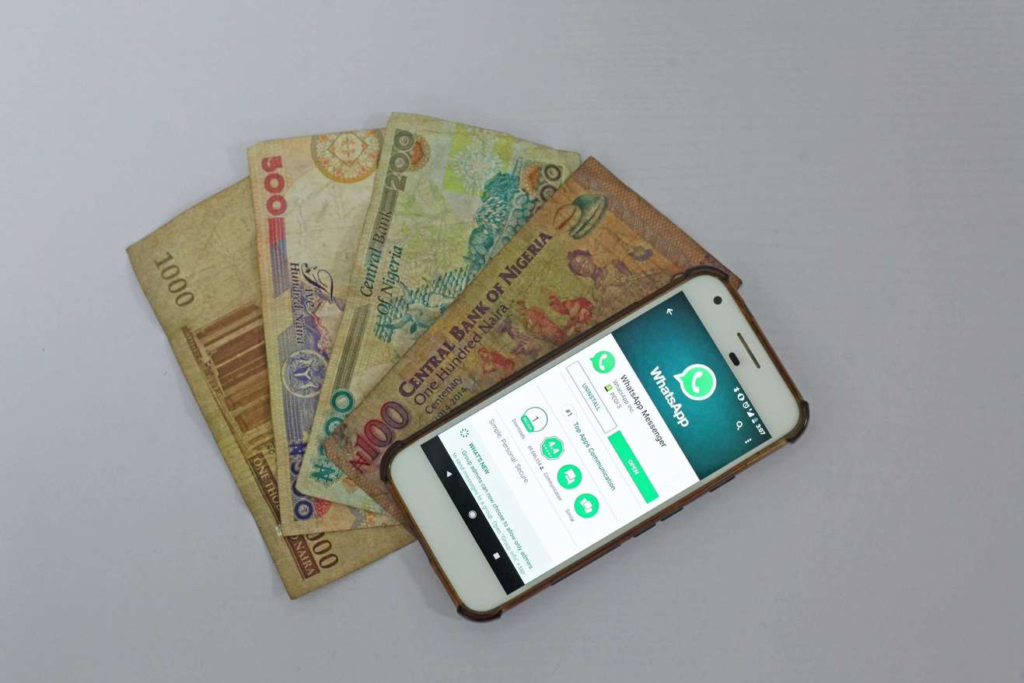
Think back to a few years ago. If you wanted to step out of your house to buy a loaf of bread, take a bus to work, or buy a chilled bottle of water on a hot afternoon, your pocket was probably full of physical cash. You likely had a mix of red ₦100 notes, green ₦200 notes, and maybe a few ₦50 notes folded neatly in your pocket or wallet.
Finding small cash notes used to be a daily mission. Think about how many times a bus conductor yelled at passengers because someone handed him a ₦1,000 note for a short ride. Think about how many times a market vendor asked you to go look for change before she could sell you a quick snack.
Fast forward to today, and daily life looks very different.
If you walk through a local market or buy fruit from a street vendor, you will notice something interesting. Almost everyone is tapping away on their smartphones. People are making quick bank transfers for tiny amounts like ₦100, ₦200, or ₦500. Small cash notes are getting harder to find in markets, bank counters, and ATMs.
This change made many people wonder what was happening behind the scenes. Did the government secretly stop printing these notes? Were ₦100 and ₦200 notes no longer valid money?
Build Funnels, Email Lists & Sell Online With One Free Tool
Create funnels, send emails, and sell online using Systeme.io without paying for multiple tools.
Create Free AccountFree forever • No credit card • Beginner-friendly
The Central Bank of Nigeria (CBN) cleared up the confusion. According to the apex bank, the shortage of smaller notes is not due to a secret ban. Instead, it is the natural result of a massive shift in how Nigerians pay for things. Financial technology, commonly known as fintech, has taken over everyday payments.
At Whatsbuzzn, we keep our eyes on the big trends shaping our daily lives. From financial updates in Nigeria to global technology shifts, our goal is to explain important news in simple, clear language that anyone can understand.
Here is a breakdown of what the CBN explained, how fintech apps transformed daily shopping, and what this shift means for your money.
What the Central Bank of Nigeria (CBN) Actually Said About Small Notes
To understand why ₦100 and ₦200 notes are becoming scarce, it helps to look at the official explanation from the central bank.
During a press briefing following a Monetary Policy Committee (MPC) meeting in Abuja, CBN Governor Olayemi Cardoso addressed public concerns regarding the shortage of lower naira denominations. Rumors had been spreading on social media claiming that the government was phasing out small cash notes.
Governor Cardoso cleared up those misunderstandings directly. He emphasized that ₦100 and ₦200 notes remain legal tender in Nigeria. The CBN has not cancelled them, nor has it instructed anyone to reject them. If a vendor or driver refuses a clean ₦100 or ₦200 note, they are rejecting valid Nigerian currency.
So, if the notes are still legal tender, why are they so hard to find?
The governor explained that cash circulation comes down to simple supply and demand. The central bank supplies cash to commercial banks based on what the public demands. Over the past few years, public demand for physical lower-denomination notes has dropped significantly.
As more Nigerians switch to mobile wallets, bank transfer apps, and digital channels, people simply need less small cash. When commercial banks request physical currency from the CBN, they ask for higher notes like ₦500 and ₦1,000 because those are what customers want to withdraw at ATMs.
According to policy updates on the official Central Bank of Nigeria platform, the government’s long-term goal is to modernize payment systems across the country. Under initiatives like the Payments System Vision (PSV 2028), the CBN is driving financial inclusion and expanding digital payment options.
In simple terms, the CBN explained that small notes are disappearing because Nigerians themselves are choosing digital transfers over physical cash. The market is simply responding to customer choices. You can also read more details on this official statement reported by Premium Times.
The Fintech Revolution: How Apps Changed Small Daily Payments
Not too long ago, making a bank transfer in Nigeria for a ₦200 item felt like a bad idea. Traditional bank transfers were often slow, network errors happened frequently, and waiting for a credit alert could take hours. No market vendor was willing to let you leave with goods while waiting for a missing alert.
Then came the fintech boom.
Companies like OPay, Moniepoint, PalmPay, and Kuda changed digital payments across the country. They built fast, reliable mobile platforms that made sending money as fast as sending a text message.
Here are the main reasons fintech platforms successfully replaced small cash notes in daily life:
1. Instant Alerts and Strong Reliability
The biggest challenge for digital micro-payments was trust. Fintech companies fixed this by building systems that deliver instant push notifications and clear audio alerts. When you buy a ₦200 item at a local shop, the vendor’s POS machine or phone announces the transfer within seconds. That instant feedback gave sellers the confidence to accept transfers for small purchases.
2. Free or Low-Cost Transfers
Traditional banks used to charge noticeable transfer fees, along with extra charges that made small payments impractical. Transferring ₦100 did not make sense if you had to pay a extra fee on top of it. Fintech platforms introduced free daily transfers and lower transaction costs, making digital transfers affordable for small purchases.
3. POS Terminals Everywhere
Point of Sale (POS) operators are now located on almost every street corner. From busy city centers to rural communities, agent banking made digital services accessible everywhere. Instead of searching for an ATM to withdraw cash, people can transfer funds directly to a merchant’s POS terminal or account.
4. Simple Mobile Apps
Fintech mobile apps were designed to be easy for everyone to use. You do not need complex technical knowledge to operate them. With basic smartphone skills, anyone can scan a QR code or type in a phone number to complete a transaction in seconds.
As digital tools become a permanent part of everyday life, keeping up with new innovations is more important than ever. If you enjoy learning about how technology is changing different industries, check out our updates on technology and AI innovations.
Economic Factors: Inflation and the Vanishing Value of Small Cash
While fintech provided the payment tools, economic changes accelerated the drop in demand for ₦100 and ₦200 notes.
Inflation plays a major role in how physical cash is used in any country. Over time, the purchasing power of lower naira notes has dropped. Items that used to cost ₦20 or ₦50 years ago now cost ₦200, ₦500, or more.
Consider standard everyday purchases today:
- A single sachet of water, which used to cost ₦5 or ₦10, now costs significantly more in most places.
- Short bus or Keke napep rides that used to cost ₦50 or ₦100 now require several hundred Naira.
- Basic items like snacks, drinks, or household essentials cost higher amounts.
Because prices have risen, carrying a ₦100 or ₦200 note buys very little on its own. When people go out to buy food or groceries, they handle larger sums of money. Carrying thick stacks of ₦100 notes to make routine purchases is heavy and inconvenient.
Fintech also solved the long-standing “no change” issue in Nigerian markets.
In the past, if an item cost ₦180 and you paid with a ₦200 note, the seller might spend ten minutes looking for a ₦20 note to give you as change. Sometimes, you were forced to buy extra items you did not want just to settle the balance.
Digital transfers removed that problem completely. With mobile apps, you pay the exact amount down to the last Kobo. If a purchase comes to ₦185, you transfer exactly ₦185. Nobody needs to search for physical change, which saves time and avoids disagreements.
Build Funnels, Email Lists & Sell Online With One Free Tool
Create funnels, send emails, and sell online using Systeme.io without paying for multiple tools.
Create Free AccountFree forever • No credit card • Beginner-friendly
The High Cost of Printing and Managing Physical Money
From the perspective of the Central Bank of Nigeria and commercial banks, managing paper currency is an expensive task.
Printing physical cash costs billions of Naira every single year. Paper banknotes do not last forever. They wear out over time due to constant handling, moisture, dirt, and rough storage.
Lower denomination notes like ₦50, ₦100, and ₦200 wear out faster than higher notes. They move through hundreds of hands every single week. They get squeezed into tight pockets, handled by market vendors, and passed around in crowded buses.
As a result, small notes quickly become dirty, torn, or damaged.
When cash gets damaged, the central bank must collect those notes through commercial banks and safely destroy them, replacing them with new prints. This continuous cycle creates heavy operational costs:
- Printing Expenses: Ordering specialized security paper, ink, and advanced printing features.
- Logistics and Security: Moving heavy boxes of physical money across states using armored vehicles and security escorts.
- Storage and Processing: Keeping cash secure in vaults and using machines or staff to sort usable cash from damaged notes.
By encouraging digital payments, the country cuts down on the need to print massive volumes of physical lower-denomination notes. When millions of small daily purchases move to fintech platforms, it saves resources for the banking system.
Those savings allow financial institutions to focus more on strengthening digital infrastructure, network security, and online banking services.
What This Shift Means for Businesses and Everyday Life
The move away from small cash notes affects everyone, from store owners in major cities to traders in small towns.
For small business owners, adopting fintech payments brings clear advantages:
Better Sales Records: Keeping track of paper cash sales can be confusing, and cash can easily get lost or miscounted. With POS terminals and mobile apps, every ₦100 or ₦200 payment is logged automatically in a digital statement. This helps business owners manage their money more accurately.
Improved Safety: Holding large amounts of cash makes shop owners targets for theft. When vendors keep less cash on hand, the risk of losing money to theft or physical damage decreases significantly.
More Customers: Vendors who accept transfers do not lose customers who are out of cash. In places where ATMs run out of money, accepting quick digital transfers ensures sales keep moving.
At the same time, this digital transition comes with challenges.
People living in rural areas with poor network coverage or limited smartphone access still depend heavily on physical cash. Older individuals who are not comfortable using mobile apps can also find it difficult when small notes are scarce.
To address these issues, fintech companies and banks are expanding offline options, such as USSD code payments that work without internet access, alongside agent banking networks across the country.
The growth of digital finance is part of a broader trend where digital tools create new possibilities for everyday people. Many individuals are leveraging online platforms to build remote careers and new income streams. If you want to learn more about modern digital strategies, take a look at our guide on YouTube automation strategy.
Frequently Asked Questions (FAQs)
Are ₦100 and ₦200 notes still legal tender in Nigeria?
Yes, ₦100 and ₦200 notes remain legal tender across Nigeria. The Central Bank of Nigeria confirmed that these notes have not been banned or withdrawn. You can legally use them for any purchase.
Why are bank ATMs not dispensing ₦100 or ₦200 notes?
Banks load their ATMs based on space efficiency and customer preferences. Higher notes like ₦500 and ₦1,000 allow machines to hold higher total values and serve more customers taking out larger sums. Because micro-transactions are mostly done digitally now, banks request fewer low-denomination notes from the CBN.
What should you do if a merchant refuses your ₦100 or ₦200 note?
By law, genuine Nigerian currency in usable condition should be accepted. However, if a vendor refuses physical cash, using a quick digital transfer through a fintech app or POS terminal is the most practical alternative in today’s market.
Will Nigeria stop using cash completely?
The CBN’s cashless policy aims to reduce heavy cash usage, not eliminate physical money entirely. Physical notes will continue to exist alongside digital payment channels to ensure everyone has payment options.
Final Thoughts: Embracing the Digital Wallet Era
The gradual reduction of ₦100 and ₦200 notes in daily circulation is not a sign that the currency is disappearing. It shows that Nigeria’s payment habits are modernizing.
As fintech platforms make transfers fast, low-cost, and reliable, people are naturally choosing mobile wallets over physical cash. Transactions that used to require pockets full of crumpled paper notes are now completed with a quick tap on a phone screen.
While physical money will always play a role, digital payments are taking the lead in everyday commerce. Learning to use these digital tools makes everyday shopping simpler, safer, and far more convenient.
If you have questions or want to get in touch with our team, feel free to visit our contact page.
Stay updated on trending news, business updates, and modern tech insights by following us across our social channels:
- Follow our latest posts on Instagram
- Join our community on Facebook
- Follow the conversation on X (formerly Twitter)
