
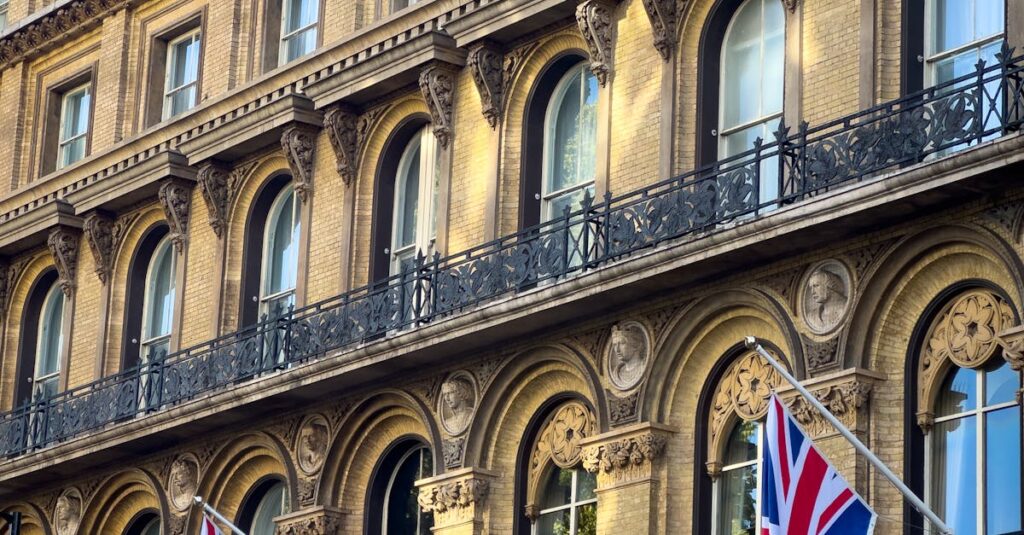
The story of how Nigeria was colonized by Britain isn’t just a dry history lesson, it’s a complex tale of business deals, broken treaties, powerful kingdoms, and incredible resistance.
For many, the name “Nigeria” feels as ancient as the Niger River itself. But the truth is that as a single country, Nigeria is a relatively modern invention, created by British colonialists just over a century ago.
Before the British arrived, the area was home to powerful empires like the Oyo Empire, the Benin Kingdom, and the Sokoto Caliphate, each with its own rich culture, advanced systems of government, and bustling trade routes.
This post walks you through the full timeline of British rule, from the first bombardment of Lagos to the day Nigeria finally won its independence.
You’ll learn the real reasons the British wanted to be there, how they managed to take control, and the lasting effects of colonization that Nigeria still lives with today.
Why Britain Was Interested in Nigeria in the First Place
Before we talk about battles and treaties, it’s important to understand what actually brought the British to Nigeria’s shores. For a long time, European interest in West Africa was focused on one very dark trade: human beings. But that started to change in the early 1800s.
In 1807, Britain passed a law making it illegal for British subjects to take part in the slave trade. You might think this was purely about morality, but it was also about economics.
Britain was becoming an industrial powerhouse, and factories needed raw materials, not just slaves.
The focus shifted from trading people to trading palm oil, which was used to make soap and lubricate machinery. The British government also wanted to find new markets for the goods its factories were churning out.
So, the stage was set. Britain wanted palm oil, it wanted markets to sell its manufactured goods, and it wanted to stop other European powers, especially France and Germany, from getting too powerful in the region.
The First Step: The Bombardment and Takeover of Lagos
The British conquest officially kicked off on December 26, 1851. With approval from the British Foreign Secretary, a naval force bombarded the island of Lagos. Why? They wanted to remove the sitting Oba (king), Kosoko, who wasn’t playing ball with British trading interests. They replaced him with a more cooperative leader, Oba Akitoye. This was just the start.
The new arrangement didn’t last long. In a familiar pattern, the British soon decided that more direct control was needed. On August 6, 1861, they signed the Lagos Treaty of Cession with Oba Dosunmu, and Lagos was officially annexed as a British colony.
This means Lagos was no longer a local kingdom; it was now ruled directly by a British governor who answered to London. The colonization of Nigeria had truly begun, with Lagos as the beachhead.
The Royal Niger Company: A Corporate Takeover
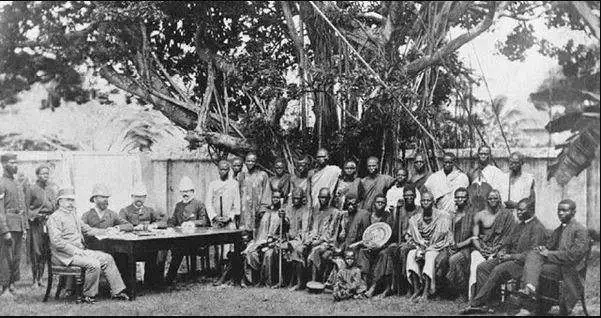
You might think it was the British government leading the charge, but for a while, the main player was actually a private business. In 1879, a man named George Taubman Goldie united all the British trading interests on the Niger River into a single company. By 1886, he had convinced the British government to give his company, now called the Royal Niger Company, a Royal Charter.
What did a Royal Charter do? It effectively turned a private company into the government of the Niger region. The Royal Niger Company had its own flag, its own army, and the power to make treaties and rule over local people. Goldie, who is often compared to Cecil Rhodes in South Africa, used this power aggressively.
Through a mix of negotiation, bribery, and military force, his company signed over 400 political treaties with local chiefs and kingdoms. Their goal was simple: secure a British monopoly over the palm oil trade along the Niger River and block the French or Germans from moving in.
How the Berlin Conference Changed Everything
While Goldie was making deals on the ground, European leaders were carving up Africa on a map. Between 1884 and 1885, they met for the Berlin Conference.
No Africans were invited. The goal wasn’t to bring peace or development; it was to prevent European powers from going to war with each other over African land.
The main agreement from the Berlin Conference was the “Principle of Effectivity.” It said that for a European country to claim a territory, it needed to set up a real government there.
This turned the “Scramble for Africa” into a frantic race for treaties and territory. Thanks to Goldie’s earlier work, Britain was able to claim a huge sphere of influence covering the lower and middle Niger River. The Berlin Conference didn’t start the colonization of Nigeria, but it gave Britain the international permission slip it needed to go full speed ahead.
Military Conquest and Fierce Resistance
Contrary to what some might think, the British did not just walk in and take over. The colonization of Nigeria was a violent military conquest that took decades. From the coastal cities to the northern savannah, powerful kingdoms and communities fought back, often with incredible bravery.
- The Benin Kingdom (1897): The Oba of Benin controlled a wealthy and sophisticated empire. When a British delegation tried to enter Benin City against the Oba’s wishes, they were attacked, and most of them were killed. In response, Britain sent a massive “punitive expedition” of over 1,000 soldiers. They captured and burned Benin City, looted its famous artworks (the Benin Bronzes), and sent the Oba, Ovonramwen, into exile.
- The Sokoto Caliphate (1902-1903): In the north, the British faced the powerful Sokoto Caliphate, one of the largest empires in Africa at the time. But the British had modern weapons, especially the Maxim machine gun. In a series of brutal battles, the armies of the caliphate were defeated. The last Sultan, Attahiru I, was killed in 1903 while trying to flee. The fall of Sokoto marked the end of major organized resistance in the north.
In the east, the British fought the Anglo-Aro War (1901-1902) to break the power of the Aro Confederacy. Along the coast, trade rivals like Nana Olomu of the Itsekiri were crushed for resisting British control over the palm oil trade. Piece by piece, through firepower and cunning, the British subdued the entire region.
The Amalgamation of 1914: Creating Modern Nigeria
After defeating the Royal Niger Company’s charter in 1899, the British government took direct control. They divided the land into two separate areas: the Northern Nigeria Protectorate and the Southern Nigeria Protectorate. But running two administrations was costly and inefficient .
Enter Sir Frederick Lugard, a seasoned colonial administrator. On January 1, 1914, Lugard merged the Northern and Southern protectorates into a single entity called the Colony and Protectorate of Nigeria.
And what to call this new, artificial creation? The name “Nigeria” was suggested in the 1890s by Flora Shaw, a British journalist who later became Lugard’s wife, inspired by the Niger River that runs through the land.
Lugard is also famous for the system of “Indirect Rule.” In this approach, the British would rule through the traditional leaders that were already in place.
The idea was simple: let the Emirs and Chiefs handle day-to-day governance while British officials pulled the strings from above, focusing on collecting taxes and preventing rebellions.
This system worked well in the highly organized north but was often a disaster in the south, where it forced “chiefs” onto societies that had never had them, creating new conflicts and resentment that last to this day.
The Colonial Economy: Built for Extraction, Not for Nigerians
Once Britain had full control, they reshaped the economy to serve their own needs. The goal was simple: extract raw materials from Nigeria and turn it into a market for British factory-made goods.
Nigeria’s own food farmers were pushed into growing cash crops for export, like groundnuts, cotton, cocoa, and palm oil. By 1917, palm oil exports alone from Nigeria were worth an enormous amount of money, almost half of the total for all of West Africa.
To move these goods efficiently, the British built a new transportation network. In the 1890s and early 1900s, they constructed a railway system that connected the agricultural heartlands to the coast.
The Vice President of Nigeria once called the building of the rail line connecting Lagos to Kano the “smartest economic decision” the British made.
They also introduced the pound sterling as the main currency and built roads, but these improvements were all designed to make money for Britain, not to develop Nigeria for Nigerians. This created a one-way economic relationship that Nigeria is still struggling to break free from today.
The Road to Independence
Even though colonization was brutal, it also created the conditions for its own end. The British brought Western education and the English language. This new education, along with the shared experience of being colonized, helped create a class of Nigerian nationalists who could communicate with each other and with the outside world.
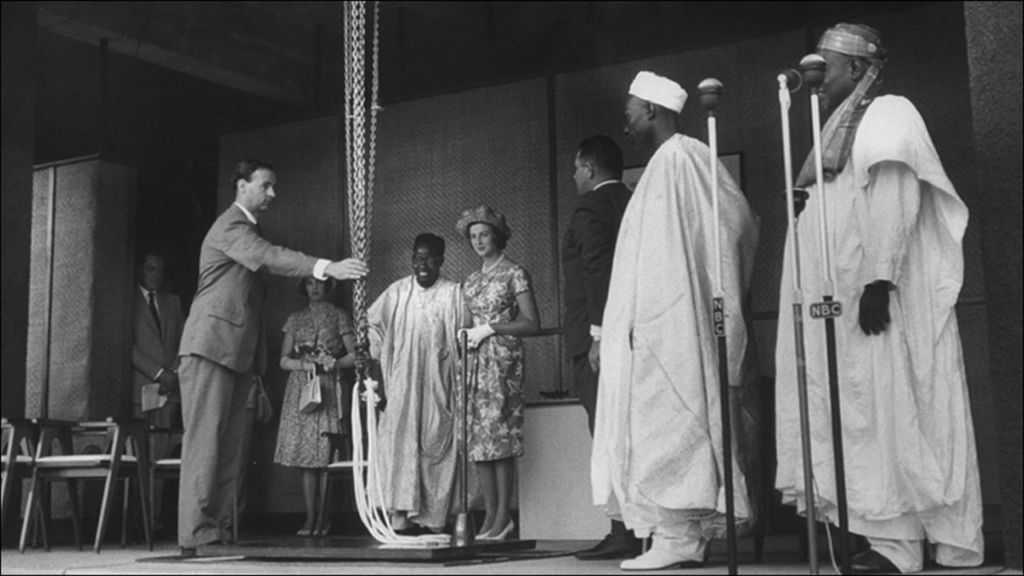
Throughout the 1940s and 1950s, Nigerian leaders, journalists, and labor unions began to push harder and harder for self-rule. Through political parties, newspapers, and non-violent protests, they built a movement that Britain could no longer ignore. After a series of constitutional conferences in London, Nigeria was finally granted full independence on October 1, 1960. The British flag was lowered, and the green-white-green flag of Nigeria was raised, marking the end of an era.
Frequently Asked Questions
When exactly did Nigeria become a British colony?
While Britain’s influence started in the mid-19th century, Nigeria officially became a single British colony on January 1, 1914, with the amalgamation of the Northern and Southern protectorates. It remained a colony until it gained independence in 1960.
What was ‘Indirect Rule’ as practiced by the British in Nigeria?
Indirect Rule was a system where the British colonial government administered Nigeria through existing local power structures, especially traditional chiefs and emirs.
The British would control these leaders from behind the scenes, using them to collect taxes and enforce colonial policies while leaving local customs largely untouched.
Did any Nigerian states successfully resist British colonization?
Many Nigerian states and communities resisted fiercely, but none were able to permanently stop the British conquest. The most famous examples include the Benin Kingdom’s resistance in 1897 and the Sokoto Caliphate’s battles between 1902 and 1903, both of which were ultimately defeated by British military force.
Final Thoughts
The colonization of Nigeria was not a simple or straightforward event. It was a violent and complex process driven by corporate greed, European rivalries, and military technology.
In just a few decades, the British transformed a region of powerful independent kingdoms into a single colony designed to serve the economic needs of an empire thousands of miles away.
Understanding this history is more than just an academic exercise. It explains so much about modern Nigeria, from its ethnic tensions and economic challenges to its official language. It is a powerful reminder of how decisions made in London over a century ago still shape the lives of millions of people today.
Reflecting on this history, what do you think is the single most defining legacy of British rule in Nigeria, and how does it continue to affect the country’s present?
